AP Psych 1.1-1.4 Study Guide
 Call Kai
 Learn
 Practice Test
 Spaced Repetition
 Match
 Flashcards
 Knowt Play
1/97

Earn XP
Description and Tags
Terms, Definitons, and Application/Examples
98 Terms
nature
genes, traits you inherit or are born with
ex. you inherit your eye color or have a genetic tendency towards anxiety
nurture
traits you learned through experience and environment
ex. learning certain manners from parents
envioroment
everything around you that influences development
ex. friends, school, family, and culture influence your behaviro
heredity
passing genetic traits from parents to children
ex. child inherits genetic tendency toward curly hair
evolutionary psychology/perspective
explains behavior by looking at how evolution may have shaped it
studies how evolution may explain why humans behave the way they do
ex. fear of snakes —> ancestors who avoided dangerous animals were more likely to survive
natural selection
organisms with traits that help them survive and reproduce are more likely to pass those traits on to their offspring
ex. giraffes with longer necks can reach more food and pass their traits to offspring
eugenics
discredited movement that tried to control human reproduction to influence inherited traits
ex. historical policies prevented certain groups from having children based on false ideas about genetic superiority

nervous system
body’s communication network made of the brain, spinal cord, and nerves
ex. you feel a hot surface and quickly react

central nervous system (CNS)
brain and spinal cord
ex. your brain processes info when you solve a math problem

peripheral nervous system (PNS)
all the nerves outside the brian and spinal cord
ex. nerves carry info from your fingers to your spinal cord

somatic nervous system
controls voluntary skeletal muscle movements and carries sensory info
ex. you kick a soccer ball

autonomic nervous system
controls automatic functions
ex. heart beat, digestion

sympathetic nervous system
activates body’s fight or flight response
ex. your heart beats faster before a big test
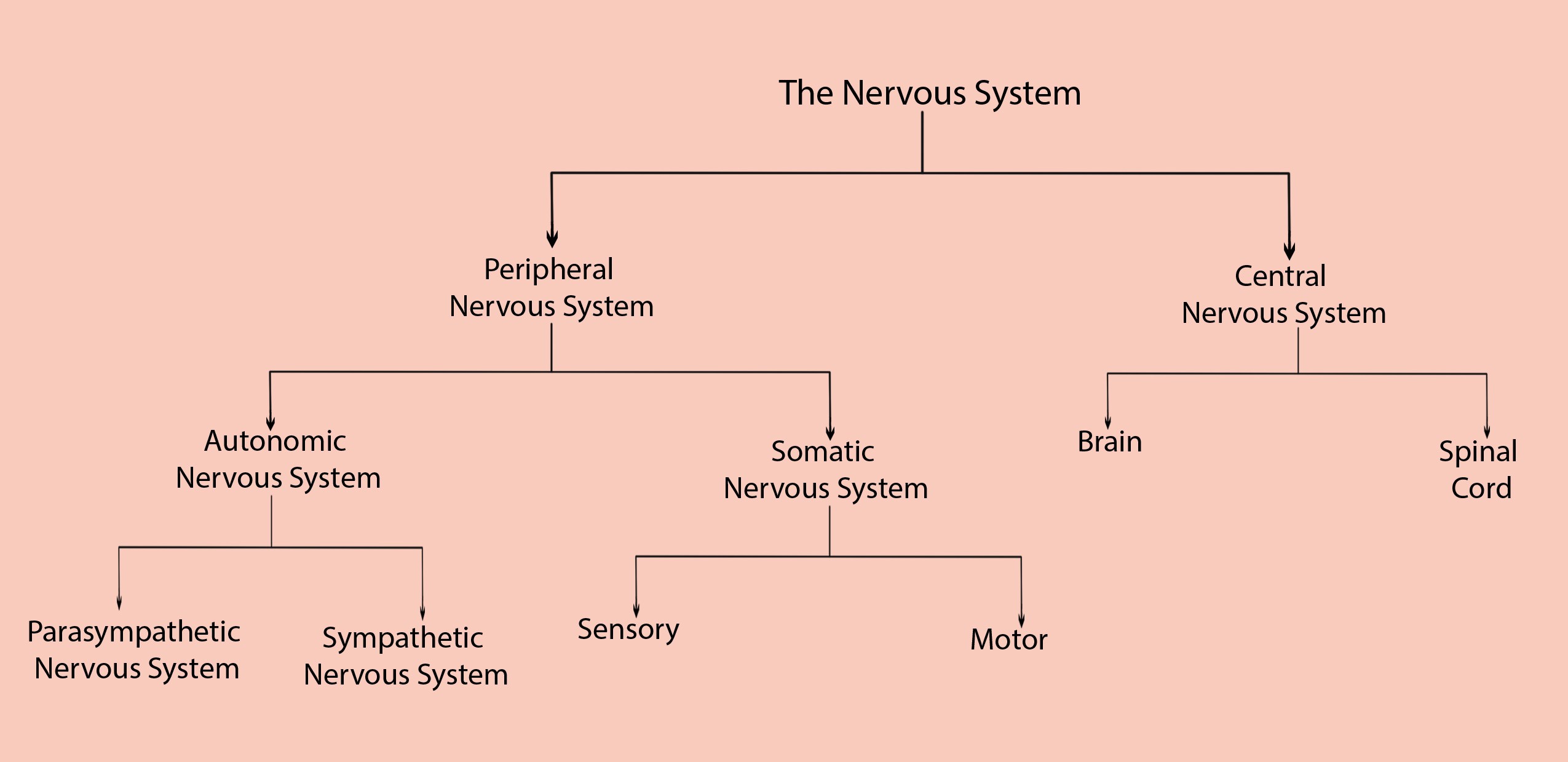
parasympathetic nervous system
helps body rest, recover, and digest food
ex. heart rate slows down after you calm down
reflex arc
pathway that produces a fast, automatic response to stimulus
ex. you pull your hand away from something hot before thinking about it

neurons
specialized cells that receive and transmit info
ex. neurons carry messages that help you move
glial cells
support cells that protect, nourish, and help neurons function
ex. glial cells help maintain and insulate neurons
sensory nuerons
carry info from sensory receptors toward CNS
ex. send info about heat from your skin
motor nuerons
carry commands from the CNS to muscles or glands
ex. tell your arm muscles to move
internuerons
connect and process info between neurons, mainly in the CNS
ex. help process info during reflex

dendrites
branch like structures that receive signals from other cells
ex. receive a message from another nuerons

axons
long neuron extensions that carry electrical impulses away from the cell body
ex. carry signal toward muscle

terminal buttons
endings of axons that release neurotransmitters
ex. release chemicals to send a message to another cell

synaptic vesicles
tiny sacs that store neurotransmitters in the axon terminal
ex. release stored dopamine into a synapse

myelin sheath
fatty insulating covering around many axons that speeds up neural signals
ex. helps messages travel quickly between brain and body

resting potential
the neurons negative electrical charge when it’s not firing
ex. neuron is waiting to send a signal
threshold
minimum stimulation needed to trigger an action potential
ex. neuron receives enough input to fire

depolarization
inside of neuron becomes less negative
ex. a neuron fires when its threshold is reached
action potential
electrical impulse that travels down the axon
ex. a neuron fires when its threshold is reached

repolarization
process of restoring the neurons negative internal charge after action potential
ex. neuron resets after firing
all-or-nothing principle
a neuron either fires a full action potential or does not fire one at all
ex. stronger stimulation does not create a bigger action potential, but it can increase firing frequency

refractory period
short period after firing when a neurons cannot fire again or needs stronger stimulation to fire
ex. a neuron briefly resets before firing another impulse

reuptake
the sending neuron takes neurotransmitters back in after their release
ex. serotonin is taken back into the sending neuron
excitatory neurotransmitters
chemicals that increase the likelihood that the receiving neuron will fire
ex. glutamate often makes a neuron more likely to fire
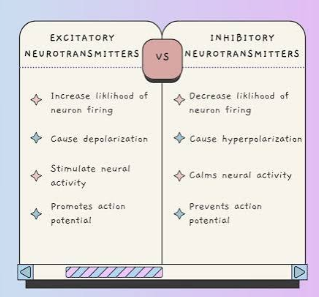
inhibitory neurotransmitters
chemicals that decrease the likelihood that the receiving neuron will fire
ex. GABA often reduces neural activity

multiple sclerosis
damages myelin in the CNS
ex. damaged myelin can cause weakness, vision problems, or difficulty coordination movements
myasthenia gravis
interferes with communication between nerves and muscles
ex. muscle weakness with repeated activity
synapse
junction where neuron communicates with another cell
ex. neurotransmitters cross tiny gay between neurons
how nueron sends message

acetylcholine (ACh)
involved in muscle movement, learning, and memory
ex. helps muscles contract when you move
dopamine
reward, motivation, movement, and learning
ex. helps reinforce behaviors that feel rewarding
serotonin
regulates mood, sleep, and appetite
ex. role in mood regulation
norepinephrine
alertness, attention, and arousal
ex. helps you become alert when something surprising happens
GABA
main inhibitory neurotransmitter in brain
ex. helps reduce excessive neural activity
glutamate
main excitatory neurotransmitter in the brain
ex. supports learning and memory
endorphins
natural chemicals that help reduce pain and can produce pleasure
ex. you feel better after exercise because your body is producing more endorphins
substance P
transmits pain signals
ex. communicates pain info from body
hormones
chemical messengers released by endocrine glands into bloodstream
ex. hormones help regulate growth, stress, and metabolism
adrenaline (epinephrine)
hormone that prepares body for fast action during stress
ex. your heart races before preforming on stage
ghrelin
hormone that signals hunger and helps regulate appetite
ex. you feel hungry around lunch time
leptin
hormone that signals body is full and regulates long term appetite
ex. helps brain monitor stored energy
melatonin
hormone that helps regulate sleep-wake cycle
ex. melatonin levels rise at night
oxytocin
hormone involved in childbirth, milk release, and aspects of social bonding
ex. helps with milk release during breastfeeding
psychoactive drugs
substances that affect brain activity, perception, mood, or behavior
ex. caffeine can make you feel more alert
agonist
substance that activates a receptor or increases neurotransmitters effects
ex. a drug mimics the action of a natural neurotransmitter
antagonist
substance that blocks receptor or prevents neurotransmitter from activating it
ex. a drug blocks a receptor so a chemical cannot activate it
reuptake inhibitor
substance that slows reabsorption of neurotransmitters into the sending neuron
ex. antidepressants increase serotonin availability by blocking its reuptake
stimulants
drugs that increase activity in the CNS
ex. can increase alertness and energy, caffeine, cocaine
caffeine
stimulant that mainly blocks adenosine receptors, reducing feelings of sleepiness
blocks=antagonist
ex. coffee helps you feel more awake
cocaine
stimulant that increases certain neurotransmitters effects, including dopamine
increases=agonist
blocks reuptake of of neurotransmitters, especially dopamine, so dopamine builds up in the space between neurons
ex. causes increased alertness and heart rate but with serious health risks
depressants
drugs that slow activity in the CNS
ex. some can cause drowsiness and slower reactions, alcohol
alcohol
psychoactive depressant that affects judgement, coordination, and reaction time
ex. someone who drinks may have trouble walking in straight line
opioids
drugs that act as opioid receptors to relieve pain and can cause euphoria and slowed breathing
ex. opioid medications can be prescribed for severe pain but carry risks of dependence and overdose, heroin
heroin
opioid that can cause intense effects and high risk of overdose and addiction
ex. acts on opioid receptors and can dangerously slow breathing
hallucinogens
alter perception, thoughts, and sensory experiences
ex. person may experience distorted sights or sounds
marijuana
psychoactive drug that can affect memory, attention, coordination, and perception
ex. someone may have difficulty remembering instructions after using
addiction
condition involving compulsive substance use or behavior despite harmful consequences
ex. a person continues using a substance even when it disrupts daily life
tolerance
when repeated exposure means more of a substance may be needed to produce same effect
ex. the same amount has less effect than it used to
withdrawal
physical or psychological symptoms that can occur when a dependent persons substance use is reduced or stopped
ex. a person may experience irritability or other symptoms after stopping regular use
brain plasticity
brains ability to change and recognize connections through learning, experience, and recovery
ex. practicing piano strengthens neural connections involved in skill
electroencephalogram (EEG)
records electrical activity of the brain using electrodes on the scalp
ex. researchers study brain-wave patterns during sleep
MRI
estimates brain activity by measuring changes in blood oxygenation and flow
ex. researchers observe which brain areas are active during a memory task
lesions
areas of damaged brain tissue, researchers may study naturally occurring lesions to understand brain function
ex. damage to a brain area may affect speech or movement

brain stem (central core)
lower brain structures connecting brain to spinal cord, helps control basic life functions
ex. breathing, heart rate, alertness
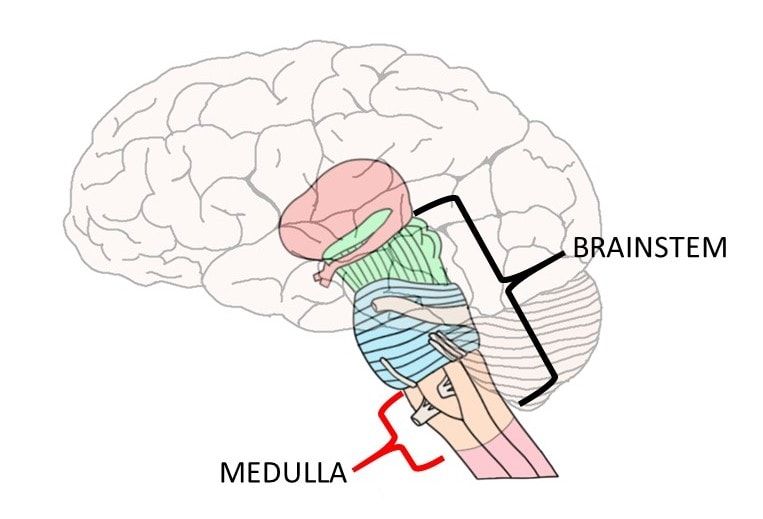

medulla oblongata
brainstem structure involved in vital automatic functions like breathing and heart rate
ex. breathing while your asleep
reticular activating system
network involved in arousal, alertness, and sleep-wake cycle
ex. helps you wake up and pay attention

cerebellum
helps coordinate movement, balance, posture, and motor learning
ex. helps you balance while riding bike

limbic system
group of interconnected structures involved in emotion, motivation, learning, and memory
ex. helps process emotionally important experiences
thalamus
relays most sensory info to the cerebral cortex, excluding the main olfactory pathway
ex. helps route visual and auditory info to the appropriate brain areas
hypothalamus
helps maintain homeostasis and regulates hunger, thirst, temp, and hormonal activity
ex. makes you feel thirsty when you need water
pituitary gland
endocrine gland regulated mostly by hypothalamus that releases hormones affecting growth and other body functions
ex. releases growth hormone
hippocampus
important for forming new explicit memories and spatial memory
ex. helps you remember info for test
amygdala
processing emotional significance, especially fear and threat, and emotional learning
ex. helps you recognize a potentially threatening situation

cerebral cortex
brains outer layer, thinking, perception, language, memory, and voluntary movement
ex. helps you solve problems and understand question
corpus callosum
large bundle of nerve fibers connecting brains left and right hemispheres
ex. allows 2 hemispheres to exchange information
cortex specialization
different areas of the cortex are specialized for different functions
ex. occipital lobe processes visual info
contralateral hemispheric organization
each cerebral hemisphere primarily control movement and receives sensory info from opposite side of body
ex. the left motor cortex primarily controls the right hand
aphasia
language impairment caused by brain damage, affects speaking, understanding, reading, or writing
ex. someone has trouble finding words after a stroke
broca’s area
brain region in the left frontal lobe important for producing speech
ex. damage can make speech slow and hard to produce
wenicke’s aera
language region in brain thats important for understanding language
ex. damage can lead to fluent speaking, but difficult to understand what your saying
frontal lobe
planning, decision making, impulse control, speech production, and voluntary movement
ex. you plan how to study for an exam
prefrontal cortex
part of the frontal lobe, important for planning, judgement, memory, and self-control
ex. you resist checking your phone while studying
motor cortex
area of frontal lobe that helps control voluntary movements
ex. you move fingers to type
parietal lobe
processes bodily sensations and helps with spatial awareness
ex. you know where your hand is without looking at it
somatosensory cortex
area of parietal lobe that processes touch, pressure pain, temp, and body position info
ex. you feel a tap on your shoulder
temporal lobe
hearing, language comp, memory, and recognizing people or objects
ex. you recognize a friends voice
occipital lobe
main brain region for processing visual info
ex. you identify the color and shape of stop sign
the 4 lobes
frontal: planning and movement
parietal: touch and space
temporal: hearing and memory
occipital: vision