Task 8: UNIT 1 AND 2- Psychology Full Year Exam Flashcards
 Call Kai
 Learn
 Practice Test
 Spaced Repetition
 Match
 Flashcards
 Knowt Play
1/301

There's no tags or description
Looks like no tags are added yet.
302 Terms
Attitude
A long‑standing evaluation of people, objects, issues, or yourself.
Tripartite model components
Affective (feelings), Behavioural (actions), Cognitive (beliefs).
Affective component
Look for emotions or feelings expressed.
Behavioural component
Look for actions or behaviours influenced by the attitude.
Cognitive component
Look for beliefs, thoughts, or assumptions.
Implicit attitude
An automatic, unconscious attitude that influences behaviour.
Explicit attitude
A conscious attitude that can be stated clearly.
Spotting implicit attitudes
Behaviour contradicts what the person says they believe.
Spotting explicit attitudes
The person openly states their attitude.
Stereotype
A generalised belief about a group.
Prejudice
A negative feeling toward a group.
Discrimination
Unfair behaviour toward a group.
Identifying stereotypes
Look for generalised statements about groups.
Identifying prejudice
Look for negative emotions toward a group.
Identifying discrimination
Look for actions that treat groups differently.
Cognitive dissonance
Psychological tension from holding conflicting beliefs or behaviours.
Responses to cognitive dissonance
Change beliefs, change behaviour, change perception of the action.
Identifying dissonance
Look for conflict between values and behaviour.
Rationalisation
Justifying behaviour to reduce dissonance.
Identifying ethical issues
Look for pressure, lack of information, or exposed identities.
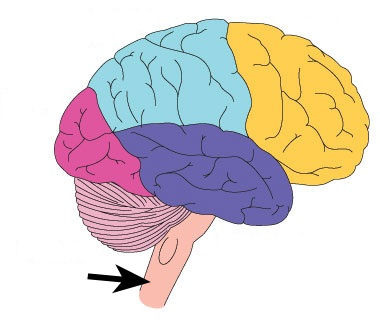
Frontal Lobe
Higher-order thinking, planning, decision-making, problem-solving; voluntary movement via the primary motor cortex; speech production (Broca's area).
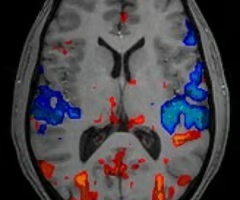
What are fMRI scans?
Uses magnetic fields to measure changes in blood flow.
Shows which brain areas are active during tasks.
Used to study brain function and identify abnormalities.
Dynamic
Strengths and Limitations of fMRI scans
Strengths: Non‑invasive, no radiation, produces detailed images of brain activity, good for studying function in real time.
Limitations: Expensive, sensitive to movement, not suitable for people with metal implants or severe claustrophobia.
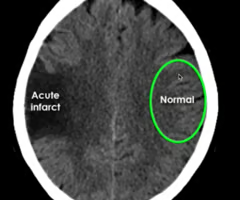
What are CT scans?
Uses X‑ray images taken from multiple angles to create a 3D structural image of the brain. Shows physical abnormalities such as tumours, bleeding or injury. Still.
Strengths and Limitations of CT scans
Strengths: Quick and non‑invasive. Useful for detecting structural damage.
Limitations: Uses radiation. Less detailed than MRI.
Define: Neuron
A specialised cell that transmits information through electrochemical signals.
How to neurons work?
Dendrites receive information. An electrical impulse (action potential) travels down the axon. Neurotransmitters are released from the axon terminals into the synapse.
Define: Neurotransmitters
Chemical messengers that transmit signals across the synapse to the next neuron.
Define: Synapse
The gap between two neurons where neurotransmission occurs
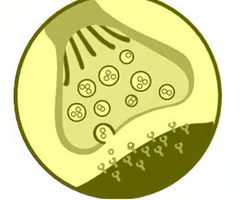
Label a synapse.
Axon terminal
Vesicles containing neurotransmitters
Synaptic cleft
Neurotransmitter
Receptor
Dendrite
How to synapses work?
Action potential reaches axon terminal.
Neurotransmitters are released into the synaptic cleft.
They bind to receptors on the next neuron.
Excess neurotransmitter is reabsorbed
What are the 4 main brain scanning techniques?
EEG, CT, MRI, fMRI
What is the role of the CNS?
Central processing and control point for all human behaviour. Processes all information from the senses and is responsible for controlling behaviour.
What is the role of the spinal cord in the CNS?
Connects the brain to the rest of the body, and allows messages to be passed from body to brain and from brain to other parts of the body
Synaptic transmission
Process of communication between neurons using neurotransmitters.
How is a synaptic transmission generated?
1. Electrical impulse down the axon triggers release of neurotransmitters from axon terminals.
2. Released into synaptic gap to be picked up by the receptors on dendrites or to be taken up again for re-use
Neurotransmitters in synaptic transmission
- Released from vesicles when action potential arrives.
- Bind to receptors on the next neuron.
Receptors in synaptic transmission
- Bind to specific neurotransmitters.
- Trigger response in the post‑synaptic neuron.
3 common neurotransmitters
Noradrenaline
Dopamine
Serotonin
Noradrenaline
Arousal, alertness, attention.
Dopamine
Movement, motivation, reward.
Serotonin
Mood regulation, sleep, appetite.
The brain is in two halves, called...
Hemispheres, which is lateralisation.
Pre-frontal cortex
The front part of the frontal lobe, located behind the forehead, and is responsible for executive functions like decision-making, planning, personality expression, emotional regulation, and social behavior.
Peripheral Nervous System (PNS)
All nerves outside the CNS that carry sensory information to the brain and motor commands back to the body, allowing communication between the CNS and organs, muscles and glands.
Somatic Nervous System
Controls voluntary movement by sending sensory messages to the CNS and motor signals to skeletal muscles, enabling actions like walking, writing and speaking
Autonomic Nervous System
Controls involuntary functions such as heart rate, breathing and digestion, automatically regulating internal processes to maintain balance and survival.
Sympathetic Nervous System
Activates the fight‑or‑flight response by increasing heart rate, widening pupils and slowing digestion, preparing the body for immediate action during stress.
Parasympathetic Nervous System
Returns the body to a calm resting state by slowing heart rate, increasing digestion and conserving energy once danger or stress has passed.
Sensory Neuron
Carries information from sensory receptors to the CNS, allowing the brain to detect environmental changes like touch, temperature and pain.
Motor Neuron
Carries commands from the CNS to muscles and glands, producing movement and physical responses based on brain and spinal cord signals.
Interneuron
Connects sensory and motor neurons within the CNS and processes information, playing a key role in reflexes, decision‑making and complex thinking.
Medulla
Controls vital survival functions such as breathing, heart rate and swallowing, operating automatically to keep the body alive without conscious effort.
Reticular Formation
Regulates alertness, arousal and the sleep-wake cycle, filtering incoming sensory information to help maintain attention and consciousness
Thalamus
Relay station that directs all sensory information except smell to the correct cortical areas, helping the brain organise and interpret incoming signals.
Primary Motor Cortex
Controls voluntary movement of skeletal muscles and is organised by body part, allowing precise, coordinated and intentional physical actions.
Primary Somatosensory Cortex
Processes touch, pressure, temperature and pain signals from the body, creating a detailed sensory map that helps us interpret physical sensations.
Primary Auditory Cortex
Processes sound information such as pitch, volume and speech patterns, allowing us to recognise and understand auditory signals.
Primary Visual Cortex
Processes visual information including colour, shape and motion, enabling recognition, interpretation and understanding of what we see.
Phineas Gage
- Survived an 1848 accident where an iron rod blasted through his left frontal lobe.
- Before the accident he was responsible and polite; afterwards he became impulsive, aggressive and unreliable.
- Memory, intelligence and language stayed intact, showing the damage was specific to personality and executive functioning.
- Demonstrates the frontal lobe's role in planning, impulse control, emotional regulation and socially appropriate behaviour.
Roger Sperry Split‑Brain
- Studied patients whose corpus callosum was severed to treat severe epilepsy.
- Found the left hemisphere specialises in language, logic and analytical tasks, while the right hemisphere specialises in spatial, visual and creative processing.
- When information was presented to the left visual field (right hemisphere), patients could not verbally describe it but could draw or identify it.
- Demonstrated hemispheric specialisation and the importance of the corpus callosum for communication between the two hemispheres.
Walter Freeman Lobotomy
- Performed frontal lobotomies by inserting an ice‑pick‑like tool through the eye socket to sever connections in the prefrontal cortex.
- Patients often became emotionally flat, passive, childlike or unable to plan, make decisions or control impulses.
- Showed the prefrontal cortex is essential for personality, judgement, emotional regulation and executive functioning.
- Procedure was later abandoned due to severe side effects and ethical concerns, highlighting the dangers of early psychosurgery.
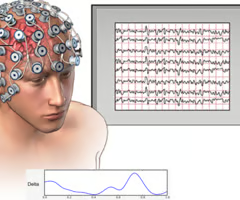
EEG (electroencephalogram)
Measures electrical activity in the brain to study sleep, consciousness and abnormal activity, excellent for tracking timing of brain activity but cannot pinpoint exact locations. Dynamic pictures
EEG Strengths and Limitations
Strengths: non‑invasive, inexpensive, excellent temporal resolution.
Limitations: poor spatial resolution, cannot locate exact brain areas, only measures surface activity
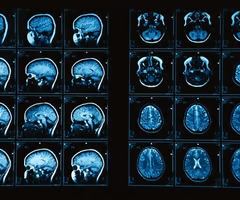
MRI (magnetic resonance imaging)
Produces detailed structural images of the brain without radiation; excellent for detecting tumours and injuries but expensive and unsuitable for people with metal implants. Still.
MRI Strengths and Limitations
Strengths: highly detailed structural images, no radiation, good for detecting tumours and injury.
Limitations: expensive, slow, unsuitable for metal implants or claustrophobic patients.
Developmental Plasticity
Brain changes that occur naturally during growth, including synaptogenesis, pruning and myelination, most active in childhood when learning is rapid.
Adaptive Plasticity
Brain changes in response to experience or injury that support learning or recovery, occurring throughout life but strongest in younger brains.
Proliferation
Rapid creation of new neurons during prenatal development, forming the basic structure needed for later brain growth and functioning.
Migration
Movement of new neurons to their final location in the brain, creating the layered structure of the cortex and enabling organised brain development.
Synaptogenesis
Formation of new synapses that support learning, memory and skill development, especially active in early childhood when experiences shape the brain.
Synaptic Pruning
Removal of unused synapses to strengthen important neural pathways, making the brain more efficient, especially during adolescence.
Myelination
Formation of the myelin sheath around axons to speed up neural transmission, improving thinking speed, coordination and reaction time.
Adolescent Brain Development: Cerebellum, Amygdala, Corpus Callosum, Frontal lobe and pre-frontal cortex
Cerebellum: still maturing, so coordination and reaction time improve. Supports new physical and cognitive skills
Amygdala: more active, leading to strong emotions like anger, fear and excitement. Can result in more impulsive and emotionally driven behaviour
Corpus Callosum: continues developing, so planning, problem solving and multitasking improve
Frontal lobe: still developing so problem solving, planning and judgement are not fully mature
Pre-frontal cortex: last areas to develop so they have weak impulse control and emotional regulation.
Assimilation
Fitting new information into existing schemas when experiences match what we already know, helping us learn without major mental change.
Accommodation
Changing existing schemas to fit new information when experiences don't match current understanding, allowing more accurate thinking.
Equilibrium
Mental balance when schemas match new experiences, making learning feel smooth and stable until new information disrupts it.
Disequilibrium
Mental imbalance when new information doesn't fit schemas, creating confusion that motivates learning and leads to accommodation.
Sensorimotor Stage
Learning through senses and movement; development of object permanence and basic cause‑and‑effect understanding in infants.
Pre‑operational Stage
Egocentrism, animism and symbolic thinking dominate; children struggle with conservation and logical reasoning despite rapid language growth.
Concrete Operational Stage
Logical thinking develops for concrete situations; children understand conservation, classification and reversibility.
Formal Operational Stage
Abstract, hypothetical and scientific thinking develops, allowing reasoning about possibilities, future events and complex problems.
Invisible Displacement Task
Tests object permanence by hiding and moving an object out of sight to see if the child can mentally track its location.
Three Mountains Task
Tests egocentrism by asking children to describe a scene from another person's viewpoint; young children choose their own view instead.
Conservation Tasks
Tests understanding that quantity stays the same despite changes in appearance, showing development of logical thinking in older children.
Pendulum Problem
Tests scientific reasoning by isolating variables to determine what affects pendulum speed, showing abstract thinking in adolescents.
Harlow (1958)
Harlow aimed to test whether attachment is based on food or comfort. He also wanted to understand how early attachment affects later emotional and social development.
Infant rhesus monkeys were separated from their mothers and raised with a wire mother and a cloth mother. Their behaviour toward each surrogate was observed in controlled conditions.
The independent variable was the type of surrogate mother provided (wire with food vs cloth with comfort). This was the condition that Harlow manipulated.
The dependent variable was the monkeys’ attachment behaviour, such as time spent with each mother and who they ran to when scared. Exploration confidence was also measured.
Monkeys consistently preferred the cloth mother, even when the wire mother provided food. They used the cloth mother as a secure base and showed distress without real attachment.
The study proved that comfort and security, not food, are the foundation of attachment. It influenced childcare practices and supported later theories like Bowlby’s.
Bowlby's Attachment Theory
Attachment is innate, forms one main bond and creates an internal working model that shapes future relationships and emotional development.
What is bowlby critical period?
Bowlby proposed a critical period from birth to 2.5 years where an infant must form an attachment. Failure to attach can lead to permanent emotional, social and cognitive difficulties, known as maternal deprivation.
What is bowlby sensitive period?
Later research suggests attachment forms during a sensitive period rather than a strict critical period; attachment is easiest in the first 0-2.5 years but can still form later, though it may be less secure. Negative effects of early deprivation can improve with positive later care, showing more flexibility than Bowlby originally proposed.
Ainsworth Strange Situation
Identified secure, insecure avoidant and insecure resistant attachment based on infant reactions to separation, reunion and caregiver sensitivity.
van Ijzendoorn & Kroonenberg
Meta‑analysis showing secure attachment is most common worldwide but cultural differences exist in avoidant and resistant attachment patterns.
The case of Genie Wiley
- Extreme deprivation for 13 years caused severe language, social and physical delays.
- Had no speech, poor motor skills, no eye contact and could not form attachments.
- After rescue she learned some words but never developed full language.
- Strong evidence for a critical/sensitive period in language and social development.
- Shows long‑term, often irreversible effects of extreme neglect and isolation.
Ethics Committee
A group responsible for approving, monitoring and reviewing psychological research to ensure it meets ethical standards and protects participant welfare.
Protection From Harm
Participants must not experience physical or psychological harm; researchers must minimise risk and stop the study if harm is likely.
Informed Consent
Participants must be fully informed about the nature, purpose and procedures of the study and agree to participate voluntarily.
Withdrawal Rights
Participants can leave the study at any time and withdraw their data without penalty.
Deception
Intentionally withholding information or misleading participants; only permitted when necessary and must be explained during debriefing.
Confidentiality
Participant data must be kept private, stored securely and only reported in a way that does not identify individuals.