Synaptic transmission
 Call Kai
 Learn
Learn Practice Test
 Spaced Repetition
 Match
Match Flashcards
 Knowt Play
1/7

There's no tags or description
Looks like no tags are added yet.
Name | Mastery | Learn | Test | Matching | Spaced | Call with Kai | Chat |
|---|
No analytics yet
Send a link to your students to track their progress
8 Terms
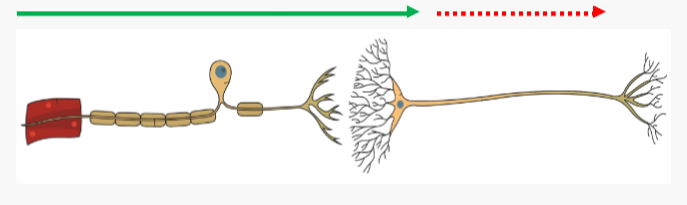
Process: 1
Information is passed down the axon of the neuron as an electrical impulse known as action potential
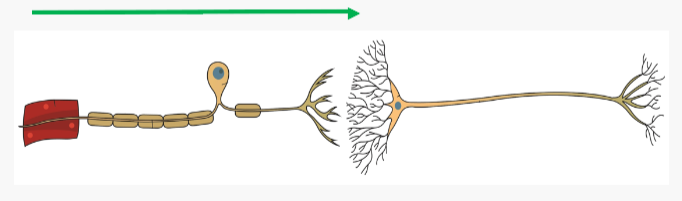
2
Once the action potential reaches the end of the axon, it needs to be transferred to another neuron or tissue, by crossing the synaptic gap
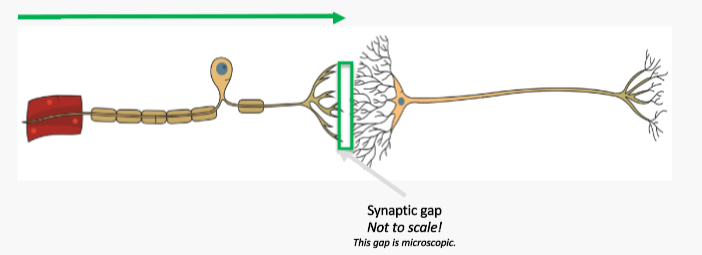
3
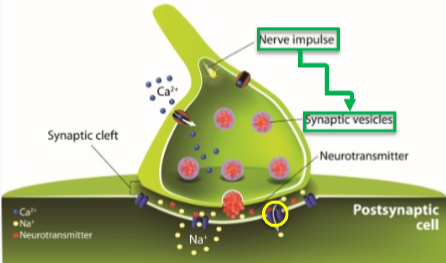
At the end of the neuron are the synaptic vesicles which contain neurotransmitters
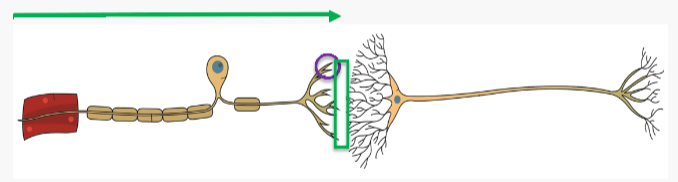
4
The electrical impulse stimulates the release of the neurotransmitters from the synaptic vesicles
5
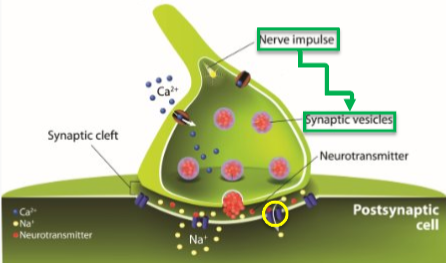
Neurotransmitters then carry the signal across the synaptic gap. They bind to receptor sites on the post synaptic cell which them becomes activated
6
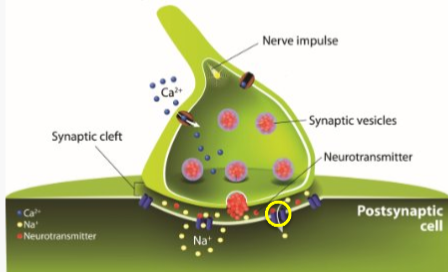
Once the receptors on the post-synaptic neuron have been activated, they either produce excitatory or inhibitory effects on the post-synaptic cell
What do excitatory neurotransmitters do?
Excitatory neurotransmitters (e.g. noradrenaline) make the post synaptic cell more likely to fire
What do inhibitory neurotransmitters do?
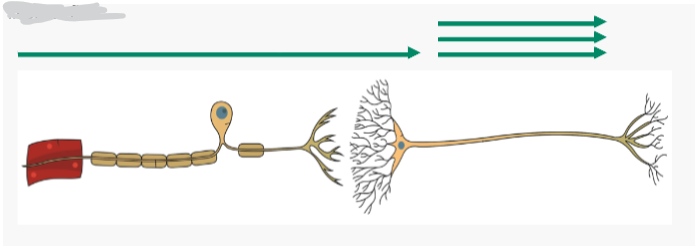
Inhibitory neurotransmiters (e.g. GABA) make them less likely to fire
Summation is the net effect of the Excitatory Postsynaptic Potentials (EPSPs) and IPSPs (adding up the positive and negative charges)