LEC 09: WEATHER & AIR MASSES
 Call Kai
 Learn
Learn Practice Test
 Spaced Repetition
 Match
Match Flashcards
 Knowt Play
1/16

There's no tags or description
Looks like no tags are added yet.
Name | Mastery | Learn | Test | Matching | Spaced | Call with Kai | Chat |
|---|
No analytics yet
Send a link to your students to track their progress
17 Terms
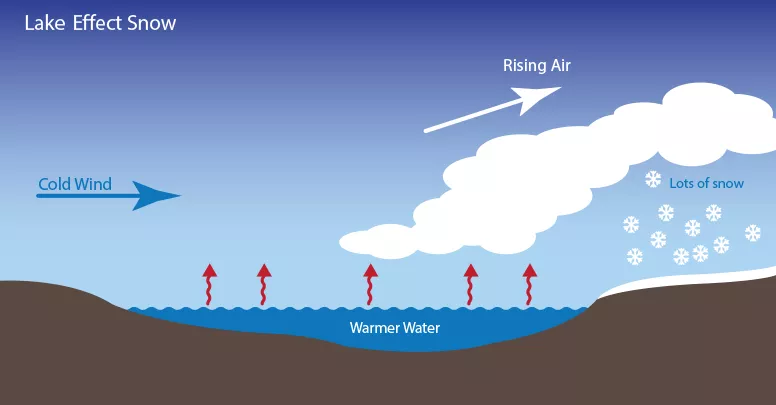
Lake Effect Snow
Air Masses
Air mass picks up moisture & energy from lake, releases snow downwind
Adiabatic Processes
Processes that occur with no net heat exchange between a parcel of air and environment
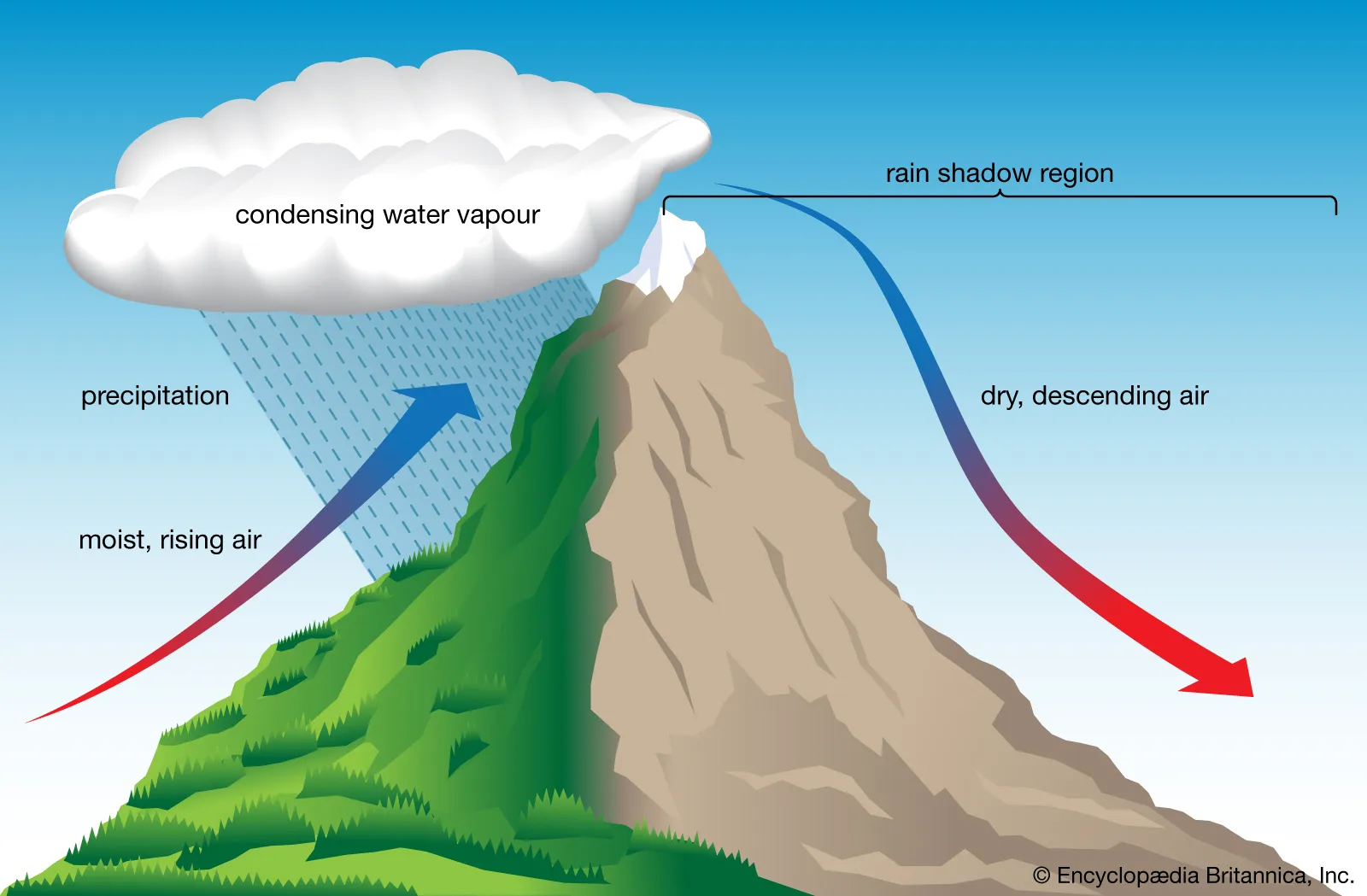
Orographic
Atmospheric Lifting Mechanism
Air masses move laterally, pushed up and over mountain

Windward & Leeward
In the direction of wind flow (mid-latitude western side) heavy rain
away from wind flow, aka. downwind (mid-latitude eastern side) dry

Chinook Winds
Warm and dry winds that flow downslope—adiabatic compression

Convectional
Atmospheric Lifting Mechanism
Surface warms, heats air masses, which rise

Convective Storms
Storms that form when warm, moist air rises → cools, and condenses into clouds, often producing heavy rain, thunder, and lightning.

Convergent
Atmospheric Lifting Mechanism
Air masses converging on low-pressure zone push air upwards.
Important in tropics where temperature differences are small.

Frontal Lifting
Atmospheric Lifting Mechanism
Caused by collisions among air masses
Mainly a mid-latitude phenomenon

Cold Fronts
Advancing cold air quickly lifts warm air
Steep Front
Cold Fronts
Strong precipitation, storms, severe weather
Move relatively fast

Warm Fronts
Advancing warm air slides over cold air
Gradual Lifting
Warm Fronts
Drizzle and overcast skies
Move relatively slow

Rossby Waves
Giant meanders in the jet stream
Caused by upper-atmosphere variations in pressure:
highs (ridges) and lows (troughs)

Mid-latitude Cyclones
Weather systems that are centered on low pressure zone causing surface convergence
Draws in warm air from south and cold air from north (N. Hem.)
Cold and warm fronts rotate around central low

Formation of Tropical Cyclones
Start as a line of mild low pressure (easterly wave)
Air converges on low pressure and rises
Rising air strengthens the low pressure systems and air starts to rotate → cyclone
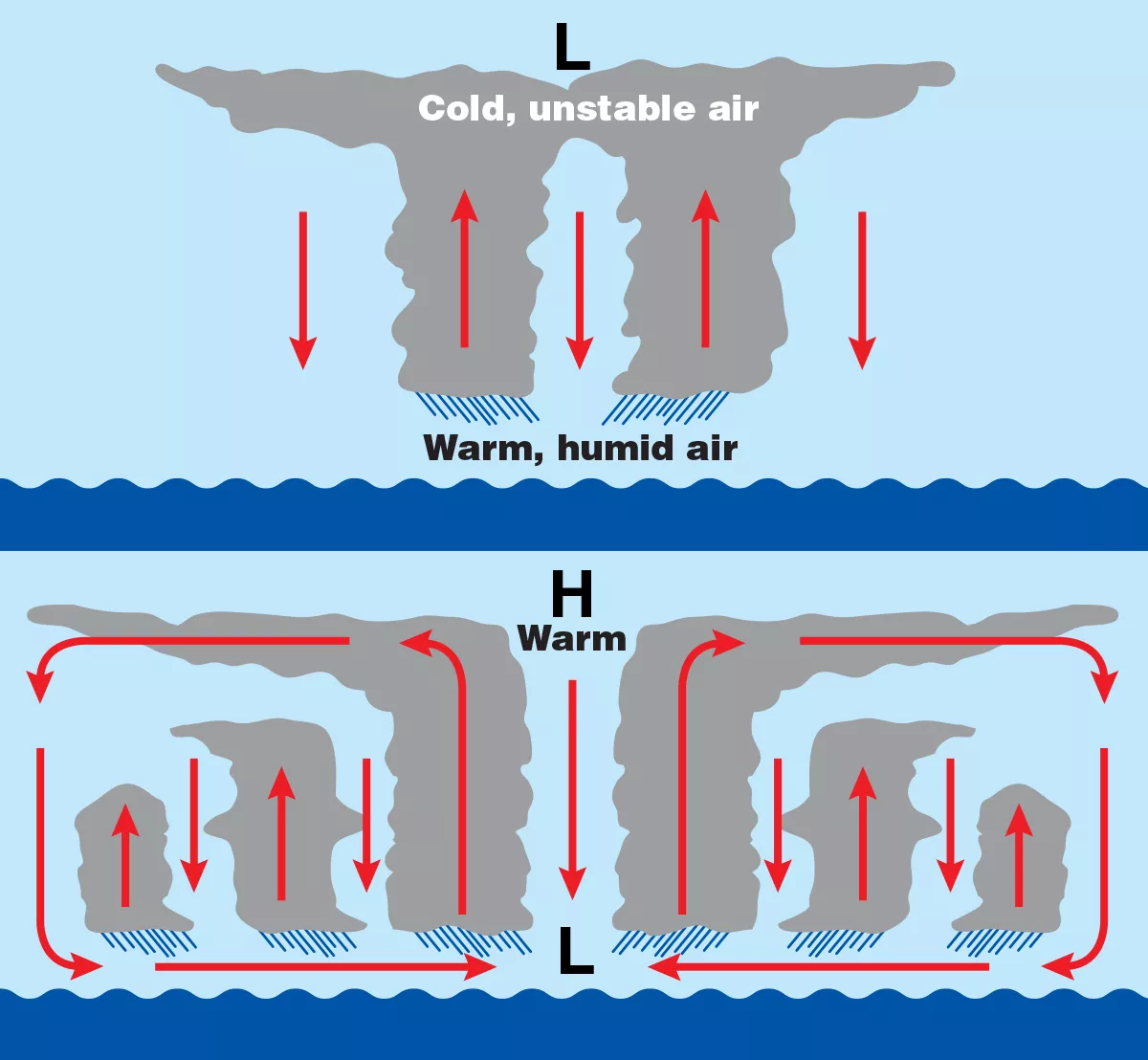
Formation of Hurricanes
1. Warm ocean surface generates convection and vertical movement
2. Moist air condenses and releases latent heat – rain starts
3. Creates warmer buoyant air that continues to rise
4.Rising air causes low-pressure zone at the surface. Winds converge & spiral inwards
5. Continued convection from the warm ocean surface intensifies storm