BIM
 Call Kai
 Learn
 Practice Test
 Spaced Repetition
 Match
 Flashcards
 Knowt Play
1/17

There's no tags or description
Looks like no tags are added yet.
18 Terms
BIM Overview
Tool to estimate changes in health insurance plan’s expenditure after the coverage of a new intervention given available budget and resources
CEA:
evals if drug good is value for money, by estimating incremental cost per unit improvement in health, measures value, long-term to capture all relevant outcomes, perspective can vary (societal is encouraged), outcomes measure = $/QALY or life-yr gained, audience = ALL
BIM
evals drug is affordable, by estimating financial impact of introducing new drug to payer’s formulary, measures affordability, usually short term (1-3 yrs), payer’s perspective, outcome measure = changes in overall budget or change in budget PMPM, audience = health insurance plans and health systems
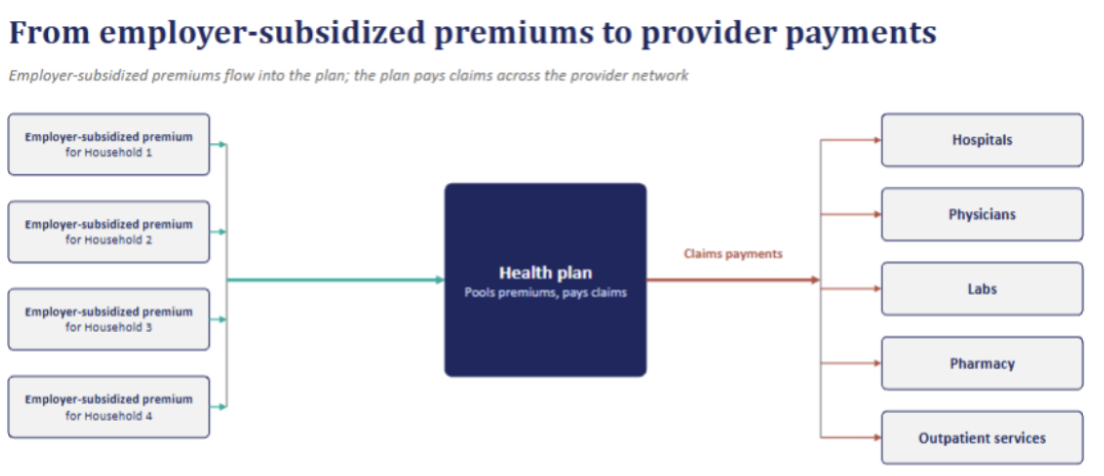
Financial operations of a US health insurance plan:
how a commercial health plan collects monthly premiums and reimburses providers for members’ health care
Look at photo 1
Look at photo 2

How to estimate budget impact
total payer cost with new intervention added to treatment mix - total payer cost with current treatment mix
Advantages of BIM
clear and relatively simple estimates of financial impact, assists with budget planning and resource allocation, short-term focus aligns with some payers’ needs, focuses on direct medical costs which aligns with payers’ perspective
Limitations
: short-term focus may not capture long-term outcomes, does NOT capture full economic implications of treatment, does NOT assess “value”, accuracy relies heavily on quality and accuracy of input data
Components/inputs of BIM:
eligible population (funnel down approach most common, full population covered by payer → exclude pts not eligible for new treatment → pts with disease eligible for new treatment), current and future market mix (how much market share the new treatment will take throughout the yrs; current = treatment pattern studies and market research; future = expected drug uptake rate, market research, expert opinion, manufacturer projections), treatment and disease costs (drug related = acquisition [wholesale acquisition cost (WAC), average sales price (ASP), fixed duration vs maintenance, adherence/dc], drug admin, ADE management, monitoring; disease related = cost of being in current health state, cost of progression, costs of negative outcomes)
Other elements of BIM
model structure (static population = same throughout the yrs; open population = people can join throughout the yrs, more applicable in case of chronic conditions where pts can stay on treatement for multiple yrs and generally more appropriate for payers’ needs;
static model of disease state transition = everything stays the same, dynamic = population quantity changes because something happened like disease progression or death), time horizon (selected by payer planning timelines and outcomes of new treatment), uncertainty analysis
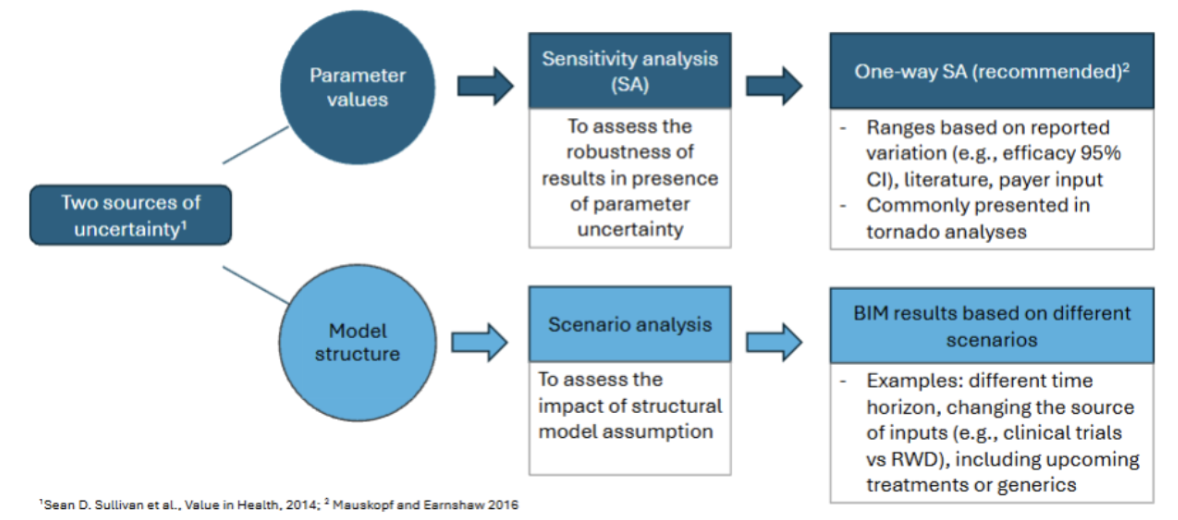
2 sources of uncertainty
ISPOR good practice for BIMs:
be transparent about model structure, data sources, and assumptions; validate model against independent date where possible, make calcs documented and reproducible, test uncertainty (one-way, scenario, threshold analysis)
Common pitfalls of ISPOR practice for BIM
overly optimistic uptake assumptions, ignoring cost oddests, using static population when dynamic one is warranted, little or no sensitivity analysis
Critical appraisal of BIM:
what would you change about this model’s assumptions and why, data sources (are population and cost inputs from credible cited sources), assumption transparency (are uptake, cost, and offset assumptions clearly disclosed), funding and sponsorship (who funded study and could that shape key assumptions), sensitivity analysis (were alt scenarios and thresholds tested)
PMPM = net budget impact/ (plan members x months)
Drug cost drives incr and slower progression trims other med and rx spending, longer horizons may show larger offsets
Checking accuracy of assumptions (ex case):
difficult to get data from individual health insurance plans, timing of coverage may differ by individual health insurance plans, Madrigal Pharma is US-based publicly traded company with only one product and only US revenue, we can apply assumptions to the US population and compare to Madrigal reported numbers
Key considerations for BIM:
ID eligible pts for new treatment, treatment uptake assumptions and (if relevant) any change in market share of treatments in the first 3 yrs, estimating treatment costs and any possible cost offsets, understanding decisionmalers perspective and what is relevant to them