Neurological disease in small mammals and exotic species
 Call Kai
 Learn
 Practice Test
 Spaced Repetition
 Match
 Flashcards
 Knowt Play
1/89

There's no tags or description
Looks like no tags are added yet.
90 Terms
What are the clinical signs of neurological disease in small mammals?
§Exophthalmos
§Ocular discharge
§Mydriasis
§Nystagmus
§Urinary incontinence
§Loss of anal tone
§Faecal impaction
§Head tilt
§Weakness
§Paresis
§Swaying
§Tremor
§Seizures
§Circling
What are the clinical signs of neurological disease in reptiles?
§Loss of righting reflex
§Loss of withdrawal reflexes→ repeatedly
§Loss of cloacal tone
§Limb paresis (hind most common)
§Reduced grip (snakes)
§Generalised or localised weakness
§Tremors and convulsions
§Blindness
§Circling
§Head tilt
What are the clinical signs of neurological disease in birds?
§Loss of withdrawal reflexes
§Loss of cloacal tone
§Limb paresis
§Reduced foot grip→ can be using wings or beak to help keep on perch
§Generalised weakness
§Tremors and convulsions
§Circling
§Head tilt
What are the differential diagnoses in small animals for neurological disease?- infectious
§Viruses e.g. herpes virus (encephalitis)
§Fungal e.g. encephalitozoon cuniculi
§Bacterial e.g. bacterial otitis media/interna, spinal abscess
§Parasitic e.g. toxoplasmosis
What are the differential diagnoses in small animals for neurological disease?- degenerative
§Degenerative e.g. spondylosis, osteoarthritis, intervertebral disc protrusion
What are the differential diagnoses in small animals for neurological disease?- trauma/ toxic
§Trauma e.g. Vertebral fracture/luxation
§Toxicity e.g. antibiotic (aminoglycosides), lead, Fipronil, Pyrethrin/permethrin.
What are the differential diagnoses in small animals for neurological disease?- husbandry
§Husbandry e.g. Hypovitaminosis A, Heat stroke
What are the differential diagnoses in small animals for neurological disease?- metabolic
§Metabolic e.g. Azotaemia, Electrolyte imbalance, Pregnancy toxaemia, Hypocalcaemia
What are the differential diagnoses in small animals for neurological disease?- other
§Other e.g. neoplasia, rat pituitary gland adenoma, peripheral and central vestibular disease, cerebrovascular accident, splay leg, Hypoxia, Idiopathic epilepsy.
What is DAMNITV?
D-degenerative (spondylosis, oesteroarthritis)
A-anomalous (splay leg)
M-metabolic (heart stroke, azotaemia, electrical imbalance, pregnancy toxaemia and hypocalcaemia)
N-neoplastic (rat pituitary gland adenoma)/nutritional (hypovitaminosis A)
I-inflammatory, idiopathic, immune-mediated, infectious (herpes virus, bacterial otitis, toxoplasmosis, encephalitozoon cuniculi)
T-traumatic (vertebral fracture/luxation), toxicity (lead, antibiotic-aminoglycosides, fipronil, pyrethrin/permethrin)
V-vascular (cerebrovascular accident)
What are the two types of vestibular disease?
-central vestibular disease
-peripheral vestibular disease
Describe central vestibular disease
§Nystagmus (vertical or horizontal).
§No horner's or facial nerve paralysis.
§Can show other CNS signs
Describe peripheral vestibular disease
§Nystagmus (horizontal, fast away from lesion).
§Can show horner's or facial nerve paralysis.
§Does not show any other CNS signs.
What are the differential diagnoses for central vestibular disease?
E.cuniculi, toxoplasma, neoplasia
What are the differential diagnoses for peripheral vestibular disease?
Otitis media (e.g. caused by Pasteurella or S. aureus).
Describe approach to otitis media
-ALWAYS CHECK RABBIT EARS!
§Inner ear infection. Infection penetrates through the tympanic membrane, progression from otitis external.
§Causes ataxia, circling, head tilt.
§Pray animals so hide the pain of otitis externa.
what breed of rabbit is prone to otitis media
lop eared
bc cartilage is smaller
down position means ears cant drain and ventilate etc
why palp base of rabbit ears
prone Aural base abscess
can be not infected yet → push out to releive → if left → abscess
-lop rabbits are predisposed so always palpate base of ears and look with scope

Describe encephalitozoon caniculi
§Obligate, spore-forming, intracellular microorganism belonging to phylum Microsporidia.
- Spread in rabbit urine mostly.
§Over 50% healthy rabbits are carriers and depends on immune system whether clinical signs occur. Immune system destroys tissue around funngi and not fungi itself.
§Clinical signs are due to inflammation→ destroys the healthy tissue around the fungi
-clinical signs are split into CNS damage and kidney damage
Describe E.caniculi clinical symptoma
Kidney damage→ usually first
PU/PD
Weight loss
Anorexia
Cataracts and uveitis
CNS damage:
Hind limb paralysis/weakness
Torticollis (head tilt)
Urinary incontinence
Tremors
What is the pathogenesis of E.caniculi?
-pathogen is ingested in contaminated food/water
-pathogen moves via the blood stream into the kidneys and so the pathogen is intermittently passed in urine
-pathogen then moves into the spine causing hindlimb paresis
-pathogen moves up spine to the brain causing a head tilt
Describe muscular weakness - floppy bunny syndrome
§Generalised flaccid paralysis BUT the rabbit is often still very alert with a good appetite, no pain
§Exact cause unknown.
treatment for floppy bunny syndrome
Majority of rabbits recover within 3-4 days with supportive care
Describe rabbit fipronil toxicity
-From Fipronil products such as Frontline spot on for cats and dogs
-can be few days after exposure
-Fipronil blocks GABA receptors in the CNS → stops chloride ion uptake → excessive CNS stimulation and death
Fipronil toxicity clinical signs in rab
§Seizures
§Tremors
§Hyperactivity
§Diarrhoea
§Hypersalivation
§Hypothermia
§Death
What are the differential diagnoses for reptile neurological disease?- infectious
§Viruses e.g. inclusion body disease, ophidian paramyxovirus, adenovirus.
§Fungal e.g. cryptococcus neoformans
§Bacterial e.g. bacterial meningoencephalitis, spinal osteoarthropathy.
§Parasitic e.g. Acanthamoebic meningoencephalitis,
What are the differential diagnoses for reptile neurological disease?- degenerative
§Degenerative e.g. osteoarthritis
What are the differential diagnoses for reptile neurological disease?- truama/ toxin
§Trauma e.g. spinal fracture or compression.
§Toxicity e.g. organophosphate toxicity, cedar shavings, drug reaction (ivermectin, metronidazole)
What are the differential diagnoses for reptile neurological disease?- hunsbandry
§Husbandry e.g. exposure to freezing temperatures, thiamine deficiency, vitamin B deficiency, hypocalcaemia, metabolic bone disease caused spinal fractures
What are the differential diagnoses for reptile neurological disease?- metabolic
§Metabolic e.g. Gout due to kidney disease
What are the differential diagnoses for reptile neurological disease?- other
§Other e.g. egg binding, bladder stones → press on n in hl
Reptile DAMNITV:
§Degenerative e.g. osteoarthritis
§Anomalous e.g. egg binding
§Metabolic e.g. Gout due to kidney disease
§Neoplastic e.g. Spinal tumour
§Nutritional e.g. thiamine deficiency, vitamin B deficiency, hypocalcaemia, metabolic bone disease caused spinal fractures
§Inflammatory, Immune mediated & Infectious e.g. Inclusion body disease (IBD), ophidian paramyxovirus, adenovirus, cryptococcus neoformans, bacterial meningoencephalitis, Acanthamoebic meningoencephalitis,
§Toxic e.g. organophosphate toxicity, cedar shavings, drug reaction (ivermectin, metronidazole,)
§Traumatic e.g. spinal fracture or compression.
§Vascular e.g. exposure to freezing temperatures
List some reptile viruses of neurological disease
§Inclusion body disease (snakes)
§Ophidian Paramyxovirus (snakes)
§Adenovirus (any reptile, mostly bearded dragons)
Describe inclusion body disease
-arenavirus effecting snakes is spread by ectoparasite mites
-BOAS= regurgitation, slow wasting and neurological signs
-Pythons =more rapid and acute death
What are the neurological signs of IBD?
§Head tremor
§Uneven pupils
§Muscle spasms (head can arch backward AKA stargazing)
§Lethargy
§Reduced mental activity
§Poor righting reflex
§Reduced muscle tone
§Constipation
What is adenovirus?
-affects beareded dragons but usually juveniles
-causes anorexia, diarrhoa/wasting and neurological signs
What are the adenovirus neurological signs?
§Stargazing
§Twitching/seizures
§'poor doer'
§Secondary infections (e.g. resp)
What is ophidian paramyxovirus?
§This virus has very similar neurological clinical signs to IBD.
§However unlike IBD, it causes mainly respiratory sign, not gastrointestinal signs,
What are the common reptile drug toxicities?
-ivermectin
-metronidazole
Describe ivermectin toxicity
§Can cause depression, paralysis, and death in chelonia.
§Sensitives reported in other reptile species.
Describe metronidazole toxicity
§High doses (>100 mg/kg) can cause vestibular disease (head tilt, circling, and disequilibrium).
§With supportive treatment can recover.
§Particular species are susceptible at lower doses e.g. indigo snakes
antidotoe for ivermectin
gastric lavage
iv lipid emulsion
charcoal
to neutralise effects and remove from git
usually die tho
What are the differential diagnoses for neurological disease in birds?- infectious
§Viruses e.g. Bornavirus (PDD), paramyxovirus, herpes virus, avian influenza, marek’s disease.
§Fungal e.g. isospora serini, aspergillosis, cryptococcus neoformans
§Bacterial e.g. Psittacosis (Chlamydophila), listeria, mycobacteriua.
§Parasitic e.g. toxoplasma
What are the differential diagnoses for neurological disease in birds?- degenerative
§Degenerative e.g. osteoarthritis
What are the differential diagnoses for neurological disease in birds?- husnbandry
§Husbandry e.g. hypocalcaemia, hyperlipidaemia, atherosclerosis, hypovitaminosis B, vitamin E/selenium deficiency
What are the differential diagnoses for neurological disease in birds?- trauma txin
§Trauma e.g. fractured spine, head trauma (fly into things)
§Toxicity e.g. organophosphates, heavy metal toxicity (lead, zinc, copper)
What are the differential diagnoses for neurological disease in birds?- metabolic
§Metabolic e.g. hypoglycaemia, hyperglycaemia hypoca
What are the differential diagnoses for neurological disease in birds?- other
§Other e.g. egg binding, testicular neoplasia, spac occupying lesions in coelomic cavity
DAMNITV in birds
§Degenerative e.g. osteoarthritis
§Anomalous e.g. egg binding,
§Metabolic e.g. hypoglycaemia, hyperglycaemia
§Neoplastic e.g. testicular neoplasia
§Nutritional e.g. hypocalcaemia, hyperlipidaemia, hypovitaminosis B, vitamin E/selenium deficiency
§Inflammatory, Immune mediated & Infectious e.g. Bornavirus (PDD), paramyxovirus, herpes virus, avian influenza, marek’s disease, isospora serini, aspergillosis, cryptococcus neoformans, Psittacosis (Chlamydophila), listeria, mycobacteriua, toxoplasma
§Toxic e.g. organophosphates, heavy metal toxicity (lead, zinc, copper)
§Traumatic e.g. fractured spine, head trauma
§Vascular e.g. atherosclerosis
What viruses in birds causes neurological disease?
§Avian Paramyxovirus: PMV 1 (Newcastle disease NOTIFIABLE), PMV 2 and PMV 3.
§Avian Influenza (NOTIFIABLE).
§Marek’s disease in chickens (herpes virus 1).
What are the clinical signs of mareks disease?
§Tumours (Skin/feathers, liver, spleen, kidney, lung, gonads, heart, muscle)
§Lameness/leg paralysis
§Wing paralysis
§Weight loss/wasting
§Eye changes
older chickens are more resistant

Describe hyperlipidaemia in birds
Clinical signs:
§Obesity/overweight
§Tremors/seizures
§Weakness
§Signs associated with liver damage e.g. diarrhoea/green faeces
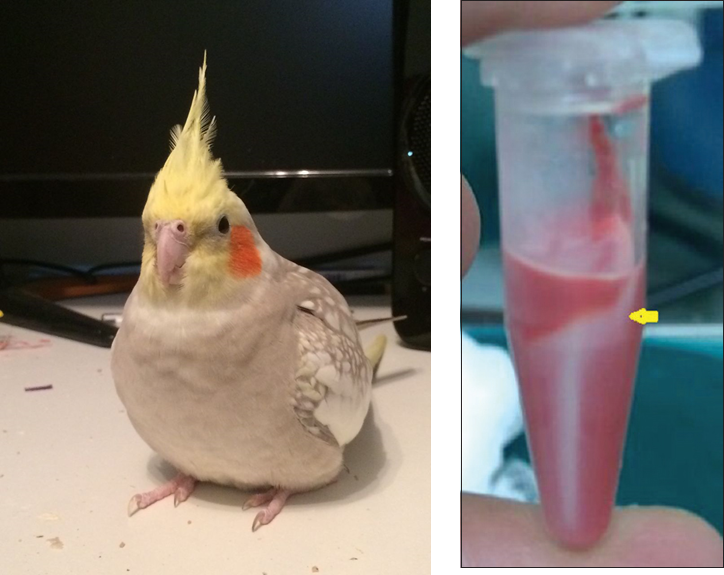
what diet is hyperlipidaemia seen with
-Seen in birds that are fed a poor diet such as parrots on seed diets
How does heavy metal toxicity occur in pet birds vs wildlife birds?
Pets:
Inquisitive parrots swallowing metal toy components, lead based paint, old metal cages, wires etc.
Wildlife:
Waterfowl ingesting fishing gear (lead weights, baits).
Birds of prey eating shot pray (lead shot)
has to eat it not just be shot by it
What are the clinical signs of heavy metal toxicity? (lead)
-Clinical signs affect the GIT, renal, urinary, and CNS:
Regurgitation, lethargy, weakness, anorexia, weight loss, anaemia, polydipsia, diarrhoea, heamoglobinuria.
CNS clinical signs: depression, seizures, head tilt, blindness.
airborne toxicity in birds → is this a cns issue
Airborne toxicities (e.g. teflon) tend to show respiratory signs and sudden death, rather than CNS signs.
When is head trauma seen in birds?
-Wild birds getting hit by a car.
-Birds flying head first into a window or obstacle.
-Falling off perches and hitting their head on something e.g. seizures
Describe head trauma in birds clinical signs
Clinical signs:
§Depressed/stunned
§Blindness (ophthalmic exam)
§Head tilt (not common)

L-normal balck pectin structure in birds eye
R- loss of normal pectin structure as a result of head trauma, shows blood aswell
can be separated apart→ should repair in days
what is pectin in birds eye
pectin supplies blood to the retina
What is psittacosis?
§Cause by bacteria Chlamydia psittaci (Zoonotic!)
§Very contagious, via faeces, urine and respiratory secretions.
§Mild to severe, depending on bird
zoonotic, immunosup people
test via faeces
What are the clinical signs of psittacosis?
§Respiratory (dyspnoea, oculonasal discharge)
§GIT (bright green faeces, regurgitation).
§CNS (tremors, twisting of the head & body).
§Sudden death (especially lovebirds)
What are the pathogen testing options?
§Antibody testing
§Antigen testing
§PCR, ELISA
§Bacteriology (culture and sensitivity)
§Histology
-Samples? blood, urine, swabs, FNA/aspirate, biopsies
What are the diagnostics for otitis media?
-Otoscopic examination
-Ear base palpation
-Imaging (radiographs or CT)

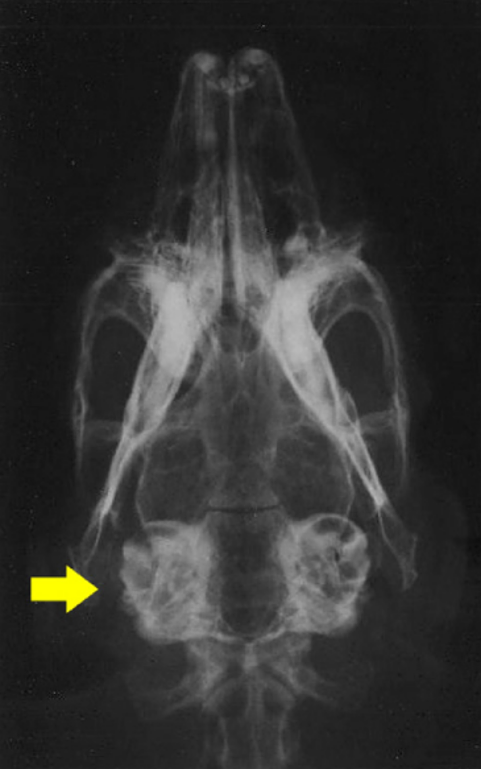
Otitis media
rabbit spinal problems common
Rabbit spinal problems
-kyphosis
-spondylosis

How do we diagnose heavy metal toxicity?
§History plus clinical signs.
§Blood work can make you suspect toxicity
§Radiographs to identify metal in the GIT but absence of metal in the GIT does not rule out toxicity


piece of metal in GI tract causing heavy metal toxicity
how do we diagnose hepatic lipidosis
Bloods:
-Grossly lipaemic if severe.
-Cholesterol, liver values raised
what diagnostics for liver disease
faecal exam→ may be green in birds
imaging: enlarged liver on radiograph
trans illumination in gekos
haem: PCV, wbc, buffy coat for parasites
biochem: total protein and albumin: globulin ratio
in birds what specific biochemical markers can be used for diagnosing liver disease
GLDH
bile acids (ast, ldh)
in reptiles what specific biochemical markers can be used for diagnosing liver disease
non
ldh/alt/alp/ ggt all widely distributed
in rabbits what specific biochemical markers can be used for diagnosing liver disease
ggt more specific than alt and alp
How do we diagnose E.caniculi?
Blood test antibody serology (ELISA):
If exposed in past will have antibodies
IgM (acute) vs IgG (chronic).
Very high levels of both can be diagnostic.
Moderate levels re-test in 4 weeks.
If increased in 4 weeks = diagnostic.
Less common:
Urine antigen test (PCR):
Unreliable as intermittently shed
Used for screening groups.
Histology (kidney PCR):
Post mortem if housed with other rabbits
How do we diagnose mareks disease?
§Presumptive diagnosis on clinical signs and gross post mortem examination.
§Histopathology (brain, eyes, masses/ tumours , sciatic nerve)
§PCR available (price?)
treatment for mareks
no treatment
diagnosis aids prevention tho → buy vacc chickens bc on land for v long time
Other pathogen diagnosis
-Ophidian Paramyxovirus:
-Adenovirus (lizards):
Ophidian Paramyxovirus:
PM histology (lung or brain)
PCR (mouth or cloacal swab)
Adenovirus (lizards):
Clinical signs
PM histology (liver biopsy)
Other pathogen diagnosis
-Psittacosis
-Inclusion body disease
Psittacosis:
PCR (conjunctival/cloacal swab or faeces)
Inclusion body disease:
PM histology (liver, kidney, pancreas samples).
PCR (mouth or cloacal swab).
What are the general treatment principles for neurological disease
§Supportive care e.g. gastrointestinal support, fluids, warmth.
§Remove toxins if possible e.g. wash fur or remove metal from GIT.
§Pain relief if needed.
§Kill/treat the pathogen/infection if possible.
§Euthanasia if poor quality of life or contagious with no cure.
§Consider other animals in the household
§Prevention is better than cure
What is the treatment for otitis external and media?
§Antibiotic ear drops (eye drops to avoid steroid?)
§Analgesia (NSAID)
§Culture and sensitivity (Pasteurella very common)
§Ear flush under sedation if needed (lots of puss/debris)
Aural base ‘abscesses’ can be gently massaged to remove the build up of debris, may require flushing or surgery if not successful
What is the approach for recurrent/non-responsiveness to treatment for rabbit ear infections?
§Partial or total ear canal ablation with lateral bulla osteotomy.
§Risks include facial nerve paralysis and vestibular disease.

What is the treatment for E.caniculi?
-Treatment eases symptoms by reducing inflammation, but does not reverse damage already done. The immune response to pathogen is what causes the clinical signs!!
§Biosecurity
§Kill parasites
§Vertigo
§Inflammation
§Gut support
-euthanasia if severe signs do not respond to treatment in a week but some live happily with slight head tilt
how treat vertigo and inflam for e cuniculi
§Vertigo: Prochlorperazine, darkness, support with rolled up towels
§Inflammation: NSAIDS/Short acting steroids
steroids last resort
biosecurity and how kill e.cuniculi
Biosecurity: (Isolate, disinfect environment so F10 and bleach)
§Kill parasites: (Fenbendazole 20mg/kg PO SID for 28 days)
What is the E.caniculi prevention
-Quarantine new rabbits and treat with fenbendazole.
-Regular worming with fenbendazole has No residue effects so wont prevent
-try and avoid pathogen
What is the treatment for hepatic lipidosis?
§Diet changes SLOWLY over 6 months
they will stop eating with sudden changes in diet
starvation causes potentially fatal fat release from the liver into the blood.
crop feeding if really need to change quickly
§Liver supplements e.g. milk thistle, Hepatosyl, lactulose
How do we treat heavy metal toxicity?
§Supportive treatment e.g. fluids, warmth, crop feeds.
§Calcium EDTA is a commonly used chelating drug (BID until asymptomatic then twice weekly till blood lead levels are in the 'normal' range)
§Remove metal particles form the GIT tract.
Most small particles will pass through in 4‐5 days.
Larger pieces may have to be removed endoscopically or as a last resort, surgically.
How do we treat psittacosis?
Doxycycline - 45 days
How do we treat viruses
No treatments, supportive care and prevention of spread.
Key points on husbundary
§Correct environment and diet
§Avoid access to toxins
§Good biosecurity:
Good hygiene
Keep 'closed' collections
Quarantine and test new animals for the common pathogens e.g. virus', parasites and bacteria (include pathogens from other body systems in this as well e.g. herpes, mycoplasma).
Prevent wildlife from coming into contact with pets.