Chapter 25 Anatomy and Physiology
 Call Kai
 Learn
 Practice Test
 Spaced Repetition
 Match
 Flashcards
 Knowt Play
1/35

Earn XP
Description and Tags
Muscles that Move the Superior Appendages
36 Terms

Identify the yellow-highlighted muscle. State its function.
Pectoralis minor — Protracts and depresses the scapula. Origin: Ribs 3–5. Insertion: scapula.
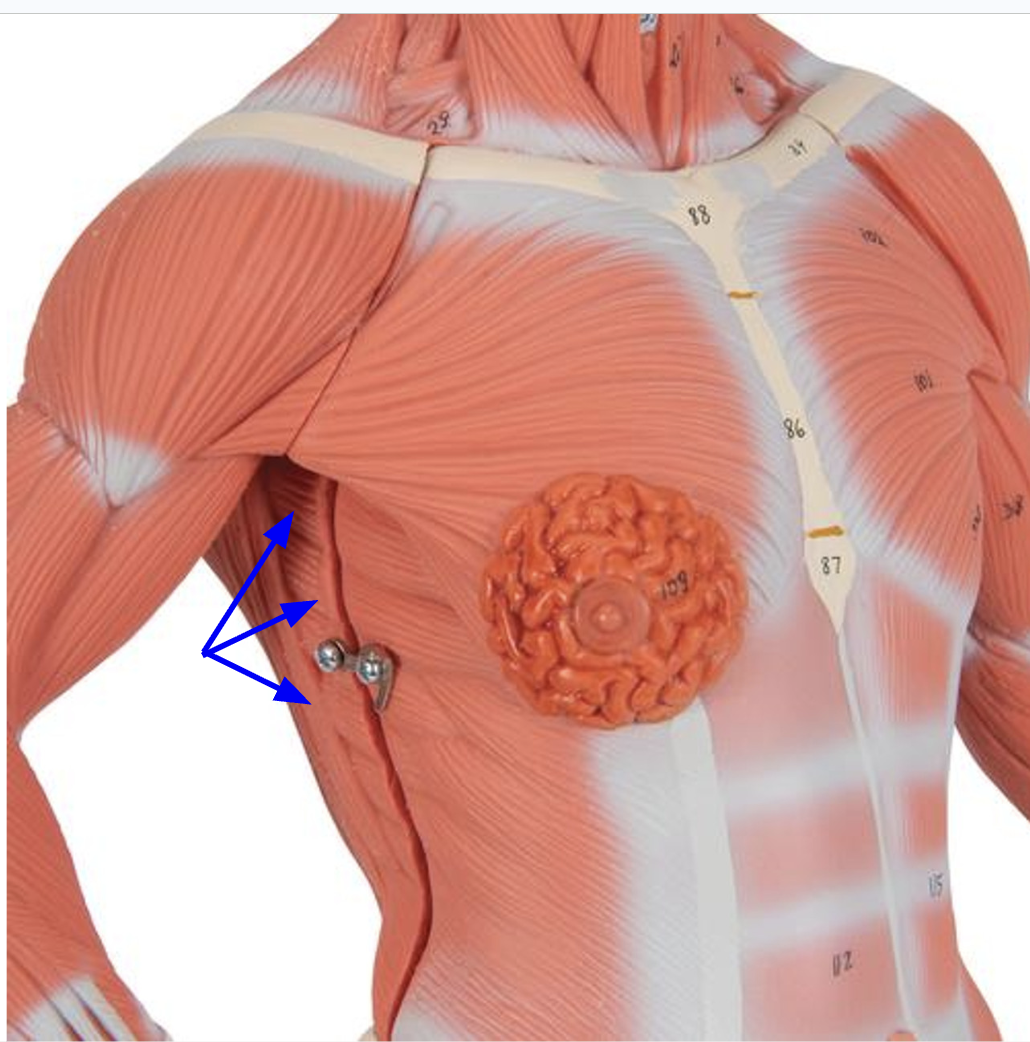
Identify the highlighted muscle indicated by the arrows. State its function.
Serratus anterior — Protracts the scapula.
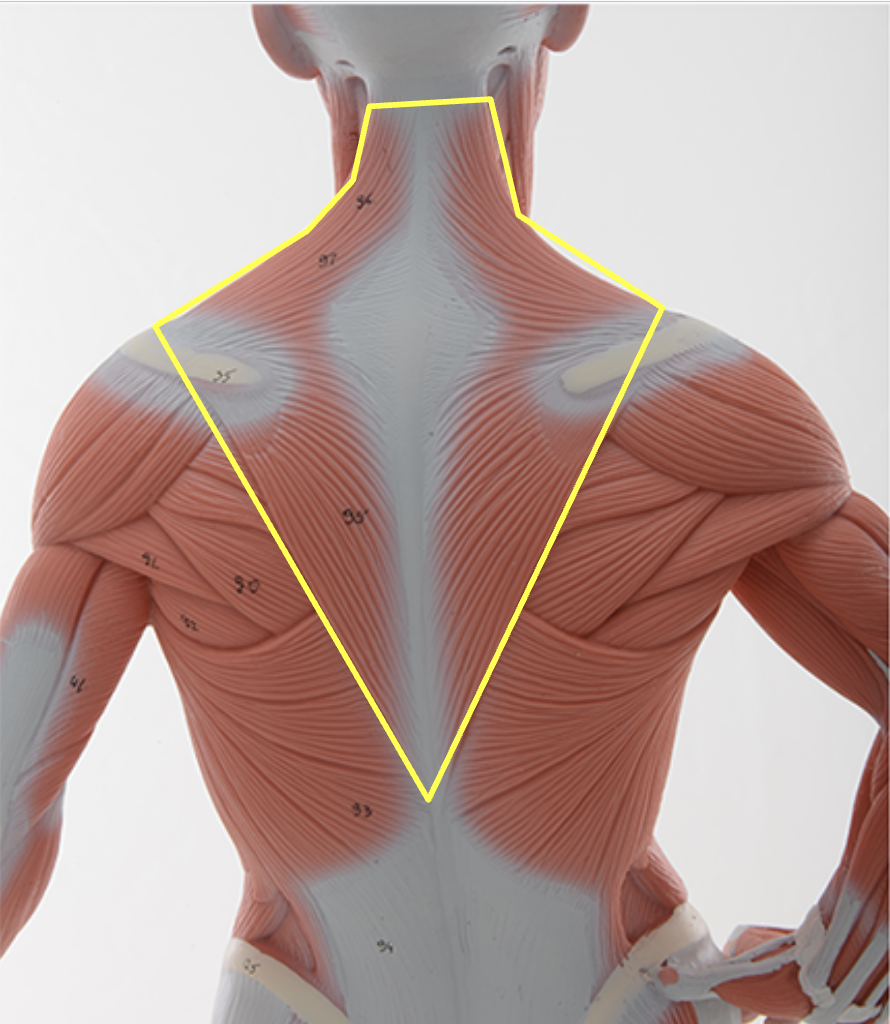
Identify the yellow-highlighted muscle. State the functions of its three fiber groups.
Trapezius — Superior fibers: Elevate scapulae. Middle fibers: Retract scapulae. Inferior fibers: Depress scapulae.

Identify the yellow-highlighted muscle. State its function.
Deltoid — Abducts, flexes, and extends the humerus.
Origin: clavicle, scapula. Insertion: humerus.

Identify the highlighted muscle. State its function.
Subscapularis — Medially rotates the humerus.

Identify the highlighted muscle. State its function.
Infraspinatus — Adducts and laterally rotates the humerus.

Identify the highlighted muscle. State its function.
Supraspinatus — Abducts the humerus.
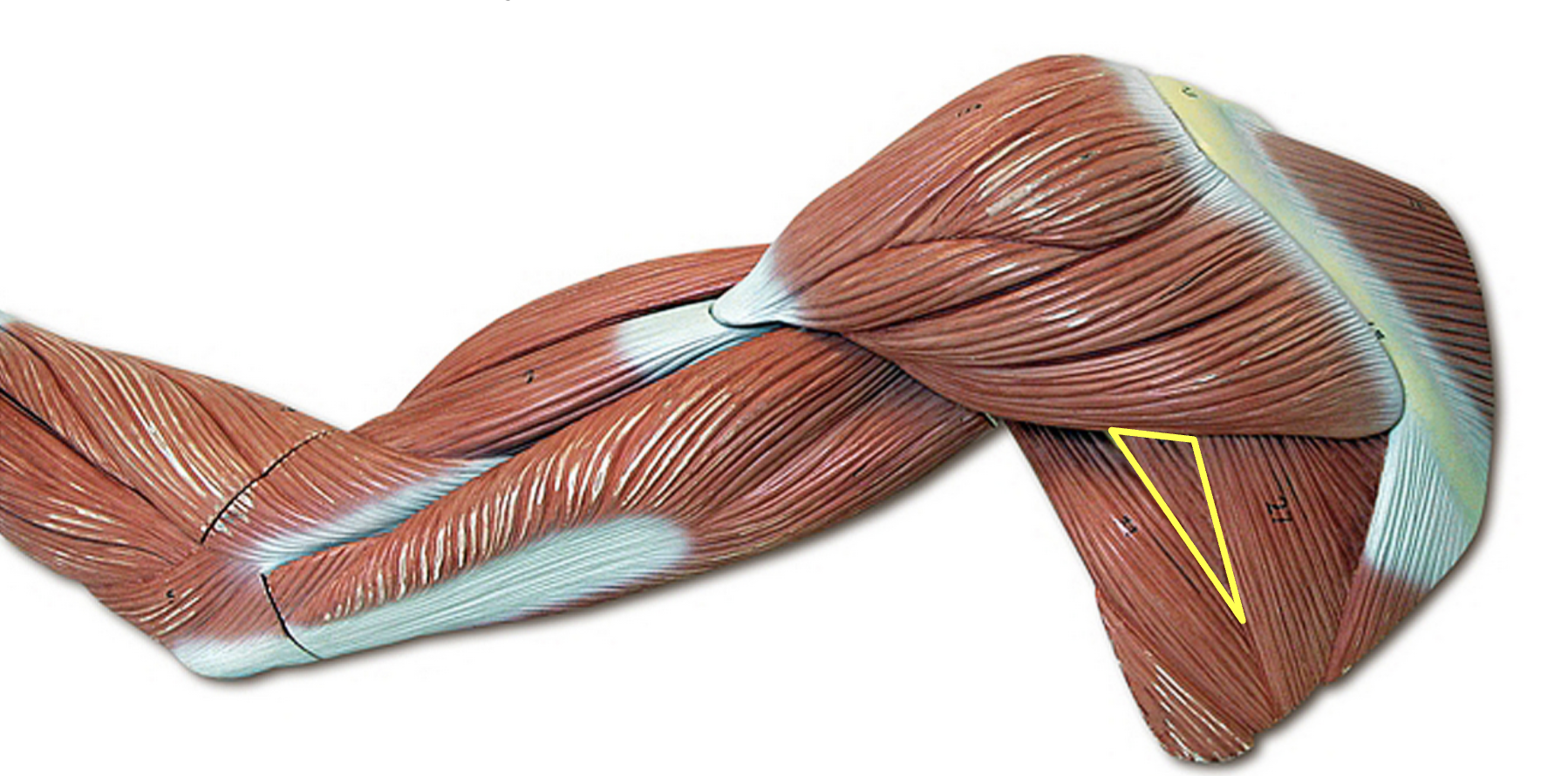
Identify the highlighted muscle. State its function.
Teres minor — Adducts and laterally rotates the humerus.
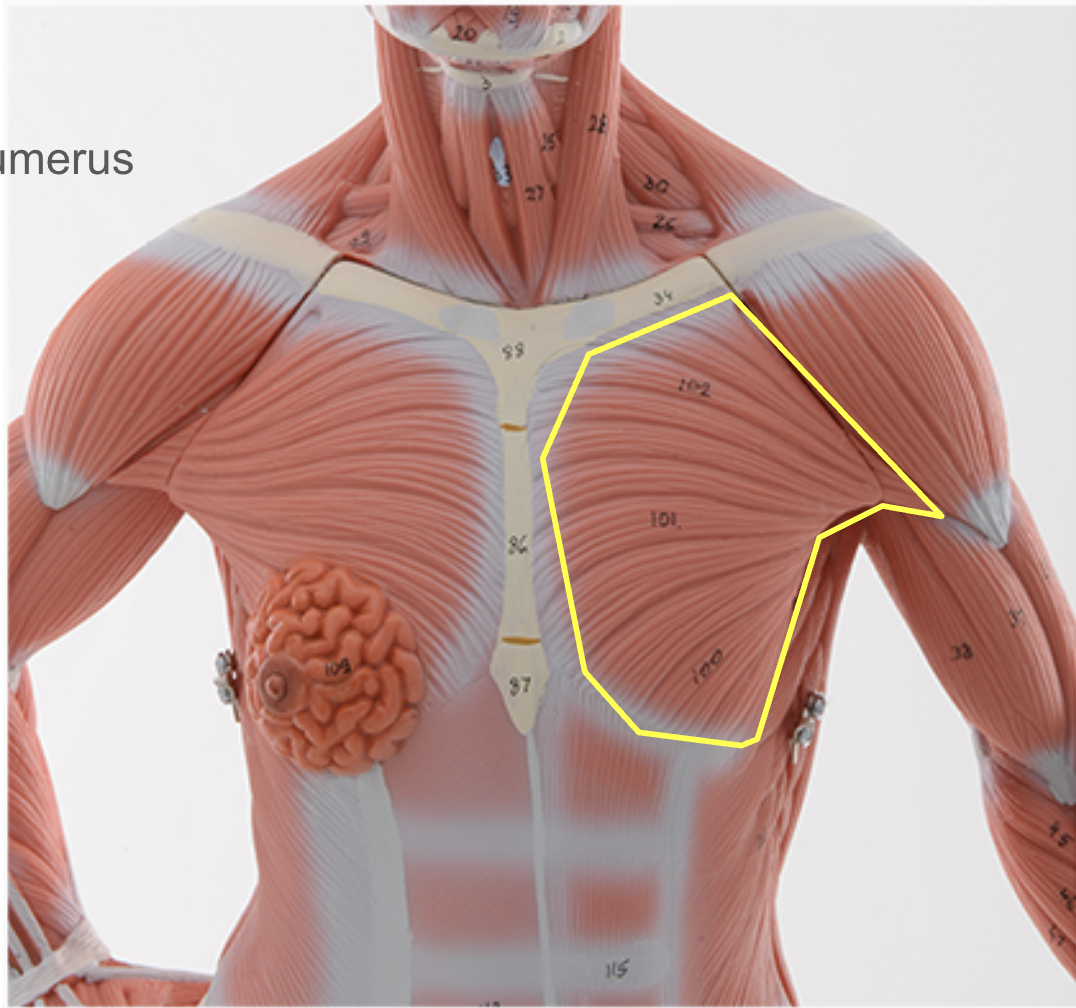
Identify the highlighted muscle. State its function.
Pectoralis major — Flexes and adducts the humerus.

Identify the highlighted muscle. State its function.
Latissimus dorsi — Extends and adducts the humerus.

Identify the highlighted muscle. State its function.
Teres major — Adducts and extends the humerus.
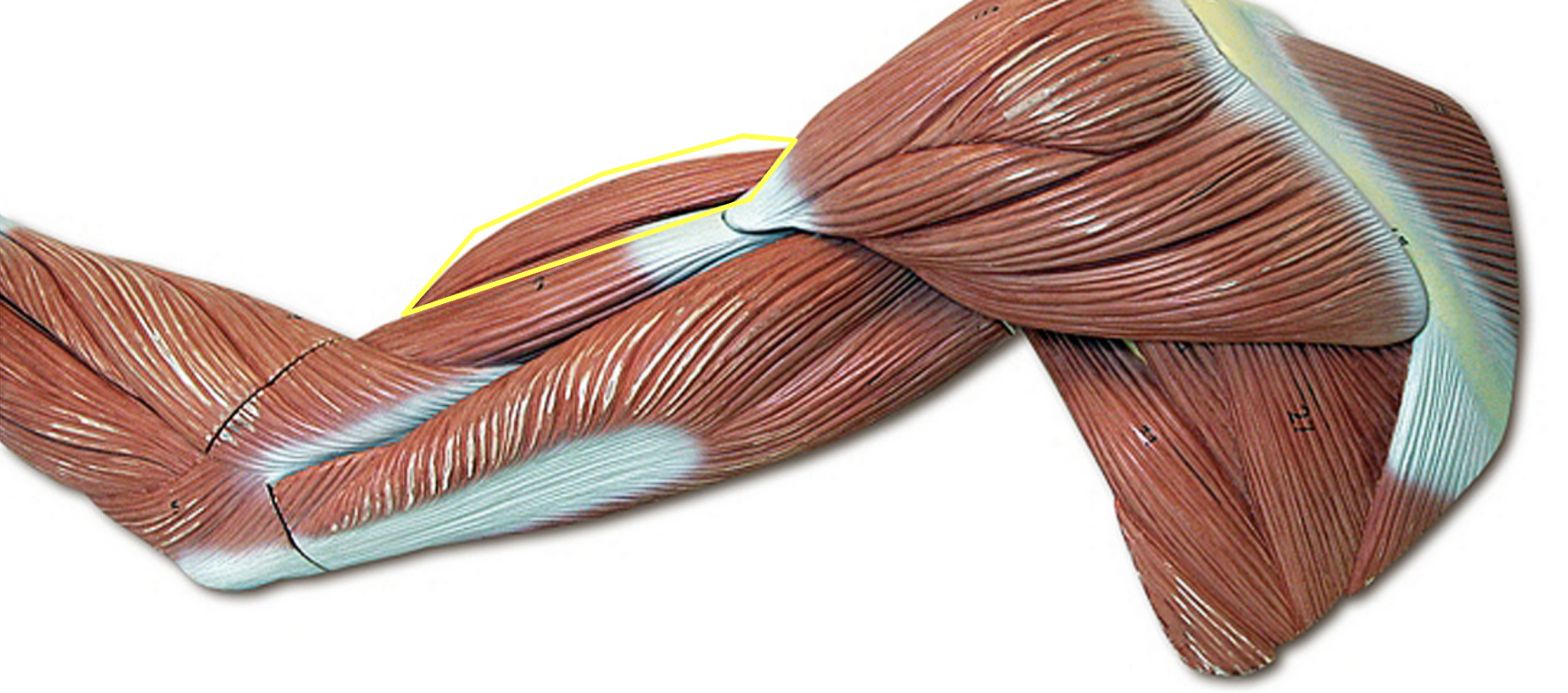
Identify the highlighted muscle. State its function.
Biceps brachii — Flexes the forearm. Origin: Glenoid fossa and coracoid process of scapula. Insertion: Radial tuberosity of radius.

Identify the highlighted muscle. State its function.
Brachialis — Flexes the forearm.

Identify the highlighted muscle. State its function.
Brachioradialis — Flexes the forearm.
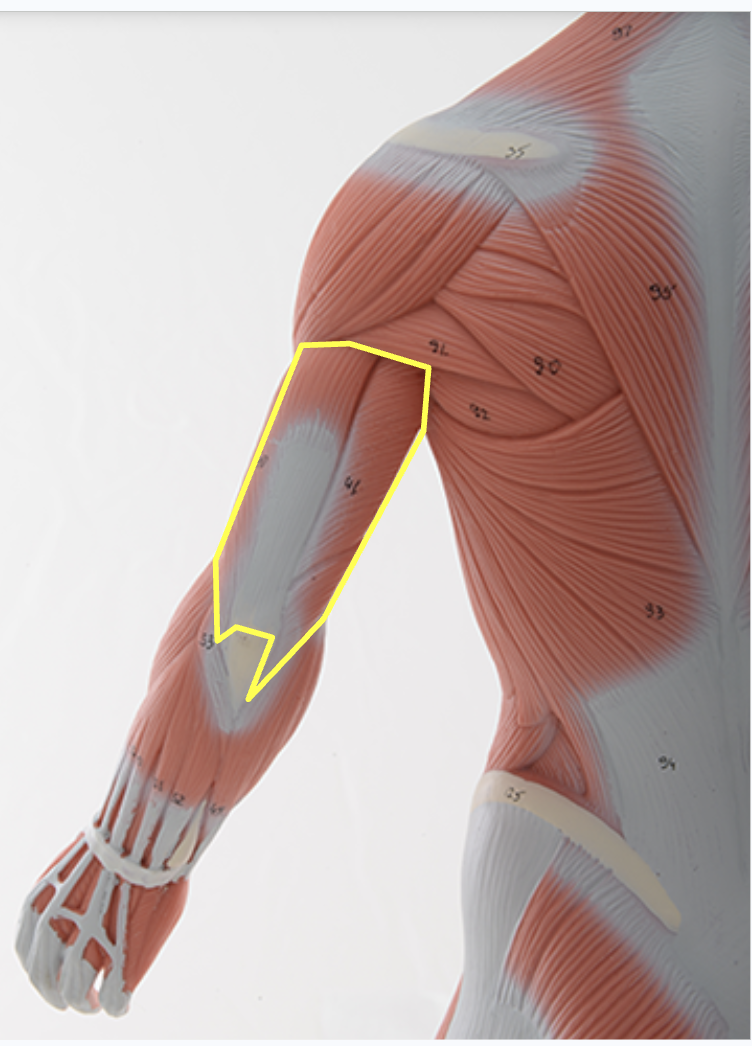
Identify the highlighted muscle. State its function.
Triceps brachii — Extends the forearm. Origin: humerus and scapula. Insertion: ulna.

Identify the highlighted muscle. State its function.
Pronator teres — Pronates the forearm.

Identify the highlighted muscle. State its function.
Supinator — Supinates the forearm.
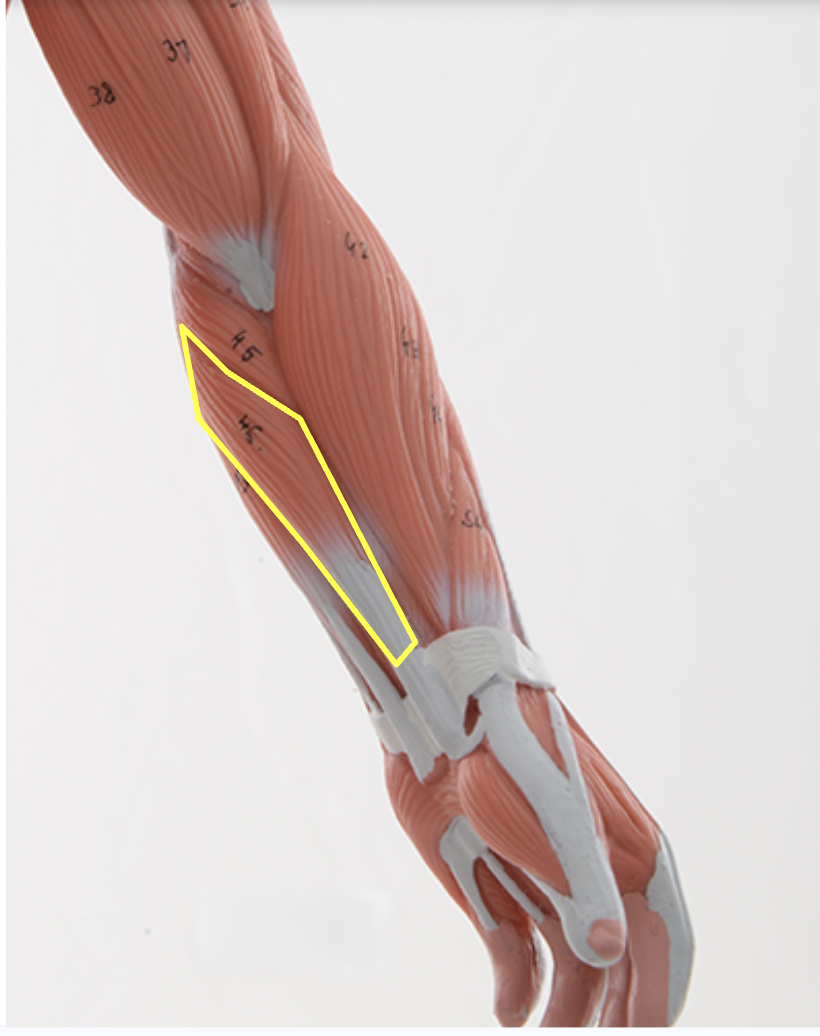
Identify the highlighted muscle. State its function.
Flexor carpi radialis — Flexes and abducts the wrist. Origin: humerus. Insertion: Second and third metacarpals.

Identify the highlighted muscle. State its function.
Flexor carpi ulnaris — Flexes and adducts the wrist.
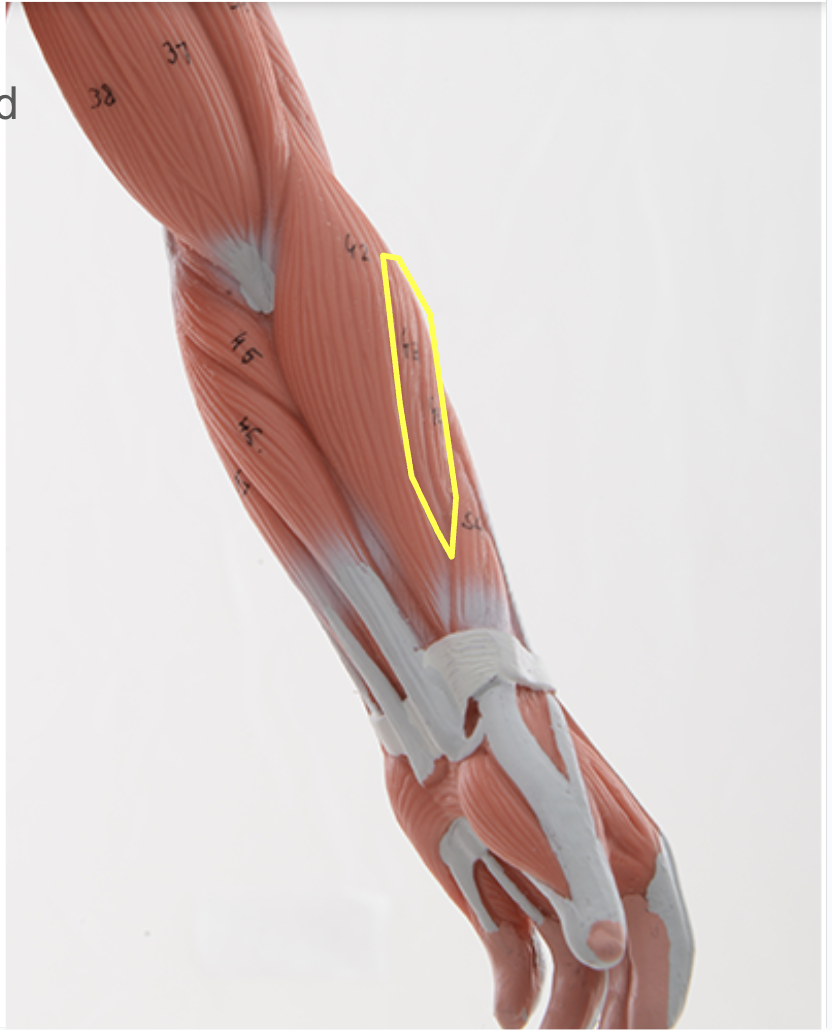
Identify the highlighted muscle. State its function.
Extensor carpi radialis longus — Extends and abducts the wrist.
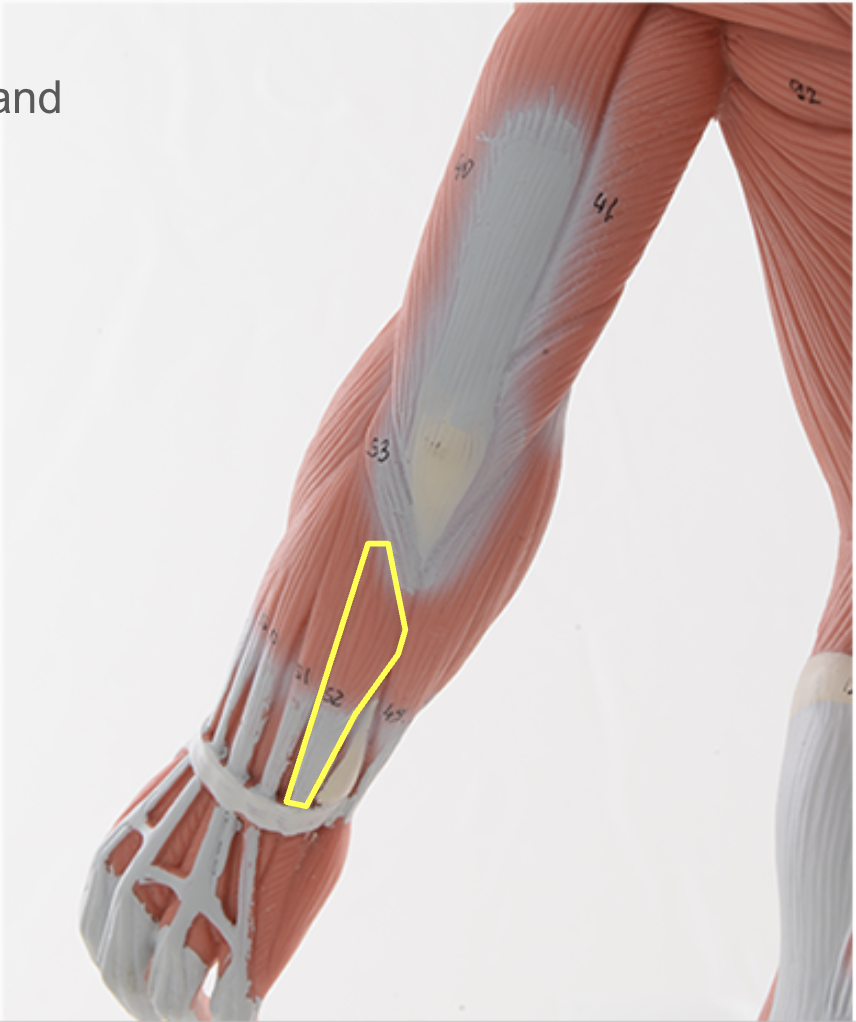
Identify the highlighted muscle. State its function.
Extensor carpi ulnaris — Extends and adducts the wrist.
What connects the upper limb to the axial skeleton?
The pectoral girdle.
What is the difference between elevation and depression?
Elevation moves upward; depression moves downward.
What is the difference between abduction and adduction?
Abduction moves away from the midline; adduction moves toward it.
What is the difference between flexion and extension?
Flexion bends a joint; extension straightens it.
What is the difference between the arm and forearm?
Arm: shoulder to elbow. Forearm: elbow to wrist.
Which two muscles produce opposite forearm movements?
Biceps brachii and triceps brachii.
Which two muscles produce opposite rotational movements of the forearm?
Pronator teres and supinator.
What does brachii refer to in muscle names?
The arm.
Why do biceps brachii and triceps brachii have brachii in their names?
They are muscles located in the arm.
What are the two large superficial muscles visible on the back?
Trapezius and latissimus dorsi.
What four muscles form the rotator cuff?
Supraspinatus, infraspinatus, teres minor, and subscapularis.
What is the purpose of the rotator cuff?
Stabilizes the shoulder joint.
What does the term antagonistic muscles mean?
Muscles that produce opposite movements.
What do the forearm muscles that move the hand control?
Flexion and extension of the wrist and fingers.
What is the glenohumeral joint?
The shoulder joint.