BCSC111 Quiz3
 Call Kai
 Learn
 Practice Test
 Spaced Repetition
 Match
 Flashcards
 Knowt Play
1/41

There's no tags or description
Looks like no tags are added yet.
42 Terms
Episodic memory
personal experience from previous events
Encoding specificity
remember something with related context/events/surroundings
Semantic memory
general knowledge, “timestamp” of events is not needed
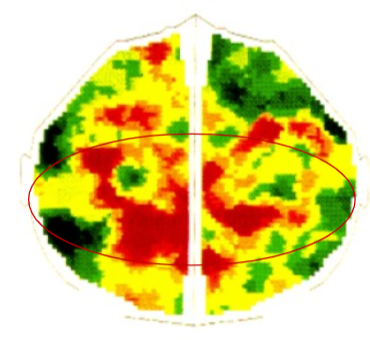
Cerebral blood flow in ______ (stronger central- posterior activity) memory
semantic

Cerebral blood flow in _______ memory (stronger anterior activity)
episodic
Declarative memory
things that can be described (may include both episodic and semantic memory)
Procedural memory
things that are hard to describe (e.g., actions)
Implicit memory
skills/knowledge acquired without being aware of the rules/patterns, Input that’s been stored/processed but can’t be explicitly retrieved (could serve as a “prime” for another subsequent stimulus)
Explicit memory
things that can be consciously recollected
Recoding
Scattered pieces of info (e.g., 9 planets) à meaningful unit (e.g., a sentence)
What components of working memory are involved in mnemonics?
Central executive and phonological loop
Proactive interference
old pairing interferes new, stronger if old pair has stronger connection than new
Retroactive interference
new replaces old
Retroactive interference PLUS (old) information decay
stronger if the old one learned a long time ago
Results supporting the hierarchical model
Slower responses to feature description than category name, Slower responses to features from the top level, Slower responses to category members from the top level
Concreteness of the word
hard to form mental images for abstract concepts
concrete
Activation in parietal lobe for ____ words, image of object in space (the “where” stream)
parietal lobe and premotor cortex
Localization of mental rotation in the brain
Principles of visual imagery
Implicit encoding of features in an object, Perceptual equivalence, Spatial equivalence, Transformational equivalence, Structural equivalence
Perceptual equivalence
imaging an object similar to actually perceiving it
Spatial equivalence
amount of time it takes to mentally scan from A to B is a function of the actual distance A-B in the image
Transformational equivalence
rotating an object similar to rotating a mental image
Structural equivalence
features of imaged object similar to actual obj.
Spatial cognition
knowing where we are, knowing where to go // situated in the context physically and/or mentally
Higher level cognition
language, reasoning, problem solving, decision making
Role of language in cognition
Effective communication, Survival: signaling food
resource and danger, Socialization, Passing down the knowledge, Verbalizing emotions and thoughts
Language and cognitive functions
Labeling of objects – recognition, Categorization, Long-term memory, Working memory – phonological loop
Chomsky views on language
nativism, universal grammar
Skinner views on language
Behaviorism, Reinforcement and conditioning, Stimulus-response, Behavioral studies of verbal behavior
Sapir-Whorf Hypothesis: Linguistic determinism
The form of our language determines our cognition: how we think, remember and perceive
Sapir-Whorf Hypothesis: Linguistic relativism
Some of the cognitive processes (e.g. categorization, description of objects, etc.) can be language-specific
Impact of aphasia on abstract thinking
Reduces performance —> supports relativism
Supplementary gesture
adds info to the verbal info (pointing to an apple while saying “eat”)
Complementary gesture
redundant info (e.g., pointing to an apple while saying “apple”)
Positive
_____ correlation between onset age of supplementary gestures and onset of two-word stage
Under-extension
failure to generalize from one exemplar to others (being too specific)
Over-extension
overgeneralize one label to all other members in the broader category (animal)
working memory deficit
Causes Difficulty following verbal instructions, Difficulty in reading, Delayed vocabulary acquisition, Delayed syntactic acquisition (Esp. due to impaired phonological loop)
Benefits of bilingualism
Metalinguistic awareness: ability to figure out and describe patterns and rules
Better executive control: suppressing influence from L1 while speaking L2
Better performance in cognitive tasks: attention shift/control task → shift between L1 and L2
What can bilingualism tell us about our mind?
Representation of concepts
Competition vs. Facilitation
Perception: e.g., perceive A as B if A is not in L1
Evidence for a unified conceptual representation
think about a concept in two languages