L12: Energy for reproduction
 Call Kai
 Learn
 Practice Test
 Spaced Repetition
 Match
 Flashcards
 Knowt Play
1/27

There's no tags or description
Looks like no tags are added yet.
28 Terms
Energy (and nutrients) for reproduction is required for:
sperm
eggs (mammals and birds)
fetal development
reproductive organs (testes, ovaries, uterus, mammary gland)
milk production
heat production for egg incubation
territorial establishment/defense
courtship
nest/burrow construction
searching for and acquiring food for young

Males – energy/nutrient demands
a) Testicular growth
minimal energy and protein requirements
b) Sperm production
minimal energy and protein requirements
Females – energy/nutrient demands
a) Ovary/oviduct growth
minimal energy and protein requirements
b) Fetal development (gestation)
c) Mammary gland development
d) Milk production (lactation)
DEE of fetal development (gestation) mammals =
2.9 x BMR
Which animals product milk
all mammals (placental, marsupial, monotreme)
DEE of lactating mammals =
5.5 x BMR

Colostrum
The first milk produced during each lactation
Typically, rich in immunoglobulins
Provides passive immunity to the neonate
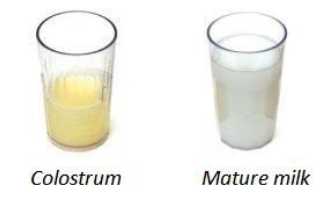
How is colostrum transferred through passive immunity
Maternal immunity can be passed to the fetus in colostrum only for as long as the GIT is permeable to Ig absorption
Ungulates = upwards of 36 hours
Marsupials = upwards of 200 days
Taurine in colostrum
essential AA for felids, critical during neonatal stages
very high levels in felid colostrum > 5 days

Nutrient concentration in rhinos vs seals
Water: Dilute (90%) in rhinos, concentrated (40%) in seals
Protein: Low (<2%) in rhinos, high (>10%) in seals
Fat: Low (<2%) in rhinos, high (>40%) in seals
Sugar (soluble CHO): high (>5%) in rhinos, low (<1%) in seals
Milk in seals
Fat/protein/energy concentrated milk
maternal diet is primarily protein (e.g. fish)
may compensate for rapid rates of heat loss
accommodates extremely short lactation
may be adaptive for breeding/birthing on unstable pack ice
Lactation in hooded seals
4-day lactation (pup can grow upwards of 30 kg
Milk in marsupials
Milk production and composition changes between periods
Period 1 = young are confined to the pouch
Period 2 = you can leave the pouch

Milk composition in marsupials (Period 1 vs. Period 2)

Types of milk intake by neonates
Hiders
mother returns to hidden neonate periodically to nurse
young nurse infrequently, but drink lots each time
Followers
young follows mother around and is constantly nursing
young nurse frequently, drink small amounts each time
Nutrient requirements for egg production in birds depends on:
Clutch size
varies with age, food availability; younger and less food lay fewer
Egg size
varies with age, food availability, and is inversely proportionate to body weight; younger and less food lay smaller eggs, and smaller birds lay larger eggs relative to BW
Egg composition
varies with stage of development at hatching: altricial vs precocial
Altricial species and examples
young show marked delay in becoming independent
young hatched/born naked (and afraid), blind, immobile
e.g. robins, crows, rats, mice, humans)
Precocial species
young show high degree of independence from birth/hatch
young born/hatched with plumage/pelage, well-sighted, mobile
e.g. chickens, ducks, deer)

Egg composition in precocial species
Yolk size is larger
Yolk = ~40% of egg weight for precocial species
Yolk = ~20% of egg weight for altricial species
Egg production in precocial birds
Precocial birds tend to lay fewer, larger eggs than altricial ones
1 egg = ~150% of BMR for precocial species
1 egg = ~30% of BMR for altricial species
To meet energy/nutrient requirements for egg laying in birds, it requires:
fat deposition prior to egg laying
mobilizing body fat and protein (lean mass) when laying
increase food intake
diet shift to nutrient-rich foods (e.g. insects)
Incubation and its purpose
Maternal/paternal heat is needed to:
initiate embryonic development in the egg
ensure development continues appropriately

Amount of heat required for incubation depends on:
clutch size
nest insulation
body weight of adult
ambient air temperature
Incubation affect on parents
adult incubating eggs has less time to feed
both parents may share the incubation (other brings food)
one parent may do all the incubating (rely on fat stores)
Lactation in birds
Eesophageal/crop secretions fed to hatchlings
sloughed epithelial cells (rich in fat/protein)
may be fed as only source of food for first 3-5 days
gradually mixed with solid food over 3-4 weeks
Energy for reproduction in reptiles and amphibians is required for:
Energy required for reproductive behaviours (e.g. courtship or nesting) and egg, follicle, and sperm development
Most reptiles breed seasonally, so they need to build up energy stores prior to reproduction
Especially important: many female reptile (including viviparous and oviparous) species will reduce food intake during certain periods of reproduction
Reproductive costs for female reptiles
Survival
Can be reduced due to behavioural changes: more basking
Increased basking associated with higher predation risk but may be needed due to increased body mass, temperature for embryonic development, compensation for reduced motility
Can also include reduced motility overall and energy depletion of reserves
Energy Allocation
Can be “expensive” for the animal especially if food intake is reduced
In most reptiles fecundity is body size dependent
Energy allocated to reproduction rather than growth may depress fecundity during later reproductive seasons
Reproduction classification in reptiles and amphibians
Viviparous
birth of live young developed within the body of the parent
Oviparous
young are hatched from eggs
