bone practical
 Call Kai
 Learn
 Practice Test
 Spaced Repetition
 Match
 Flashcards
 Knowt Play
1/113

There's no tags or description
Looks like no tags are added yet.
114 Terms

frontal bone

anterior cranial fossa
depression in skull formed by frontal ethmoid and sphenoid bone
houses frontal lobe of brain

frontal suture

frontal sinus

supraorbital foramina/ notches

supraorbital margins/ridges

parietal bone

lambdoid suture

Sagittal suture

squamous suture

temporal bone
protects the internal ear
attachment for muscles of the jaw and head

carotid canal

internal auditory meatus ; VII facial nerve, VIII vestibulocochlear nerve

external auditory meatus

jugular foramen
internal jugular vein

mandibular fossa

mastoid process
for muscle attachment
contains mastoid air cells which connect to ear cavity

petrous portion
encloses structure of internal ear

styloid process
attaches tendons and ligaments of the hyoid, tongue, and pharynx

stylomastoid foramen; VII facial nerve

squamous portion

temporal fossa
temporalis muscle attachment

zygomatic process

occipital bone
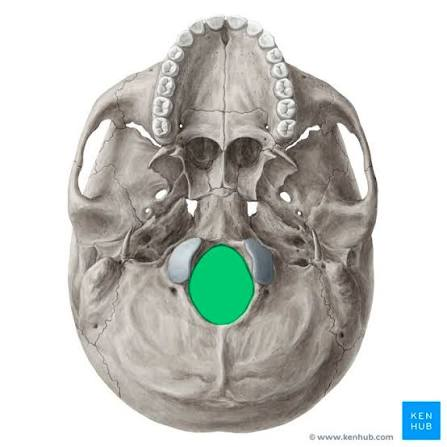
foramen magnum; spinal cord
connects cranial cavity with vertebral canal
surrounds connection between brain and spinal cord

hypoglossal canal; XII Hypoglossal nerve

jugular foramen; internal jugular vein, IX glossopharyngeal nerve, X vagus nerve, XI Accessory nerve

occipital condyles

superior nuchal line

wormian bones

sphenoid bone
forms part of cranial floor
strengthens sides of skulls

blue
body of sphenoid bone

foramen lacerum; internal carotid artery, auditory tube
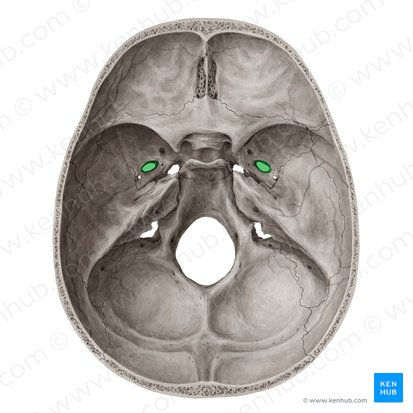
foramen ovale; V trigeminal nerve (mandibular branch)

foramen rotundum; V trigeminal nerve (maxillary branch)

foramen spinosum; middle meningeal nerve
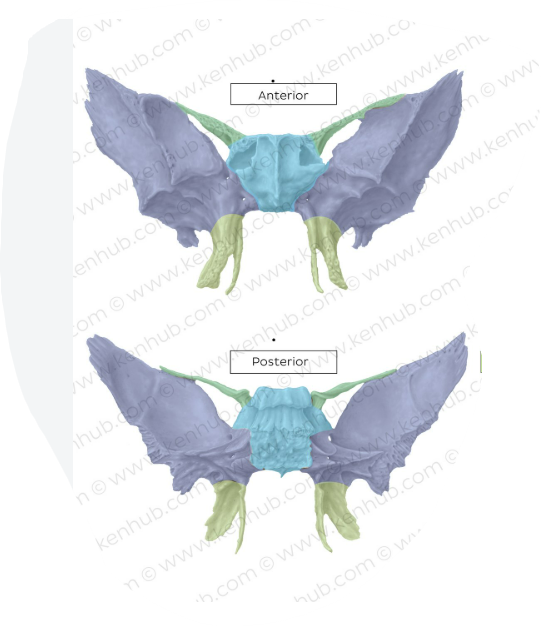
dark blue
greater wing

dark green
lesser wings
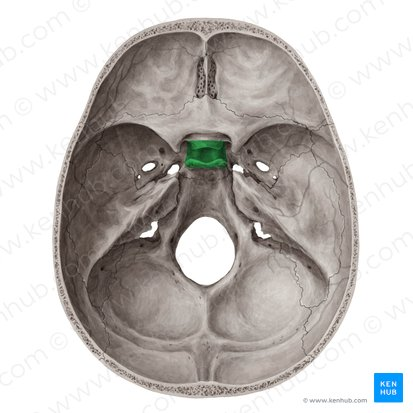
hypophyseal (pituitary) fossa
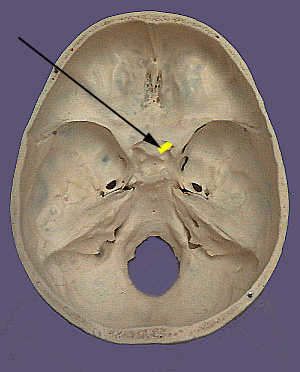
optic canal/foramen; II optic nerve

light green
pterygoid plates and processes
where muscles attach the move mandible

whole thing
sella turcica

sphenoid sinus

superior orbital fissure; III oculomotor, IV trochlear, V Trigeminal (ophthalmic branch), VI abducens

ethmoid bone

cribriform plate

olfactory foramina; I olfactory

crista galli
attaches falx cerebri
ethmoid sinus
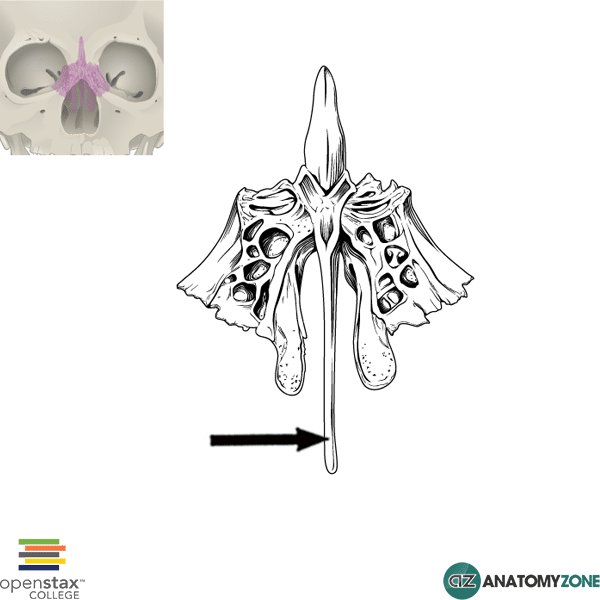
perpendicular plate
bones of nasal cavity

lateral framework: frontal processes of maxilla

floor: hard palate

nasal bones (bridge)

lacrimal bones

hole
lacrimal foramen
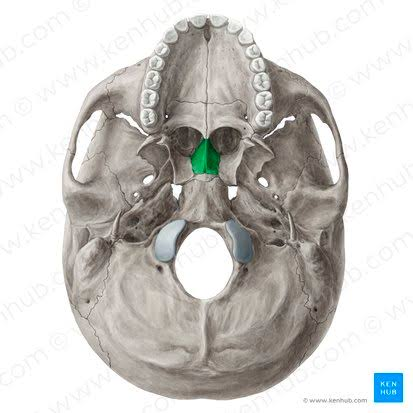
vomer bone - inferior aspect articulated with palatine process of maxilla and horizontal plates of palatine. The superior aspect articulates with perpendicular plate of ethmoid and inferior aspect of body of sphenoid

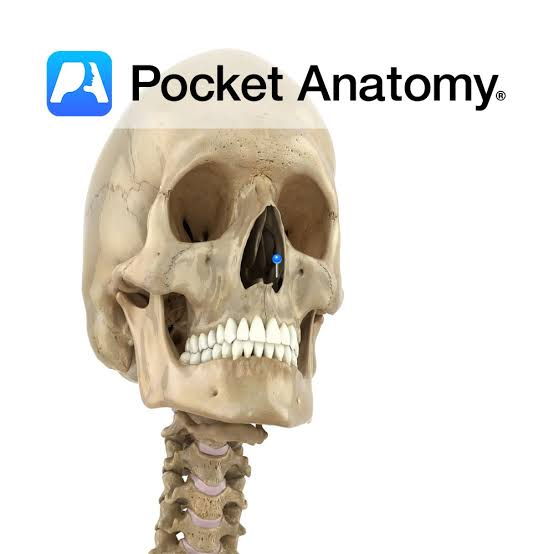
inferior nasal conchae
slows inhaled air
and increases air turbulence in the nasal cavity
Humidifies and warms the air before it reaches the lungs.

temporal bone part
zygomatic process of temporal bone

zygomatic arch

palatine bone

horizontal plate

orbital process
protects eye
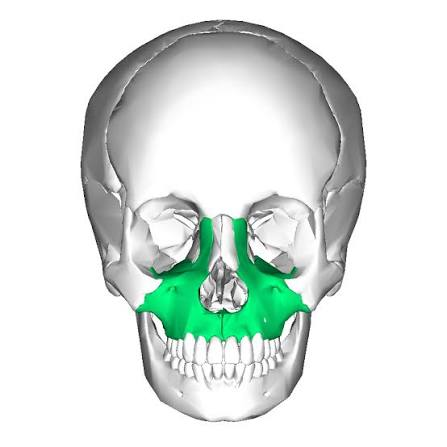
maxilla
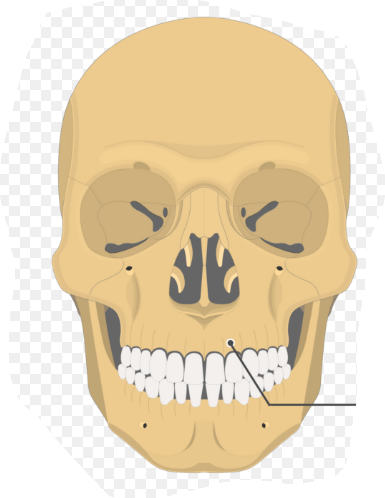
alveolar margin and process
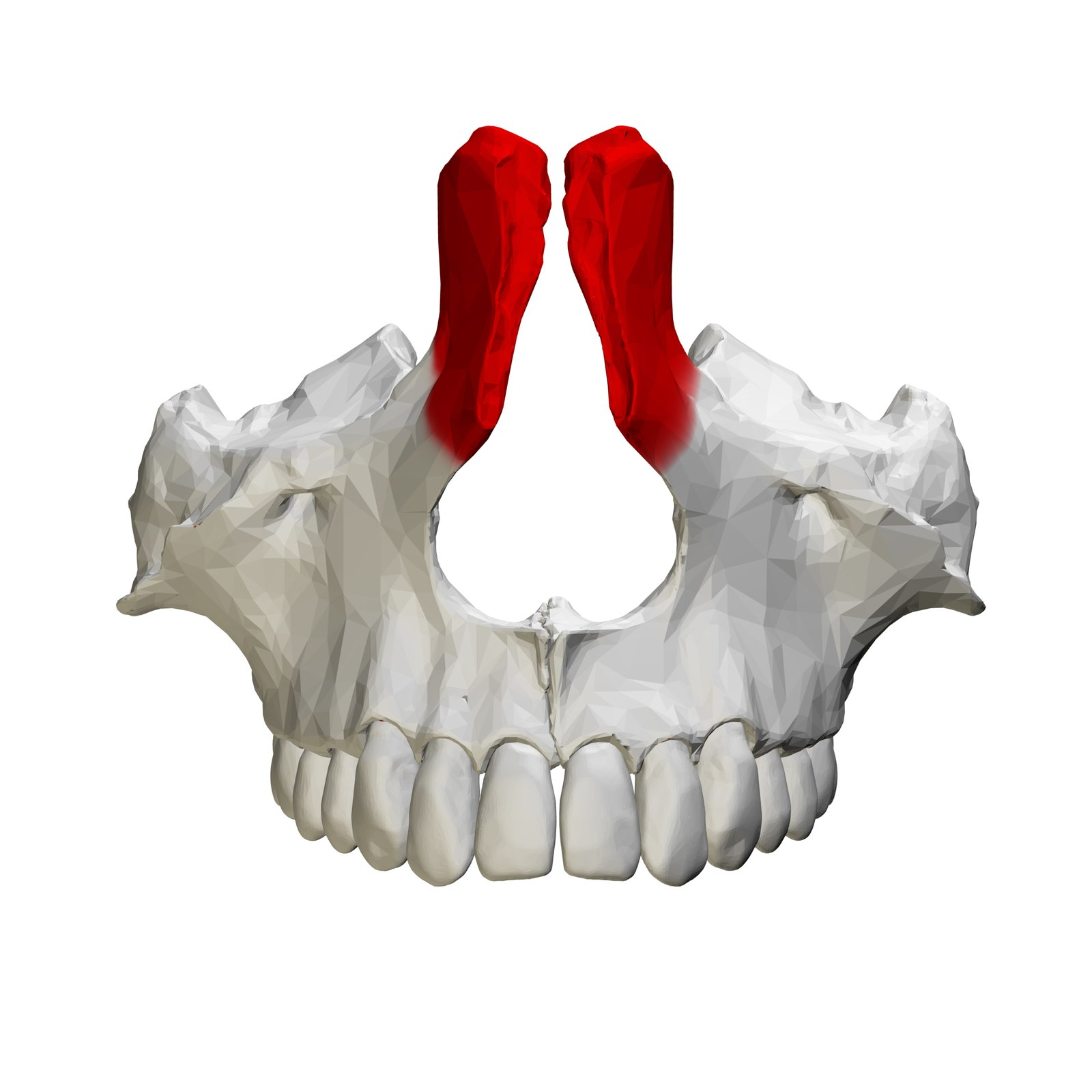
frontal processes

incisive foramen
connects nasal and oral cavities

maxillary sinus
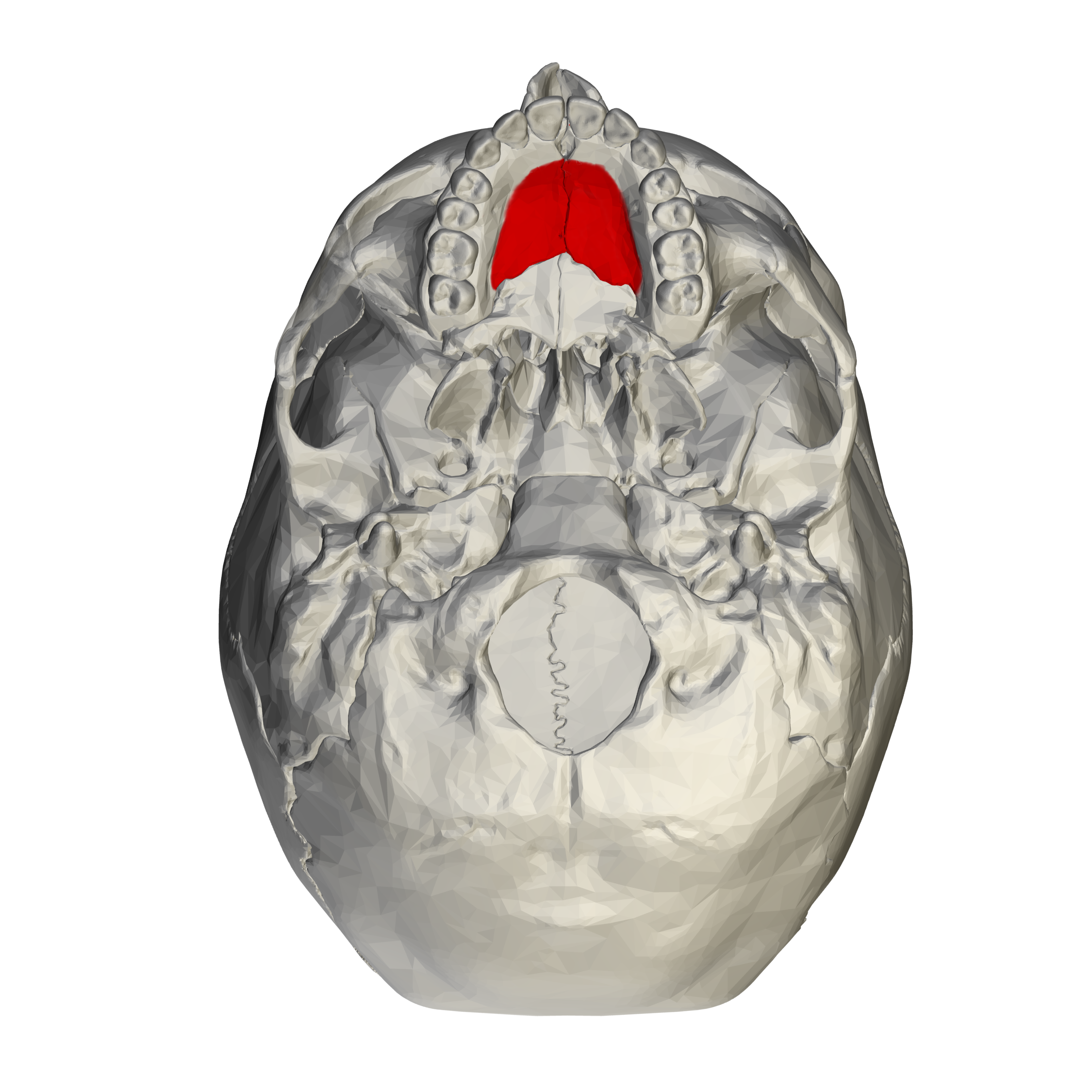
palatine process

mandible

alveolar margin

angle

body

mandibular condyles

coronoid process

mental foramen

ramus

hyoid bone
attatches muscles of larynx, pharynx, tongue
articulates with styloid process of temporal

stylohyoid ligaments to styloid process of temporal bone

styloid process

suprahyoid muscles and infrahyoid muscles pull the hyoid bone dorsally when swallowing: aids in swallowing

body of vertebrae
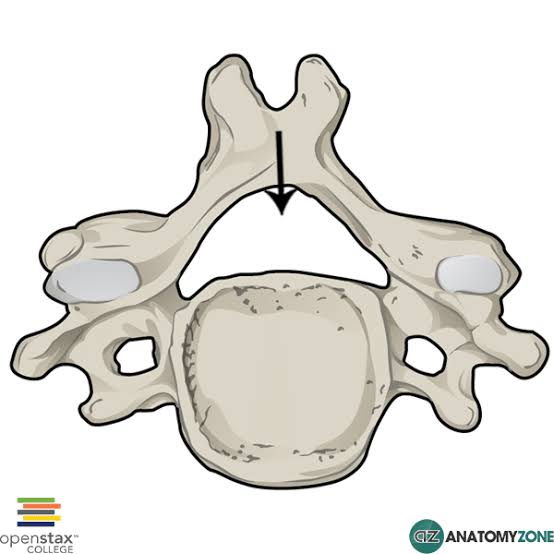
vertebral foramen

laminae

pedicles

superior articulating process

inferior articulating process

transverse process

superior articulatinf facet
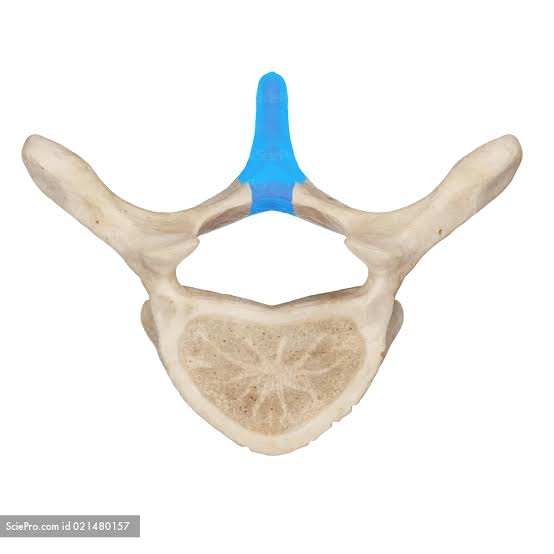
spinous process

cervical vertebrae
what is different about the cervical vertebrae
short bifid spinous process

transverse foramen
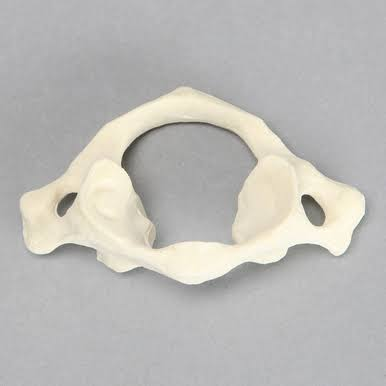
atlas (c1)

fovea dentis

inferior facets for the axis
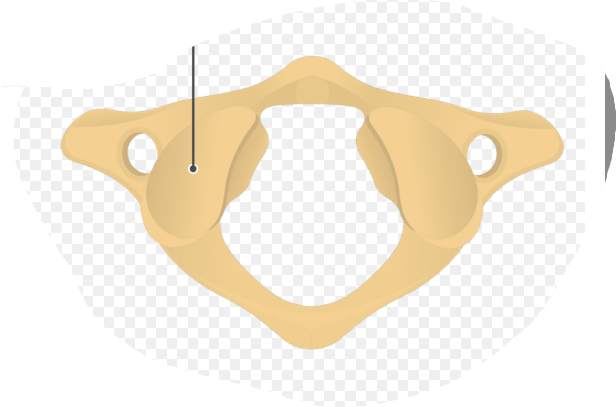
superior facets for occipital condyles

axis (c2)

dens/odontoid process

thoracic vertebrae