bio test 2
 Call Kai
 Learn
 Practice Test
 Spaced Repetition
 Match
 Flashcards
 Knowt Play
1/111

There's no tags or description
Looks like no tags are added yet.
112 Terms
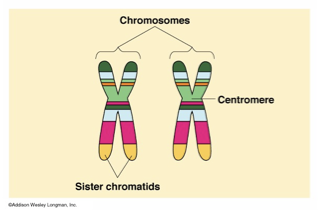
Chromosomes (how are they packaged, where are they found, what is it not being used for)
They are tightly packaged DNA
Found only during cell division
DNA is not being used for macromolecule synthesis
Chromatin(how are they packaged, where are they found, what is it being used for)
Unwound DNA strands
Found during interphase
DNA IS being used for macromolecule synthesis

How is DNA organized
Organized into chromosomes
Double Helix molecules wrapped around histone proteins
(chromatin are the unwound strands of DNA, chromosomes are the DNA strands that are wound together)
What is a chromatid
One half of a duplicated chromosome

What is a centromere
It holds together the sister chromatids
Does kineotochore formation
Pairs homologus pairs together

What is a kineotochore
Protein structure that assembles on the centromere and links chromosomes
(handles that the spindle fibers grab onto when pulling the sister chromatids apart during mitosis)
What are the 4 phases of a cells life
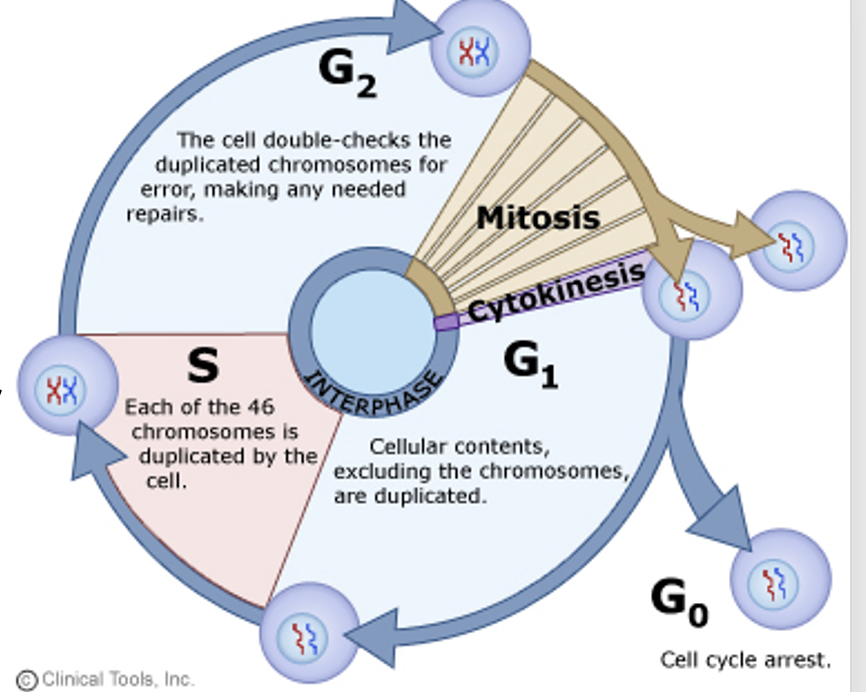
Interphase (cell stil grows and makes proteins/organelles):
G1
S (replicates DNA)
G2
Mitosis

What happens in the G1 stage
Beginning of a cell’s life cycle
Comes right after cytokinesis
Cell begins growing to full size
Makes proteins
DNA is single stranded

What happens in the S phase
The DNA replicates
The number of chromosomes stays the same but the number of chromatids double

What happens in the G2 Phase
Makes the proteins needed for divison
Checks for errors
what are the stages of mitosis
PMAT
Prophase
Metaphase
Anapahse
Telophase

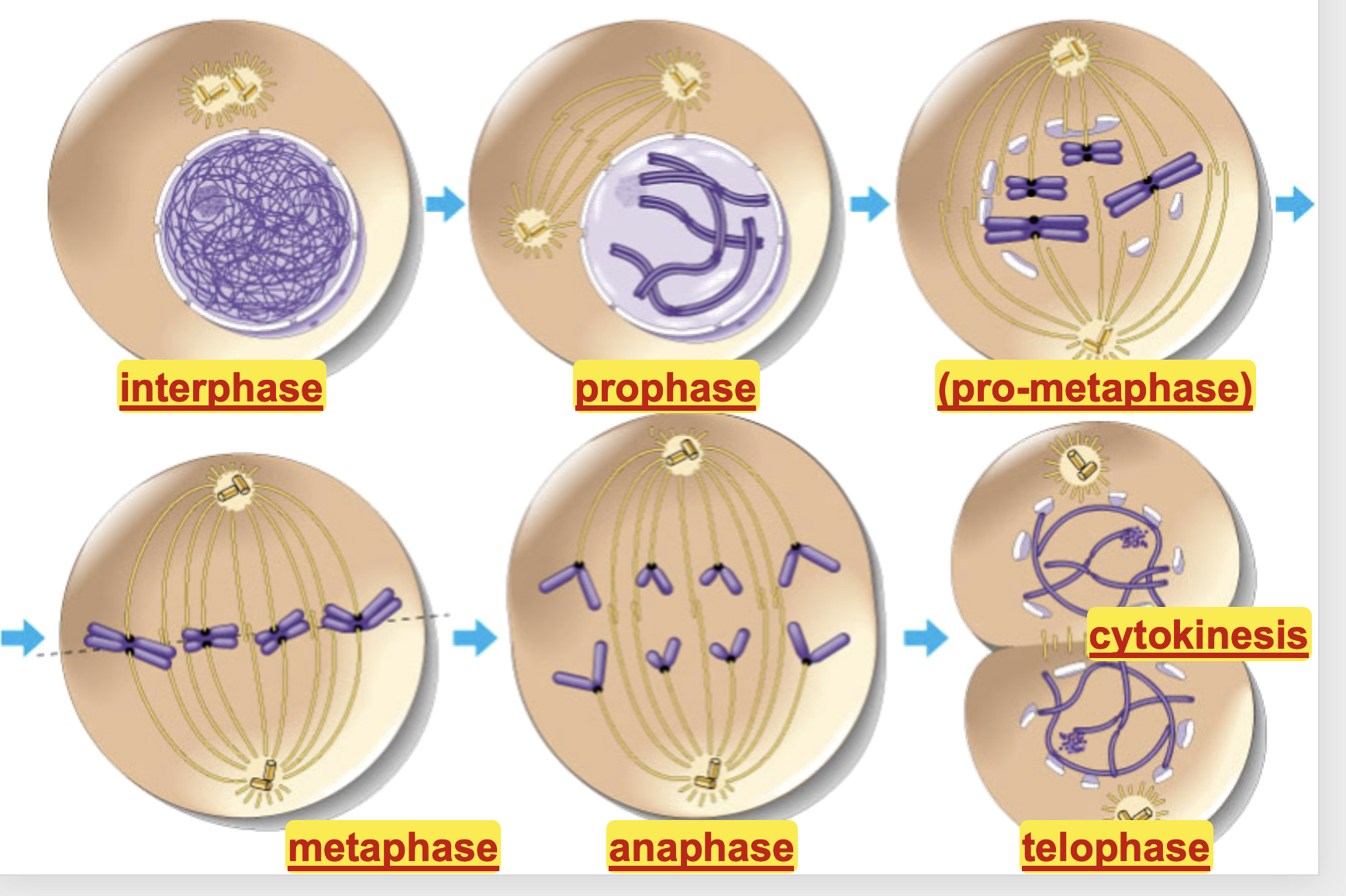
What happens in prophase
The loose chromatin condense and the chromosomes have the X shape with 2 sister chromatids
Nucleoli and nuclear membrane breakdown
The centrosomes move to the opposite side of the cell
No more DNA is made

What happens in pro-metaphase
The spindle fibers (microtubules) connect to the chromosomes

What is metaphase
The chromosomes all line up (metaphase plate)

What happens in anaphase
Sister chromatids seperate at the centromere
No longer X shape
Each is its own chromosome
Spindle fibers pull them apart
Each gets pulled to a different side of the cell

What happens in telophase
The nuclear membrane reforms around the two chromosomes
The chromosomes unwind (back into chromatin)
Cytokinesis is already underway(cell is physically dividing)

Cytokinenis in animals
The cell membrane pinches in on itself
Cleavage furrow
Eventually seperates into two daughter cells

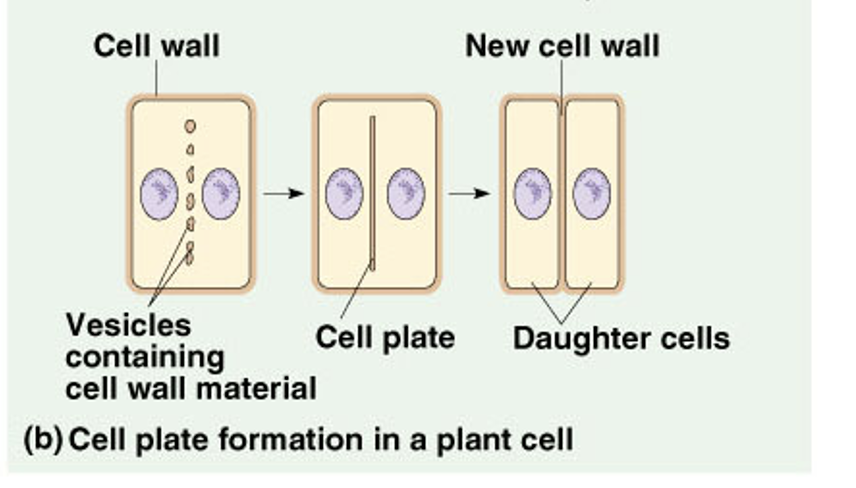
Cytokinenis in plants
A cell wall is formed between the daughter cells (still in 1 cell)
Overview of mitosis (before and during)
IPMAT
Interphase
Propahse (pro-metaphase)
Metaphase
Anaphase
Telophase
What are cyclins
Proteins mean the cell is ready to move on to the next stage
What is apoptosis
The programmed process of a cell dying
Caused by:
harsh environment
exposure to viruses
signals from other cells
Process called “blebs”
What is cancer
Uncontrolled mitosis
Forms tumors
Cells that don’t die
Asexual reproduction
No meiosis/ fertilization
Offspring are usually identical to parent and other “child” cells
Mitosis
One parent
1 cell becomes 2
Sexual Reproduction
Use of sex cells (gametes)
Fertilization to become a zygote
Different from parent cells
2 cells become 1
Gametes have half the number of chromosomes as the zygote
What is a homologus pair
A pair of chromosome made by 1 maternal chromosome and a paternal chromosome (each has 2 chromatids for a total of 4 chromatidssa)
Both chromosomes match because they code for the same thing (hair color)
Haploid vs Diploid Cells
Haploid:
Only carries half the regular amount of chromosomes
Human reproductive cells (sperm/egg) have 23 chromosomes
Diploid:
Have a regular amount of chromosomes
In humans (23 pairs = 46)
What are Autosomes
Found in male and female
Humans have 22 pairs
Contain genetic information
Homologus pairs (half maternal / half partenal)
What are Sex Chromosomes:
Determine the sex of an individual
One pair of chromosomes
X and X = Female
X and Y = Male
NOT HOMOLOGUS
X chromosomes are bigger and contain more information than the Y
What happens in Prophase 1
Chromatin is condensed into chromosomes
Chromosomes pair up with their homologus pairs
Crossing over (genetic information is exchanged between pairs) (first source of genetic variation)
Centrioles move to poles
Nuclear membrane breaks down
What happens in metaphase 1
Chromosomes are arranged on the metaphase plate as homologus pairs
second source of genetic variation
What happens in anaphase 1
Homologus pairs are pulled apart
One chromosome from the pair is pulled to each side (still as a chromosome) (sister chromatids move to the same pole)
What happens in telophase 1
Each pole with its haploid chromosomes seperates into its own cell
What happens in prophase 2
The spindle reforms
Chromosomes begin moving to the metaphase 2 plate
What happens in metaphase 2
The chromosomes are lined up on the metaphase plate
What happens in anaphase 2
Sister chromatids are seperated by the centromeres
Chromosomes move to opposite poles
What happens in Telophase 2
Cell splits again
What is independent assortment
The way in which one pair of homologus chromosomes lines up on the metaphase plane is independent of how the others line up
What are the 4 differences between mitosis and meiosis
Meiosis happens in reproductive cells
Meiosis has 2 divisions while mitosis only has 1
Meiosis results in 4 haploid cells and mitosis results in 2 diploid cells
The daughter cells in meiosis are different while the ones from mitosis are the same (due to crossing over and independent assortment)
Differences between male and female meiosis
Male:
Spermatocytes are made due to testosterone and are made starting during puberty and continue being made forever
Meiosis is completed before the sperm leave the testes
Female:
All oocytes are made before birth
Meiosis is only completed if the egg is fertilized
What is meiotic non-disjunction
Failure of chromosome pairs to seperate properly during cell division
What is aneuploidy
Any chromosome number that is not a multiple of the haploid number
What is trisomy XXX
When a woman is born with three X sex chromosomes
Causes some defects
What is klinefelters
A man has a XXY sex chromosome pair
Causes defects
What is Monosomy (Turner Syndrome)
Females born with only one X sex chromosome
What is trisomy 21
Down syndrome
3 copies of the 21 chromosome (1 extra chromosome)
What are the 4 nucleiotide bases
Adenine
Guanine
Thymine
Cytosine
A pairs with T
C pairs with G
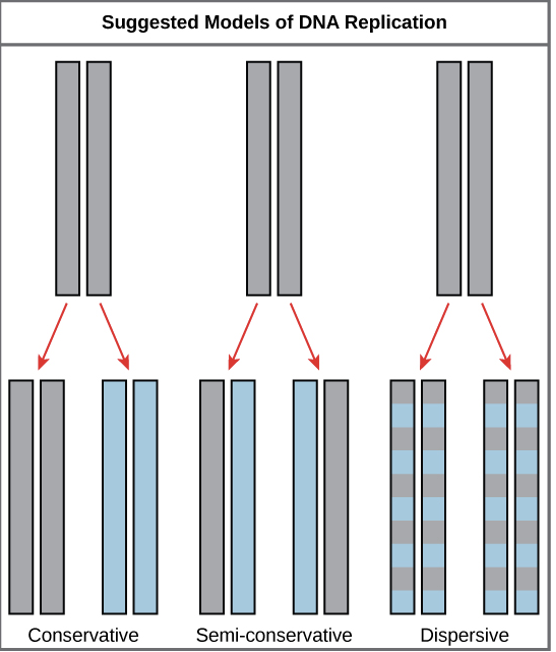
What does semiconservative DNA replication
There is a permanent seperation between the two strands of DNA
Each strand is used to make a new template strand
what are the 4 steps of DNA replication
Seperation of the strands
Short RNA primers are formed
Use both strands of DNA as a template
RNA is replaced and replication ends
What happens in the first step of DNA replication
replication begins at the many replication bubbles (a lot to speed up the process)
The bubbles move in both directions and copy the DNA as they grow
Once bubbles meet, the process is done

What is the role of Helicase in strand seperation
It unwinds and seperates the DNA strands
What is the role of topoisomerase
relieves tension by cutting the phosphodiester bonds
What is the role of primase
It puts down the short piece of RNA known as a primer
what is the role of DNA polymerase
Reads along the naked strand and adds the complementary nucleotide
What happens in step 2 of DNA replication
Primase attaches to the single stranded DNA and adds a small RNA primer in the 5’→ 3’ direction while moving in the a 3’ → 5’ direction
Why must a RNA primer be added to a single stranded DNA
The DNA polymerase cant start building from nothing, it can only build onto something
The RNA primer gives it a starting point
What happens in step 3 of DNA replication
The DNA polymerase attaches to the RNA primer and produces the complementary strand
What direction does the DNA polymerase moving
what direction does it build the strands in
it moves in the 3’ → 5’ direction
builds the daughter strands in the 5’ → 3’ direction
What is the difference between leading strand and lagging strand
The leading strand is built continuously since it is the strand that is the same direction as the fork (one primer at the start)
the lagging strand is the strand that runs in the opposite direction
it needs a new primer so it can build, these fragments are called Ozaki fragments
What happens in ster 4 of DNA replication
The RNA primers are replaced with DNA
How is the RNA replaced with DNA
Nuclease and DNA polymerase: work to replace the RNA primers
Ligase: forms the phosphodiester bonds between the new DNA and the rest of the DNA
What enzyme proofreads the new nucleotides
DNA polymerase
What are mutations
Mistakes in the replication of DNA
What are telomeres
They are special non-coding nucleotide sequences that are at the end of chromosomes
They erode gradually
What does telomerase do
Telomerase extends the final 3’ end of the lagging strand so that a primer can fit and the synthesis can be completed
What is PCR
What is its role
Polymerase Chain Reaction
It’s the rapid and specific replication of a specific portion of DNA without the need for a cell
What are the three main parts of PCR
Denature the DNA
Primers Aneal
DNA polymerase extends the DNA chain
What are the 2 steps of making proteins/genes
Transcription
Translation
What is the process of transcription
an RNA copy is made from a gene DNA template (this is pre-mRNA) then it is processed(some pieces are removed) and becomes mRNA
what is the process of translation
The ribosomes read the mRNA and builds a specific chain of amino acids (polypeptides)
protein
What are the 4 types of RNA
Messenger RNA (mRNA)
Ribosomal RNA (rRNA)
Transfer RNA (tRNA)
microRNA
What is the role of messenger RNA
They code for proteins
What is the role of ribosomal RNA
forms the core of the ribosomes
Makes the proteins
What is the role of transfer RNA
Carriers the amino acid for the growing protein chain
What is a codon
A group of 3 nucleotides that code for a specific amino acid or signal stop and start
What is the sequence of the start codon
AUG
What are the 3 sequences for stop codons
UAA
UGA
UAG
How is RNA translation similar and different from DNA replication
Similar:
Opens and unwinds DNA
1 template strands
Complementary base pairing
Different:
RNA does not stay paired
RNA is single stranded
RNA is shorter
What is the role of RNA polymerase
Catalyzes new phosphodeister bonds
Uncoils the DNA
Adds new nucleotides (5’ → 3’)
Differences between RNA and DNA polymerase
RNA has ribonucleotides vs DNA deoxynucleotides
RNA polymerase can’t proofread
RNA doesnt need a primer
What is the process from Template to transcription
A double helix DNA is seperated into 2 strands (template and coding)
The template is used to make a complementary mRNA strand that is identical to the coding strand except (T → U)
From the mRNA strand the codons are read
What are the 3 stages of transcription
Initiation
Elongation
Termination
What happens in the initation step
The promoter contains the TATA box, where the process begins.
A transcription factor binds the TATA box, then additional transcription factors join.
RNA polymerase binds at the promoter, forming the transcription initiation complex.
The DNA unwinds and RNA synthesis begins.
What happens in the elongation step
The RNA polymerase moves downstream
Reads in the 3’ → 5’ direction
Builds in 5’ → 3’ direction
DNA helix reforms behind it
Goes until it reaches a termination sequence
What happens in the termination step
RNA polymerase reads the termination signal (AAUAAA)
pre-mRNA is released
Enzymes modify the ends (5' cap and poly(A) tail)
what is RNA splicing:
making the pre-mRNA into mRNA
removes the introns (non-coding sections)
Splices the exons together
What is responsible for the removal of introns and splicing of exons
snRNPs (small nuclear riboprotein particles)
Benefit of splicing
Genetic recombination
What is the role of the large subunit of a ribosome
Catalyzes the formation of the peptide bond
What is the role of the small subunit of a ribosome
Matches the tRNA to the mRNA
what are the 4 binding sites on a ribosome
mRNA
Peptidyl-tRNA (P-site)
Aminoacyl-tRNA (A-site)
Exit (E-site)
2,3 and 4 are on the large subunit
What are the 4 types of gene mutations
Silent
Missense
Frameshift
Nonsense
What is a silent mutation
Mutation with no effect
third nucleotide is changed but doesnt change the amino acid
What is a missense mutation
Subsitution of a nucleotide causing a new amino acid
What is a frameshift mutation
Addition/deletion of 1 or moew nucleotides
Competely new amino acid
What is a nonsense mutation
Formation of a stop codon in a place where a coding codon should be
What are the 4 types of chromosomal mutation
Deletion
Duplication
Inversion
Translocations
What is a deletion mutation
Loss of a portion of the chromosome
(can be compensated for by the homologus pair)
What is a duplication mutation
A region of a chromosome is represented twice
(can facilitate evolution)
What is an inversion mutation
A portion of the chromsome is removed, rotated or replaced
What is a translocation mutation
A portion of the chromosme being placed on the other homologus pair