B4.1 Adaptation to environment
 Call Kai
 Learn
 Practice Test
 Spaced Repetition
 Match
 Flashcards
 Knowt Play
1/17

There's no tags or description
Looks like no tags are added yet.
18 Terms
habitat
the place where an organism, population, species or a community lives
abiotic factors
non-living environmental factors e.g. pH, temperature, light intensity, water availability
biotic factors
living components of the environment and their interactions e.g. predators, competitors
sand dunes and lyme grass
challenges of sand dunes:
strong winds, low water available, low mineral nutrients available, shifting sand
adaptations of lyme grass:
thick waxy cuticle → reduces water loss through transpiration
stomata in furrows → trap humid air, reducing transpiration
rolled leaves → reduce water loss
deep roots → absorb water
underground stems (rhizomes) → allow growth when buried by sand
mangrove swamps and tress
challenges of mangrove swamps:
waterlogged, oxygen-poor soil
high salinity
adaptations of mangrove trees:
salt glands in leaves → secrete excess salt
suberin in root epidermis → reduces salt absorption
pneumatophores (vertical roots) → absorb oxygen from the air
accumulation of solutes in cells → lowers water potential, allowing water absorption
buoyant seeds → float for dispersal by water
how abiotic factors affect species distribution
different species have different ranges of tolerance of abiotic factors
species can only survive in environments that fall into their range of tolerance
range of tolerance
the range of conditions for an abiotic factor within which a species can survive
zone of tolerance curve
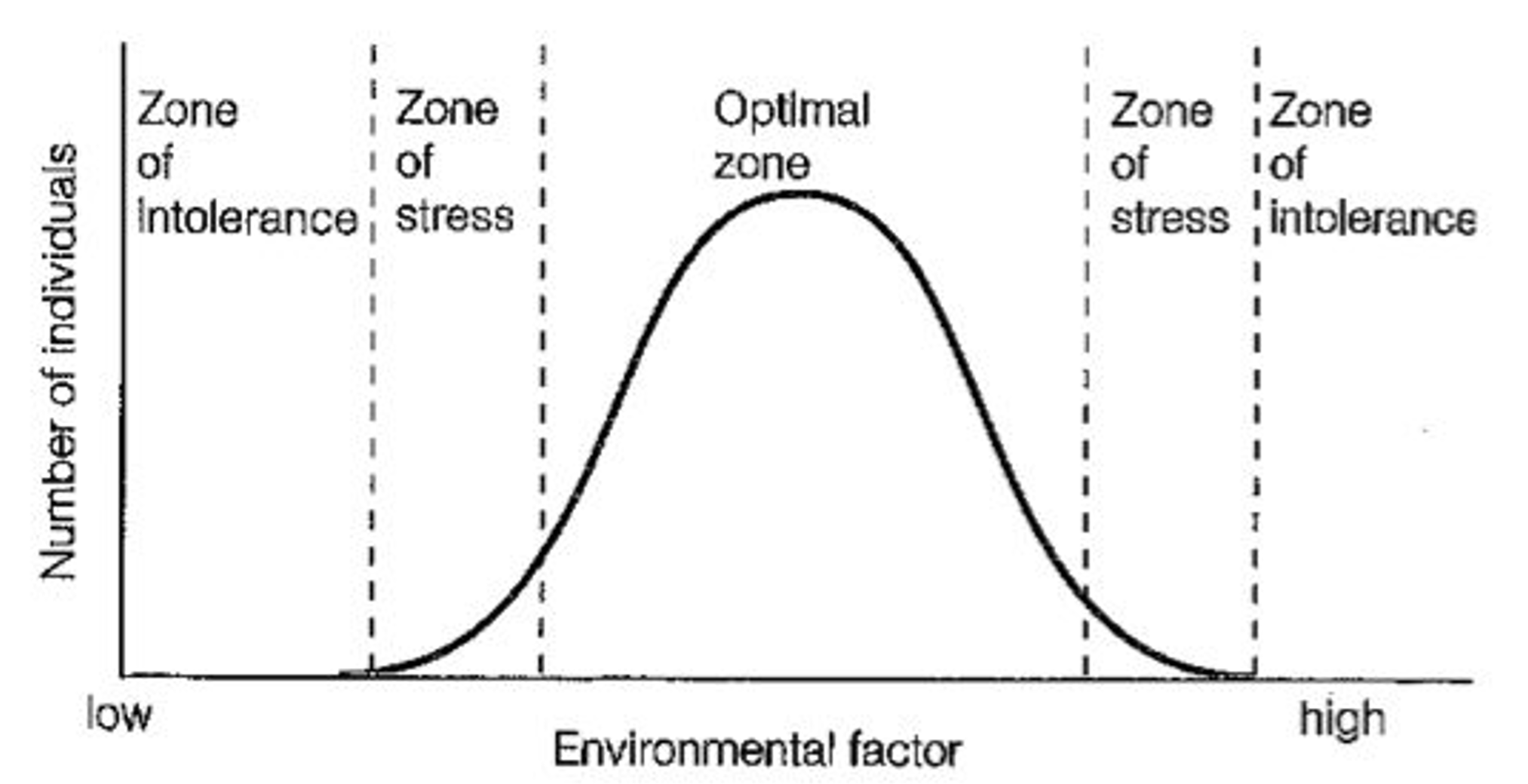
using transects to investigate abiotic factors
place a transect along an environmental gradient
use quadrats at regular intervals to record species abundance
measure abiotic variables such as temperature, light intensity or soil ph
compare the data to identify correlations
abiotic conditions required for coral reef formation
shallow water → sufficient light for photosynthesis
clear water → maximum light penetration
warm temperatures → around 23–29°C
slightly alkaline ph → allows calcium carbonate skeleton formation
suitable salinity → prevents osmotic problems
biome
a group of ecosystems with similar climates and communities of organisms
climate characteristics of the six major terrestrial biomes
biome | temperature | precipitation |
|---|---|---|
tropical forest | high | high |
temperate forest | moderate | moderate to high |
taiga (boreal forest) | low | low to moderate |
hot desert | high | very low |
grassland | moderate to high | low to moderate |
tundra | very low | low |
convergent evolution
the independent evolution of similar adaptions in distantly related species due to similar selection pressures
example of convergent evolution in biomes
cacti in america and euphorbs in africa, both have:
spines → protection from herbivores
water storage in stems → survival during drought
thick waxy cuticle → reduces water loss
tropical forest named plant
pitcher plant
photosynthesise
carnivorous → insects fall into the pitcher and are digested by enzymes, providing nitrates
spines → prevent insects from escaping
grow as epiphytes on trees rather than in soil → greater access to sunlight
tropical forest named animal
orchid mantis
mimics the appearance of orchids for camouflage
young mantis is black and orange to mimic an orchid bud
attracts insects and uses its forelimbs to capture and kill prey
hot desert named plant
saguaro cactus
no leaves → reduces water loss, photosynthesis occurs in the stem
waxy cuticle → reduces water loss
thick stem → stores water
pleated stem → allows rapid swelling after rainfall
spines → protect stored water
cam metabolism → stomata open at night to reduce water loss
shallow widespread roots → absorb rainwater
deep roots → access deeper water
hot desert named animal
fennec fox
nocturnal → avoids daytime heat
underground den → keeps the animal cooler
large ears → radiate heat
long fur → keeps it cool during the day and warm at night
pale colour → reflects heat
hairy foot pads → protect against hot sand
panting → increases heat loss