Image quiz 1783-1824
 Call Kai
 Learn
 Practice Test
 Spaced Repetition
 Match
 Flashcards
 Knowt Play
1/46

There's no tags or description
Looks like no tags are added yet.
47 Terms

#1
Brave Boy of Waxhaws - Depicts the childhood incident involving 14-year-old Andrew Jackson in 1781, when he refused to polish a British officer's boots and was struck with a saber, becoming a symbol of his independence, patriotism, and resilience.
#2
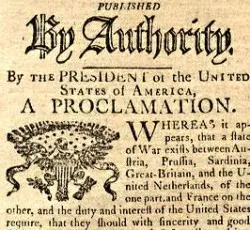
The Proclamation of Neutrality - Issued by George Washington in 1793, declared that the United States would remain neutral in the war between France and Great Britain to avoid European conflicts and protect the young nation's stability and trade.

#3
The Election of 1800 - Depicts the election in which Thomas Jefferson defeated John Adams after a tie with Aaron Burr was decided by the House of Representatives, marking the first peaceful transfer of power between opposing political parties.
#4
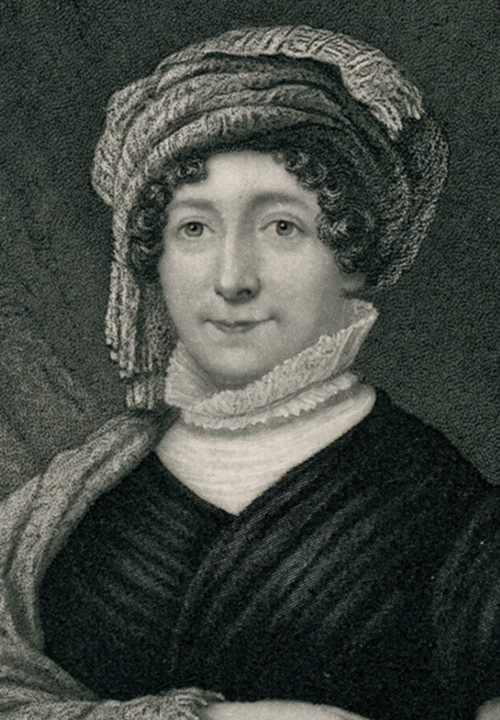
Dolley Madison - First Lady and wife of James Madison who famously saved George Washington's portrait and important government papers before British troops burned the White House during the War of 1812.
#5
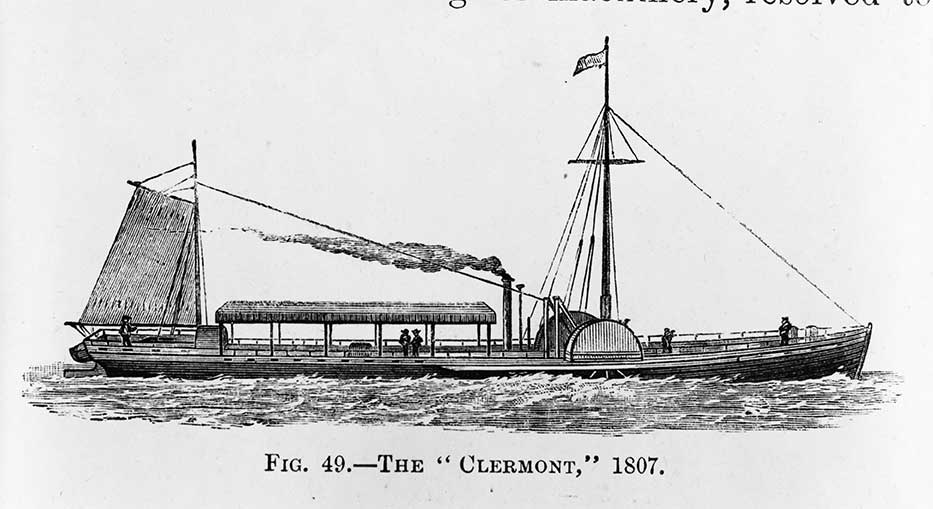
The Clermont - Robert Fulton's first commercially successful steamboat, launched in 1807, which traveled from New York City to Albany and transformed American transportation, trade, and westward expansion.

#6
The U.S.S. Constitution ("Old Ironsides") - American warship launched in 1797 that earned its nickname during the War of 1812 when British cannonballs appeared to bounce off its thick wooden hull, becoming a symbol of American naval strength.

#7
Marbury v. Madison - Landmark 1803 Supreme Court case under Chief Justice John Marshall that established judicial review, giving the Supreme Court the power to declare laws unconstitutional and strengthening the judicial branch.

#8
Daniel Boone Escorting Settlers through the Cumberland Gap - Painting depicting frontiersman Daniel Boone leading settlers through the Cumberland Gap into Kentucky in 1775, symbolizing westward expansion and the idea of Manifest Destiny.

#9
Mad Anthony Wayne Flag - Unique American flag presented by General Anthony Wayne to Miami Chief She-Moc-E-Nish after the Battle of Fallen Timbers, representing the 1795 Treaty of Greenville, which ended the Northwest Indian War and transferred Native American land to the United States.

#10
Washington Resigning His Commission - John Trumbull's painting depicting George Washington voluntarily giving up his position as commander-in-chief in 1783, symbolizing the peaceful transfer of military power to civilian government.

#11
The Federalist Paper Authors - Alexander Hamilton, James Madison, and John Jay, who wrote 85 essays under the name "Publius" between 1787 and 1788 to encourage ratification of the Constitution and support a stronger federal government.

#12
The Articles of Confederation - America's first constitution, ratified in 1781, which created a weak central government and gave most power to the states, eventually leading to calls for a stronger federal government.
#13
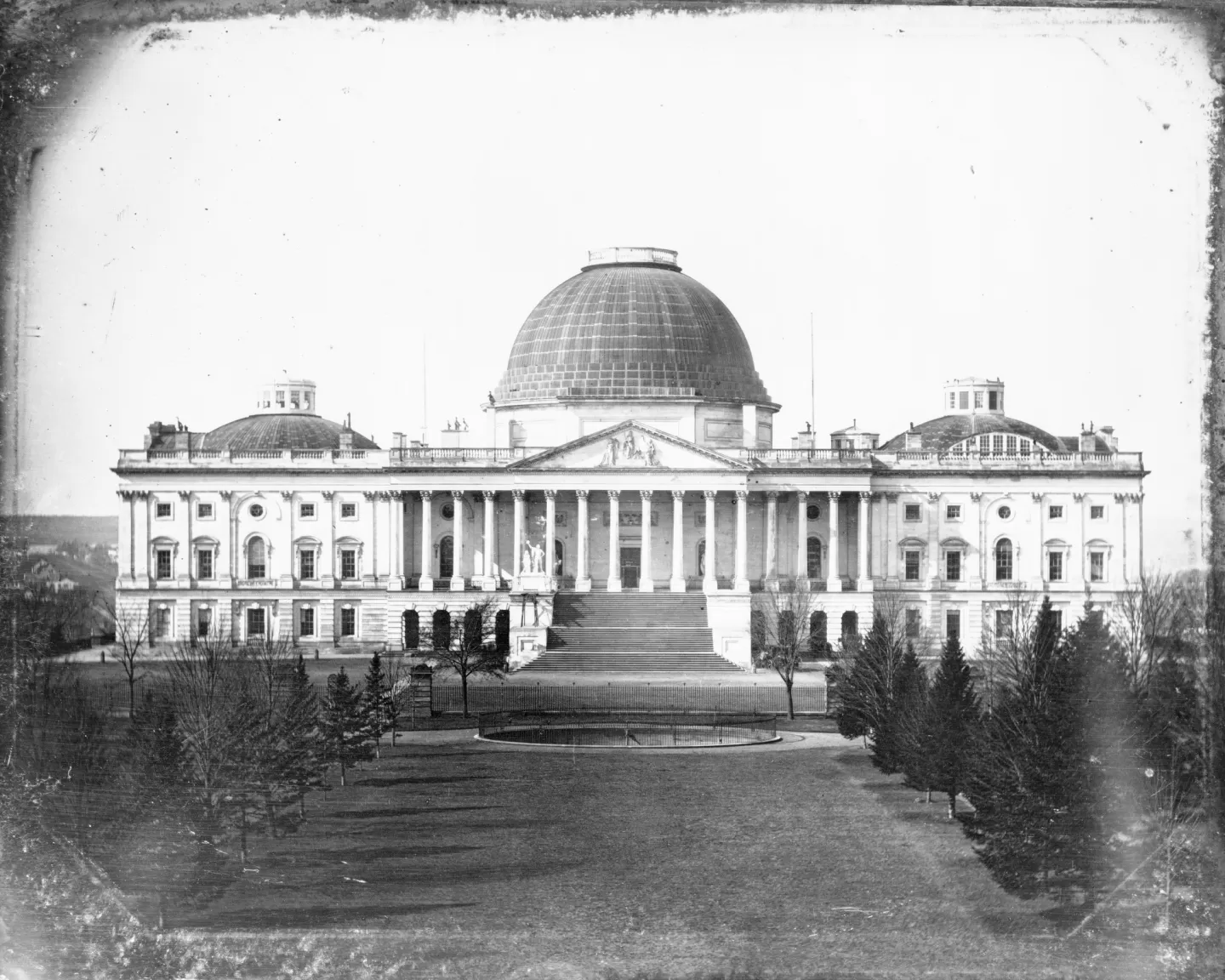
The Capitol Building - Iconic government building in Washington, D.C., recognized by its large central dome, where the Senate and House of Representatives meet as part of the legislative branch.

#14
Washington "I Can't Tell a Lie" - Famous fictional story claiming that young George Washington admitted to chopping down his father's cherry tree, created by biographer Mason Locke Weems in 1806 to represent Washington's honesty and integrity.

#15
"Am I Not a Man and a Brother?" - Anti-slavery medallion created in 1787 showing a kneeling, chained enslaved African man, which became a widely recognized symbol of the abolitionist movement and the fight against the slave trade.

#16
John Jay Burning in Effigy - Depicts American protesters burning dummy figures of Chief Justice John Jay in 1795 to express anger over the unpopular Jay Treaty with Great Britain, which many believed favored British interests.

#17
The Monroe Doctrine - Foreign policy statement issued by President James Monroe in 1823 warning European countries against further colonization or interference in the Western Hemisphere and establishing the Americas as a separate sphere of influence.
#18
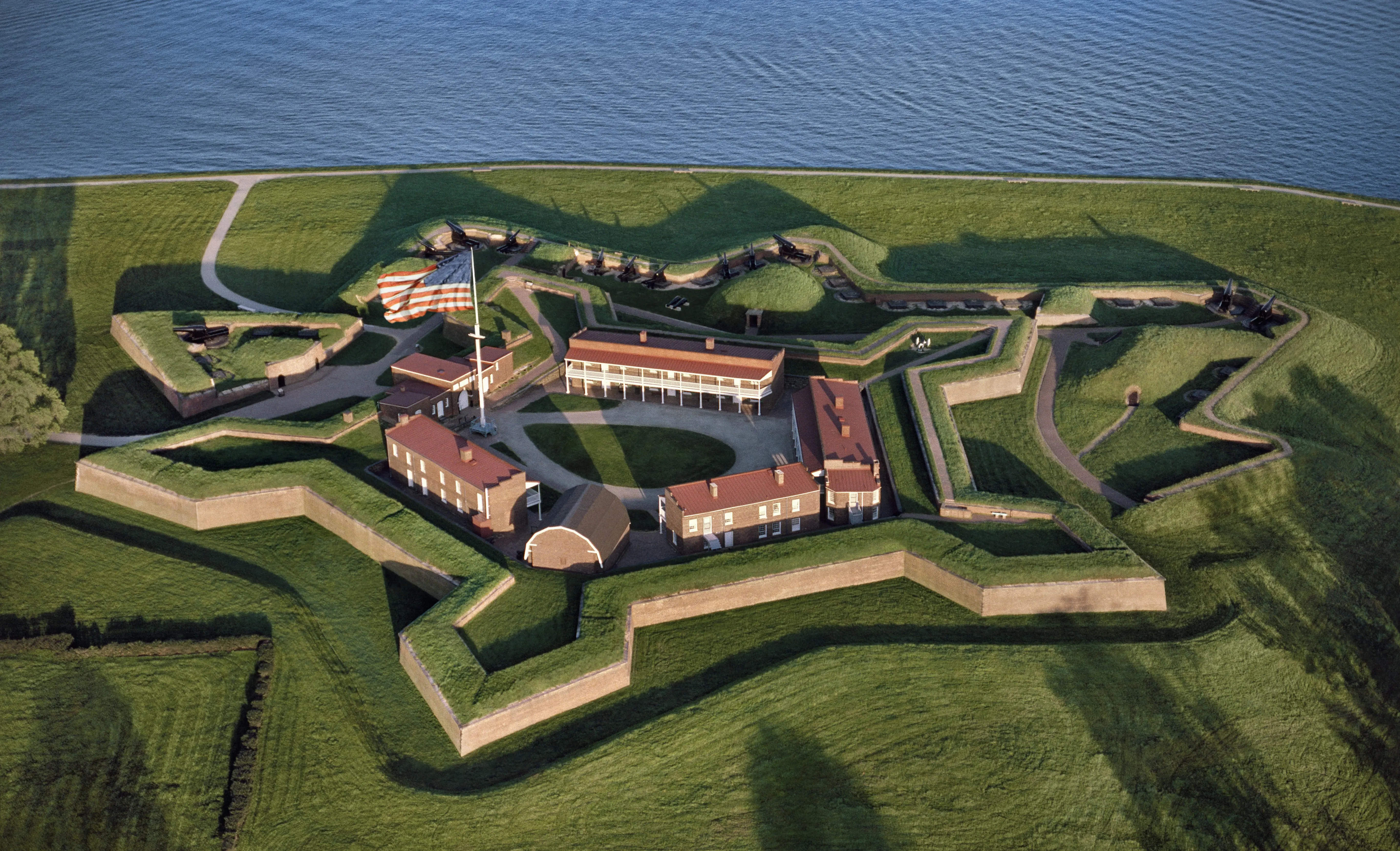
Fort McHenry - Star-shaped fort in Baltimore that successfully defended against a British naval bombardment in 1814 during the War of 1812, inspiring Francis Scott Key to write the poem that became "The Star-Spangled Banner."

#19
The Burning of Washington, D.C. - Depicts the British invasion of Washington on August 24, 1814, during the War of 1812, when British troops burned important government buildings, including the White House and Capitol, in retaliation for American attacks in Canada.

#20
“We Owe Allegiance to No Crown" - Patriotic painting created during the War of 1812 showing an American sailor holding the flag alongside symbols such as a broken chain and crushed crown, representing American independence and rejection of British monarchy.

#21
Stephen Decatur's Raid in Tripoli - Depicts the daring 1804 U.S. Navy mission during the First Barbary War in which Lieutenant Stephen Decatur and his crew entered Tripoli Harbor and burned the captured USS Philadelphia to prevent enemy forces from using it.

#22
The Lewis and Clark Expedition - Expedition commissioned by Thomas Jefferson between 1804 and 1806 to explore and map the Louisiana Purchase, establish relationships with Native American tribes, and find a route to the Pacific Ocean with help from Sacagawea.
#23
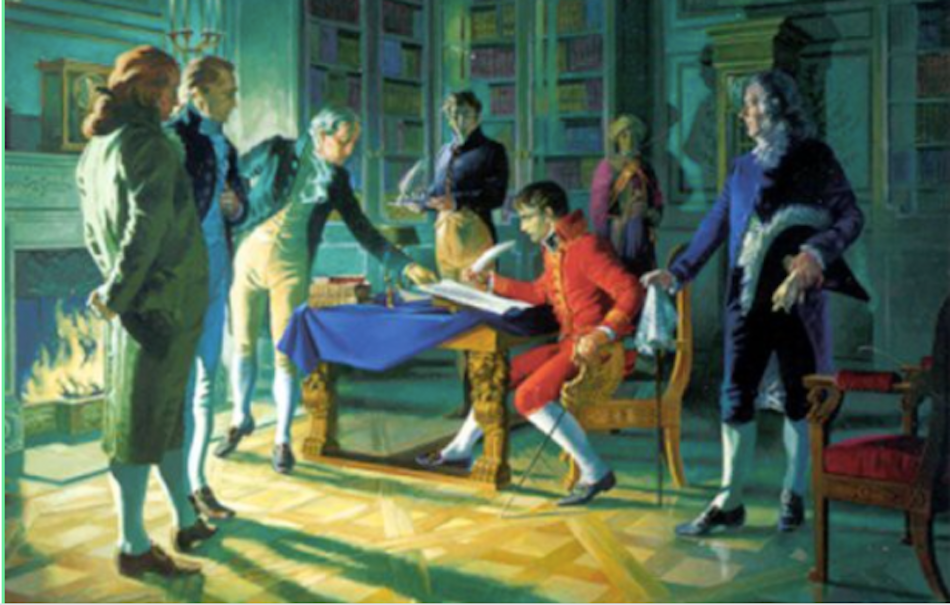
Signing of the Louisiana Purchase - Depicts the 1803 agreement in which the United States purchased approximately 828,000 square miles of territory from France for $15 million, doubling the country's size and encouraging westward expansion.

#24
Death of Washington - Depicts the death of George Washington at his Mount Vernon estate in Virginia on December 14, 1799, at age 67, which caused widespread mourning throughout the young nation.

#25
The Cotton Gin - Invention created by Eli Whitney in 1793 that quickly separated cotton fibers from seeds, making cotton production more profitable and increasing the expansion of plantation agriculture and slavery in the South.
#26
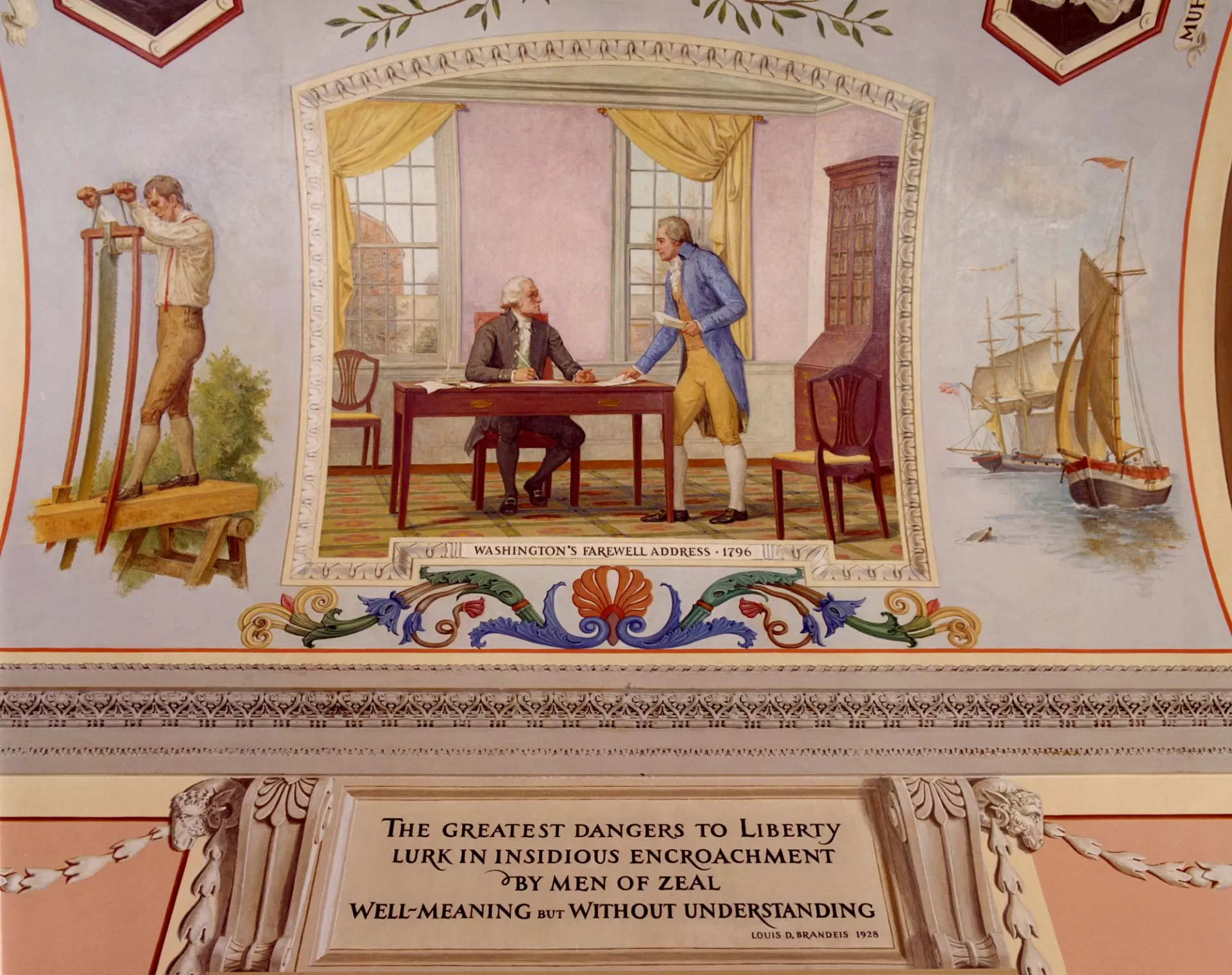
Washington's Farewell Address - George Washington's 1796 open letter announcing he would not seek a third presidential term and warning Americans against political divisions, regional rivalries, and permanent foreign alliances.

#27
The Whiskey Rebellion - Protest between 1791 and 1794 in which western Pennsylvania farmers resisted a federal tax on whiskey, leading George Washington to send nearly 13,000 militia members to demonstrate the federal government's power to enforce its laws.

#28
Lafayette with Washington at Mount Vernon - Painting commemorating the 1784 reunion between George Washington and French military leader Marquis de Lafayette at Mount Vernon, symbolizing their friendship and the alliance between France and America during the Revolutionary War.
#29
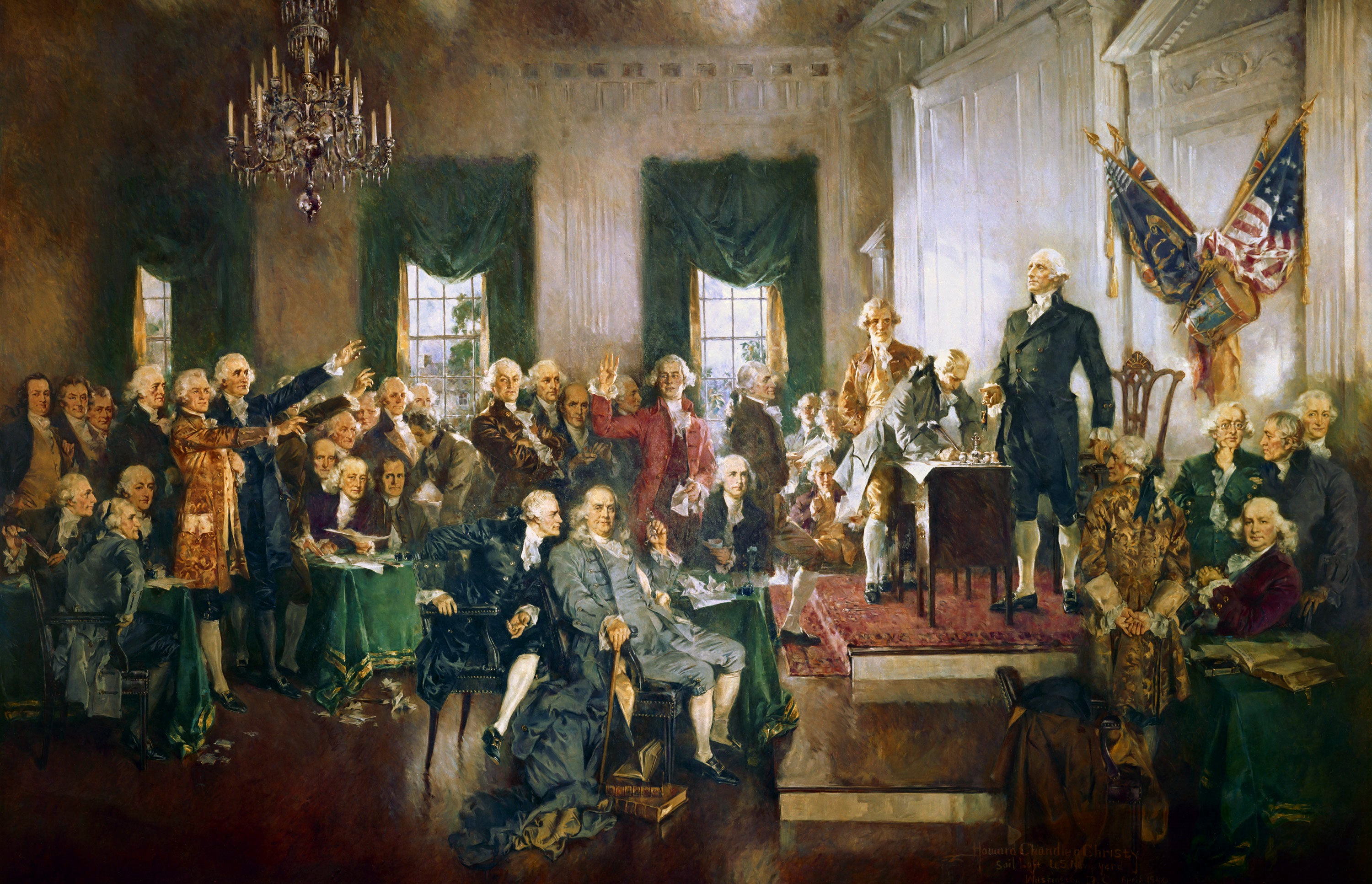
Signing of the U.S. Constitution - Depicts the September 17, 1787 signing of the Constitution by 39 delegates at the Constitutional Convention in Philadelphia, replacing the weak Articles of Confederation with a stronger federal government.

#30
Shays' Rebellion - Armed uprising between 1786 and 1787 led by Revolutionary War veteran Daniel Shays and Massachusetts farmers protesting high taxes and debt, exposing the weaknesses of the Articles of Confederation and encouraging the creation of the Constitution.

#31
John Marshall - Fourth Chief Justice of the Supreme Court who served from 1801 to 1835 and strengthened the federal government and judicial branch through important decisions, especially Marbury v. Madison, which established judicial review.

#32
Exchange of New Orleans - Depicts the December 20, 1803 ceremony in which France officially transferred New Orleans and the Louisiana Territory to the United States, completing the Louisiana Purchase and giving America control of the Mississippi River port.

#33
The Hamilton-Burr Duel - Depicts the 1804 pistol duel between Alexander Hamilton and Vice President Aaron Burr in New Jersey, resulting in Hamilton's death the following day and destroying Burr's political career.
#34
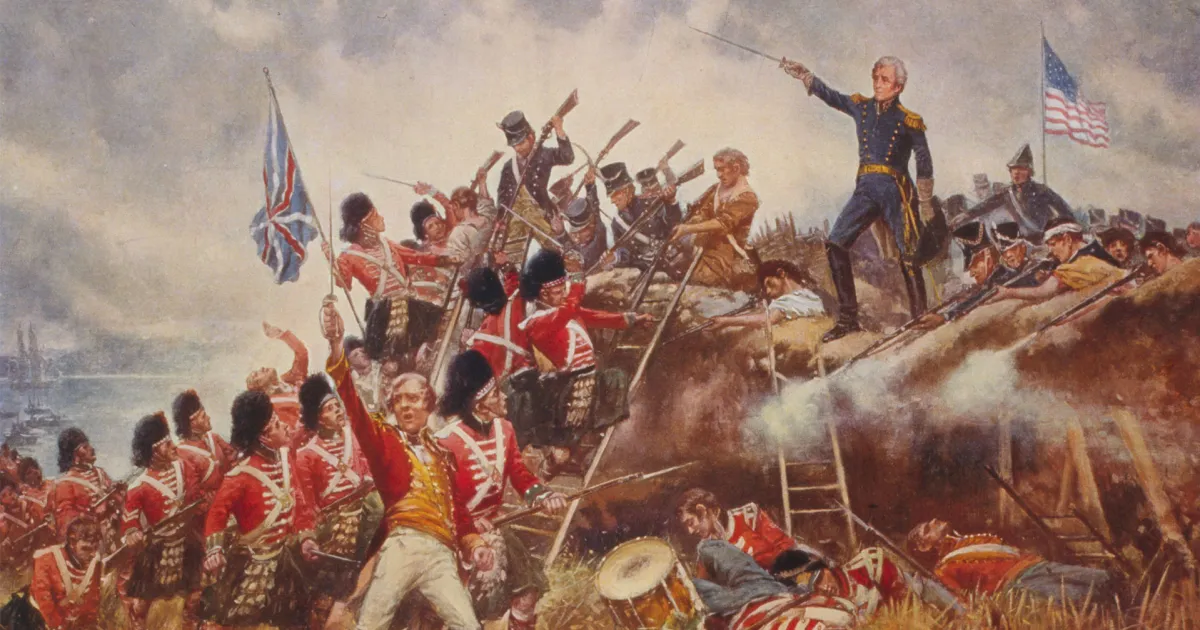
The Battle of New Orleans - Major American victory on January 8, 1815, during the War of 1812, in which General Andrew Jackson led American forces to defeat a larger British army, boosting national pride and making Jackson a national hero.

#35
Toussaint Louverture - Formerly enslaved Haitian general who led the Haitian Revolution against European powers, helping end slavery in the French colony of Saint-Domingue and paving the way for Haiti's independence in 1804.

#36
The L'Enfant Plan of Washington, D.C. - City design created by Pierre Charles L'Enfant in 1791 featuring a street grid crossed by wide diagonal avenues, traffic circles, and public spaces that established the layout of the nation's capital.

#37
The Republican Court in the Time of Washington - Daniel Huntington's 1861 painting showing an idealized gathering hosted by First Lady Martha Washington, featuring important early American leaders and representing the social and political unity of the early republic.

#38
The Erie Canal - 363-mile waterway completed in 1825 connecting the Hudson River to Lake Erie, greatly reducing transportation costs, encouraging westward settlement, and helping New York City become a major commercial center.

#39
The Missouri Compromise of 1820 - Agreement that admitted Missouri as a slave state and Maine as a free state to maintain the balance in the Senate while prohibiting slavery in the remaining Louisiana Purchase territory north of the 36°30′ parallel, except Missouri.

#40
The Treaty of Ghent - Peace agreement signed on December 24, 1814, that officially ended the War of 1812 between the United States and Great Britain and restored prewar boundaries between the two nations.

#41
Tenskwatawa ("The Prophet") - Shawnee religious leader who worked with his brother Tecumseh to encourage Native Americans to return to traditional customs and reject European-American influences while resisting American westward expansion.
#42
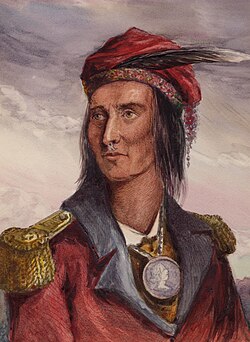
Tecumseh - Shawnee chief and warrior who united Native American tribes into a confederacy to resist American westward expansion and protect Indigenous lands, later allying with the British during the War of 1812.

#43
Oliver Hazard Perry ("Don't Give Up the Ship") - American naval commander during the War of 1812 who used the phrase on a battle flag honoring Captain James Lawrence and led American forces to victory at the Battle of Lake Erie in 1813.

#44
Francis Scott Key - American lawyer and poet who witnessed the British bombardment of Fort McHenry in 1814 and was inspired by the American flag still flying at dawn to write the poem that became "The Star-Spangled Banner."
#45
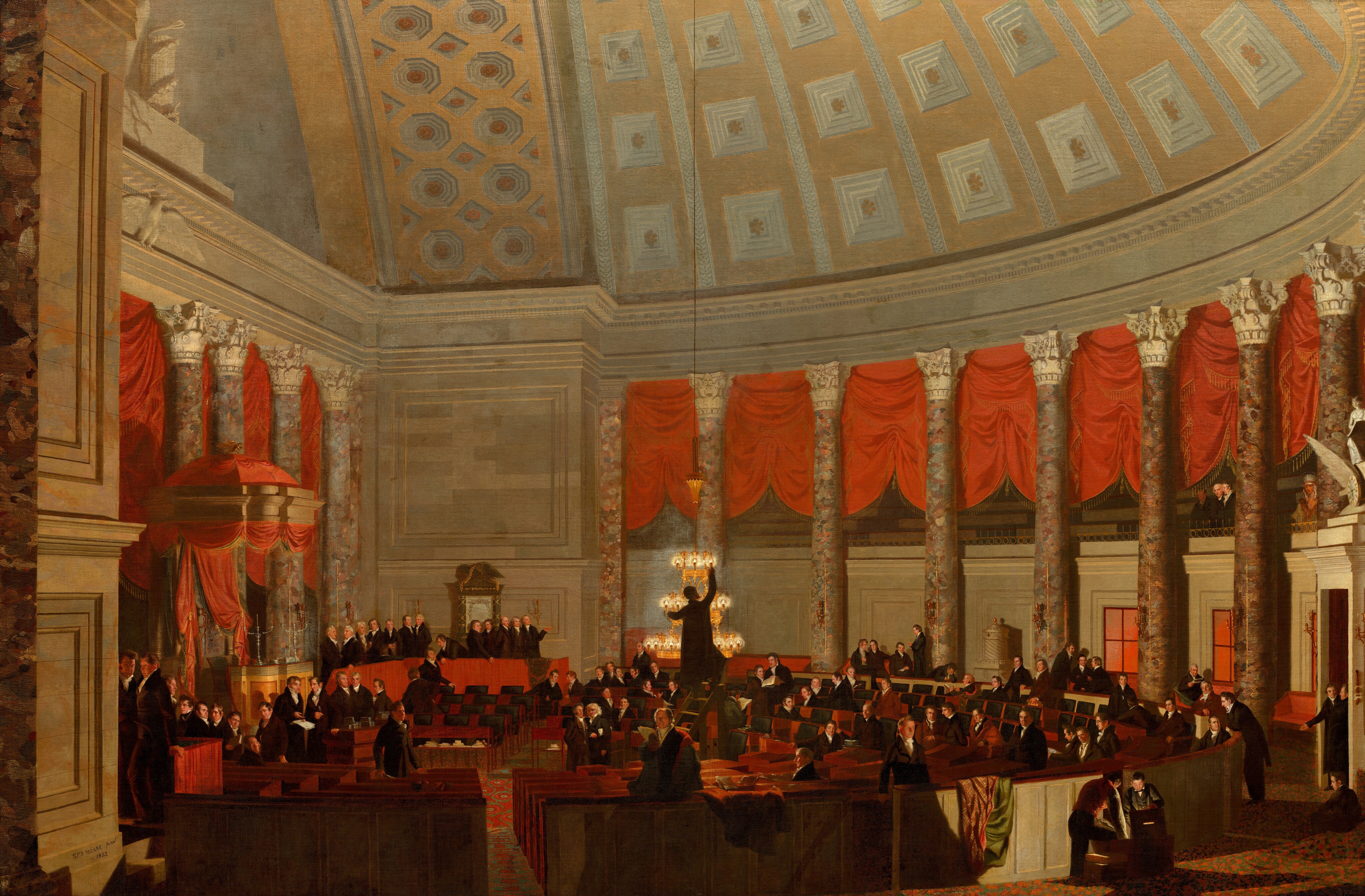
The House of Representatives - Samuel F. B. Morse's 1822 painting depicting lawmakers gathered inside the U.S. House chamber, celebrating representative government, democracy, and the role of elected officials.

#46
Pinckney's Treaty - 1795 agreement between the United States and Spain that gave American ships free navigation of the Mississippi River and duty-free access to the port of New Orleans, helping western farmers trade and encouraging westward expansion.

#47
Gabriel's Rebellion - Planned uprising in 1800 led by Gabriel, an enslaved blacksmith in Virginia, who intended to lead enslaved people into Richmond to seize weapons and take control of the city, but the plan was stopped before it began.