Chapter 17: endocrine system
 Call Kai
 Learn
 Practice Test
 Spaced Repetition
 Match
 Flashcards
 Knowt Play
1/164

There's no tags or description
Looks like no tags are added yet.
165 Terms
gap junctions
pores in cell membrane that allow signaling molecules to move from cell to cell
calorigenic effect
heat production
glucose sparing effect
use other forms of glucose to save glucose for the brain
neurotransmitters
released from neurons to travel across synaptic cleft to second cell
paracrine
secreted by one cell and diffuse into nearby cells of same tissue
hormones
chemical messengers in bloodstream acting on different tissues and organs
endocrine system
glands, tissues, cells that secrete hormones
endocrinology
study of endocrine system and treatment of disorders
endocrine glands
organs that are sources of hormones
exocrine glands
secrete into ducts at epithelial surface or mucosa of digestive tract- ➡ extracellular effects
endocrine glands
no ducts, secrete into bloodstream
intracellular effects on cell metabolism
compare nervous vs endocrine systems
speed and persistence of response
nervous: quickly
endocrine: slowly
adaptation to long-term stimuli
nervous: adapt quickly
endocrine: response persists - adapt slowly
area of effect
nervous: target and specific (one organ)
endocrine: general and widespread (many organs)

target organs
organs or cells that have receptors for a hormone and can respond to it
hypothalamus
forms the walls of the third ventricle of brain
regulates primitive functions from water balance and thermoregulation to sex drive and childbirth
many of its functions are carried out by pituitary gland
pituitary gland (hypophysis)
suspended from hypothalamus by a stalk
size and shape of kidney bean
housed in sella turcica
composed of anterior and posterior pituitary
anterior pituitary
linked to hypothalamus by blood vessels of hypophyseal portal system
regulated by hypothalamic hormones
hypophyseal portal system
network of blood vessels that connects the hypothalamus to the anterior pituitary gland
posterior pituitary
made of nervous tissue, not a “true gland”
communicates with hypothalamus via hypothalamo-hypophyseal tract
hypothalamo-hypophyseal tract
made of axons of nerve cell bodies in thalamus. hypothalamic neurons secrete hormones into posterior pituitary via the axons
What are the six hypothalamic hormones that regulate the anterior pituitary gland?
gonandotropin-releasing hormone (GnRH)
thyrotropin-releasing hormone (TRH)
Corticotropin-releasing hormone (CRH)
Prolactin-inhibiting hormone (PIH)
Growth hormone-releasing hormone (GHRH)
Somatostatin
What are the two hypothalamic hormones stored in posterior pituitary and released on demand?
oxytocin (OT)
Antidiuretic hormone (ADH)
gonadotropin-releasing hormone
Gland: hypothalamus
Target: anterior pituitary gland
Effect: stimulate release of FSH and LH
thyrotropin-releasing hormone (TRH)
Gland: hypothalamus
Target: anterior pituitary gland
Effect: stimulate release of thyroid-stimulating hormone (TRH)
corticotropin-releasing hormone (CRH)
Gland: hypothalamus
Target: anterior pituitary gland
Effect: stimulates release of andrenocotropic hormone (ACTH)
prolactin-inhibiting hormone (PIH)
Gland: hypothalamus
Target: anterior pituitary gland
Effect: inhibits release of prolactin
growth hormone-releasing hormone
Gland: hypothalamus
Target: anterior pituitary gland
Effect: stimulates release of growth hormone (GH)
Somatostatin (hypothalamus)
Gland: hypothalamus
Target: anterior pituitary gland
Effect: inhibits release of GH and TSH
oxytocin
Gland: posterior pituitary gland
Target: uterus, mammary glands
Effect: stimulates labor contractions and flow of milk during lactation, may promote emotional bonding between lactating mother and infant
paraventricular nuclei (of hypothalamus)
produce oxytocin
antidiuretic hormone (ADH)
Gland: posterior pituitary gland
Target: kidneys
Effect: increases water retention, thus reducing urine volume and preventing dehydration
also called arginine vasopressin
supraoptic nuclei (of hypothalamus)
produce oxytocin and ADH
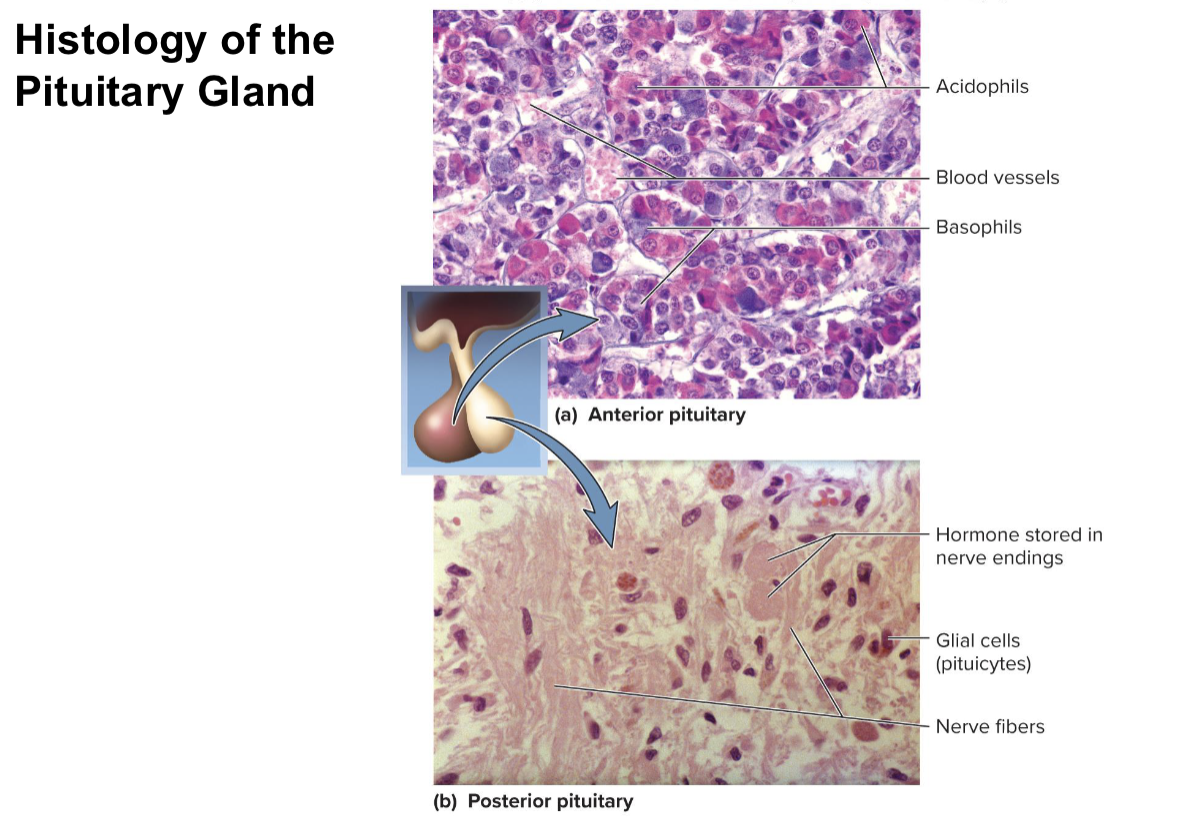
Describe the histology of the pituitary gland
the anterior gland is made of epithelia tissue
the posterior gland is made of nervous tissue
follicle-stimulating hormone
Gland: anterior pituitary gland
Target: ovaries, testes
Effects:
female: development of ovarian follicles and estrogen secretion
male: sperm production
Luteinizing hormone (LH)
Gland: anterior pituitary gland
Target: ovaries and testes
Effects:
female: ovulation, corpus lute secretion of progesterone
male: testosterone secretion
thyroid-stimulating hormone (TSH)
Gland: anterior pituitary gland
Target: Thyroid
Effects: growth of thyroid, stimulate secretion of thyroid hormone
Adrenocorticotropic (ACTH)
Gland: anterior pituitary gland
Target: adrenal cortex
Effects: growth of adrenal cortex, secretion of glucocorticoids
prolactin
Gland: anterior pituitary gland
Target: mammary glands
Effects: milk synthesis
growth hormone
Gland: anterior pituitary gland
Target: liver, bone, cartilage, muscle
Effects: widespread tissue growth especially in those organs
Explain hypothalamic and cerebral control of the pituitary gland
rates of secretion are not constant
brain monitors conditions and influences anterior pituitary gland
in times of stress, hypothalamus triggers release of ACTH
during pregnancy, hypothalamus triggers prolactin secretion
posterior pituitary is controlled by neuroendocrine reflexes
neuroendocrine reflexes
control of posterior pituitary gland
release of hormones in response to nerve signals
hypothalamic osmoreceptors trigger release of ADH when there is a rise in osmolarity
infant suckling triggers hypothalamus to release oxytocin
explain how feedback from target organs controls pituitary secretion
negative feedback inhibition: increased target organ hormone levels inhibit release of hypothalamic and/or pituitary hormones
positive feedback can also occur like contractions causing more release of OT
hypothalamo-pituitary thyroid axis
Thyrotropin releasing hormone (TRH) stimulates ease of thyroid stimulating hormone (TSH) from the anterior pituitary gland. TSH stimulates secretion of TH from thyroid. TH inhibits release of TSH and TRH

insulin-like growth factors
the growth hormone induces the liver to secrete insulin-like growth factors
they prolong the action of GH by increasing the half-life
mechanisms of GH-IGF action
protein synthesis: boost transcription and translation
lipid metabolism: stimulates catabolism of fats
carbohydrate metabolism: mobilizing FAs reduces use of glucose which frees more glucose for the brain (glucose-sparing)
electrolyte balance: promotes electrolyte retention by kidneys which makes electrolytes available for growing tissues
ghrelin
hormone released by stomach that activates growth hormone
What are the endocrine organs of the body?
hypothalamus
pituitary gland
pineal gland
thymus
thyroid gland
parathyroid glands
adrenal glands
pancreas
ovaries
testes
what are some other organs/tissues that have endocrine functions?
skin
liver
kidneys
heart
skeletal muscle
stomach and intestines
adipose tissue
osseous tissue
placenta
pineal gland
attached to roof of third ventricle
larger in children
synthesizes melatonin
melatonin
Gland: pineal gland
Target organ: brain
Effects: circadian rhythm, promotes sleep, may influence mood and sexual maturation
Thymus
roles in endocrine, lymphoid, and immune systems
site of maturation of T cells
larger in children
secretes thymopoietin, thymosin, and thymulin

involution
shrinkage of glands
thymopoietin, thymosin, and thymulin
Gland: thymus
Target organ: immune cells
Effects: Stimulate T lymphocyte development and activity
Thyroid gland
largest purely endocrine gland
two lobes connected by isthmus
contains thyroid follicles and parafollicular glands

Thyroid follicles
compose the thyroid galnd
lined with follicular cells
the cells secrete the thyroid hormone
parafollicular cells
cells in thyroid gland
respond to rising blood calcium and secrete calcitonin
Thyroxine and triiodothyronine (T3 and T4)
thyroid hormone
Gland: thyroid gland
Target organ: most tissues
Effects: increase metabolic rate, o2 consumption, heat production, appetite, growth hormone secretion, alertness, and reflex speed
Calcitonin
Gland: thyroid gland
Target organ: bone
Effects: stimulates bone deposition in response to high blood calcium, mainly in children
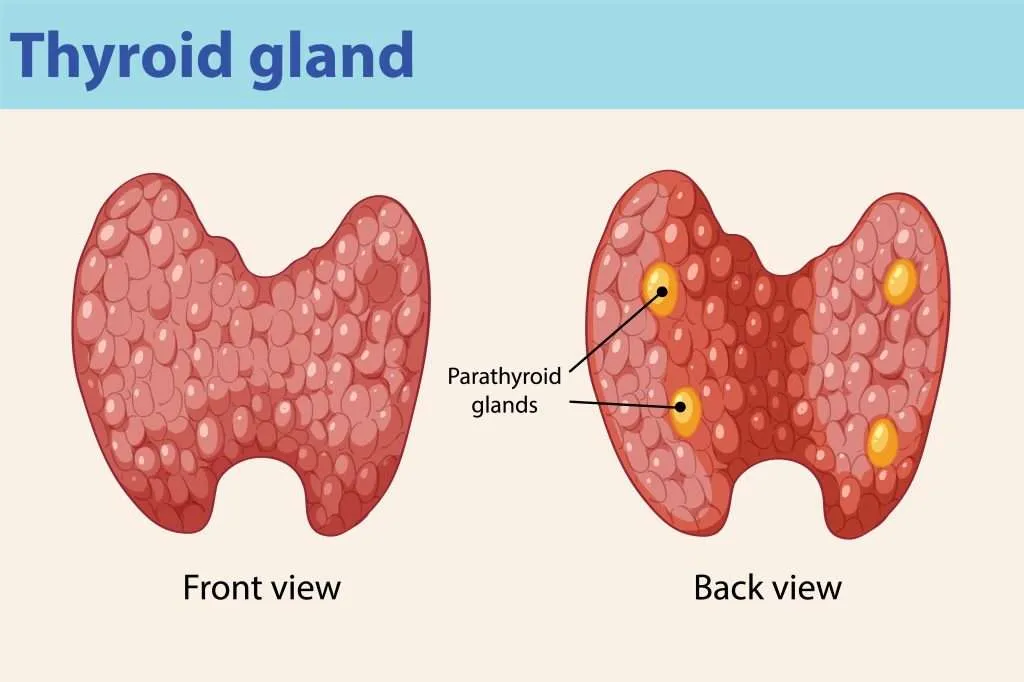
parathyroid glands
four small glands embedded in posterior surface of the thyroid gland
can very in number
secrete parathyroid hormone
parathyroid hormone (PTH)
Gland: parathyroid gland
Target organ: bone, kidneys, and small intestine
Effects: raises blood calcium, stimulates bone resorption and inhibits deposition, reduce calcium excretion, and enhance calcitriol synthesis( calctitriol promotes osteoclast activity)
adrenal glands
sit on top of the kidneys
adrenal medulla (inner)
adrenal cortex (outer)

adrenal medulla
inner core
10-20% of gland
endocrine and sympathetic ganglion
contains chromaffin cells
chromaffin cells
in adrenal medulla
when stimulated by nerve fibers, they release catecholamines
catecholamines
epinephrine, norepinephrine, dopamine
Gland: adrenal medulla
Target organ: most tissues
Effects: increase alertness and prepare the body for physical activity
adrenal cortex
outer layer
secretes corticosteroids
has three zones: zone glomerulosa, zona fasciulata, zone reticularis

zona glomerulosa
thin outer layer
secretes mineralocorticoids
zona fasciculata
thick middle layer
cells arranged in fascicles separated by capillaries
secretes glucocorticoids
zona reticularis
inner layer
cells in branching network
secretes glucocorticoids and androgens
mineralcorticoids
regulate electrolyte balance
glucocorticoids
regulate fuel metabolism
aldosterone
Gland: adrenal cortex (only in zone glomerulosa)
Target organ: kidney
Effects: raise blood pressure maintains blood pressure and volume by promoting Na+ and water retention, and K+ excretion
Renin-angiotensin-aldosterone system (RAAS)
baroreceptors near hear detect low BP which activates sympathetic reflex
renin is released from kidney
renin acts on angiotensinogen to form angiotensin I
ACE is released from lungs
ACE converts angiotensin I to angiotensin II
angiotensin II acts on the adrenal gland to stimulate release of aldosterone

cortisol
Gland: adrenal cortex
Target organ: most tissues
Effects: Help body adapt to stress and repair damaged tissue by: stimulating fat and protein catabolism, gluconeogenesis, causing release of glucose and FAs into the blood
androgens
Gland: adrenal cortex
Target organ: -
Effects: primary adrenal sex steroids
DHEA
Gland: adrenal cortex
Target organ: bone, muscle, integumentary, brain, and many others
Effects: precursor of testosterone, stimulates pubic, axillary hair growth, gland development and libido at puberty
estradiol
main adrenal estrogen. source of estrogen in women after menopause because the ovaries no longer secrete estrogen
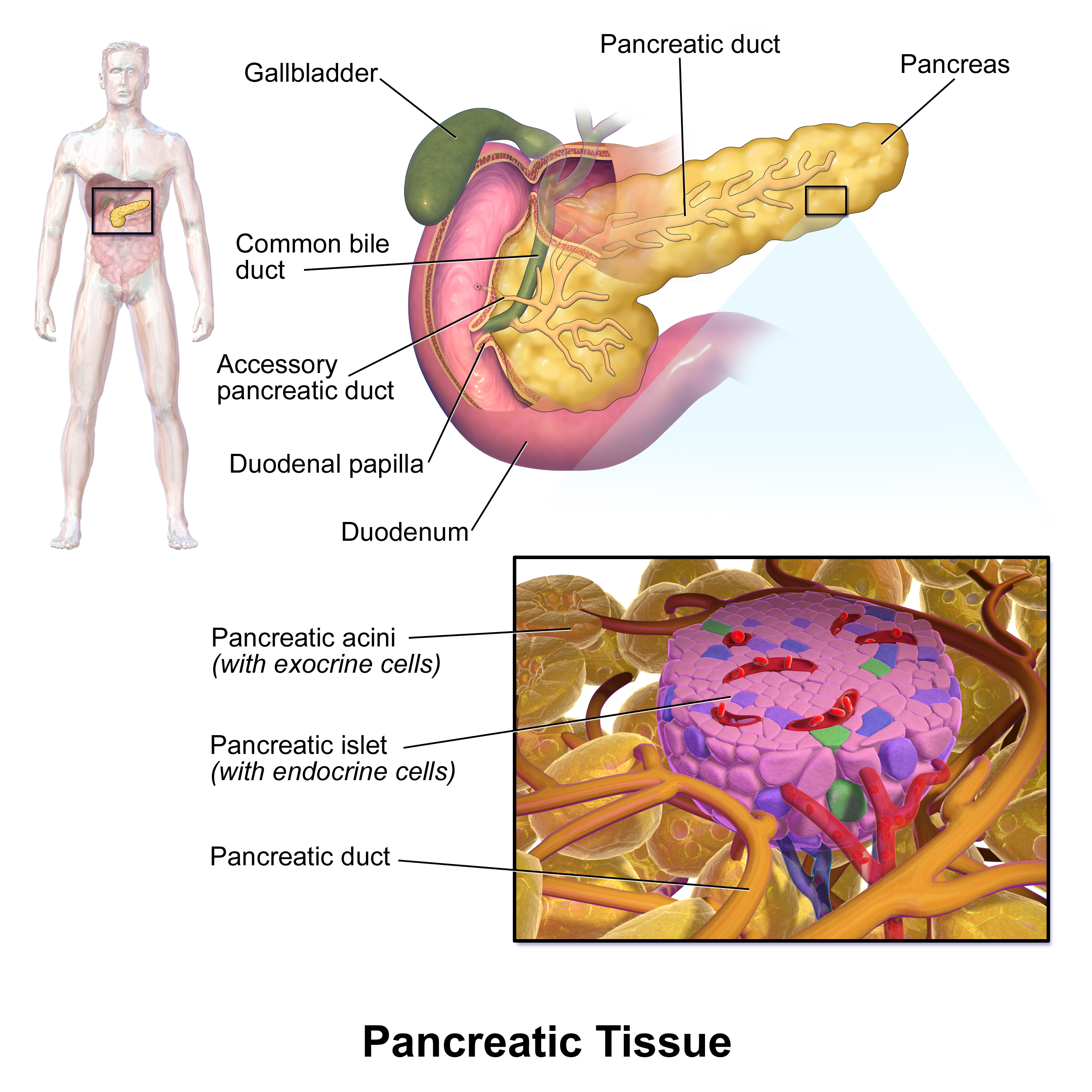
pancreas
mainly exocrine but has some endocrine function
made of many pancreatic islets
regulation of glycemic (blood glucose concentration)

pancreatic islets (islets of langerhans)
endocrine cells
respond to blood nutrient levels
three types
alpha cells
beta cells
delta cells
PP cells
alpha cells
secrete glucagon between meals when blood glucose concentration drops
glucagon
Gland: pancreas
Target organ: mainly liver
Effects: gluconeogeneis, glycogen and fat breakdown, raises blood glucose
beta cells
secrete insulin when glucose and amino acid blood levels are rising
insulin
Gland: pancreas
Target organ: most tissues
Effects: stimulates glucose and amino acid uptake, promotes glycogen, fat, and protein synthesis, lowers blood glucose level
delta cells
secrete somatostatin in response to glucose and amino acids
somatostatin (pancreas)
Gland: pancreas
Target organ: stomach, intestines, pancreatic islet cells
Effects: paracrine regulator of glucagon and insulin
PP cells
secrete pancreatic polypeptide for 4 to 5 hours after a meal
Pancreatic polypeptide (PP)
Gland: pancreas
Target organ: brain
Effects: acts on brain to inhibit vagal stimulation of pancreas to reduce secretion of pancreatic enzymes no longer needed
ovaries
primarily estradiol, progesterone, and inhibin
estrogen
Gland: ovaries
Target organ: many tissues
Effects: stimulates female reproductive development, regulates menstrual cycle and pregnancy, prepares mammary glands for lactation
progesterone
Gland: ovaries
Target organ: uterus, mammary glands
Effects: regulates menstrual cycle and pregnancy, prepares mammary glands for lactation
inhibin
Gland: ovaries and testes
Target organ: anterior pituitary
Effects: inhibits FSH secretion
testes
secrete testosterone and inihbin
seminiferous tubules secrete sperm and hormones
nurse cells
cells within seminiferous tubules that release inhibin
interstitial endocrine cells
between seminiferous tubules, secretes testosterone and sex steroids
testosterone
Gland: testes
Target organ: many tissues
Effects: stimulate fetal and adolescent development, musculoskeletal growth, sperm production, and libido
cholecalciferol
Gland: skin
Target organ: -
Effects: precursor of calcitriol
calcidiol
Gland: liver
Target organ: -
Effects: precursor for calcitriol
angiotensinogen
Gland: liver
Target organ: -
Effects: precursor of angiotensin II
erythropoietin
Gland: liver and kidneys
Target organ: red bone marrow
Effects: promotes red blood cell production, increases oxygen-carrying capacity of blood
hepcidin
Gland: liver
Target organ: small intestine, liver
Effects: regulates plasma iron level
angiotensin I
Gland: kidneys
Target organ: -
Effects: precursor to angiotensin II
natriuretic peptides
Gland: heart
Target organ: kidney
Effects: lower blood volume and pressure by promoting Na+ and water loss