Lecture 53: Polysystemic Mycotic Infections
 Call Kai
 Learn
 Practice Test
 Spaced Repetition
 Match
 Flashcards
 Knowt Play
1/40

There's no tags or description
Looks like no tags are added yet.
41 Terms

what are these showing?
blastomycosis
blastomycosis
large breed, young, male sporting dogs
subclinical infection is rare
clinical signs → cough, ocular disease, skin disease
fever, lymphadenopathy
fungal osteomyelitis and lameness

what are these showing?
blastomycosis ocular signs

what is this?
blastomycosis

what are these showing?
disseminated blastomycosis

what is this radiograph showing?
blastomycosis → snowstorm effect, nodular, diffuse

what is this radiograph showing?
marked hilar lymphadenopathy from blastomycosis

what are these showing?
blastomycosis in bones → osteolytic ad osteoproductive lesion with a pathologic fracture
blastomycosis bloodwork
normocytic, normochromic, nonregenerative anemia
lymphopenia
neutrophilic leukocytosis with or without a left shift, and monocytosis
hypoalbuminemia and hyperglobulinemia
hypercalcemia
diagnosis of blastomycosis
serum antibodies → low sensitivity
urine/serum antigen test → high sensitivity (>90% when urine used), not specific
definitive diagnosis of blastomycosis
cytology → FNA or masses, lymph nodes, etc, impression smears of draining tracts
histopath
culture

what is this?
FNA of a skin lesion showing blastomyces yeast
blastomycosis treatment
amphotericin B → used IV for life threatening systemic disease
itraconazole → best option! treat for 4 weeks beyond resolution of dz
histoplasmosis
most commonly seen in cats
<7 years of age
subclinical infection is common
pulmonary infection and disseminated infection are most common with clinical infection
large bowel diarrhea is most common due to colonic infiltration

what are these showing?
histoplasmosis

what is this radiograph showing?
histoplasmosis → tracheal lymphadenopathy

what is this showing?
histoplasmosis → widespread granulomatous pneumonia in the cat
ocular lesions of histoplasmosis
chorioretinitis is most common but can include conjunctivitis, retinal detachment, and optic neuritis

what is this showing?
histoplasmosis ocular lesions
histoplasmosis bloodwork
normocytic, normochromic, nonregenerative anemia is most common in dogs and cats
neutrophil counts can be normal, increased, or decreased

what is this?
histoplasma in mononuclear cells

what is this showing?
histoplasma in a neutrophil and from FNA
diagnosis of histoplasmosis
urine antigen testing for cats and dogs
cytology → rectal scrapings, bone marrow or buffy coat, FNAs or affected organs
histopath
PCR assay
histoplasmosis treatment
itraconazole → first choice with fewest side effects
amphotericin B for life threatening systemic disease
coccidioidomycosis
dogs → young, male, large breed dogs
90% of affected dogs are lame, with swollen, painful bones or joints
in cats, skin lesions most common (56%), then respiratory disease (25%)

what are these showing?
coccidioidomycosis
presenting complaints of coccidioidomycosis
cough, dyspnea, anorexia, weakness, weight loss, lymphadenopathy, ocular inflammation, and diarrhea
pulmonary abnormalities → crackles, wheezes, pleural effusion
coccidioidomycosis bloodwork
normocytic, normochromic, nonregenerative anemia
leukocytosis, leukopenia, and monocytosis are most common
hyperglobulinemia
diagnosis of coccidioidomycosis
serum antibodies are detected by complement fixation (CF), AGID, and tube precipitin (TP) tests
definitive diagnosis by cytology, histopath, PCR assay or culture
coccidioidomycosis treatment
amphotericin B for life threatening systemic disease
fluconazole used most often for respiratory infections
itraconazole and ketoconazole are also used
tx for 60-90 days or until signs resolved for 1 month

what is this?
coccidioidomycosis

what is this?
sporotrichosis
sporotrichosis
lymphocutaneous most common form → small firm nodules in skin, infection ascends along lymphatics
nodules rupture and drain
in cats, lesions seen most often on bridge or nose or head (pinnae)
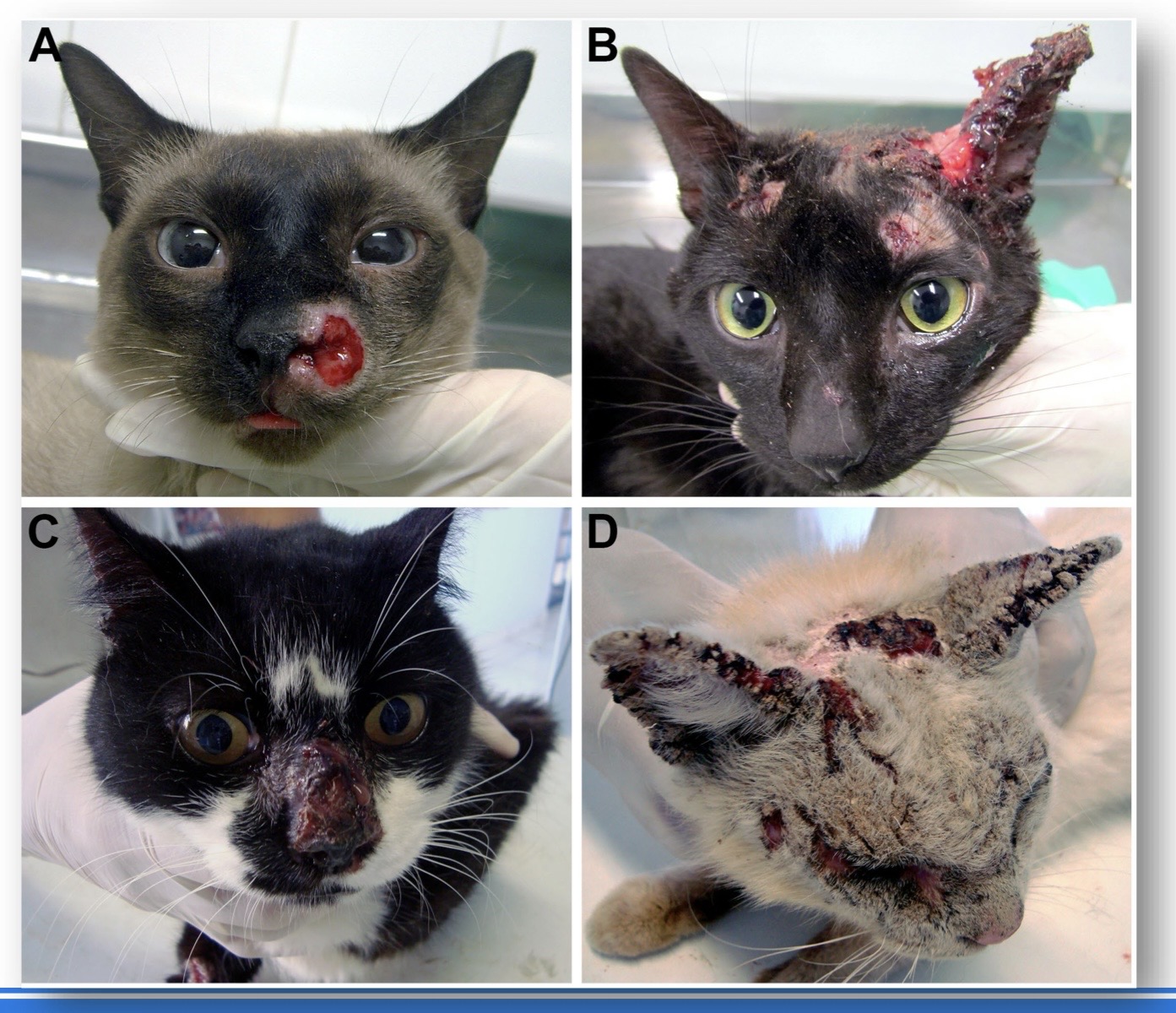
what is this showing?
sporotrichosis
diagnosis of sporotrichosis
culture from lesion samples
cytology in cats
fluorescent antibody test available

what is this?
impression smear from ulcerated skin lesion of sporotrichosis
sporotrichosis treatment
itraconazole is treatment of choice
continue course 3-4 weeks past clinical cure
terbinafine is also used
what is this?
sporotrichosis → zoonosis

what is causing these ulcerated lesions on the head of this cat?
sporothrix schenckii
what is the most common clinical sign for coccidioidomycosis infection in a dog?
lameness → 90% of affected dogs are lame with swollen, painful bones or joints

what is you diagnosis and what drug will you use for treatment?
blastomycosis and itraconazole