ARS 472 Quiz 2
 Call Kai
 Learn
 Practice Test
 Spaced Repetition
 Match
 Flashcards
 Knowt Play
1/54

There's no tags or description
Looks like no tags are added yet.
55 Terms
Qin dynasty
221 - 207 BC
Conquered the six other warring states

Han dynasty
206 BC - 220 AD
Three parts
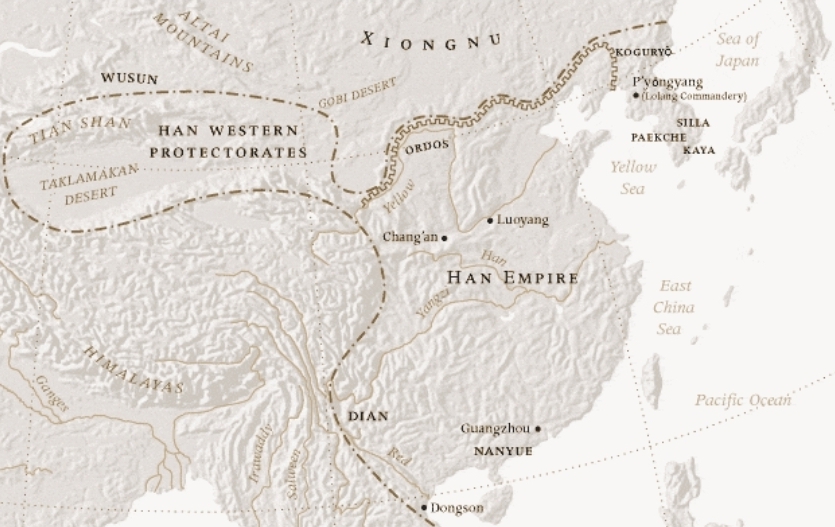
Western Han: 206 BC - 9 AD
Xin (Wang Mang): 9 - 25
Eastern Han: 25 - 220
Three Kingdoms
221 - 265 AD
Shu
Wei
Wu
Western Jin
265 - 317
Southern Dynasties
Eastern Jin 317 - 420
Liu Song
Southern Qi
Liang
Chen
Northern Dynasties
Northern Wei 386 - 535
Eastern Wei
Northern Wei
Northern QI
Northern Zhou
The Tomb of Qin Shihuangdi
Famous tomb of the first emporer of China


Name
Culture/period/dynasty
Location
Terracotta Army at the Tomb of Qin Shihuangdi
Qin dynasty
Lingtong, Shaanxi province

Name
Location
Measurements
Where is it now
Figurines of the tomb of Emporer Jingdi
Yangling, Shaanxi province
H: approx 60 cm
Han yangling museum, Xi’an

Name
What is this image
Tomb at ManCheng
ManCheng tombs were rock cut tombs that belong to royalty of the Western Han
Cut away showing tentative reconstruction of Lui Sheng’s tomb

Name
Culture/ period/ dynasty
Date
Where was it found
Jade suit sewn with gold thread, shroud for Dou Wang
Western Han
113 BC
Dou Wan’s tomb, ManCheng, Hebei province

Name
Type of peice
Culture period dynasty
Date
Medium
Measurements
Where It was found
Fairy Mountain incense burner
boshan xianglu
Western Han
113 BC
Bronze inlaid with gold
H: 26 cm
Liu Sheng’s tomb ManCheng

Name
Culture period dynasty
Date
Material
Measurements
Where it was found
Lamp held by kneeling servent girl
Western Han
Ca. 173 BC
Gilt Bronze
H: 48 cm
Dou Wan’s tomb, ManCheng

The Mawangdui Tombs
Famous tombs from the Western Han dynasty
Contain the tombs for
The Marquis of Dai
His wife: Lady Dai (her body had been really well preserved)
And another male member of the family, many people say it's their kid


Cross section and model of Tomb No.1 of the Mawangdui tombs
Aka Lady Dai's tomb

Name
Culture period dynasty
Date
Material
Measurements
Where was it found
Funeral banner with painting on silk
Western Han
Ca.168 BC
Painting on silk
205 × 92 cm
From tomb no.1 at Mawangdui
Human province museum, Changsha

Detail on Funeral Banner at (Lady Dai’s) tomb no. 1 at Mawangdui
sun and moon perhaps symbolizing ying and yang or the idea of balance

Detail on Funeral Banner at (Lady Dai’s) tomb no. 1 at Mawangdui
The figure standing in the center could represent Lady Dai

Detail on Funeral Banner at (Lady Dai’s) tomb no. 1 at Mawangdui
perhaps a depiction of the underworld
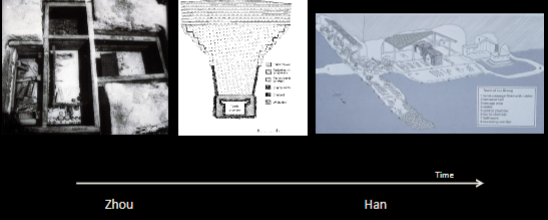
Differences in tombs between the Zhou and Han dynasties
Name
Date
where was it found
Where is it now
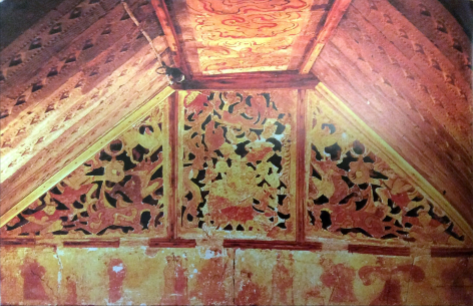
Partition gable with “two peaches kill three warriors”
1st Century BC
mural in Tomb 61 Luoyang, Henan province
Museum of ancient tombs at Luoyang

Name
Date
measurement
What is it based on
Drawing of “Two Peaches Kill Three Warriors”
1st Century BC
25×206 cm
Based on the Mural in Tomb 61, Luoyang, Henan Province
Name
What does it show
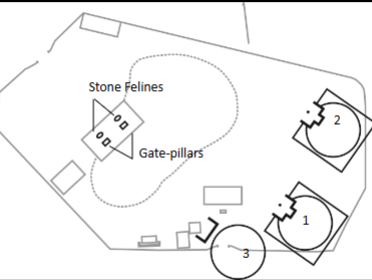
The Wu Family Shrines
A cluster of Eastern Han dynasty memorials and tombs
Include a lot of ancient Chinese pictorial art
Site reconstruction map showing possible locations of Chamber 1, 2, and 3 at Wu site
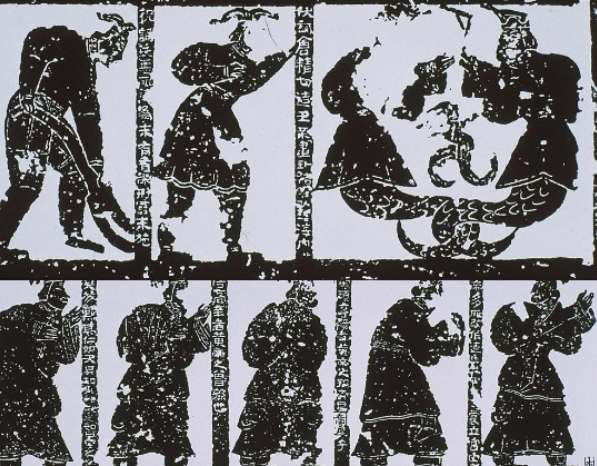
Name
Where is it from
ink rubbing taken from a stone relief carving
Wu Lang Shrine from the Wu Family Shrine

Name
Story
Where was it found
Wu Liang Shrine: Story of the Virtuous Aunt of Liang
The story: it shows a woman who tries to save kids from a fire. Her moral duty was to save her brother’s kid above her own. However, when she made it out she realized she had saved her own kid and not her brother’s kid like she was supposed to. Now, it was too late. Filled with shame, she chose to throw herself back into the burning house to try to save her brother’s kid or die trying
Wu Liang Shrine, Wu family shrines
rubbing (above)
reconstruction (below)

Name
What type of Calligraphy is this
Date
Culture period dynasty
Location
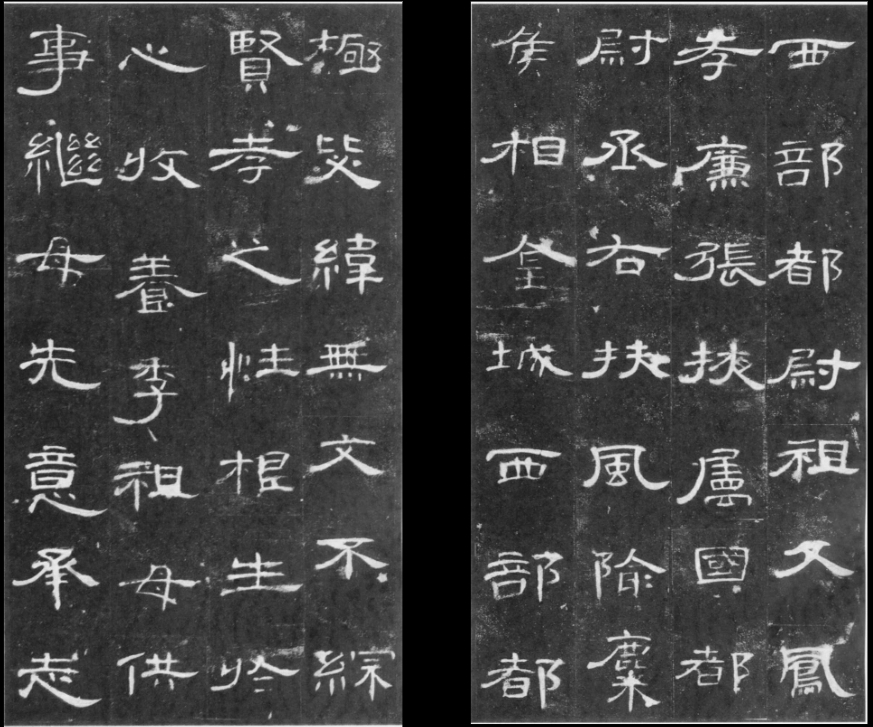
Liqi Bei
clerical script or lishu
156 AD
Han dynasty
Qufu, Shangdong province

Name
Culture period dynasty
Date
Caoquan Bei
Eastern Han dynasty
185 AD

Map of Northern Wei and Southern Qi
500 AD

Name
Who is it attributed to
Type of peice and materials
Measurements
Where is it now
Wise and Benevolent Women
Attributed to Gu Kaizhi, possible of Song Dynasty copy
Hand scroll, ink and slight color on silk
25.8 × 470.3 cm
The palace museum, Beijing

Wise and benevolent women details

Name
Material
Measurements
Where is it now
Sections of Admonitions of the court instructress to the palace ladies
Hand scroll, ink and color on silk
329×25cm
British Museum, Lodon

Name
Material
Measurements
Where is it now
Sections of Admonitions of the court instructress to the palace ladies
Hand scroll, ink and color on silk
329×25cm
British Museum, Lodon

Name
Culture period dynasty
Date
Where was it found
Lacquer-painted Wood screen
Northern Wei dynasty
Before 484
From the Tomb of Sima Jinlong at Datong,
Shanxi province
Name
Artist
Culture period dynasty
Materials
Measurements
Where is it now
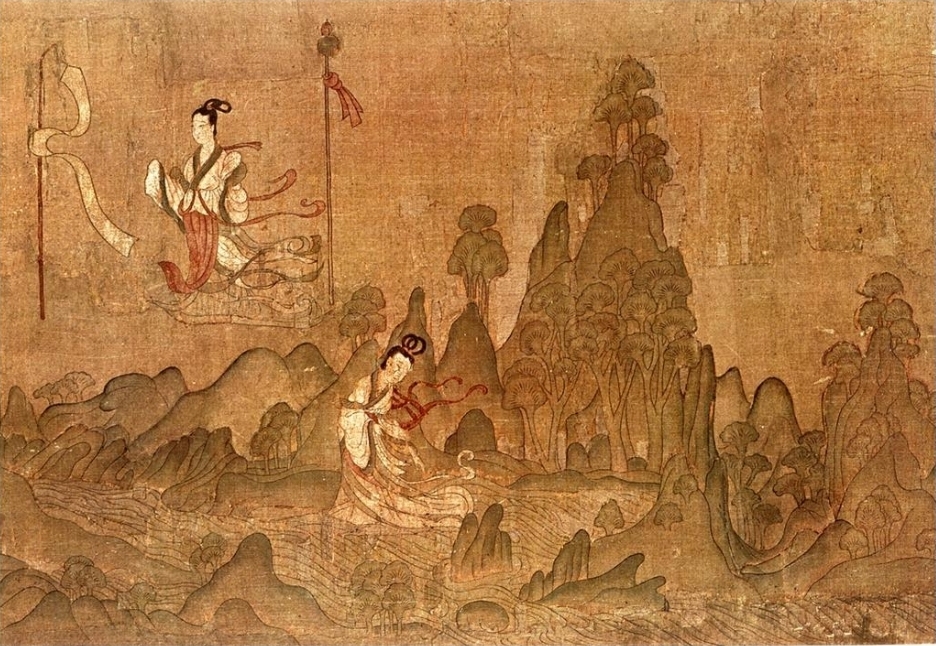
Section of the Nymph of the Luo River
Attributed to Gu Kaizhi
Song Dynasty copy
Handscroll, ink and color on silk
27.1×572.8cm
The palace museum Beijing

Name
Artist
Culture period dynasty
Materials
Measurements
Where is it now
Section of the Nymph of the Luo River
Attributed to Gu Kaizhi
Song Dynasty copy
Handscroll, ink and color on silk
27.1×572.8cm
The palace museum Beijing

Section of the Nymph of the Luo River
Attributed to Gu Kaizhi
Song Dynasty copy
Handscroll, ink and color on silk
27.1×572.8cm
The palace museum Beijing

Name
Culture period dynasty
Material
Measurements
Where was it found
Where is it now
Seven Sages of the Bamboo Grove and Rong Qiqi
East Jin Dynasty
Molded-brick relief
H: 80 cm
From the tomb Xishanqiao, Nanjing
Nanjing museum

Name
Rubbing of Seven Sages of the Bamboo Grove and Rong Qiqi

Name
Culture/period/dynasty
Materials
Measurements
Where is it at now
Stone sarcophagus with stories of Filial Piety
Late Northern Wei Dynasty
Engraved grey limestone
24.5 in x 7 ft 4 in
Nelson-Atkins museum

Detail of Stone sarcophagus with stories of Filial Piety
Late Northern Wei Dynasty
Engraved grey limestone
24.5 in x 7 ft 4 in
Nelson-Atkins museum

Name
Where is it at
Horsemen
Wall painting in the tomb of Lou Rui

Name
Where was it found
An Official Portrait
Wall painting in the tomb of Lou Rui

Name
Date
Artist
Culture/ period/ dynasty
Materials
Measurements
Where is it now
Preface to the poems composed at the Orchid Pavilion
353 AD
Wang Xizhi (known as a master of Chinese Calligraphy)(ca. 303-365)
Tang Dynasty copy
Handscroll ink on paper
24 × 88.5 cm
The palace museum, Beijing

Comparing Liqi Bei and Caoquan Bei
Qin Shihuangdi
First emperor of china
Unified China after the warring states period
And built himself a massive tomb complex
Ruled his people with fear
Terracotta Army
Qin Shihuangdi’s statues that were found buried around his tomb
Confusionsim
Belief system focused on human centered world view with a focus on social ethics and tradition
Doaism
Belief system focused on “going with the flow” and balance- Ying and yang
Tomb of Emporer Jingdi
Western Han dynasty Royal tomb complex
Filled with many miniature terracotta figures depicting Royal Court
Yong
Burial or grave figures built to serve, protect, and accompany the deceased
(not too sure about this one)
Clerical script (Lishu)
Traditional style of Chinese Calligraphy eventually became the main administrative script of the Han dynasty
running script (xingshu)
More expresive style of Chinese calligraphy that balanced speed and legibility
Xie He's six laws
Bro made six laws for creating and appreciating ancient Chinese art
1. Spirit Resonance: capturing living essence of the subject rather than a static copy.
Bone method: ste of brush use
Correspondence to object: illustrating the sunjects physical and visual attributes accuratly
Suitability to type: adding colors and values to match the subject
Division and planning: spacing, composition, and layout of the peice
Transmission and copying: kearning from the masters
Tomb of lou Rui
Northern Qin dynasty high ranking official Lou Rui’s tomb