Chapter 8 - Thinking, Decisions, Intelligence, and Language
 Call Kai
 Learn
 Practice Test
 Spaced Repetition
 Match
 Flashcards
 Knowt Play
1/53

There's no tags or description
Looks like no tags are added yet.
54 Terms
what is cognition
the mental activity that includes thinking and understanding the results of thinking
cognitive psych used to be based on what two ideas (define thinking)
knowledge about the world is stored in the brain in representations
thinking is the mental manipulation of representations of knowledge in the world
what are the two types of mental representations (define them)
analogical representations: mental representations that have some sort of physical characteristic of what they represent (clocks, maps)
symbolic representations: mental representations that do not have a physical component that corresponds to the object/idea (usually words, numbers, or ideas)
what is a concept
a category, or class, of related items (ex: musical instruments or fruits)
what is the prototype model
a way of thinking of concepts: within each category, there is a best example of the category, this is what we think/compare new things to
what is the exemplar model
a way of thinking about concepts: proposes that there is no single best example for the category, rather, each one serves as an example to be compared to
what is a script
script vs schema
a type of schema that directs behavior over time within a situation
script is more specific than schema, and it involves more of a sequence
(ex: going to the movies)
what are stereotypes
cognitive schemas that allow for fast processing of information about people based on the group they belong to
what is decision making
selecting among multiple choices
what is problem solving
finding a way around an obstacle to meet a goal
name relevant bias to this chapter (2)
confirmation
hindsight
what is an anchor
a reference point used in decision making
what is framing
how is a question presented
in decision making, it emphasizes the positive or negatives of a choice
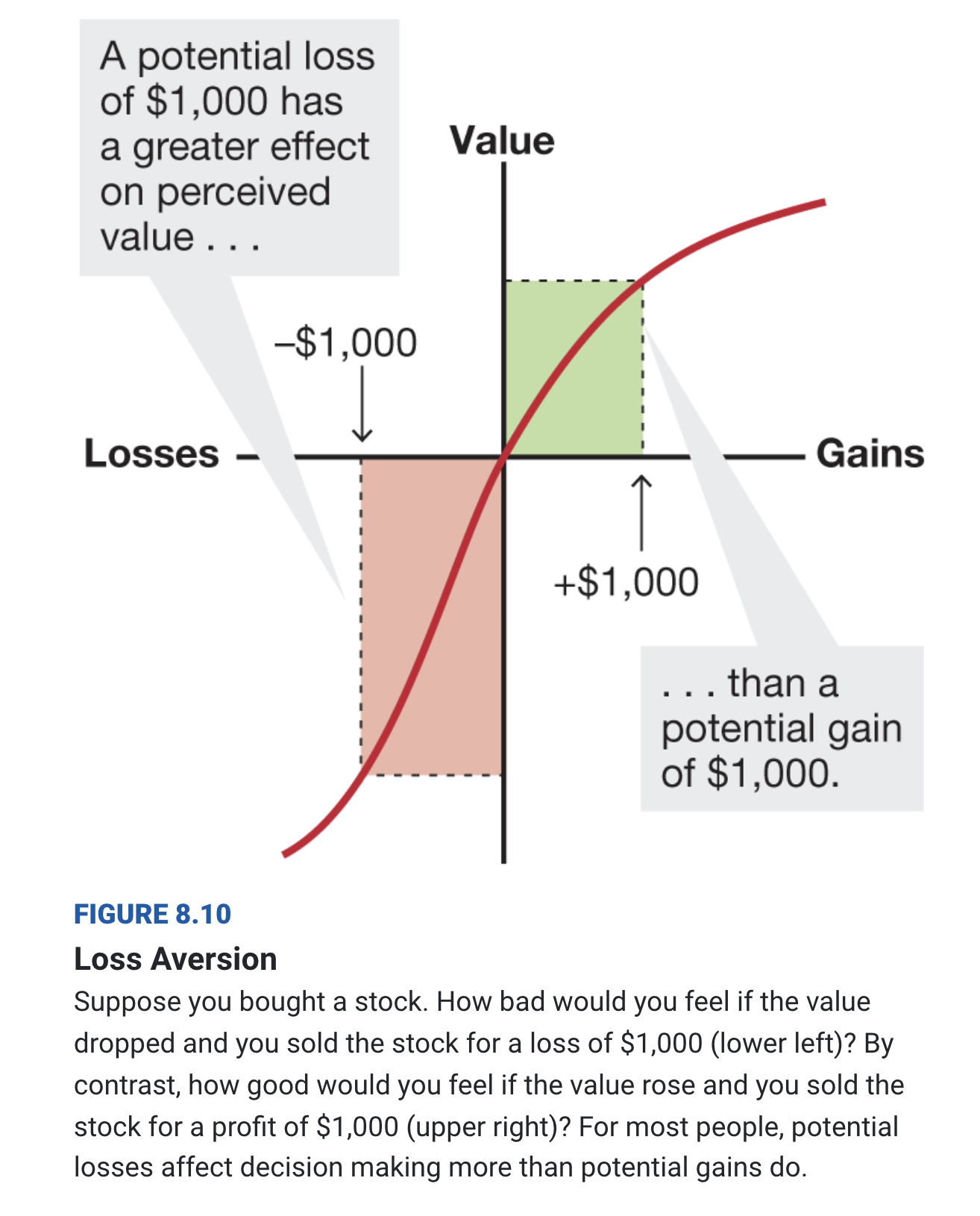
what is loss aversion
people are more scared of losing rather than gaining
what is the representativeness heuristic
tendency to place a person or object in a category if the person or object is similar to our prototype for that category
Ex: Bob gets 8 hours of slepp, maintains a 4.0, and gets into medical school. Is he happy or sad? most people would say happy because Bob represents the model of the happy category/concept
what is the base rate
how frequently an event occurs
what is affective forecasting
people will overestimate how they will feel about something in the future
integral vs incidental
related vs not related
what is the endowment effect
we value things we own more than what we would buy them for
what are incidental affective states
emotions carry over from unrelated sources and influence current judgment
what are integral affective states
emotions triggered directly from a specific choice
what is restructuring
thinking of a problem in a new way
what are mental sets
problem solving strats that have worked in the past
what are functional fixedness
a type of mental set that in which we have fixed ideas about the typical function of an object
what is an insight
lightbulb! solution to problem becomes clear
what is intelligence
the ability to use knowledge to reason, make decisions, make sense of events, solve problems, understand complex ideas, learn quickly, and adapt to environmental challenges
what are the two main types of standardized tests
achievement tests assess people’s current level of skill and knowledge
aptitude tests seek to predict what tasks, and jobs, someone would be good at
binet-simon intelligence scale
first intellegence scale used in france
what was the stanford-binet test
based on binet-simon, used for american children
what was the Wechsler intellegence test
for adults, tested a variety of things vs just a single number
what is mental age
determined by comparing the child’s test score with the avg score for children of each chronological age
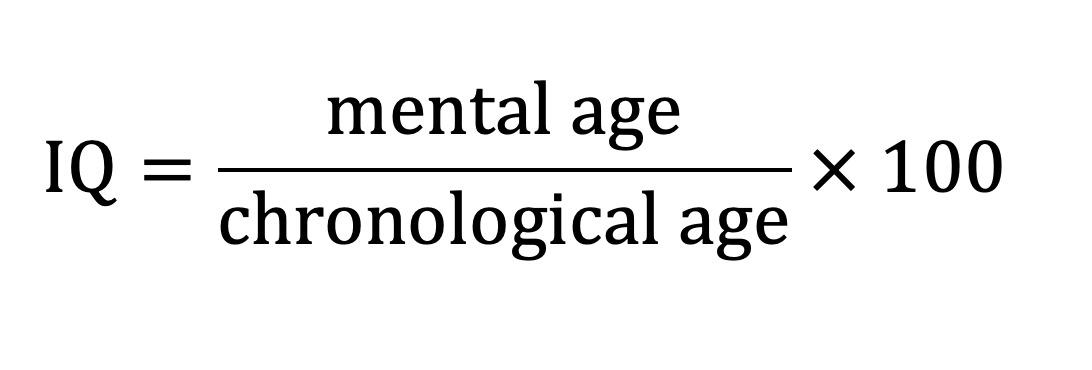
what is IQ? formula? does it work for adults? mean? sd? what % does it make up of variation in performance at work/schoo?
intelligence quotient
doesn’t work for adults
100 pm 15
25%
what is general intelligence
the idea that one factor/grouping underlies all intelligence/can predict it all
fluid vs crystallized intelligence
fluid intelligence is your ability to understand abstract relationships and think logically without prior experiences
crystallized intelligence is your ability to use prior information to solve problems
what is the triarchic theory? define each part?
there are three types of intelligence
analytical - being good at problem solving, puzzles, and other academic things
creative - ability to gain new insight
practical - dealing with everyday tasks
what is emotional intelligence
a form of intelligence that emphasizes managing, recognizing, understanding emotions, and using them to guide decisions/actions.
how does speed relate to IQ relate to life
higher speed = higher IQ = higher lifespan
gray matter is associated with which type of intellegence (fluid/crystalized)
fluid
what is the Flynn effect
IQ has increasing recently
what is language
a system of communication through sounds and symbols governed by grammatical rules
what are morphemes
the smallest unit of language that have meaning, including prefixes and suffixes
all examples of morphemes:
frost, de, er, defroster
what are phonemes
the basic sounds of speech, the building block of language
kissed has two morphemes (kiss + ed) and four phonemes (the sounds you make)
relate the big 4 units of language
sentence → phrase → words/morphemes → phonemes
what is aphasia
language disorder that results in difficulty understanding and producing language
what is linguistic relativity theory
language determine thoughts (proven wrong)
brocas area vs Wernicke’s aphasia
damage to the left side of brain
vs
difficulty understanding speech and communicating meaningfully due to damage in left temporal region
talk about the ages related to discriminating between phonemes
can discriminate between them for up to 6 months of age
after, only can discriminate in their language
what is telegraphic speech
the way toddlers speak, using rudimentary sentences that lack grammar, but still convey meaning. it does follow a specific syntax
when do toddlers begin to have telegraphic speech
18-24 months
what is surface structure
the sound and order of words
what is deep structure
the implicit meaning of sentences
(fat cat)
what is a creole language
a language that evolves from mixing languages
whole language vs phonics (define)
whole language (learning words in context) motivates students to read, but phonics (mapping letters to sounds) produces stronger readers
what is dslexia? what is the central problem? is it genetic?
the struggle to learn how to read, spell, and write (despite normal level of intelligence)
central problem: inability to hear, identify, and use phonemes
yes it is genetic