Structures I: Midterm A
 Call Kai
 Learn
Learn Practice Test
 Spaced Repetition
 Match
Match Flashcards
 Knowt Play
1/74

There's no tags or description
Looks like no tags are added yet.
Name | Mastery | Learn | Test | Matching | Spaced | Call with Kai | Chat |
|---|
No analytics yet
Send a link to your students to track their progress
75 Terms
Beams
Structural element characterized by horizontal members, resistance to bending and shear, and typically found in floor and roof systems.
Columns
Structural element characterized by vertical members, resistance to compression, typically found between floor and roof systems, and is sensitive to buckling.
Trusses
Structural element characterized by triangulated systems, works in tension and
compression, and typically found in roofs and bridges.
Cables
Structural element characterized by its resistance only to tension and is used in bridges, wheels, and
catenary structures.
Arches
Structural element used in compression only systems.
Load path
The route a load follows through a structure to the ground
Types of loads
compression, tension, bending, shear, torsion
tension
pulling force, seen in cables/suspension bridges/tensile membranes, and stretching/getting longer
compression
pushing force, seen in columns/arches/masonry, getting shorter
bending
combination of compression and tension, shape or force into a curve, for example breaking a pencil
shear
sliding force across planes in material, seen in slabs/short beams, sliding a book
torsion
twisting about a longitudinal axis, twist a towel/wrench, typically don’t want to design with this
Structural Systems
Load bearing walls, frame systems, shells and domes, and tensile systems
stone
high compressive strength and low tensile strength
wood
strong in tension and bending
brick
good in compression
steel
high strength to weight ratio, good in tension and compression
concrete
good in compression but bad in tension
composite
engineered wood, carbon fiber
units of mass
kg, lbf-s²/in, and slug
units of length
m, in, ft
units of force
N and lbf
units of stress or pressure
Pa, psi, and psf
types of forces
pull, weight, friction, and normal force
newtons law of inertia (1st law)
an object will remain at rest or in uniform motion in a straight line unless
acted upon by an external force.
Newtons second law of motion (law of acceleration)
F=ma
Newtons third law of motion
For every action, there is an equal and opposite reaction. sum of the forces = 0
Static Equilibrium

Moment equation
M=F×d⟂
M in moment equation
the moment of an axis
F in moment equation
A force
d⟂ in moment equation
the perpendicular distance between the force’s line of action and the axis of rotation
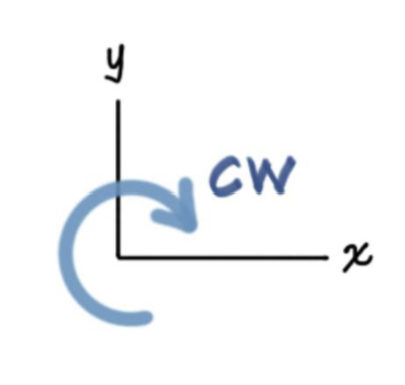
Positive moment direction

Negative moment direction
pin or hinge support

pin or hinge reaction

roller support

roller reaction
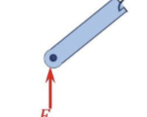
rocker support

rocker reaction

fixed support

fixed reaction

Simply supported
type of beam with a pin support on one end and a pin roller on the other
simply supported with an overhang
type of beam with a pin support in the middle, a roller on one end, and an overhang on the other end.
simply supported with two overhangs
type of beam with a pin and roller support in the middle and an overhang on each end.
cantilever beam
type of beam that is fixed on one end and free on the other

draw the free body diagram


find the ∑Fx=0
Ax=0k

find the ∑Fy=0
Ay=2k

find the ∑Ma=0
By=2k ↑

draw a free body diagram for the problem


Find the ∑Fx=0 reminder w=F/d
Ax=0k
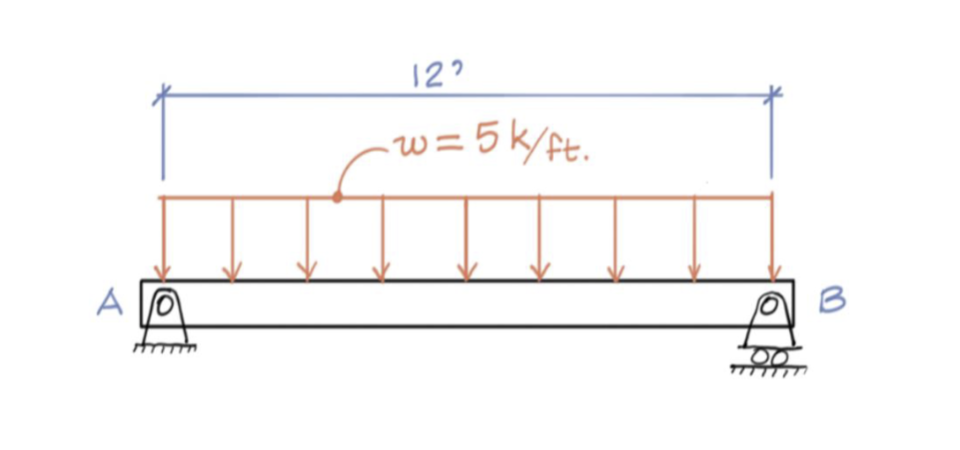
Find the ∑Fy=0
Ay=30k

Find the ∑Ma=0
By=30k
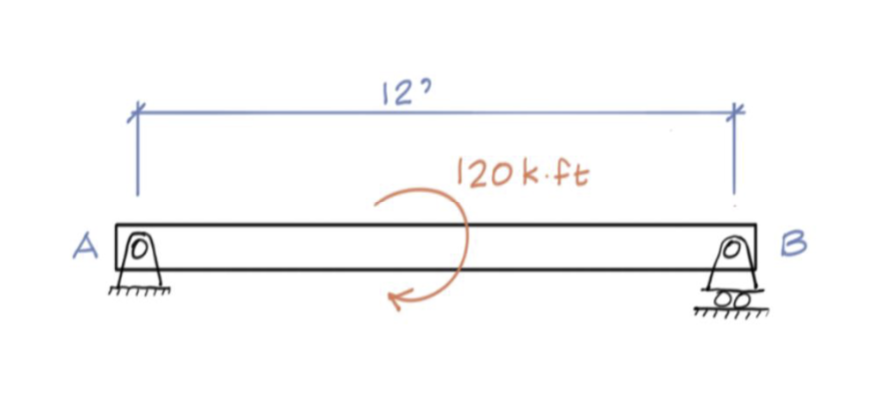
Draw a free body diagram


Find the ∑Fx=0
Ax=0k

Find the ∑Fy=0
Ay=10k ↓

Find the ∑Ma=0
By=10k

draw a free body diagram

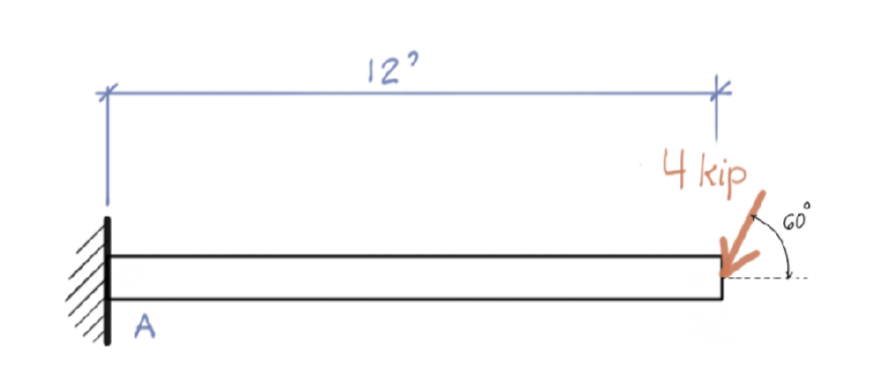
Find the ∑Fx=0
Ax=2k

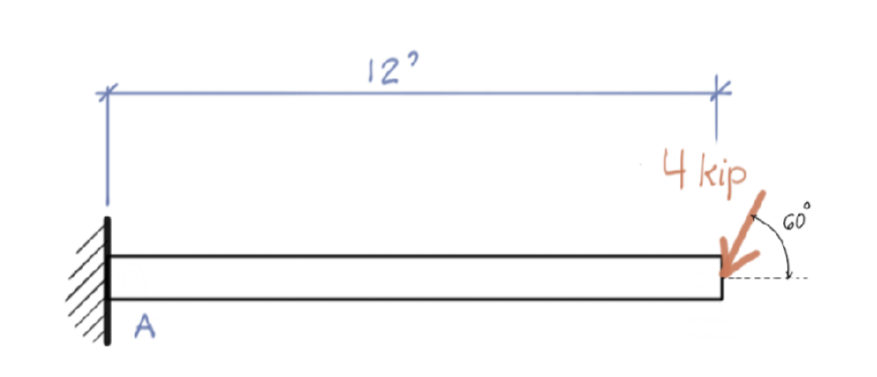
Find the ∑Fy=0
Ay=3.46k


Find the ∑Ma=0
Ma=41.6kft


Draw the free body diagram


Draw the shear diagram


draw the Moment Diagram

In a moment diagram, a positive moment would go in what direction?
down
slope up on a shear diagram translates to what kind of curve in a moment diagram?
concave up
slope down on a shear diagram translates to what kind of curve in a moment diagram?
concave down
What kind of load does a cable carry?
tension
A moment is the 1 of a 2 and its 3 from its line of action to a given point.
product
force
distance
if an object is at rest the sum of the forces on an object…?
is equal to zero
beams and columns can take axial shear and moment
true
pinned supports can take two translational reactions
true
roller supports can take two translational reactions
false; roller supports can take one translational reactions
fixed supports can take two translational and one rotational reaction
true