Earth Science B - Review questions
 Call Kai
 Learn
 Practice Test
 Spaced Repetition
 Match
 Flashcards
 Knowt Play
1/21

There's no tags or description
Looks like no tags are added yet.
22 Terms
Description of atmospheric conditions over time
climate
bottom layer of the atmosphere that we live in
troposphere
form of radiation with the longest wavelength
radio waves
layer that contains ozone and filters uv radiation
stratosphere
average kinetic energy of all the atoms and molecules that make up a substance is referred to as
temperature
two principle absorbers of radiation emitted by earth’s surface are carbon dioxide and what
water vapor
which gas is most abundant in clean, dry air
nitrogen
best description of air
it is a mixture
what gas plays a more important role in weather processes than the others
carbon dioxide
practically all clouds and storms occur in this layer of the atmosphere
troposphere
primary wavelengths emitted by earth’s surface are
longer than the ones emitted by the sun
T/F - Lengths of daylight and darkness are equal during equinox
True
T/F - Vegetation can increase the amount of precipitation that falls over and area
True
The greenhouse effect is best described as
a natural warming of the atmosphere
Recent global warming appears to be the result of
increase of greenhouse gasses in the air
melting ice caps can result in what
rise in sea level
An increase in ocean temperatures can cause
melting of sea ice
How long ago was earth’s temperatures similar to temperatures today
135,000 years ago
when do you think earth was covered with more ice than is on our planet today
between 135,000 and 20,000 years ago
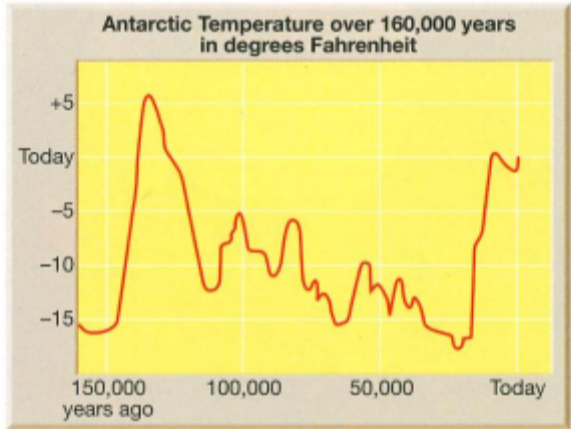
which part of the temperature graph shows the global warming trend discussed in the chapter
the time from 100 years ago to the present
when during the past 160,000 years were carbon dioxide concentrations the highest
about 120,000 years ago
What were the carbon dioxide levels in the atmosphere during the ice age in the past 160,000 years
between 190 and 200 ppm