Cath - OCT/IVUS and ISR /angiogram
 Call Kai
 Learn
 Practice Test
 Spaced Repetition
 Match
 Flashcards
 Knowt Play
1/35

There's no tags or description
Looks like no tags are added yet.
36 Terms

?
Plaque rupture
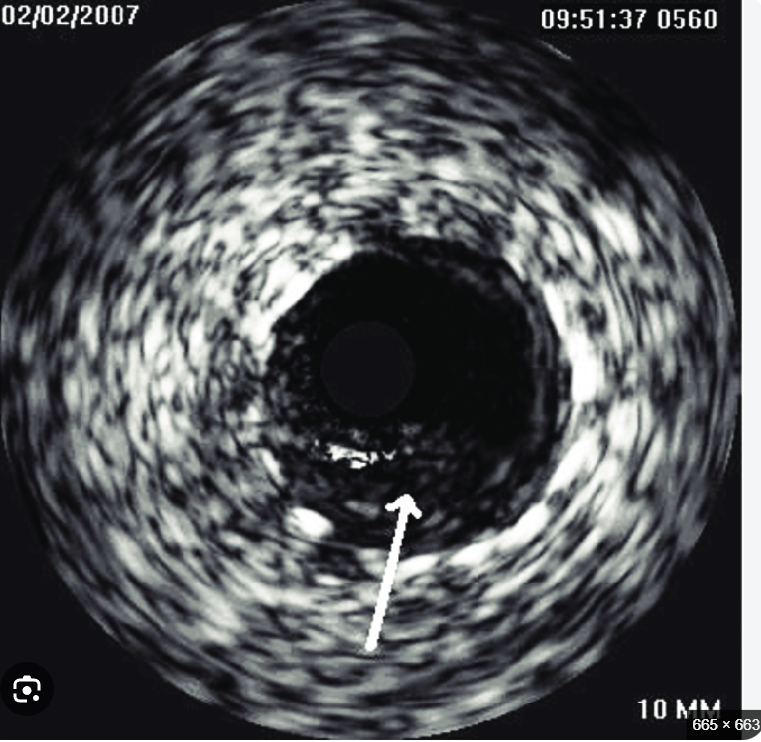
?
stent thombosis
(heteogenecity, pedunculated)

?
Dissection
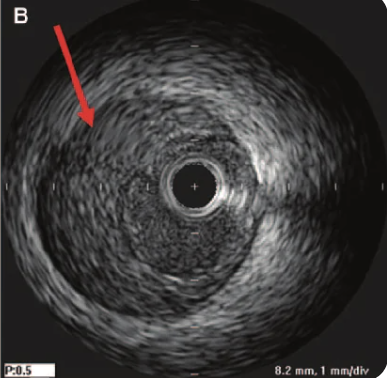
?
Intramural haeamtoma

? what is 1,2,3?
Neointima
stent
vessel
ISR
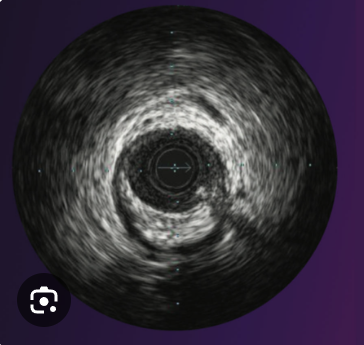
?
Fibrous plaque

?
Fatty/soft plaque
Lower echogenicity than aventitia

?
Calcium
When is IVUS better than OCT?
For Left main lesions
CTO
Ostial
CKD (no contrast)
When is OCT better than IVUS?
Calcium
Definition of lesion morphology
Minimum lumen area to defer stenting?
6mm for LM, 4mm for rest
What is MSA for LM bifurcation target ?
5678
o oLCx = 5.0 mm2
o oLAD = 6.3 mm2
o POC = 7.2 mm2
o LM = 8.2 mm2
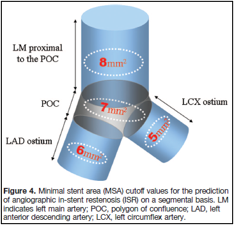
What is the IVUS/OCT cut off for stent underexpansion?
- Absolute: IVUS > 5.0mm2, OCT > 4.5mm2
- Relative: >/= 80% (Acceptable), > /= 90% (optimal) of reference lumen area
What is the IVUS defined criteria for optimal stent deployment?
1. Minimal lumen area in stented segment > 5mm2, or 90% of distal reference lumen area
2. Plaque burden at the 5mm proximal or distal to the stent edge < 50%
3. No stent edge dissection involving media with length > 3mm
Management of stent underexpansion?
High pressure post dilation
Does malapposition need to treated ? If so, when?
Acute malapposition post PCI has not been correlated with long term MACE
Most can be left untreated
- Treat if
o Gross malapposition
o Proximal stent edge malapposition (risk of re-wiring outside stent during future PCI)
What are the mechanisms for ISR?
Stent underexpansion
Neointimal proliferation or neoartherosclerosis
How would you classify ISR according to timeline?

Acute (<1day): can happen while inpatient
Subacute (1d to 1m): highest within 1month
Late stent thrombosis; 1m - 1y
after 1month there is still 1-2 % chance up to 3months
Very late stent thrombosis: 1y +
Risk factors for ISR?
- Clinical related
o DM, CKD , older age, female age, high BMI
o Previous diffuse ISR
o Previous PCI CABG
o Drug resistance
- Lesion related
o Severely calcified lesions
o Diffuse long disease
o Aorto ostial lesions
o Bifurcation lesions
- Stent related
o Stent length
o BMS and first generation DES
o Smaller stent diameter
- Procedural related
o Stent underexpansion
o Stent struts malopposition
o Stent fractures
o Overlapping stents
Management of ISR?
NC (non compliant) or cutting balloon

?
Calcificied plaque
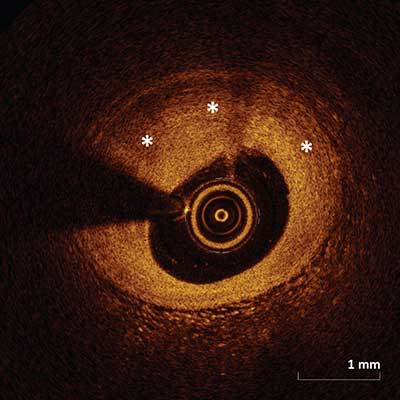
Fibrous plaque

?
Eruptive calcified nodule
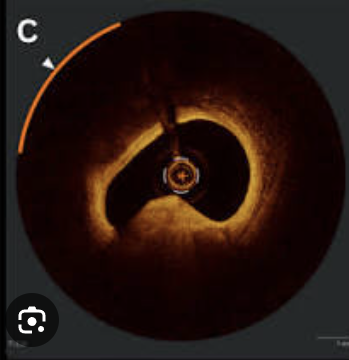
?
Non eruptive calcifed nodule

?
Ruptured plaque

?
Plaque erosion

?
TCFA

?
Red thrombus
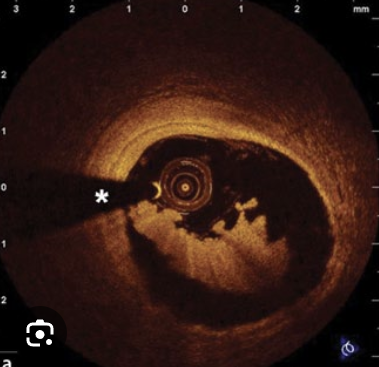
?
white thrombus

?
extensive (A) or limited (B) localized contrast penetration of the FL. Examples of nonfenestrated dissection show either incomplete (C) or complete (D) dehiscence of the TL from the vessel wall.

?
Intramural haematoma

?
stent thrombosis

?
ISR
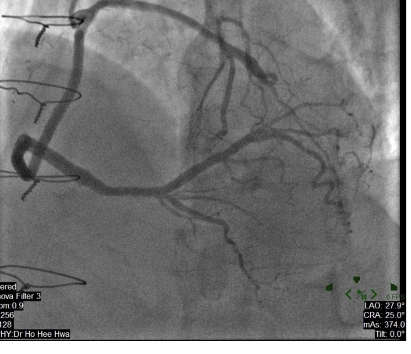
SVG Y graft to RCA and diagonal

SVG jump graft

What type of graft is this?
LIMA RIMA Y graft
