Language Acquisition I+II

0.0(0)
Studied by 0 people
call kaiCall Kai
learnLearn
examPractice Test
spaced repetitionSpaced Repetition
heart puzzleMatch
flashcardsFlashcards
GameKnowt Play
Card Sorting

1/23

encourage image

There's no tags or description

Looks like no tags are added yet.

24 Terms

1
New cards

Comprehension vs Production

Comprehension: understanding what others say (or sign or write)

Production: speaking (or signing or writing) to others

Comprehension precedes production.

<p><span><strong>Comprehension: </strong>understanding what others say (or sign or write)</span></p><p class="MsoNormal"><span><strong>Production:</strong> speaking (or signing or writing) to others</span></p><p class="MsoNormal">Comprehension precedes production.</p>
2
New cards

Word gap


The difference in the number of words known or used by children from different socioeconomic backgrounds, which can impact language acquisition and literacy development.

3
New cards

Word gap - Low SES vs High SES

At 18mo, children from low SES backgrounds produce fewer words


By 24mo there is a 6mo language gap between SES groups
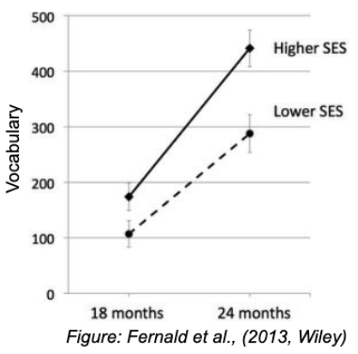
<p><span>At 18mo, children from low SES backgrounds produce fewer words</span></p><p class="MsoListParagraphCxSpLast"></p><p class="MsoListParagraphCxSpLast"><span>By 24mo there is a <strong><u>6mo</u></strong> language gap between SES groups</span></p>
4
New cards

The Matthew Effect (Stanovich, 1996)

“The rich have become richer and the poor have become poorer”

Gaps between groups will widen over time.
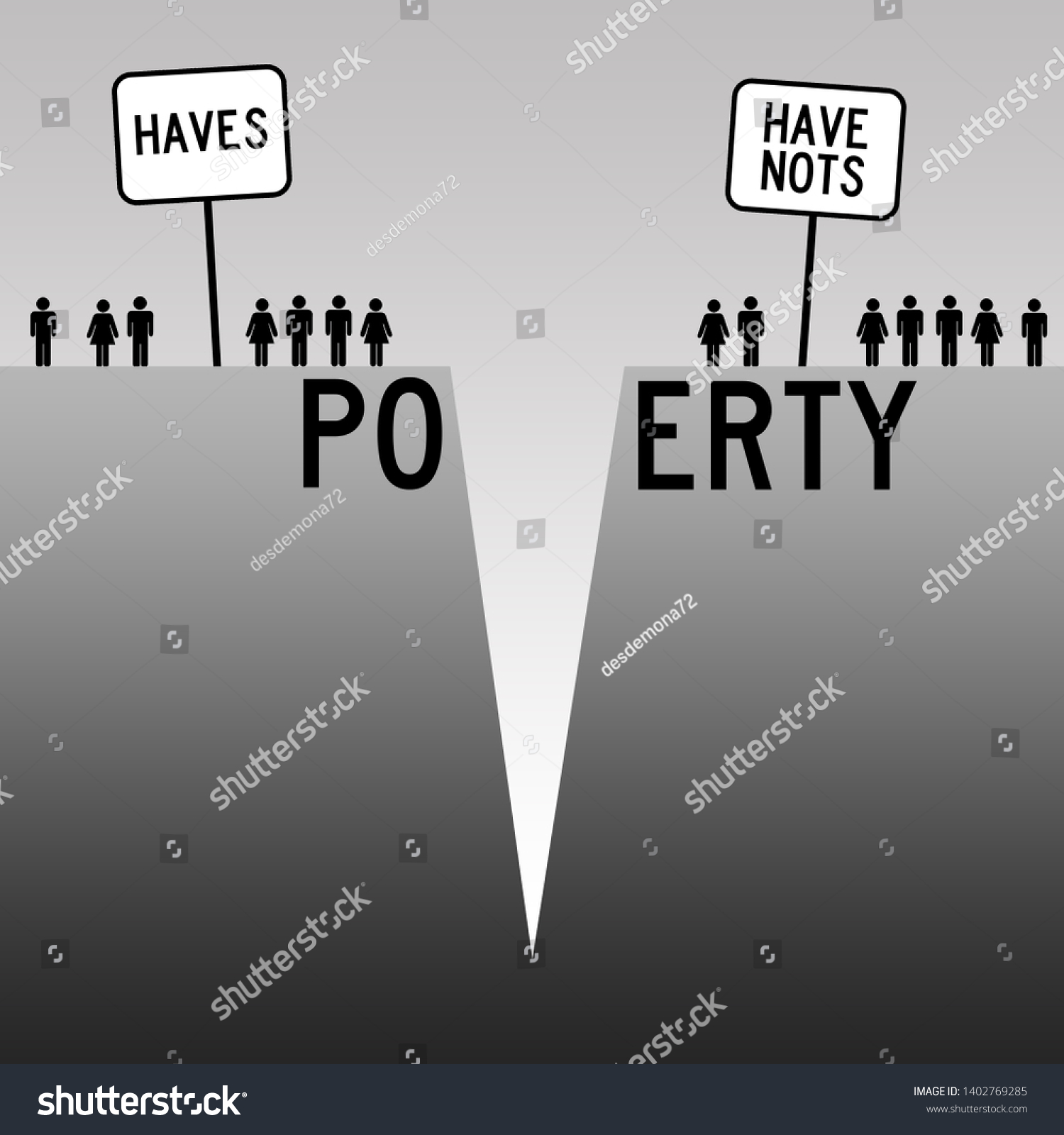
<p><span><em>“The rich have become richer and the poor have become poorer”</em></span></p><p><span>Gaps between groups will <u>widen</u> over time.</span></p>
5
New cards

Recognising Language (preferences)

Foetuses can hear from 15-18 weeks.

Sounds are muffled in the womb. Infants initially prefer muffled sounds

Infants then prefer:
- Their mother’s voice
- Parents over strangers
- Own language(s) over another language(s)

6
New cards

Cadence

The rhythm of language/speech

7
New cards
<p>Recognising Cadence <em>(study)</em></p>

Recognising Cadence (study)

Mothers recited stories twice/day in the last 6 weeks of pregnancy (3.5 hrs total exposure)

At age 55(hours), infants “worked” to produce the story they had heard over a different story (control group did not)

Foetus and infants can learn and recall cadence (and learn contingencies)

8
New cards

Transitional probability

Sounds that occur together are more likely to be from the same word.

<p>Sounds that occur together are more likely to be from the same word.</p>
9
New cards
<p>Statistical learning</p>

Statistical learning

The ability to automatically detect patterns and regularities in the environment through exposure, without explicit instruction.

e.g., infants learn where words begin and end by detecting which syllables frequently occur together.

Statistical learning is domain-general (not specific to language).

10
New cards

How do infants use statistical learning to segment speech? (study)

8-month-olds heard 3 repeated pseudowords for 2 minutes, with no pauses or pitch cues.

  • Transitional probabilities: 1.0 within words, 0.33 between words.

  • At test, infants preferred part-words over words, despite hearing both before.

  • Conclusion: Infants detect statistical patterns to identify word boundaries.


<p>8-month-olds heard 3 repeated pseudowords for 2 minutes, with <strong>no pauses or pitch cues</strong>.</p><ul><li><p>Transitional probabilities: <mark data-color="red" style="background-color: red; color: inherit;">1.0 </mark><strong><mark data-color="red" style="background-color: red; color: inherit;">within</mark></strong> words, <mark data-color="red" style="background-color: red; color: inherit;">0.33 </mark><strong><mark data-color="red" style="background-color: red; color: inherit;">between </mark></strong>words.</p></li><li><p>At test, infants <strong><mark data-color="blue" style="background-color: blue; color: inherit;">preferred part-words</mark></strong> over words, despite hearing both before.</p></li><li><p><strong>Conclusion:</strong> Infants detect statistical patterns to identify word boundaries.</p></li></ul><p></p>
11
New cards

Infant Directed Speech (IDS)

IDS exaggerates differences between vowels, which helps children learn words.


Infant directed speech (IDS) has characteristics that help children isolate words:

-             Higher pitch

-             Exaggerated intonation

-             Simple structure

-             Highly grammatical

-             Slower speed

-             Lots of repetition

<p><strong>IDS </strong>exaggerates differences between vowels, which helps children learn words.</p><p></p><p><span><strong>Infant directed speech (IDS)</strong> has characteristics that help children isolate words:</span></p><p class="MsoListParagraphCxSpFirst"><span>-</span><span style="font-family: Times New Roman; line-height: normal; font-size: 7pt;">&nbsp;&nbsp;&nbsp;&nbsp;&nbsp;&nbsp;&nbsp;&nbsp;&nbsp;&nbsp;&nbsp;&nbsp; </span><span>Higher pitch</span></p><p class="MsoListParagraphCxSpMiddle"><span>-</span><span style="font-family: Times New Roman; line-height: normal; font-size: 7pt;">&nbsp;&nbsp;&nbsp;&nbsp;&nbsp;&nbsp;&nbsp;&nbsp;&nbsp;&nbsp;&nbsp;&nbsp; </span><span>Exaggerated intonation</span></p><p class="MsoListParagraphCxSpMiddle"><span>-</span><span style="font-family: Times New Roman; line-height: normal; font-size: 7pt;">&nbsp;&nbsp;&nbsp;&nbsp;&nbsp;&nbsp;&nbsp;&nbsp;&nbsp;&nbsp;&nbsp;&nbsp; </span><span>Simple structure</span></p><p class="MsoListParagraphCxSpMiddle"><span>-</span><span style="font-family: Times New Roman; line-height: normal; font-size: 7pt;">&nbsp;&nbsp;&nbsp;&nbsp;&nbsp;&nbsp;&nbsp;&nbsp;&nbsp;&nbsp;&nbsp;&nbsp; </span><span>Highly grammatical</span></p><p class="MsoListParagraphCxSpMiddle"><span>-</span><span style="font-family: Times New Roman; line-height: normal; font-size: 7pt;">&nbsp;&nbsp;&nbsp;&nbsp;&nbsp;&nbsp;&nbsp;&nbsp;&nbsp;&nbsp;&nbsp;&nbsp; </span><span>Slower speed</span></p><p class="MsoListParagraphCxSpLast"><span>-</span><span style="font-family: Times New Roman; line-height: normal; font-size: 7pt;">&nbsp;&nbsp;&nbsp;&nbsp;&nbsp;&nbsp;&nbsp;&nbsp;&nbsp;&nbsp;&nbsp;&nbsp; </span><span>Lots of repetition</span></p>
12
New cards

Infant Directed Speech (IDS) speech streams study

When presented with identical speech streams, 7mo infants learned the ‘words’ significantly better if IDS was used.

13
New cards

Child Directed Speech (CDS)

Children who hear more CDS have larger vocabularies

Parents adjust their speech based on words they think their children do not know

5yrs understand sentences better in CDS

CDS even helps adults learn words in a new language.

14
New cards

Recognising words (by months)

By 4.5mo: recognise own name

6mo: understand words “Mommy” and “Daddy”

6-9mo: show understanding of some words for familiar objects e.g., food and body parts.

15
New cards
<p>What did research on infants’ response to their name reveal about early ASD detection?</p>

What did research on infants’ response to their name reveal about early ASD detection?

From 9mo, infants later diagnosed with ASD showed more failures to orient to their name than other infants.

More repeated failures predicted an earlier ASD diagnosis.

Conclusion: Response to name from 9 months may be a useful early ASD screening indicator


16
New cards

Dragon study used to investigate language and categorisation in 10-month-old infants

Infants saw dragons varying from small to big wings, presented in either silence, with one word, or with two words ('geepee' and 'boota').

  • Tested on unseen prototypes:

    • 4: Average small-wing dragon.

    • 16: Average big-wing dragon.

    • 10: Average of all dragons.

    • Plus one completely novel dragon.

  • Prediction: Familiar prototypes would be less interesting (less looking time).


<p>Infants saw dragons varying from <strong>small to big wings</strong>, presented in either <strong>silence, with one word, or with two words</strong> ('geepee' and 'boota').</p><ul><li><p>Tested on unseen prototypes:</p><ul><li><p><strong>4:</strong> Average small-wing dragon.</p></li><li><p><strong>16:</strong> Average big-wing dragon.</p></li><li><p><strong>10:</strong> Average of all dragons.</p></li><li><p>Plus one completely novel dragon.</p></li></ul></li><li><p><strong>Prediction:</strong> Familiar prototypes would be less interesting (less looking time).</p></li></ul><p></p>
17
New cards

What were the results of the dragon study, and what do they suggest about language and categorisation?

  • Silence condition: Formed 1 overall category (dragon 10 familiar).

  • One-word condition: Formed 1 overall category (dragon 10 familiar).

  • Two-word condition: Formed 2 separate categories (dragons 4 and 16 familiar).

Conclusion: Language influences categorisation — using two different labels encouraged infants to divide the same visual stimuli into two distinct categories.

<ul><li><p><strong>Silence condition:</strong> Formed 1 overall category (dragon 10 familiar).</p></li><li><p><strong>One-word condition:</strong> Formed 1 overall category (dragon 10 familiar).</p></li><li><p><strong>Two-word condition:</strong> Formed 2 separate categories (dragons 4 and 16 familiar).</p></li></ul><p><strong>Conclusion:</strong> Language influences categorisation — using two different labels encouraged infants to divide the same visual stimuli into <strong>two distinct categories</strong>.</p>
18
New cards

How was the role of word learning in developing a shape bias investigated?

  • 17-month-olds received vocabulary training on 12 nouns.

  • Shape training: Object nouns (e.g., bucket, pear, ladder, boot).

  • Material training: Substance nouns (e.g., lotion, chalk).


  • Tested whether children generalised novel nouns based on shape or material, for solid and non-solid stimuli.


19
New cards

What were the results of shape vs material vocabulary training, and what do they suggest?

  • Shape training: Greatest vocabulary growth; developed an early (precocious) shape bias, even overgeneralising it to non-solid substances.

  • Material training: Did not develop a material bias.

  • No training: Did not develop the same early shape bias.


20
New cards

Fast Mapping (Carey, 1978)

Ability to quickly link (map) a novel name to a novel object, typically by applying known information.

21
New cards

Fast Mapping (Carey, 1978) (Study)

Children told:

“Bring me the chromium tray, not the blue one, the chromium one.”

13 of 14 children brought the green tray.


One week later:

Children were asked which colour from a palette was the chromium one.

9 out of 13 children chose green
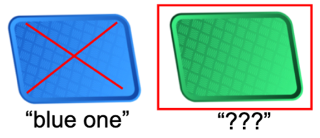
<p><span><strong>Children told:</strong></span></p><p class="MsoNormal"><span><em>“Bring me the chromium tray, not the blue one, the chromium one.”</em></span></p><p class="MsoNormal"><span><strong>13 </strong>of <strong>14 </strong>children brought the green tray.</span></p><p class="MsoNormal"><span>&nbsp;</span></p><p class="MsoNormal"><span><strong>One week later:</strong></span></p><p class="MsoNormal"><span>Children were asked which colour from a palette was the <em>chromium</em> one.</span></p><p class="MsoNormal"><span><strong><mark data-color="green" style="background-color: green; color: inherit;">9 </mark></strong><mark data-color="green" style="background-color: green; color: inherit;">out of </mark><strong><mark data-color="green" style="background-color: green; color: inherit;">13 </mark></strong><mark data-color="green" style="background-color: green; color: inherit;">children chose green</mark></span></p>
22
New cards

Word learning is the product of:

Nested timescales.

  1. What the child is seeing/doing now

  2. What the child just did

  3. The child’s developmental history


<p><strong>Nested timescales.</strong></p><ol><li><p>What the child is seeing/doing now</p></li><li><p>What the child just did</p></li><li><p>The child’s developmental history</p></li></ol><p></p>
23
New cards
<p><span style="font-family: Aptos, sans-serif;"><strong>Example of the Past Impacting Word Learning </strong><em>(Study: Horst, Parsons &amp; Bryan, 2011)</em></span></p>

Example of the Past Impacting Word Learning (Study: Horst, Parsons & Bryan, 2011)

3.5-year-olds heard storybooks 3 times over 1 week, with either the same or different stories. Tested on novel word recall and retention.

  • Results: Children hearing the same stories showed significantly better immediate recall AND later retention of novel words than those hearing different stories.

= Repeated exposure to the same stories enhances word learning and long-term retention, showing how past experiences influence word learning.


<p>3.5-year-olds heard storybooks 3 times over 1 week, with either the <strong>same or different stories</strong>. Tested on novel word recall and retention.</p><ul><li><p><strong>Results:</strong> Children hearing the <strong><mark data-color="yellow" style="background-color: yellow; color: inherit;">same stories</mark></strong> showed significantly <mark data-color="yellow" style="background-color: yellow; color: inherit;">better </mark><strong><mark data-color="yellow" style="background-color: yellow; color: inherit;">immediate recall AND later retention </mark></strong>of novel words than those hearing different stories.</p></li></ul><p>= Repeated exposure to the same stories enhances word learning and long-term retention, showing how <strong>past experiences influence word learning</strong>.</p>
24
New cards
<p><span><strong>Example of Past Impacting Word Learning (</strong><em>Study, Williams &amp; Horst, 2014)</em></span></p>

Example of Past Impacting Word Learning (Study, Williams & Horst, 2014)

Read 3.5yr children naptime storybooks 3x in 1 week

-             Tested immediate recall for novel words

-             Tested retention for novel words


Both story repetition AND sleep facilitated word learning