Visual Arts #2 exam
 Call Kai
 Learn
 Practice Test
 Spaced Repetition
 Match
 Flashcards
 Knowt Play
1/20

There's no tags or description
Looks like no tags are added yet.
21 Terms

Name: Seperation of light from darkness
Artist: Michelango (grumpy, did not want to paint)
Location: Sistine chapel ceiling, Vatican ceiling
Date: 1511-1512
Technique: Fresco (fresh) Watercoloring, Fresco cycle, series of scenes tells 9 stories of genesis but ordered backwards. Fresco goes on wet plaster can’t continuously work on (giornata - amount of plaster able to paint in a given day). “pouncing” with charcoal dust - Michelango was not exact when he did this. Limestone and volcanic ash used for plaster.
illusionistic- gives the illusion that your looking up at God (also foreshadowing)
Composition - Illusionistic architectural framework
Modeling - very shadowy, looks like real body, 3D, life like.

Name: Battle of Hastings begins
Location: Norman - Anglo-saxon, England or France,
Date: 1066- 1082
Material: Linen/wool
Technique: Embroidery(made in great Britain that is known for it), Bayeux Tapestry
230ft long, shows continuous story of the battle
William - Normandy, viking, North France
Manuscript painting - there are mythical animals
Style: Cartoonish, simply/exaggerate to tell story, idealized towards William, Includes negative space to to help with story telling
Astrologers announce a comet - Halley’s comet is in this (bad omen from harold)
Charles Dickens said it was the work of amateurs
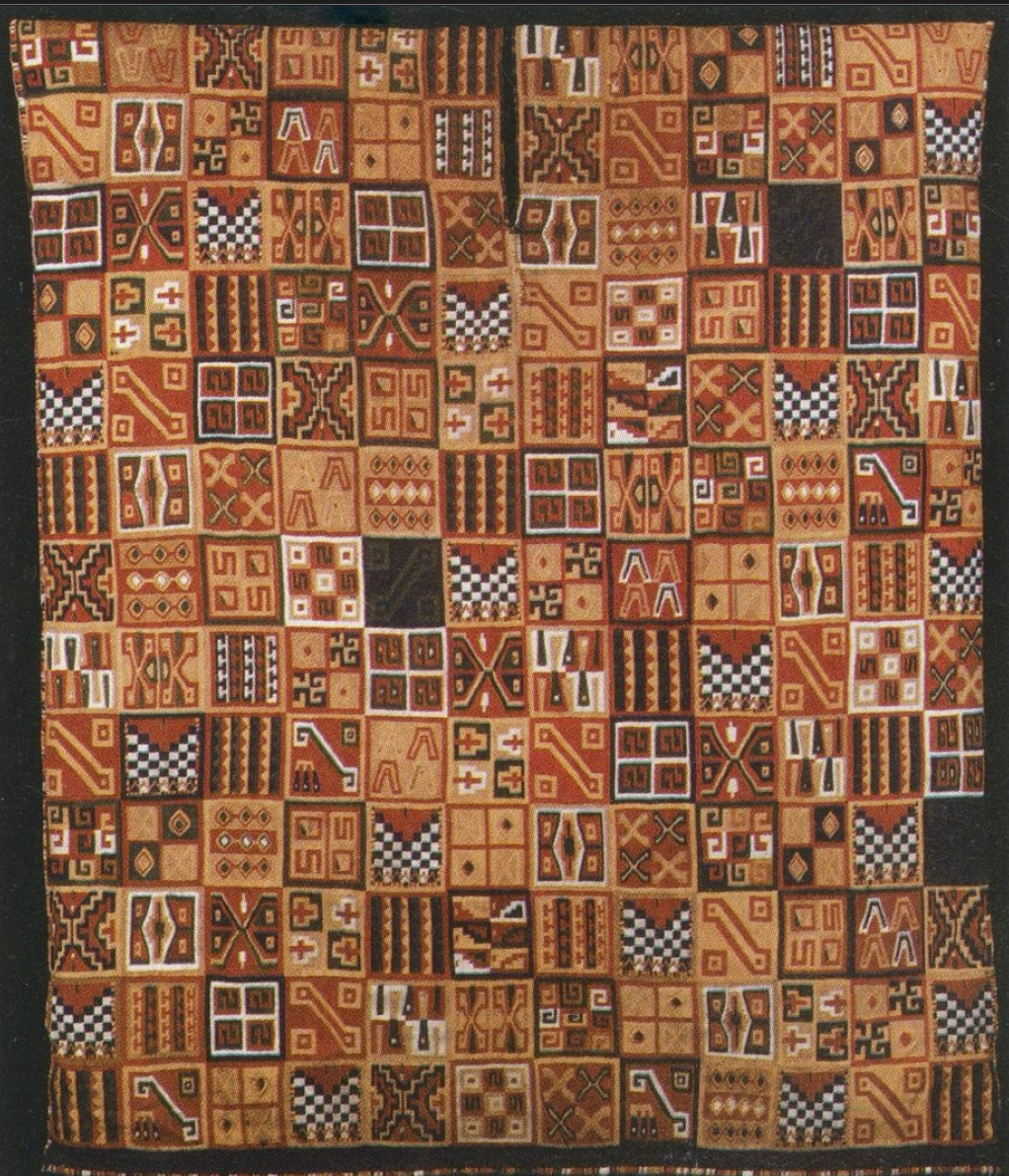
Name: Tunic
Location: Peru, Inca
Date: 1500
Material: Camelid fiber (wool, from alpaca lamb), cotton
Textile (patchwork, family crest of different noble families to show honor, power, and eliteness
Slits in the textile show it is supposed to be worn. Elite status because king of Inca empire, very unique
Cochineal - expensive dye from an insect that when squished is a pinkish/red color.
Women - high priestest, virgin women, protective class, women made the textile
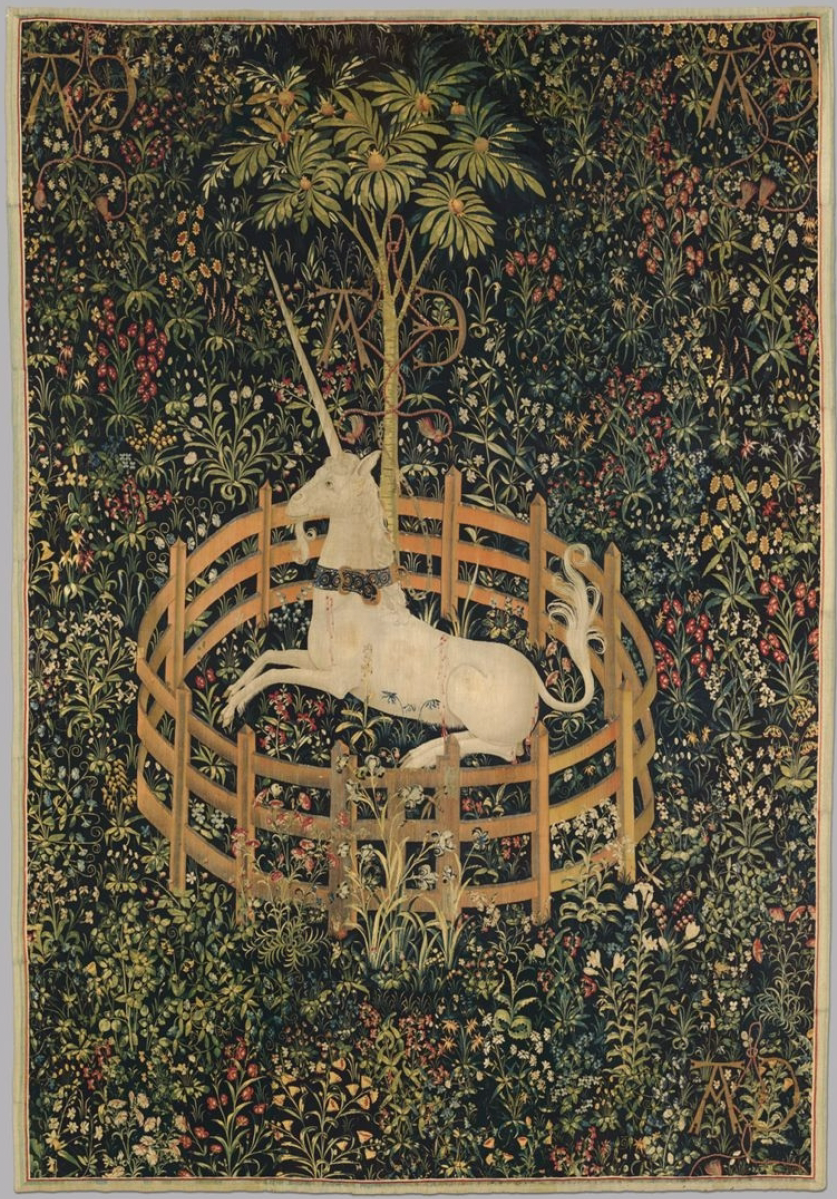
Name: The Unicorn rest in a garden from the unicorn Tapestries
Location: French/Flemish (beligium)
Material: wool/silk/metal thread (silk thread that was wrapped in gold/silver to make the tapestry have a shimmer)
Technique: Woven
Date: 1495-1505
Commissioned by an artistocrat french family, used as decoration, warm walls, ultimate luxury item.
Garden connects to garden of Eden, hints of religion in the art, Unicorn was a symbol of the virgin mary, christ like with wounds, but secular object
In the Met in New York
Medieval art

Name: Shakyamuni Buddha (“Sage of the Shakyas”, familial clan from what is now Nepal)
Location: Saspol Cave 3, Gon-Nila-Phuk cave temples, India (mountainous region)
Technique: Mural Painting (because in cave, not well perserved, falls apart easily - sense of movement from the light and pattern like stained glass)
Date: 15th ce
Manifestation of buddha
Pilgrammage site (travel to worship) the journey, part of the trial
Tibetan buddhist tradition, multiple manifestations of the buddha allow enlightenment in one life time.
several images of the buddha, and some lower dieties, revolve around buddha life and aspects (different things to pray about). Repetition of images.

Name: Waves at Matsushima
Technique: Byobu, Painted screen, adjustable/foldable (good for small houses)
Artist: Tawaraya Sotatsu (lower ranked artist)
Material:Painted screen, gold, ink, color, paper, Fusuma - folding/sliding screen
Location: Kyoto, Japan
Date: 16th - early 17th C
Composition: Abstract, irregular island, silver, trees
Pictorial space: map, 2 views in one painting, eagle eye and normal 90 degree view of the island
Tarashikomi - Pooling of ink, color falling outside of the intended lines, linearity of waves, ink bleeds

Name: Court ladies preparing newly woven silks
Material: Silk with ink/color/gold (can be rolled up, transported) (got silk from the silk worm - parasite of mulberry tree
Location: Somg Dynasty (emperor Huizong)
Attributed to Zhong Xua, court painter of the Tang dynasty that came before the song dynasty
Date: 12th C
Writing on it- Colophon, info about it, Seal - show ownership and multiple owners
Purpose- show how they made silk, in a ceremonial way shown by how the women are dressed, only court ladies, and symbolic

Name: Virgin and Child with Saints Dominic and Aurea
Artist: Duccio di Buoninsegnia
Date: 1312-1315
Material: Tempera/gold/panel (small, portable, foldable)
Icons (iconic, religious (orthodox) because of virgin mary and baby jesus): Tempera (egg white or yoke) or encaustic (wax) on panel (wood) with gold leaf. Pigment and binder to make paint (wax common to make oil, watercolor, and acrylic)
Altar piece: Triptych (like trifold)
Process: Poplor (wood), Gesso (Plaster), Underdrawing, gold leaf, underpainting, final layers
Blue robe Virgin Mary wears and purple Jesus (royalty) - Both very nice colors and shows status and symbol
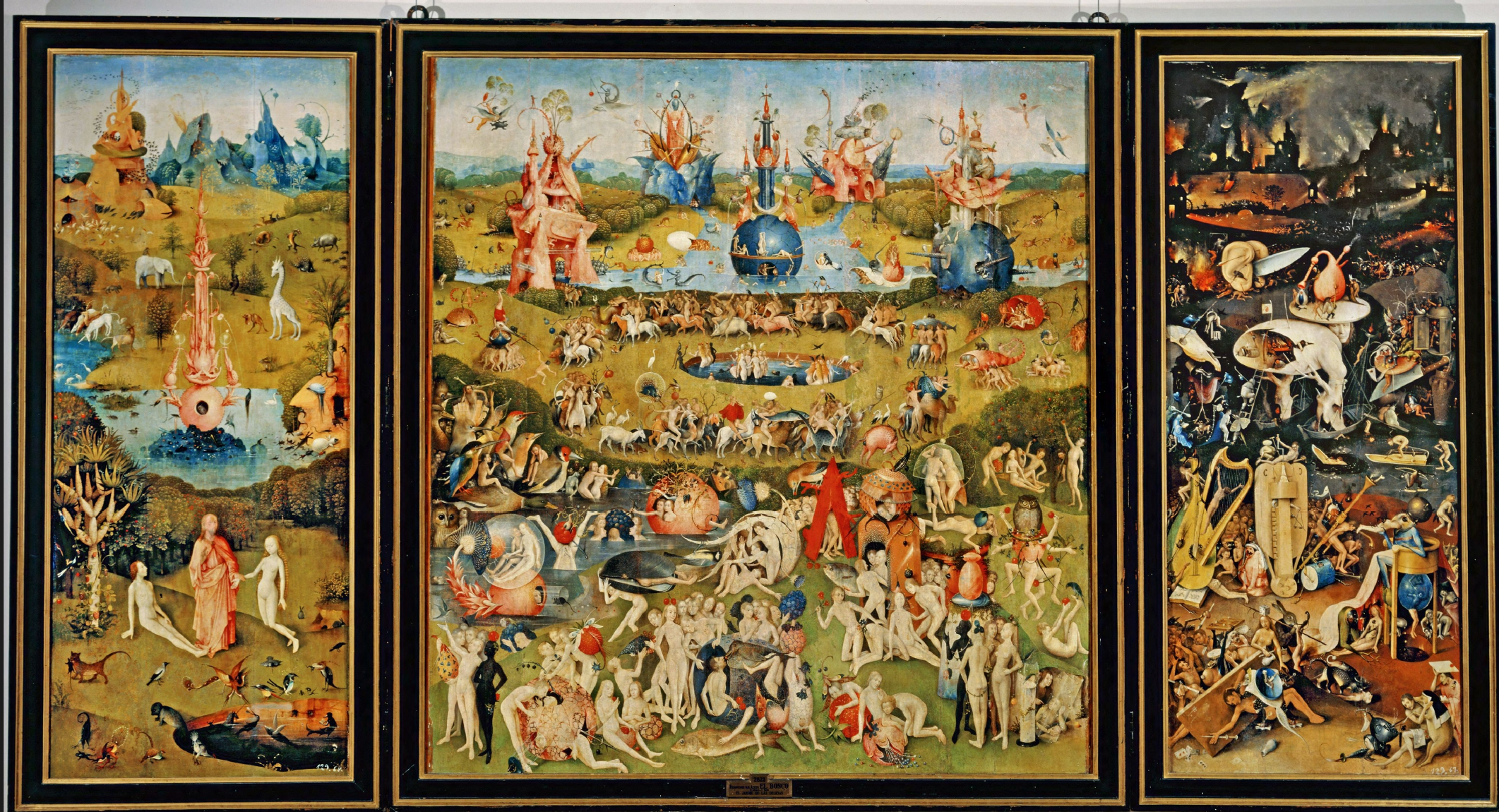
Name: Garden of Earthly Delights
Artist: Hieronymus Bosch
Location: Triptych, Brussels
Material: Oil/wood, Since oil takes more time to dry, so more time to work on it, Oil/pigment to make paint, prep wood to paint
Date: 1505-1515
NOT AN ALTAR PIECE, not religious, not state art (highly unsual artwork)
Left - Creation, garden of eden, supposed to be good (adam, eve, and god the father depicted) but animals eating each other, beastes + dark water (bad)
Right - Hell, beast, look evil, good religious people and bad, moral collapse
Center - Alchemy (theory) - crucible (experiments) alchemical vesicle, Large red fruit, ancient alchemical symbol (elixir of life, philosophers stone - ties with christianity , eternal life)

Name: Adam and Eve
Artist: Albert Durer (German artist, put his name in artwork in latin ancient script (classism)
Technique: engraving (copper plate, use burin used, plate would move burin stayed stationary), Mulitple prints, less expensive, mass production
Location: Nuremburg, Germany
Date: 1504
Start of collecting era since its a print
Depictions of what Jesus looks like
4 Humors (fluids of the body are made of) - Elk melancholy, pessimism (black bile), Cat Choleric ( Yellow bile), Rabbit Sanguine lazy phelegmatic (High passion), Ox Phlegmatic

Name: The Great Wave, 36 views of Mount Fuji (series, sublime nature landscape)
Artist: Katsushika Hokusaki
Material: Polychrome, woodblock, print, paper
Technique: Woodblock (have to make art upside down and flipped, labor intensive, mulitple artist (Design, carver, print), mass production
Added to the collecting era, Transformed Western art
Composition: Traditional perspective
Prussian Blue, early synthetic pigment (cheaper), Used the Bokashi Technique: pigments are more saturated and fade up the image
Date: 1831
Read right to left, different perspective, more threatening

Name: The letter
Artist: Mary Cassatt (most time in Paris)
Technique: color drypoint, aquatint (like etching, not engraving) (draw into wax, still making plate, use acid-etch into copper plate, more fluid movement, Use drypoint needling to add more details (in hair)
Date: 1890-1891
Flatten perspective
People didn’t love her art because it was depictions of women in everyday life, and time period when it was difficult for women to do anything.
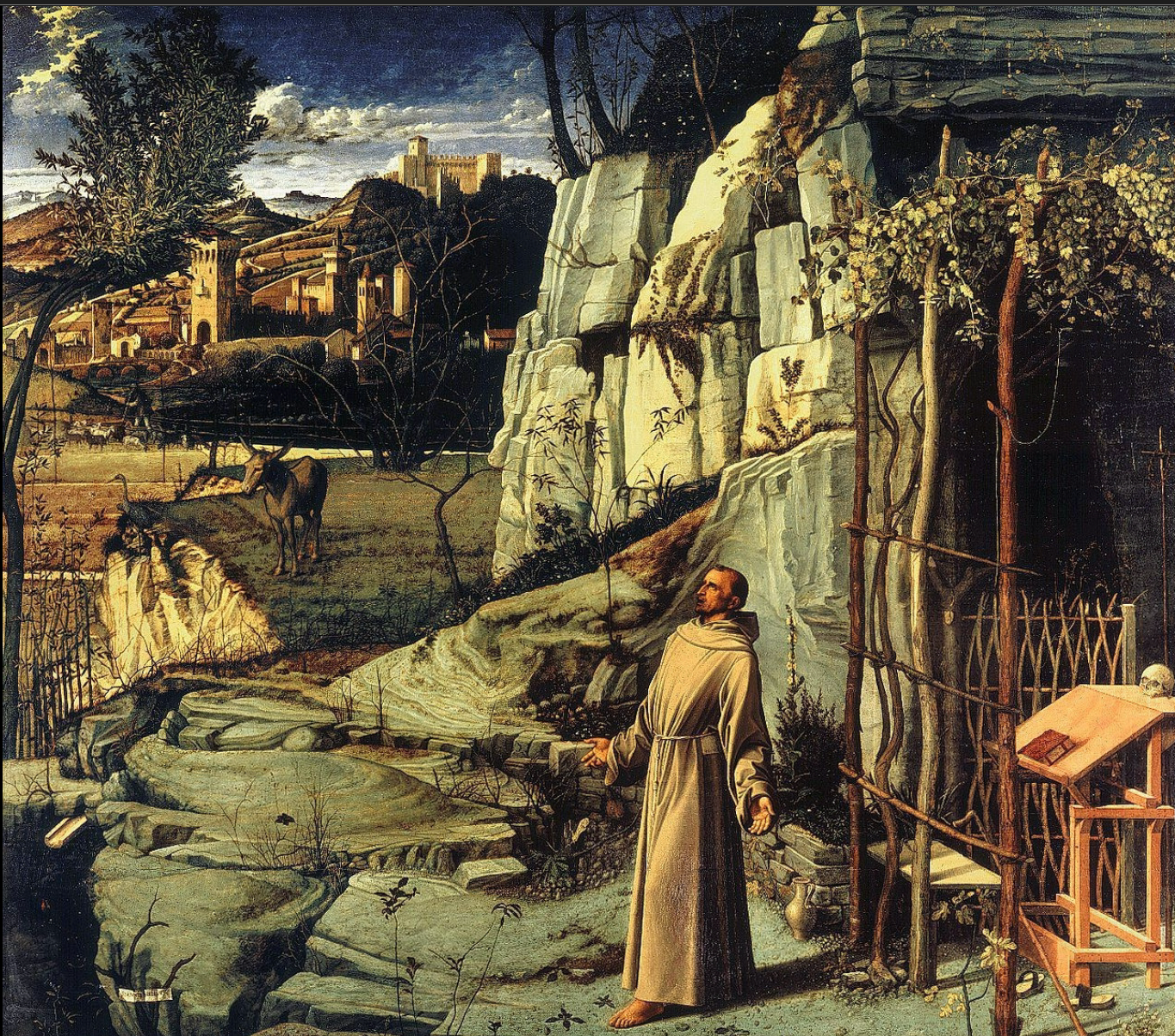
Name: Saint Francis is Ecstasy
Artist: Giovanni Bellini (he gave up his fortune, approval from the Pope Innocent 3rd, Stigmata at La Verna (wounds of christ in his hands, feet, and his side), tries to live a Christ like life of poverty, God was in everything (revolutionary and radical idea in christianity)
Material: Oil, tempora, wood
Date: 1470s
Naturalism in the landscape
The light in the landscape is transformative and religious. Golden light and light touches everything it sees.
Orthogonal- Vainishing paint, looks 3d, like looking through a window
Atmospheric perspective - fading of color
Start to see signatures in art

Name: Mountain Market, Clear with rising mist
Location: Joseon dynasty, Korea
Material: Painted scroll, ink on silk (precious)
Date: Early 1500s
Read from the bottom to to the top, golden
Mirrored image, if you flip it
Part of a courtly environment, painter would write poetry (lierat), honored refer literatil
Long tradition of landscape, sophisticated use of space, subdued colors (soft colors, decrease intensity of work), calligraphic (decorative), journey through landscape, Pictorial space and composition

Name: Great Serpent Mound (looks like a snake)
Location: Adams County, Ohio
Date; 1070 (lines up with when the Halley’s comet happened (Battle of hastings)), lines up with astronomical events
Large area, 1254 feet long
Landscape, not a painted piece of art, Built in an impact crater
Indigenous people lived in this area
Nearby burial mounds
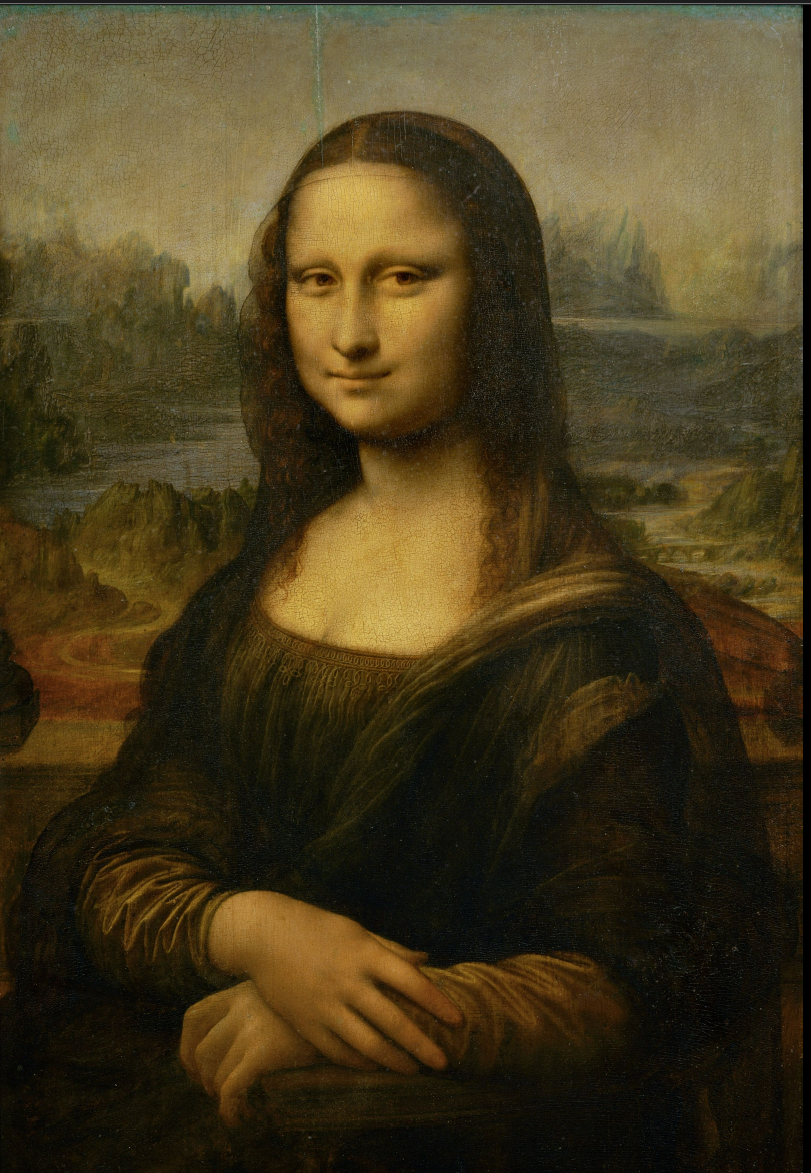
Name: Mona Lisa (her whole name is Madonna Lisa di Gherardo, my lady or another name for the Virgin Mary)
Artist: Leonardo da Vinci
Material: Oil/wood
Date: 1503-1506
It is kept at the Louvre in France, Paris
Touchstone - Represented what was bad about art, stiff and boring, other artist took own spin of portrait poking fun at her
Naturalism - looks 3d with light and dark
Atmospheric perspective - background fades up
Went against standard portraits that were side profiles because this was 3/4th view, Vinci went against the normal)
Directly looking at the viewer, new in europe, too confronting especially for a women
Chiaroscuro - light and dark, new in renaissance painting
Sfumato - hidden by smoke, darker pigments in the background

Name: Hip Pendant of an iyoba (Queen mother)
Location: Benin City, Nigeria (kept at the met right now)
Material: Ivory (African ivory trade) , iron, copper
Date: 1550
idealistic and abstract, religiously related to the Mona Lisa
Pendant - used as part of a ritual movement to show wealth and power, luxury item because it was ivory. Worn by Iyoba (queen mother) also one for Oba (king)
The color being white shows the Olokun, god of the sea, spiritual counterpart of the Oba
The headdress had alternating images of Portuguese traders and mudfish to show trading, sea gods, and wealth from trade.

Name: Jahangir Preferrring a Sufi Shaykh to kings
Artist: Bichitr
Material: Gouache, gold, ink, paper
Location: Mughal
Date: 1615-1618
Figures order and size show the ranking of them for his world view and in general (what artist consider important)
Jahangir - ruler on throne, emperor (biggest one, with halo surrounding him)
Sufi Shaykh Salim - Guy with the beard (mystic) pilgrammage site to get advice from or honor mystic
Ottoman sultan Ahmed 1 - wearing a turbin, great traders for western goods, wearing green/gold textile
King James of England - 17th ruler attire
Bichitr - the artist is at the bottom, holding one of his artworks, Hindu artist
2 little angels as decoration, collecting sands of time
All part of muraqqa or album

Name: Twin figure (ere ibeji)
Location: Yoruba culture, Nigeria (now kept at the houston MFA with a shared garment)
Material: wood, glass, beads, cotton, coconut shell beads, pigments (indigo, tukula) (mainly wooded material, the rest is part of the garment covering the twin figures)
Date: early 20th C
Purpose: It was a way for mothers to remember twins, because they weren’t as likely to survive since they would be smaller) Try to remember them as young adults, Mothers would go to sharma (liminal) set up in a shrine to remember, very individualized and personal
Now its too expensive, but just use something cheaper, ritual more important than the figure itself
Style: Ideal figures, and abstract

Name: Whirling log ceremony
Artist: After Hosteen Klah (very famous, medicine man, sand painter, weaver, born intersex)
Weaving after a sand painting design
Date: 1925
Culture: Dine (Navajo)
Reservations, part of aztec empire
Ritual activity, made sand paintings, but only kept for ritual, some are made into sand weavings if something special, symbol of healing
The rotating logs with spirit figures (swastica), would rotate by people blowing on them
8 Yeis, holy people that are sitting on the logs
Logs in 4 cardinal directions, East is at the top, then in moves clock wise, good luck

Name: Te-Hau-ki-Turanga (Maori meeting house)
Artist: Raharunhi Rukupo, master carver
Date: 1842, 1843 (Restored 1935)
Material: Wood, shell, grass, flax, pigments
Location: New Zealand
Marae - fenced in complex of carved building and grounds that belong to a certian tribe, Iwi
Ridge pole - Spine of tribal founding ancestor, human like features of the building, face on top of ridge pole. A line form of building
Tiki - ancestors refered as gods, religious but mainly family ritual based, localized
All the arts in Polynesia were sacred
Interior had relief panels with polychrome geometric images, lower sections were house post with carved small ancestral images (Poupou), Beams and Rafters - painted, red, white, black designs
Tukutuku panels - women made outside the meeting house