GED Reasoning Through Language Arts (RLA) Comprehensive Study Guide
 Note
 Call Kai
 Learn
 Practice Test
 Spaced Repetition
 Match
 Flashcards
 Knowt Play
1/67

Earn XP
Description and Tags
Vocabulary practice flashcards reviewing all grammar, language conventions, reading comprehension, writing process, and literary analysis topics covered in the GED Reasoning Through Language Arts course.
68 Terms
Homophone
A word that sounds alike or similar to another word but has a different spelling and definition, functioning as a specific type of homonym.
Homograph
A word that shares the same spelling with another word but has a different meaning and sometimes a different pronunciation.
Affect (Verb) vs. Effect (Noun)
Affect as a verb means to alter, to change, or to influence; effect as a noun means a result or consequence.
Coordinate Adjectives
Adjectives that modify the same noun equally and can be separated by a comma, verifiable by inserting 'and' between them or reversing their order without changing the sense.
Semicolon
A punctuation mark used to connect closely related independent clauses not joined by a coordinating conjunction, or to separate series items that contain internal commas.
Colon
A punctuation mark used after an independent clause to call attention to the words that follow it, such as introducing a list, an explanation, or a quotation.
Ellipsis Mark
A punctuation mark consisting of three periods (…) indicating that words have been removed from a quotation, or four periods if a full sentence or more is omitted.
Run-On Sentence
A sentence error consisting of multiple independent clauses that have not been joined together properly with appropriate conjunctions or punctuation marks.
Dangling Modifier
A dependent clause or verbal phrase that lacks a clear, logical grammatical connection to any word in the sentence.
Split Infinitive
A grammatical construction that occurs when a modifying word comes between the word 'to' and the paired verb.
Double Negative
The pairing of two negative words or modifiers in a single clause, which standard English permits only when expressing a positive meaning.
Parallelism
The grammatical rule requiring that multiple items or ideas presented in a series or list be stated in equivalent grammatical structures.
Imperative Sentence
A sentence type that tells someone to do something or issues an order, generally ending with a period or an exclamation point for urgent commands.
Compound-Complex Sentence
A sentence structure that contains at least two independent clauses and at least one dependent clause.
Sentence Fragment
A group of words that does not contain even one independent clause and therefore cannot stand alone as a complete sentence.
Independent Clause
A group of words containing a subject and a predicate that expresses a complete thought and can stand alone as a sentence.
Dependent Clause
A clause containing a subject and a verb that cannot stand alone as a complete thought and functions within a sentence as an adjective, an adverb, or a noun.
Prepositional Phrase
A phrase that begins with a preposition and ends with a noun or pronoun object, functioning in a sentence as an adjective or an adverb.
Participle
A type of verbal ending in -ing (present) or -d, -ed, -n, -t (past) that functions exclusively as an adjective modifying a noun or pronoun.
Gerund
A verbal ending in -ing that functions exclusively as a noun, serving as a subject, predicate nominative, or object in a sentence.
Infinitive
A verbal composed of the word 'to' followed by the base form of a verb, capable of functioning as a noun, an adjective, or an adverb.
Appositive
A word or phrase placed immediately beside a noun or pronoun to explain, define, or rename it.
Absolute Phrase
An independent phrase consisting of a noun followed by a participle that provides general context for a sentence rather than modifying a specific word.
Direct Object
A noun or pronoun that receives the action of a transitive verb, answering the question 'who?' or 'what?'.
Indirect Object
A noun or pronoun in a sentence with a direct object that indicates to whom, for whom, to what, or for what the action of the verb was performed.
Predicate Nominative
A noun or pronoun following a linking verb that renames, defines, or links back to the subject.
Antecedent
The noun that has been replaced by a pronoun, requiring agreement with that pronoun in number and gender.
Complete Subject
The simple subject of a sentence along with all of its modifying words, adjectives, and prepositional phrases.
Predicate
The part of a sentence that explains or describes the subject, including the verb or verb phrase, any objects, and all related modifiers.
Subject-Verb Agreement
The grammatical rule requiring that a verb match its subject in both number (singular or plural) and person (first, second, or third).
Collective Noun
A noun representing a group of people, places, or things that acts grammatically as a single unified unit, such as choir, team, or herd.
Linking Verb
A verb that connects the subject to a noun, pronoun, or adjective in the predicate that describes or defines that subject.
Active Voice
A sentence construction in which the subject performs the action expressed by the transitive verb.
Subjunctive Mood
The grammatical mood used specifically for expressing wishes, hypothetical situations, and statements contrary to fact.
Correlative Conjunctions
Conjunction pairs that connect grammatically equal elements within a sentence, such as either…or, neither…nor, and not only…but also.
Linguistic Form
The structure of language that encodes the literal meanings of words and sentences, derived from phonological, morphological, syntactic, and semantic elements.
Jargon
Specialized, often technical vocabulary used and understood primarily by members of a specific profession or trade.
Colloquialism
An informal word or phrase common in familiar everyday speech and informal writing that is considered inappropriate for formal academic discourse.
Conciseness
A writing quality characterized by communicating a complete and clear message in the fewest words possible without stating the obvious.
Paragraph Coherence
The smooth, uninterrupted flow of sentences within a paragraph, achieved through clear linking of ideas, repetition of key words, parallel structures, and consistent verb tense.
Transitions
Words and phrases used between sentences and paragraphs to guide readers from idea to idea and indicate relationships like sequence, contrast, cause, or conclusion.
Working Thesis
A preliminary, adaptable thesis statement formulated early in the writing process that establishes a specific topic and a comment to guide composition.
Inductive Reasoning
A logical progression in writing that uses multiple specific details, facts, or observations to establish a broader generalization or causal relationship.
Recursive Writing Process
An approach to writing where an author moves freely back and forth between planning, drafting, revising, and editing rather than following a strict linear sequence.
Revising
The stage of the writing process where the author rereads text to resolve large-scale issues affecting clarity, cohesion, structure, and logical flow.
Context Clues
Nearby words or surrounding sentences that provide hints—such as examples, definitions, descriptive words, or opposites—to assist in deciphering unfamiliar vocabulary.
Syntax
The sentence structure and word order that provide grammatical cues aiding in the comprehension of meaning.
Denotation vs. Connotation
Denotation is the objective, literal dictionary definition of a word, whereas connotation refers to the subjective emotional associations and reactions a word evokes.
Derivational Affix
A morpheme added as a prefix or suffix to a root word to produce a new, related word that often alters the meaning or part of speech.
Inference
A logical deduction or conclusion arrived at by combining explicit textual details with a reader's background knowledge and personal experience.
Synthesis
The advanced reading skill of understanding, selecting, and integrating related concepts and evidence from multiple texts to construct a coherent argument.
Author's Assumptions
Unstated beliefs, values, or premises that a writer accepts or takes for granted without providing proof in an argument.
Text Evidence
Precise, descriptive, and factual information provided within a text to support a claim and establish the credibility of an argument.
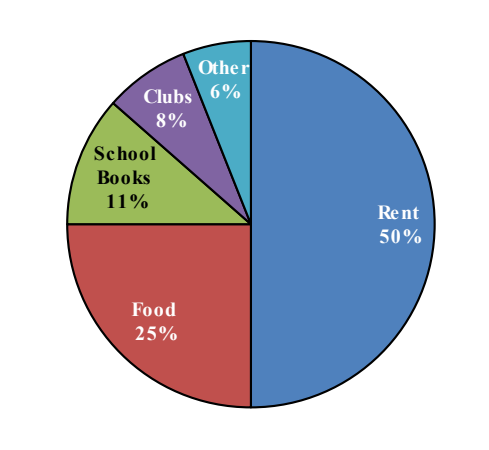
Pie Chart (Circle Graph)
A circular graph divided into proportional wedges designed to show how a single unit, whole entity, or category is divided into parts.
Memo (Memorandum)
An official written document featuring a heading (author, date, recipient, and title) used to communicate plans of action or information requests within an organization.
Informational Text
A nonfiction text structured to educate and enlighten readers by prioritizing clarity, precision, and logical organization over emotional appeal.
Dramatic Irony
A literary device in which the audience or reader knows crucial facts or events that the characters within the narrative do not know.
Comic Relief
The introduction of comedy or humorous characters by an author to interrupt a dramatic or tragic scene and provide lighthearted contrast.
Foreshadowing
A literary device wherein an author provides hints, warnings, or clues through dialogue, description, or action about events that will take place later in a story.
Ethos, Pathos, and Logos
Aristotle's three classical modes of rhetorical appeal: ethos appeals to character and credibility, pathos appeals to emotion, and logos appeals to logic and reason.
Chiasmus
A rhetorical figure that uses two parallel clauses in which the second clause reverses the word order or grammatical structure of the first.
Metonymy
A figure of speech in which a term is substituted with the name of a closely associated object or concept, such as referring to the news media as 'the press.'
Synecdoche
A figure of speech in which a part of an entity is used to represent the whole, such as calling a construction worker a 'hard hat.'
Dynamic Character
A literary character who changes significantly in personality, perspective, or values throughout the progression of a narrative.
Inciting Incident
The specific narrative event that prompts the main conflict of a story and initiates the rising action.
Climax
The turning point and moment of highest conflict or tension in a narrative plot that brings about the results of the main conflict.
Third-Person Omniscient
A narrative point of view where the narrator is not a character in the story and knows the thoughts, emotions, and actions of all characters.
Mood vs. Tone
Mood is the emotional atmosphere and feeling evoked in the reader by a text, whereas tone is the author's attitude toward the topic and audience expressed in the writing.