(2) Denmark: Military History and Notable Events
 Call Kai
 Learn
 Practice Test
 Spaced Repetition
 Match
 Flashcards
 Knowt Play
1/27

There's no tags or description
Looks like no tags are added yet.
28 Terms
1002 - St. Brice’s Day Massacre (All Facts)
Massacre in which at least 37 Danes were killed, including Sweyn Forkbeard’s (the King of Denmark at the time) sister Gunnhild, on the orders of King Aethelred II “The Unready” of England
Massacre which fueled Sweyn Forkbeard and the Danes to invade England
1016 - Battle of Ashingdon (All Facts)
Battle in which King Canute of Denmark defeated Edmund Ironside of England in which they agreed to split England in half between the two
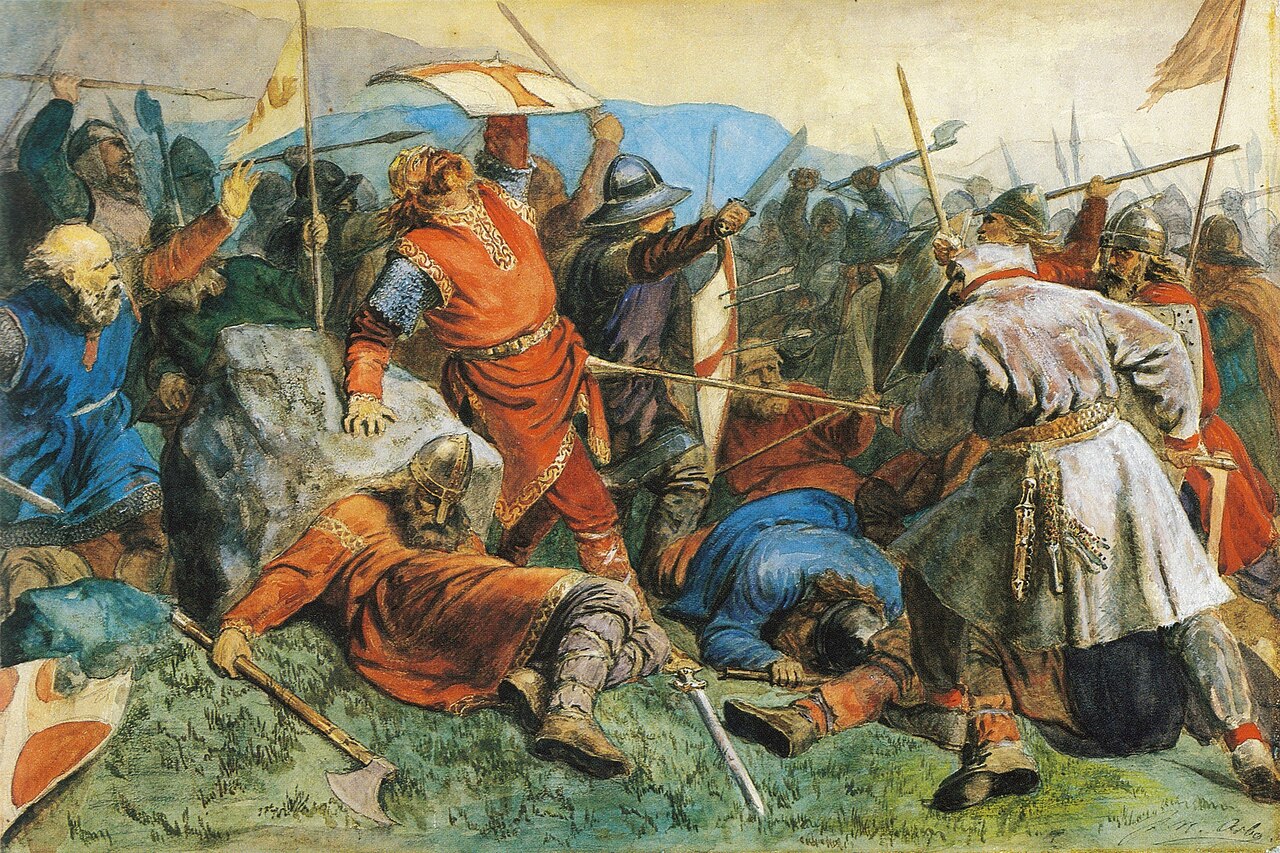
1030 - Battle of Stiklestad (All Facts)
Battle in which Canute the Great and his “Farmer Army” forces defeated Olaf Haraldsson and his forces to become King of Norway as well as King of Denmark and King of England
Olaf Haraldsson was made a hero and a saint following his death
1397 - 1523 - Kalmar Union (All Facts)
Treaty signed between the Kingdoms of Denmark, Norway, and Sweden that joined them together as one sovereign state
Treaty in which the three entities agreed to
be united under one monarch
carry out a common foreign policy
settle matters of royal succession by consensus
The namesake entity constituted the second largest accumulation of European territories under one leader, Queen Margaret of Denmark, who spearheaded the treaty
The namesake treaty had the namesake entity grow to some extent out of a general trend towards the creation of larger political entities at the time, such as the Polish-Lithuanian Commonwealth and the expansion of Moscow in Russia
1450 - Treaty of Bergen (All Facts)
Treaty signed between Denmark and Norway that was an act of union in which the two kingdoms agreed to always have the same king
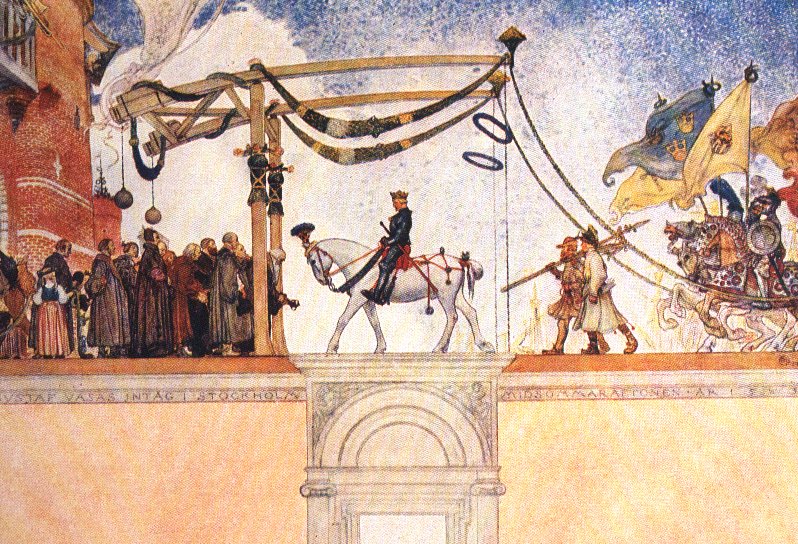
1521 - 1523 - Swedish War of Liberation (All Facts)
War in which Gustav Vasa and his rebel Swedish forces and peasants rose up and defeated King Christian II and his royal Danish forces, thus ending the Kalmar Union
War after which Gustav Vasa became King of Sweden
1520s - 1600s - Danish Reformation (All Facts)
1534 - 1536 - Count’s Feud // Danish Civil War / War of Succession (All Facts)
War in which Christian III and his Protestant forces defeated Christian II, Christopher of Oldenburg, and their combined Catholic forces
War after which the Catholic Kingdom of Denmark became Protestant (Lutheran) and the Danish Reformation began
1544 - Treaty of Speyer (All Facts)
Treaty in which Denmark granted the Netherlands full rights of trade and passage in the Baltic
1544 - Malmo / Koge / Jutland Witch Trials (All Facts)
Series of trials in which 52 people were convicted of witchcraft and burnt at the stake

1558 - 1583 - Livonian War (All Facts)
War in which Tsar Ivan IV and his Russian forces were defeated by Poland, Lithuania, Denmark, Norway, Sweden, Transylvania, and the namesake confederation
War which Tsar Ivan IV began due to
his ambition to transform Russia, which, at the time, had a rudimentary agriculture and little industry; by taking control of the Baltic and its ports, as they had already become, at the time, important centers of international trade and offered the prospect of benefit from the more advanced western countries of the time
War in which Tsar Ivan IV
sent his troops into the namesake kingdom / confederation in a lightning strike designed to secure the Baltic region for Muscovy (Russia) and give it an outlet to the west
War in which Tsar IV and his Russian forces
seized several large towns and fortresses
disputed with one another in Moscow and ultimately destroyed their momentum
may have overreached themselves during that period of the Tsar’s imperial expansion, but the Baltic region would have been a considerable prize nonetheless
War which saw
The Siege of Narva
The Siege of Pskov
War during which
the namesake Order of Knights managed to improve its military and diplomatic posture, still being the area’s main defense force
Riga (modern-day Latvia; of the namesake confederation / order) put itself under the protection of Poland
the namesake confederation was partitioned as Sweden and Denmark were poised to take over (modern-day) Estonia and Courland
War which ended when Russia made peace with Poland gave up its claims to the Baltic state of Livonia

1563 - 1570 - Northern Seven Years’ War (All Facts)
War in which Sweden fought against Denmark, Norway, Poland, Lithuania, and Lubeck
War which ended with the Treaty of Stettin

1570 - Treaty of Stettin (All Facts)
Peace Treaty signed between Denmark and Sweden, which ended the Northern Seven Years’ War and restored the prewar frontiers of the states involved
1611 - 1613 - Kalmar War (All Facts)
War in which King Christian IV and his Danish and Norwegian forces defeated King Charles IX and King Gustavus Adolphus and their Swedish forces
War which began when King Charles IX provoked King Christian IV of Denmark into declaring war by Sweden’s constant hostility towards Danish ships in the Baltic Sea
War in which, within weeks of such provocation, the Danes had taken the strategic namesake stronghold, infuriating King Charles IX so much so that he challenged King Christian IV to a duel, but the Danish-Norwegian King scornfully rejected such a challenge
War in which King Christian IV of Denmark was determined to gain full power over the Baltic, after having already controlled the Sound, without which it was landlocked
War which had a serious effect of drawing resources from Sweden’s Russian front towards their front against the Danes
War which featured a young Gustavus Adolphus leading the Swedes, which featured his modernized army, equipped with units of reindeer-drawn sledges and skiing units
War in which Denmark’s capture of Kalmar turned the tide firmly in the Danish direction
War which ended with the Treaty of Knared
1613 - Treaty of Knared (All Facts)
Peace Treaty signed between Denmark and Sweden, which ended the Kalmar War
Peace Treaty in which
Sweden gave up Finland
Sweden allowed Danish merchants to enter Livonia
Sweden gave Denmark Alvsborg as a surety

1618 - 1648 - Thirty Years’ War (All Facts)
Conflict
between Catholics and Protestants in Germany following the failure to reconcile them via the Peace of Augsburg
Conflict in which
4.5M-8M people were killed from
the battlefield
plague and disease
the constant maneuvering helped to spread disease
famine
the constant maneuvering laid waste to vast tracts of farmland
Crops were destroyed
German towns lost as many as 50% of their populations from
being razed to the ground by siege and fire
plague borne by countless armies
the European continent was nearly destroyed
Conflict which began
with the Defenestration of Prague and Bohemian Revolt
when Bohemia elected itself a new Protestant as king, Frederick V, previously the elector of Palatine, to replace the Habsburg King Ferdinand II, whom the Bohemian estates had previously “accepted” as king
Conflict during which
The Protestant Union was dissolved
Conflict during which
Johann Tserclaes (Count of Tilly) and his Catholic forces sacked the Heidelberg University Library
Bavaria (as well as Spain and Austria) invaded France with their armies and advance units of the Bavarian cavalry arrived in the Parisian suburbs
These armies invaded France but were driven back
Conflict which saw
The Bohemian Revolt
The Defenestration of Prague
The Battle of White Mountain
The Vatellina War (between Spain and Switzerland)
The Battle of Lutter
The Battle of Dessau Bridge
The Sack of Magdeburg
The Battle of Breitenfeld
The Battle of Lutzen
The Battle of Nordlingen
The Battle of Wittstock
The Battle of Rheinfelden
The Battle of Freiburg
Conflict which involved
The Eighty Years’ War / Dutch Revolt (between Spain and the Netherlands / Dutch Republic)
Conflict which ended with
The Peace of Prague
The Peace of Westphalia
This took three years of negotiation in two cities, Munster and Osnabruck, to bring about the official signing
Just four years prior to the start of the war,
Catholics and Protestants alike in Germany were already preparing for the conflict, which threatened to engulf the whole continent as
battle-lines were already being drawn up by then
fortunes were already being spent equipping private armies throughout Germany
Germany prepared itself to be the battlefield when the war would break out
In the Protestant north of Germany,
whole cities were ringed with star-shaped walls, bastions, and moats
In Catholic Bavaria and in the Rhineland,
great new fortresses pierced the skylines
intense diplomatic activity was taking place, particularly on the part of
Prince Christian of Anhalt-Bernburg
King James of England
Conflict which ended when three successive salvos crashed out from 70 cannons on the walls of Munster to announce that peace came from a war-ravaged Europe after three decades of bitter conflict in which every power became involved both on land and sea
Conflict after which
100K+ mercenaries had to be paid and returned home lest they turn themselves into robber-bands adding even more torment to a war-weary Europe
the high cost of the war caused massive tax demands on both nobles and peasants, both parties of whom threatened revolt

1626 - Battle of Lutter (All Facts)
Battle in which Johann Tserclaes and his Holy Roman forces and Catholic League defeated Christian IV and his Danish-Norwegian forces during the Thirty Years’ War

1626 - Battle of Dessau Bridge (All Facts)
Battle in which Albrecht von Wallenstein and his forces defeated the Danish-Norwegian forces during the Thirty Years’ War

1634 - Burchardi Flood (All Facts)
Tidal wave which destroyed Strand Island in the North Sea (in the Jutland of Denmark)
Incident in which up to 15K people drowned
1643 - 1645 - Torstenson War (All Facts)
War in which Axel Oxenstierna and his Swedish forces defeated King Christian IV and his Danish-Norwegian forces
War in which greed and envy on the part of King Christian IV forced Denmark-Norway to bow to its Swedish neighbor
Despite a hard-fought naval campaign, Denmark could no longer view the Baltic as its private lake
War which began when King Christian IV of Denmark-Norway increased the Sound Dues, or a toll for non-Danish ships passing through the Danish Sound
Even though Sweden was exempt from these tolls, Christian IV
made it more difficult for Sweden’s ships
increased the toll for ships from any of Sweden’s newly-acquired territories
In response, Sweden withdrew its army in Moravia and attacked Denmark
The fleet of the Netherlands was prepared to join them
War in which Swedish forces took Jutland and Skane

1655 - 1660 - Northern War (All Facts)
Series of conflicts which began when Charles X Gustav of Sweden decided to invade Poland-Lithuania and took Warsaw, in a preemptive attack to protect Sweden from a Russian attack
Series of conflicts over the Baltic Sea, which, like the Mediterranean Sea, was a vital route for seaborne trade, especially with southern Europe, and which
possessed prized resources for trade with Mediterranean countries including
iron
copper
salt-herrings (a vital source of food at the time)
grain (for the rest of Europe)
wood
naval supplies (that were in great demand)
was of such strategic and economic importance that other European countries supported Denmark-Norway to prevent Sweden from gaining complete control over the Baltic Sea, including
the Netherlands
the Holy Roman Empire and Brandenburg-Prussia
Russia
Series of conflicts in which
Charles X Gustav of Sweden broke off his campaign against Poland to turn on Denmark-Norway in the First Dano-Swedish War
Denmark declared war on Sweden in the Second Dano-Swedish War
Series of conflicts which thus included
The First Dano-Swedish War
The Second Dano-Swedish War
Series of conflicts in which were signed
The Treaty of Konigsberg
The Treaty of Roskilde
The Treaty of Valiesar
Series of conflicts which ended with
The Treaty of Oliva
The Treaty of Copenhagen
The Treaty of Cardis

1657 - 1658 - First Dano-Swedish War (All Facts)
War in which Charles X Gustav and his Swedish forces defeated Frederick III and his Danish-Norwegian forces
War in which the people of Copenhagen fought hard against a besieging Swedish army
War which began when Sweden invaded from the south of Denmark-Norway, taking advantage of the frozen sea in an exceptionally cold winter to move rapidly from island to island, taking Jutland and Zealand and then attacking an undefended Copenhagen
War which ended with the Treaty of Roskilde
1658 - Treaty of Roskilde (All Facts)
Peace Treaty signed between Charles X Gustav of Sweden and Frederick III of Denmark-Norway which
ended the First Dano-Swedish War
gave Sweden the islands of Skane, Halland, and Blekinge, thus completing Sweden’s peninsula north of the Baltic Sea
gave Sweden the islands of Bornholm and territories in Norway
thus decisively delineated the mutually recognized boundaries of Denmark, Sweden, and Norway; boundaries which are almost exactly the same to this day

1658 - 1660 - Second Dano-Swedish War (All Facts)
War in which Frederick III and his Danish-Norwegian forces, with help from the Netherlands, Poland, and Brandenburg-Prussia, defeated Charles X Gustav and his Swedish forces
War in which Denmark declared war on Sweden, encouraged by the Netherlands and Austria
Despite the prior Treaty of Roskilde, Charles X Gustav invaded Denmark again
War in which Charles X Gustav of Sweden was killed
War in which the courage of Copenhagen saved the Baltic Sea from becoming “a Swedish lake”
1660 - Treaty of Copenhagen (All Facts)
Peace Treaty signed between Sweden and Denmark-Norway, which ended the Second Dano-Swedish War
Peace Treaty in which
Sweden restored the diocese of Trondheim to Norway
Sweden restored the diocese of Bornholm to Denmark
Sweden retained Scania and other territories they conquered on their western borders
Denmark abandoned claims to southern Sweden
1672 - 1678 - Franco-Dutch War (All Facts)
War in which King Louis XIV and the French defeated the Dutch, taking many previously Dutch-controlled territories
War which began when the French crossed the Rhine River and captured city after city
War in which, to halt the French invasion, the Dutch opened their dykes and caused extensive flooding to the lands France was invading
War in which French troops conquered Franche-Comte
War in which King Charles II of England declares war on the Netherlands, thus supporting King Louis XIV and France, in what became known as the Third Anglo-Dutch War, which overlapped with the namesake war
War in which the Dutch forts in Senegal in West Africa were conquered and taken from them by France
War which saw the
Battle of Turckheim
Battle of Salzbach
Battle of Fehrbellin
Messina Revolt
Fall of Ghent (the French capture of which forced the Dutch to the conference table)
War which King Louis XIV declared in order to crush the Protestant Dutch and seize control of their maritime trade
Once the Dutch cut their dykes, and fought ever the more bravely under William of Orange, Louis XIV’s war aims became unfulfilled and he was anxious to make peace
War during which Frederick William of Brandenburg-Prussia invaded Bremen, Verden, and Western Pomerania, Sweden’s enclaves in north Germany
War whose course was said to have changed drastically due to Frederick William’s intervention, which was said to have
discouraged the French who were less committed than prior to that point
encouraged Frederick William and his great plan of unifying Prussia
War which ended with the Treaties of Nijmegen

1678 - 1679 - Treaties of Nijmegen (All Facts)
Series of Peace Treaties signed between France and the Holy Roman Empire, ending the Franco-Dutch War
Series of treaties in which France
gained Franche-Comte from Spain
regained control over the duchy of Lorraine
got a rationalization of the frontier in Flanders to give King Louis XIV the “dueling-ground” advocated by Vaubin