The Greek World
 Call Kai
 Learn
 Practice Test
 Spaced Repetition
 Match
 Flashcards
 Knowt Play
1/12

There's no tags or description
Looks like no tags are added yet.
13 Terms

New York Kouros
600 BCE, Archaic Period, marble, stylized
strong Egyptian influence— Egyptian math material proportions (canon proportions)
uses Egyptian tools for stone carving potentially grave markers and votive offerings— displays excellence and role models for aristocrats
Kouros = young man

Kroisos Kouros
530 BCE, Anavysos, Greece, marble, Archaic Period
grave marker- person died honorably in war — help others remember who died
same conservative type 100 years before
more naturalistic style
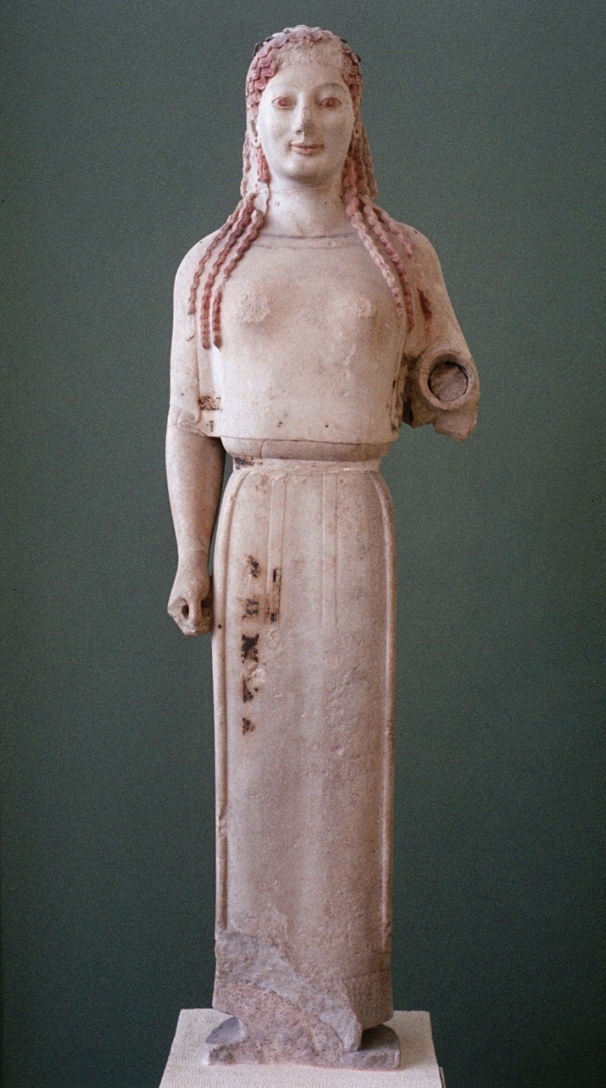
Peplos Kore
530 BCE, Athenian Acropolis, Greece, Archaic Period
idealized version of a woman- aristocrat
first monumental women statue
wears type of dress called Peplos- fully covered and very expensive dress = status
found over graves or dedicated to god and goddess

Achilles and Ajax Playing Dice
Amphora, Greece, c. 530 BCE, created by Exekias (famous for art, known throughout the Greek world), Archaic Period
very stylized
doesn’t just make scene directly from Homer- humanizes characters by writing scenes not written about
playing games in between battles— simple dice game
not heroic scene- shows what is fated to happen— playing game of chance
anti war statement— no winners and losers

Doryphoros
c. 450 BCE, created by Polykleitos, originally made of bronze, Classical Period
depiction of ideal, beautiful person (moderate, restrained, simple, good to citizens, male, and rational)
similar to Kouros as it depicts a naked man, but changed some of the syle
not grave markers and most famous statues in the ancient world
made as a response to The Canon, completely secular- everything in the universe comes down to mathematical proportions- beauty is symmetrical, cohesive, balanced

Riace Warriors
from Riace, Italy, bronze statues, 450 BCE, Classical Period
ship carrying them to Rome wrecked— don’t know where they were set up (sanctuary)
heros— maybe Trojan War- leader and older
liked color— used shell, glass, stone to make eyes lifelike
used bronze, silver, and copper to get across different color

Parthenon (Temple of Athena)
Acropolis, Greece, 447–438 BCE, created by Iktinos and Kallikrates, sculptural program: Phidias, Classical Period
very sculpture-heavy
subtle optical illusions that help make it look perfect from every angle built in by the architects
large statue of Athena placed in the middle
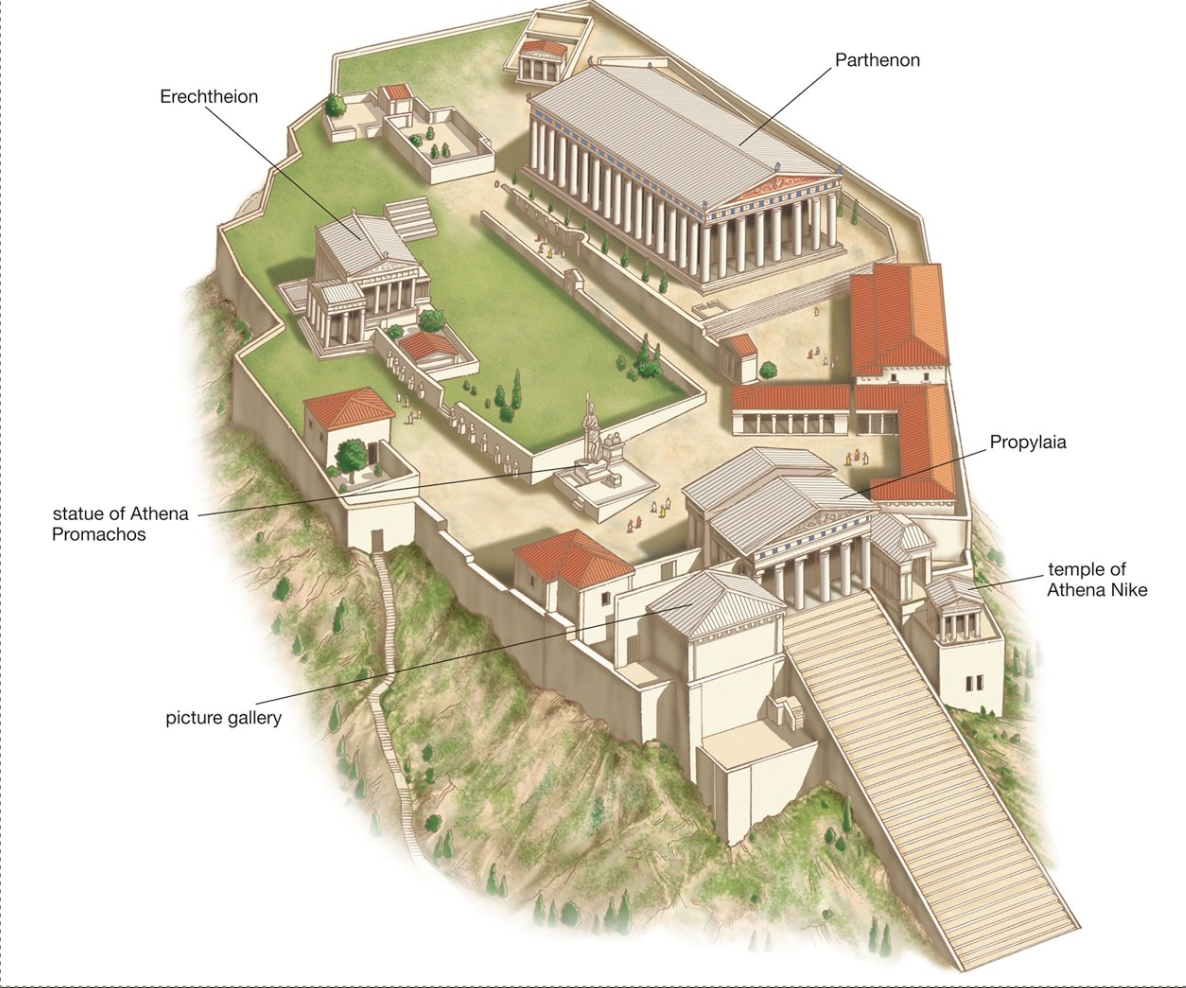
Acropolis
Athens, Greece 450 BCE— planned out together (all buildings and gateways are cohesive), Classical Period
greek temple- 3 step platform, columns around all 4 sides of building, porch, rectangular room in the middle (cella)— house for gods/ shrine

Birth of Athena- Pediment
Athens, Greece 447– 438 BCE, not fully intact (middle is destroyed), Classical Period
depicts Jupiter getting his head cut open and Athena being born
sets the time of the story—> sun god riding into the picture (dawn) creative with scale (shows riding chariots into and out of scene)
sense of movement- seen in drapery and the poses

Lapith versus Centaur
Athens, Greece 447- 438 BCE, Classical Period
sense of tension and Greek strength
shows defeat of centaurs trying to steal Greek women—> shows Greek strength
celebration of Greeks winning the Persian War
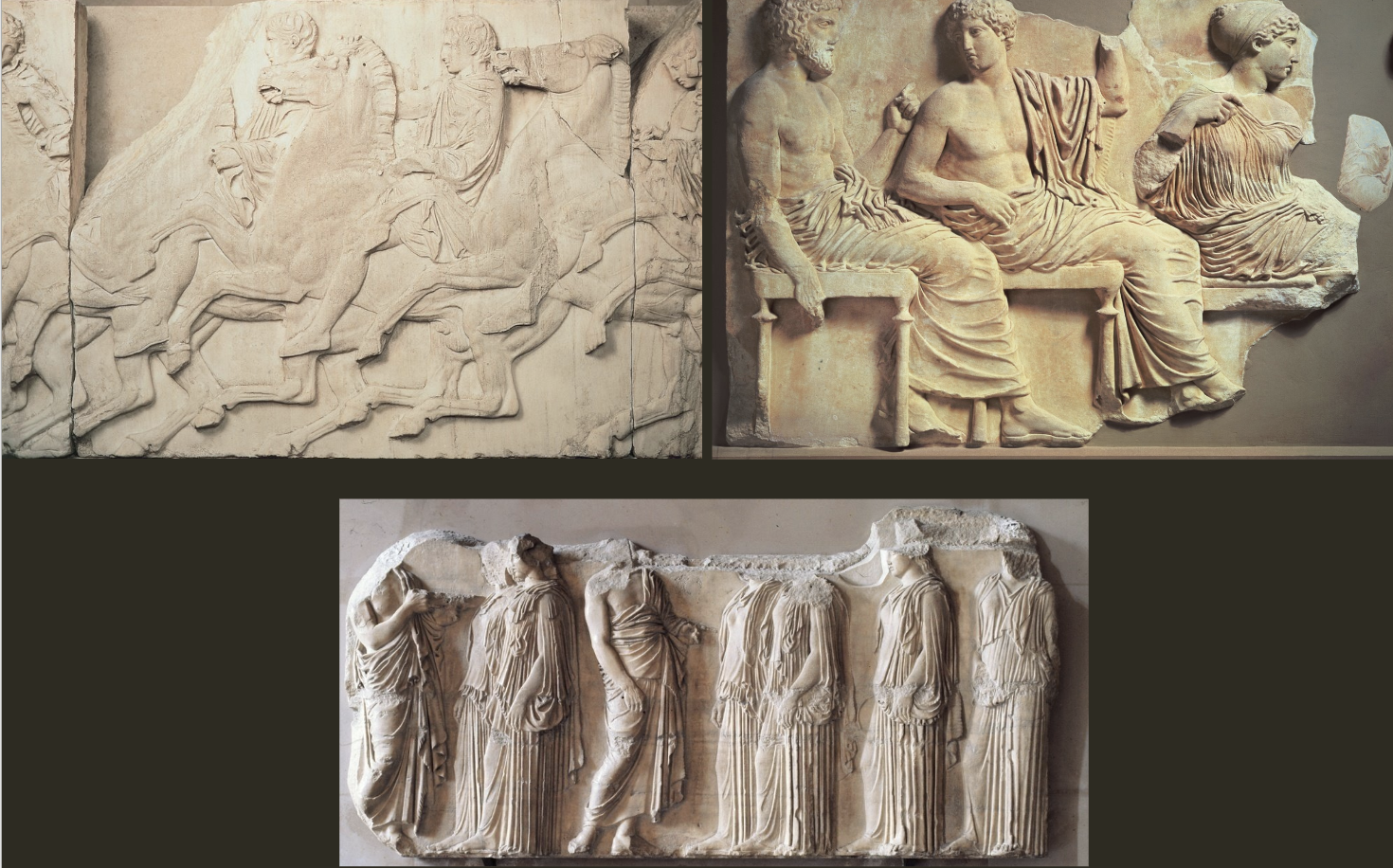
Ionic Frieze
Athens, Greece 447- 438 BCE, Classical Period
depicts a Panatheneic Procession
lots of variety during the parade— elders, women carrying baskets, men readying horses, etc.
festival for Athena
unique because the Greeks are depicting themselves on a frieze— not normally seen in Greek culture

Cult Statue
Athens Greece, 447– 438 BCE, Classical Period
unique because it was the first statue built that large or made of solid gold —> shows the extravagence of the Athenians
potentially a thank statue to Athena for helping Greeks win the Persian War

Aphrodite of Knidos
Knidos, Greece, 350 BCE, made by Praxiteles
supposed to protect harbor and sailors as Knidos was a port city
first monumental nude female statue of an elite woman or goddess— extremely controversial
shows religous power- depicts her bathing (ceremonial and cleansing)
more humanistic approach to depicting a deity