DENT 267: LO1 LS1- Gingival Disease Modified by the Endocrine
 Call Kai
 Learn
Learn Practice Test
 Spaced Repetition
 Match
Match Flashcards
 Knowt Play
1/50

There's no tags or description
Looks like no tags are added yet.
Name | Mastery | Learn | Test | Matching | Spaced | Call with Kai | Chat |
|---|
No analytics yet
Send a link to your students to track their progress
51 Terms
gingivitis
-no CAL
-inflammation
periodontitis
-CAL (pockets, bone loss)
-inflammation
gingival pocket
-JE at CEJ
-supragingival fiber destruction
-PDL intact
perio pocket
-JE on cementum
-supragingival fiber destruction
-alveolar bone destruction
-PDL destruction
perio health, gingival diseases and conditions classification
-perio health & gingival health
-gingivitis: dental biofilm induced
-gingival diseases: non-dental biofilm induced
periodontitis classification
-necrotizing perio disease
-periodontitis
-periodontitis as a manifestation of systemic disease
peri-implant diseases and conditions
-peri-implant mucositis
-peri-implantitis
-peri-implant soft and hard tissue deficiencies
other conditions affecting the periodontium
-systemic diseases or conditions affecting the periodontal supporting tissues
-perio abscesses and endodontic periodontal lesions
-mucogingival deformities and conditions
-traumatic occlusal forces
-tooth and prothesis related factors
DH process of care
-assess
-diagnose
-plan
-implement
-evaluate
steroid hormone influenced gingivitis
-biofilm is initiating factor modified by hormonal changes
-puberty
-pregnancy
-oral contraceptives
-menstrual cycle
-menopause
-prevotella intermedia associated w/ hormonal changes
dental biofilm-induced gingivitis and modifying factors
-associated w/ bacterial dental biofilm only
-potential modifying factors of biofilm- induced gingivitis (systemic conditions or oral factors enhancing plaque biofilm accumulation)
-drug-influenced gingival enlargements
which systemic conditions can be linked to dental biofilm-induced gingivitis
-sex & steroid hormones (puberty, menstrual cycle, preg, oral contraceptives)
-hyperglycemia
-leukemia
-smoking
-malnutrition
which oral factors can be linked to dental biofilm-induced gingivitis
-prominent subg resto margins
-hyposalivation (reduced saliva production)
effect of hormonal changes
-increase in estrogen in females and testosterone in males
-has temporary effect on the inflammatory status of the gingiva
-increased blood circulation to gingiva & increased sens to local irritants
-increase in gram neg. species (P. intermedia, P. nigrescens and Capnocytophaga sp.)
-may cause increase in bleeding & inflammation despite constant biofilm levels
what may estrogen regulate?
-cell proliferation, ketatinization
-vascular proliferation
-may be relatively small amounts of biofilm
-local & systemic factors play a role
puberty associated gingivitis signs & symptoms: clients of adolescent age
-exaggerated response to amounts of biofilm that are present
-age varies 10-16 years
-occurs equally in boys & girls
-tends to decrease as child progresses through puberty
what is puberty associated gingivitis?
-no attachment loss/bone loss
-colour changes
-contour, possible modification in size, more prominent on facial papillae
-consistency
-texture
-bleeding
what is the etiology of puberty associaed gingivitis?
-heightened response to biofilm due to hormones & bacterial species
-poor diet during adolescence
-poorer biofilm control measures
-other local factors retain biofilm (ortho tx, mouth breathing, caries, defective restos)
histology of puberty associated gingivitis?
-vasodilation
-build up of inflammatory exudate
-swollen capillaries
-ulceration of sulcular epithelium
-collagen fiber destruction
prognosis of puberty associated gingivitis
-as puberty ends, gingival reaction diminishes, subsides by age 17-18
-exaggerated response is reversible
-local irritants must be kept under control, or the condition may progress to periodontitis
pregnancy associated gingivitis
-accentuates the gingival response to biofilm
-usually generalized
clinical characteristics of pregnancy associated gingivitis
-an exaggerated inflammatory response
-usually occurring during 2nd and 3rd trimesters
-pregnant women show more gingival inflammation than they do 6 months postpartum, despite similar biofilm levels
histopathology of pregnancy associated gingivitis
-histopathology & pathogenesis is same as biofilm induced gingivitis without hormonal influence
-biofilm is responsible for gingivitis
-increase in proportions of P. intermedia in pregnant women studied compared to non-pregnant control groups
-hormones are growth factors for bacteria
etiology of pregnancy associated gingivitis
-mainly due to increased levels of progesterone which causes dilation and tortuosity of the gingival microvasculature
-incidence of inflammation is highest in 8th month when hormones as peak
-pregnant women near or at term produce large quantities of estradiol, estriol and progesterone
-exaggerated response is reversible after giving birth
pregnancy associated gingivitis: what has been shown to suppress the immune response to biofilm?
-high levels of progesterone and estrogen
pregnancy associated gingivitis: what is reported to be depressed in response to high levels of gestational hormones?
-PMN chemotaxis and phagocytosis
pregnancy associated gingivitis: depression in what may be a factor in the altered tissue response?
-maternal T- lymphocyte response
pregnancy associated gingivitis: may be due to an organism's ability to use estrogen as a growth factor as a substitute for natural growth factor, menadione
-increase in P. intermedia
pregnancy associated gingivitis: prognosis
-usually good
-tissue edema may remain
-heightened response decreases as hormones decrease in postpartum period
-risk of progression to perio
-in presence of perio, there may be a link with pre-term birth, low birth weight and preeclampsia
planning perio therapy during pregnancy: when is the best time?
-early in second trimester
perio therapy during pregnancy: emergency treatment
-can be performed at any time during pregnancy
planning care for biofilm induced gingivitis modified by pregnancy: education
-biofilm control
-nutrition
-discuss influence of hormones
-if perio, discuss the link to preterm birth/preeclampsia
planning care for biofilm induced gingivitis modified by pregnancy: debridement
-elimination of biofilm retentive factors (calc, overhangs, referral to dentist if needed)
planning care for biofilm induced gingivitis modified by pregnancy: eval
-evaluation of tissues
planning care for biofilm induced gingivitis modified by pregnancy: CNC
-frequent maintenance
planning care for biofilm induced gingivitis modified by pregnancy: referral
-referral to periodontist for surgical removal of pregnancy tumor if required or if it does not resolve by the eval appt (most likely postpartum)
planning care for biofilm induced gingivitis modified by pregnancy: what can help prevent inflammation
-meticulous OH at the outset of pregnancy
puberty/pregnancy associated gingivitis: a comparison
-exaggerated response to biofilm
-diligent control of local irritants
-response should subside after the pregnancy/puberty
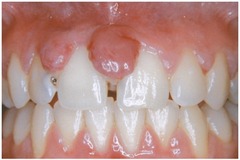
Pregnancy-Associated Pyogenic Granuloma
-more common in max interprox
-when papilla reacts strongly to bacterial biofilm
-mushroom-like
-bleeds easily if disturbed
-usually after 1st trimester if associated w/ pregnancy
-proliferation of CT
pyogenic granuloma: etiology
-inflammation response to biofilm or as a result of trauma, hormones or meds (Accutane), long term irritation
-typically associated w/ modification by the patient's hormonal condition
-can occur on lips, tongue, and buccal mucosa

pregnancy tumor: histopathology
-mass of CT, engorged capillaries, edema, leukocytes infiltration
-sometimes called angiogranuloma
Case: 34-year-old pregnant women diagnosed with a pyogenic granuloma and pregnancy related gingivitis. Client is concerened bc each time she bites tog, she bites on the tissue & it causes discomfort. What would our care plan be?
-refer to periodontist/dentist for diagnosis if undiagnosed and you suspect pregnancy tumor
-biofilm control instruction (OHI)
-debridement, eval, CNC
-may resolve spontaneously following birth
-surgical excision w/ biopsy if needed
-in this case, likely surgical excision required
Menstrual Cycle Associated Gingivitis
-uncommon: ovarian dysfunction
-some women may be sens but in most, no clinically evident changes
-exaggerated response to local iritation before ovulsation
-usually in women w/ pre-existing gingivitis
-may be due to estrogen which peaks & drops during ovulation & pre-menstruation
care plan for Menstrual Cycle Associated Gingivitis
-client education: nutrition, smoking cessation, biofilm control, educate on etiology and link to hormonal changes
-debridement: elimination of biofilm retentive factors (referral to dentist as required)
-eval
-CC
Oral contraceptive associated gingivitis
-exaggerated tissue response to local irritants (similar to pregnancy)
-usually only in those taking high dose contraceptives/hormones (older types w/ higher doses)
-current low dose oral contraceptives are not as harmful to the periodontium as when doses were higher in past
care plan for oral contraceptive associated gingivitis
-client education: nutrition, smoking cessation, biofilm control, educated on etiology and link to hormonal changes, refer to physician regarding a possible change in oral contraceptive
-debridement: elimination of biofilm retentive factors (referral to dentist)
-eval
-CC
menopausal changes
-exaggerated response to bacterial biofilm due to the hormonal changes/fluctuations
-hormone replacement therapy
-osteoporosis: risk increases after menopause
menopausal changes: what should DH be aware of
-possible oral side effects associated w/ bisphosphonates, antiresorptive agents (slow or block bone resorption) and antiangiogenic agents (stop tumors from growing their own bone supply)
-be able to recognize signs & symptoms of MRONJ
menopausal gingivostomatitis (senile atrophic gingivitis)
-uncommon
-mucosa is dry, burning sensation, taste alterations (salt, peppery, sour)
-similar to desquamative gingivitis
-may occur after ovariectomy
-resolve spontaneously
-biofilm control & frequent CNC intervals
diabetes mellitus associated gingivitis
-aggravated by high blood glucose levels
-poorly controlled diabetic condition aggravates the reponse to biofilm
-more common in children
care plan for diabetes mellitus associated gingivitis
-cons w/ client's physician regarding blood glucose levels & susceptibility to infection, referral to MD for control of diabetes, request bloodwork to determine degree of control of diabetes, and susceptibility to infection
-may requires antibiotic premed
-client education: explain nature of their disease, nutrition, smoking cessation, biofilm control
-debridement: elimination of biofilm retentive factors
-eval: look for resolution of inflammation, is further treatment required? is the diabetes under control?
-frequent continuing care intervals