Lecture 23: Disorders of the Gravid Uterus
 Call Kai
 Learn
 Practice Test
 Spaced Repetition
 Match
 Flashcards
 Knowt Play
1/29

There's no tags or description
Looks like no tags are added yet.
30 Terms
- average of 7-9% and range of 5-20%
- often older mares, barren mares, or foal heat breedings
What is the incidences of abortion like in horses?
- transcervical
- hematogenous
- previous intrauterine infection
What are the 3 routes of bacterial infection?
- transcervical infection leading to abortion
What is the route of infection if the lesion is at the cervical star?
- mares typically present 7-9 months of gestation
- inappropriate lactation
- vulvar discharge
what are the clinical signs of placentitis?
- Ascending
- nocardioform
- hematogenous
What are the 3 forms of placentitis?
- caused by step. Equi zooepidemicus
- starts at cervix and impacts near the cervical start
- see abortion at any stage, highest incidence between 5-10 months gestation
What is ascending placentitis?
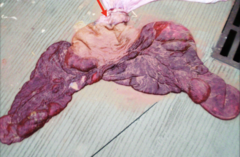
- nocardioform actinomycetes or Crossiella equi
- see late term abortions, stillbirths, premature birth
What is nocardioform placentitis?
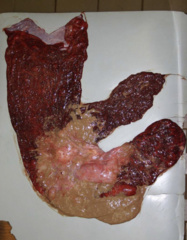
- At base of gravid uterus and non-gravid horns or body/horn
- Chorionic surface = brown, sticky, and mud-like mucoid/purulent at uterine tubule junction
- Aborted mares will clear the infection
What are the characteristics of nocardioform placentitis?

- caused by lepto, mare reproductive loss syndrome, and salmonella
- see widespread placental infection
What is hematogenous placentitis?
- combine thickness of the uterus and placenta (CTUP)
- presence of purulent material between uterus and placenta
- culture vaginal discharge
How do you diagnose placentitis?
- double dose of altrenogest (regumate)
- broad spectrum abx (potassium penicillin + gentamicin)
- flunixin meglumine (banamine)
- pentoxifylline (helps fetus)
What is the gold standard standard treatment for placentitis?
- EHV-1 = most important cause of herpes abortion
- EHV-3 = coital exanthema --> vesicles not abortion (pic)
- EHV-4 = rhinopneumonitis and sporadic abortion, resp in young horses
What are the 3 types of herpes virus?

- transmission = inhalation or contact with aborted fetus or placenta
- carriers occur due to latency
- associated with stress, new groups during late gestation, yearlings housed close to mares
What is the transmission of equine herpesvirus like?
- late abortion - 7 months to term with no clinical signs
When do you see abortions with equine herpesvirus?
- Virus --> tonsils and lymph nodes --> viremia --> lungs, endometrium, chorioallantois, fetus, nervous tissue --> damages endometrium --> edema --> choriallantoic separation --> fetal anoxia --> late abortion - 7 months to term with no clinical signs
What is the pathogenesis of herpesvirus?
- outbreaks of abortion preceded by resp outbreak in foals/yearling 1-4 months earlier
- more sporadic
- eosinophilic intranuclear inclusion bodies in foci in liver, ect
What is a typical EHV clinical picture?
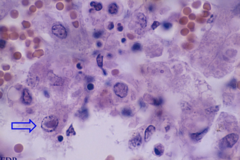
- EHV-1
you always need to consider _______ on farms 1st when mares are aborting
- early recognition (isolate, clean, PPE)
- separate yearlings + pregnant mares
- vaccinate = EHV-1
How do you prevent EHV?
- (3), 5, 7, 9 months gestation
When should you vaccinate mares for EHV-1?
true
True or false
stress can be a cause of abortion
- death in absence of bacterial infection
- mares not systemically ill
What is foal mummification?

- loss of fetal fluid
- uterus contracted around fetus
- secondary to twins
How does foal mummification occur?
- dead fetus with bacterial contaminations --> soft tissues often removed
- mares not systemically ill
What is fetal maceration?
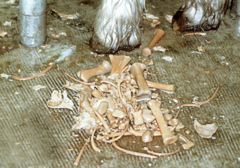
- rare due to dorsal uterine attachment of broad ligament
- mid to late term (5-10 months)
- most limited to 180* rotation
- signs can vary from no pain to colic, restlessness, ect
What are uterine torsions like in horses?
- may not cause pain
What are
- painful
- creating low grade colic that does not response well to analgesics
What are >180* uterine torsions like in horses?
- rectum palaption --> uturus might feel constricted
How do you diagnose uterine torsions in horses?
- standing flank laparotomy
- rolling the mare with a plank in her flank
How do you correct uterine torsions in horses?
- vaginal varicose veins
- more common in older, multiparous mares near the end of gestation
What is the most common cause for vaginal bleeding in horses?
- ligation, cautery, and laser ablation
- preparation "H", works great sometimes
How do you treat vaginal varicose veins?