bone health and physiology
 Call Kai
 Learn
 Practice Test
 Spaced Repetition
 Match
 Flashcards
 Knowt Play
1/38

There's no tags or description
Looks like no tags are added yet.
39 Terms
name the three bone cells
osteoclasts
osteoblasts
osteocytes
what are the two main ECM components
C, HC
collagen fibres
hydroxyapatite crystals
ECM
collagen function, what type is the main one
hydroxyapatite crystals, where are they found, function, what are they made of
collagen - mostly type 1, flexible strength and reduces brittleness (reduces tensile forces)
hydroxyapatite crystals - high conc of calcium and phosphate accumulating between collagen fibres, reduces compressive forces, makes bone stiff
what does lamellar mean
layers
what are the two types of bone marrow
red and yellow
red bone marrow
active or inactive in the formation of RBCs
what type of stem cells
they can mature into what three -cytes
active in the formation of red blood cells
has haematopoietic stem cells
erythrocytes - RBCs
leukocytes - WBCs
thrombocytes - platelets
yellow bone marrow
active or inactive in RBC formation
contains mostly what type of cells
what can it turn into
inactive
adipose cells
has haematopoietic potential for emergency situations as the adipose filled spaces can reactivate and revert back to red marrow
what are names for primary and secondary bone
p- woven bone
s- lamellar bone
primary/woven bone
irregular or regular organisation of collagen fibres
newly formed or old bone
what bone does this eventually become
in what ages is this bone found
strong or weak
irregular organisation of collagen fibres
immature, new
eventually remodelled into lamellar bone
found in developing bones and adult bones when repairing from a fracture
mechanically weak
secondary/lamellar bone
describe collagen alignment
old or new bone
what age is it seen in
strong or weak bone
regular, parallel alignment
mature bone
adult bones
mechanically strong
what are the two bone types in adult bones
compact and cancellous bone
compact bone
what is it also known as C
what layer is it
what systems does it contain DHS
what colour BM
function
cortical bone
thick outer layer of bone
dense haversian systems
yellow bone marrow
provides the strength for weight bearing
cancellous bone
another name for it
what layer of bone
what forms along lines of stress
what colour marrow
function
spongy/trabecular
inner cavity of the bone
trabeculae form
red bone marrow
flexibility and absorbs shock

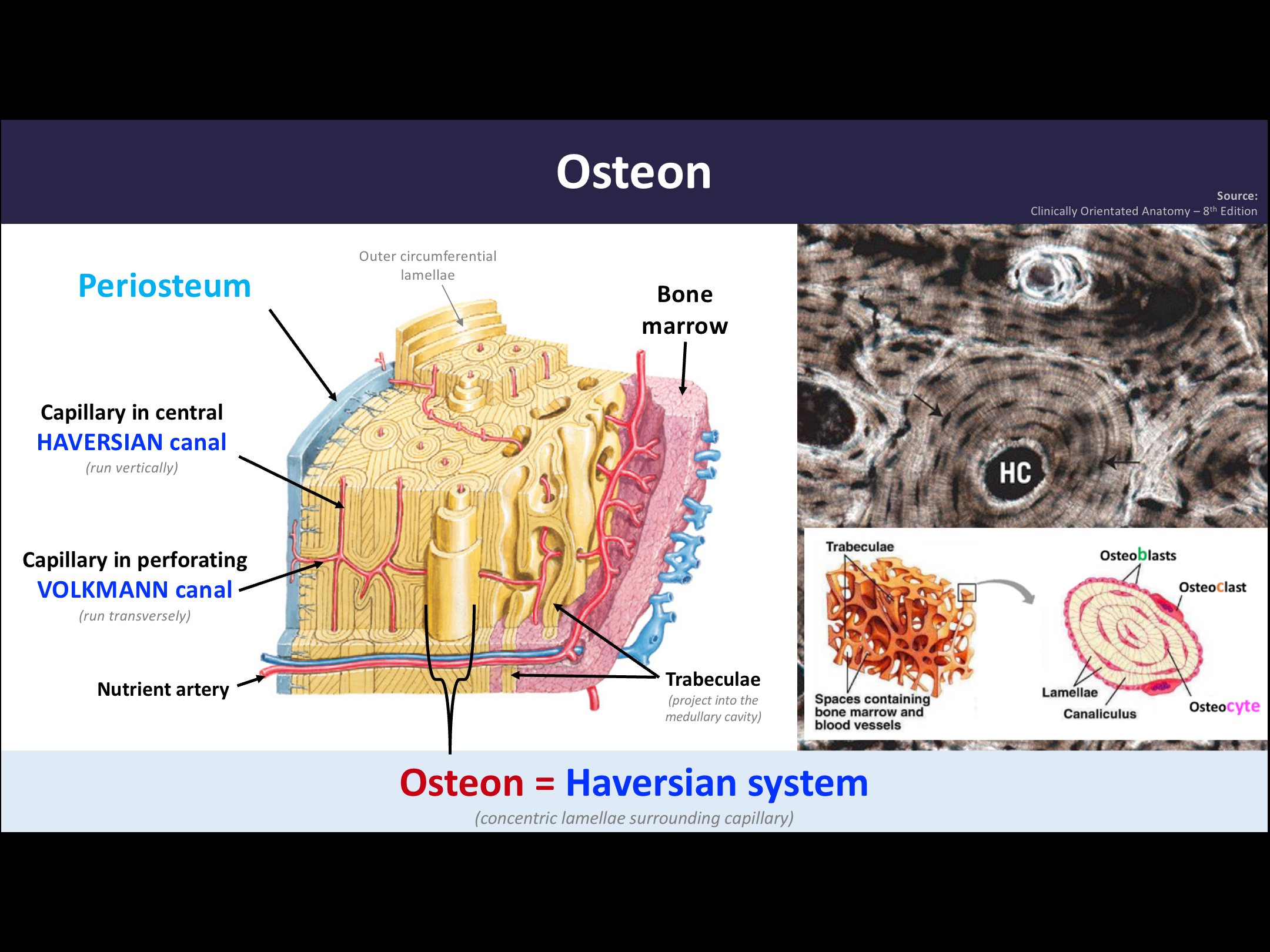
osteons
what lines the bone
capillaries in central canal - H
capillaries horizontal - V
osteons are called HS
what fills the trabeculae
what is inside an osteon
inside an osteon
lamellae, osteocytes - small black dots on the lamellae, on outside contains osteocytes, middle - haversian canal
periosteum - when fractures happen it has innervation so it can feel pain
bone functions 6
support
protect
store calcium phospates
blood cell maturation
articulate
move
what are the 5 types of bone
long
flat
short
sesamoid
irregular
bone modelling
what do mesenchymal cells in the limb buds differentiate into
what connective tissue do these form
what process happens to the outer layer of the diaphyseal shaft
what happens to the centre of the cartilaginous model
what is primary ossification
what is secondary ossification
chondrocytes
hyaline cartilage model
ossification
vascularisation
when the centre of the bone develops towards the end - before birth
when the ends of the bone turn into bone
why is bone remodelling needed
if extra bone is needed
remove bone that isnt in use
heal and replace damaged bone
renew old bone, callus formation after a fracture
access stored material
calcium and phosphate
which bone cells originate from
mesenchymal stem cells
haematopoietic progenitor stem cells
MSC → osteoBLAST
HPSC → osteoCLAST
remodelling concept
bone damage occurs
what do osteoclasts do
what do osteoblasts do
what is the BMU
what structure is forming behind it
osteoclasts resorb bone
blasts secrete and mineralise matrix
basic multicellular unit
osteon = lamellae + haversian canal
what are the 5 stages of remodelling
A,R,R,BF,M
activation
resorption
reversal
bone formation
mineralisation
activation 1
what initiates bone remodelling 3
what cells are recruited
what are they differentiated into
what happens to them
hormonal changes (oestrogen, parathyroid hormone), systemic changes to homeostasis, mechanical loading
pre-osteoclasts
osteoclasts
they are activated
osteoclast activation
macrophage pre-cursor cells are also known as what
these bind to what CSF
what cell is made and begins to proliferate
what is rank, where is it found, what is the ligand for it
what cells produce the RANK ligands
what affect do activated osteoclasts have on bone resorption
colony forming unit granulocyte monophage CFU-GM
macrophage colony stimulating factor M-CSF
osteoclasts
RANK is a receptor found on osteoclast pre cursor cells (and released by them), RANKL
produced by osteoBLASTS, T lymphocytes, osteoblasts, bone marrow, stromal cells, synovial fibroblasts
increased bone resorption
osteoclast inhibition
what is OPG
its expressed to prevent what
OPG binds competitively to what LIGAND
what effects does that have
what happens to pre existing osteoclasts
osteoprotegerin
prevent bone catabolism
RANKL
RANKL no longer able to bind to RANK on osteoclast precursor
prevents differentiation and maturation of osteoclasts
they become apoptotic
active resorption
once osteoclasts are activated what do they bind to
what enzyme converts water + co2 → x + x
what does the chloride bicarbonate exchanger do
what compound is made and breaks down the bones calcium and phosphate crystals
bone
h+ and bicarbonate HCO3-, carbonic anhydrase
it exchanges bicarbonate with a chloride ion
hydrogen ion and chloride makes HCL to dissolve bone
reversal
what are osteomacs
what do they promote/regulate
osteal macroophages
osteoblastogenesis
make coupling signals to recruit osteoblasts
prepare bone surface
promote bone surface
promote matrix deposition
phagocytic function in removing apoptotic cells and debris
bone mineralisation/formation
phase 1
what protein is laid down first
which bone cell releases matrix vesicles
what two ions are drawn into vesicle to make which compound found in bone
this compound is converted into which crystals
phase 1
collagen
osteoblasts
ca2+, phosphate ions
calcium phosphide
insoluble hydroxyapatite crystals
bone mineralisation/formation
phase 2
which enzyme acts on vesicle membrane
the breakdown of phospholipids allows what release, where
what helps hydroxyapatite crystals grow onto collagen fibres
phase 2
phospholipase
hydroxyapatite penetrates out of the vesicle into ECM
many proteins, ca2+, Pi, H+
what are osteoids
bone-like structures
unmineralised bone
has osteoblasts and clasts, key structure in bone development
mineralisation
what happens to osteoblasts when they are done mineralising bone
what other cell remains in communication with them
what structure forms
they retire/are dormant, change shape and become quiescent
osteocytes (appear black on lamellae)
osteons
give three examples of stimuli for bine remodelling rates and balance
mechanical loading
nutrients
hormones
how does the bone respond to different mechanical stresses
through trabeculae aligning along lines of principal force
how does bine respond to
high mechanical loading
low mechanical loading
increased mass and density
decreased mass and density
describe the mechanostat hypothesis
what happens to bone when mechanical load is low
bone resorption and formation is affected by difference in weight bearing
bone resorption happens when mechanical strain is low
bine formation occurs when load is high, more dense
osteoporosis
main characteristic of this condition, what structure is affected
which bone cell is most responsible
risk factors
what scan will give indication of structural deterioration
brittle bones, trabeculae thinning (due to effects of ageing and inactivity)
osteoCLAST activity is more than blast
clucocorticoid medication, inactivity, menopause - due to reduced OE levels, prostate cancer - reduced testosterone
DEXA scan (bone mineral density scan)
cellular response
where are osteocytes embedded within
how are they connected to other osteocytes
what effect does mechanical loading of the bone have on canaliculi
what will osteocytes detect
what does this process stimulate
lacunae filled with fluid
connected via canaliculi
causes fluid to flow through the canaliculli
they can sense movement and any breaks from microdamage
bone remodelling
nutritional stimuli
what minerals does bone store
vitamins
calcuim, phosphorus
Mg, K, Zn, Cu
Vit D
A,C,K
what is found on collagen fibrils for stiffening
what two compounds is it made of
hydroxyapatite
calcium phorphorus
provides weight bearing ability of the bone
why is vitamin D important for bone health
function of phosphorus
it aids with Ca2+ absorption - found in sunlight and food
imp role for ATP