Topic 1: Mitosis
 Call Kai
 Learn
Learn Practice Test
 Spaced Repetition
 Match
Match Flashcards
 Knowt Play
1/41

There's no tags or description
Looks like no tags are added yet.
Name | Mastery | Learn | Test | Matching | Spaced | Call with Kai | Chat |
|---|
No analytics yet
Send a link to your students to track their progress
42 Terms
What does the nucleus cell contain
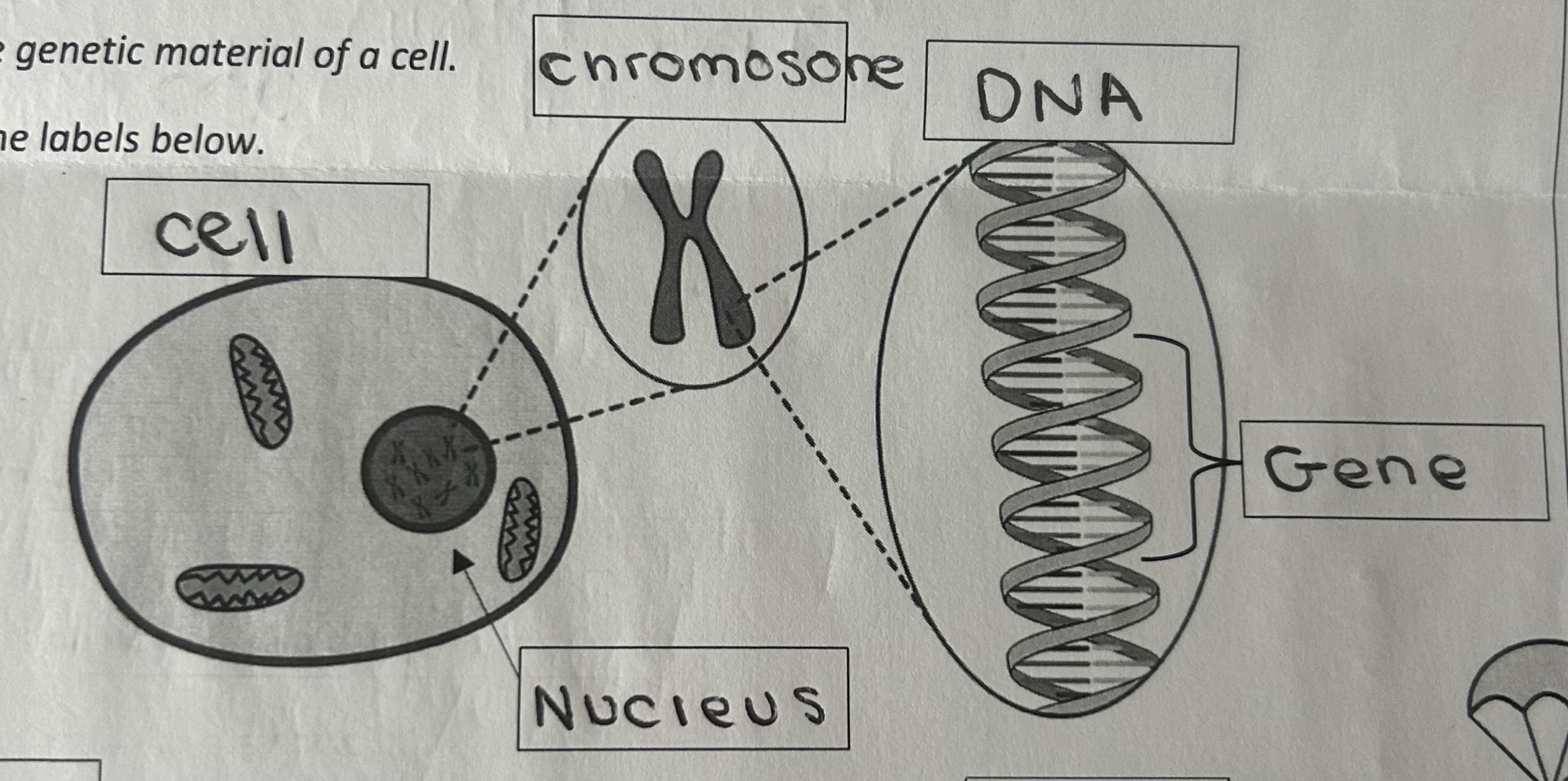
chromosomes made of DNA molecules
Explain why chromosomes in body cells are normally found in pairs.
One set is inherited from the organisms mother and one from its father
What areChromosomes
Chromosomes are long lengths of a molecule called DNA, the DNA is coiled up to form the arms of the chromosome
What doChromosomes carry
Each chromosome carries a large number of genes. These are short sections of DNA. Genes control our characteristics. Different genes control the development of different characteristics, eg hair colour, eye colour.
Why do gametes (sperm + ovum cells) have half the normal number of chromosomes
They combine to make a full set (fertilisation)
What are chromosomes made of and contain
Made of:
DNA
Contain:
sections called genes
What is the function of a gene
coding for characteristics
what is an allele
half a gene/different form
What is the function of DNA
codes for protein
Label genetic material of a cell
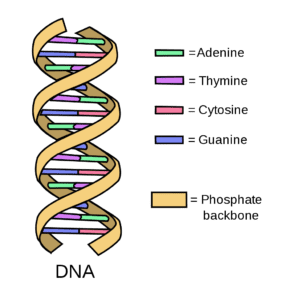
What are the 4 bases in DNA
(A,T,C,G)
Adenine
Thymine
Cytosine
Guanine
Define mitosis
cell division
Describe situations where mitosis is occurring
Asexual Reproduction - A plant or animal makes a copy of itself without a mate
Growth - When a child grows taller, their body cells divide to make more cells
Healing wounds + replacing old cells - your body fixes cuts and wounds, your skin, hair, and nails grow new cells
Development - A baby grows from one tiny cell after fertilization
Regeneration - Some animals grow back lost parts
How many cells are produced during mitosos
2
What do body cells in multicellular organisms do
Divide to produce new cells as part of a series of stages called the cell cycle
What is meant by the cell cycle
when the cells grow + divide
When does the cell cycle start and when does it end
Starts - when a cell has been produced by cell division
Ends - with the cell dividing to produce two identical cells
What is the stage of the cell cycle called when the cell divides
Mitosis
During which period of the cell cycle does cell growth occur
Interphase
Why is the cell cycle needed
to grow
repair
Asexual reproduction
Stages of Mitosis
Interphase
Prophase
Metaphase
Anaphase
Telophase
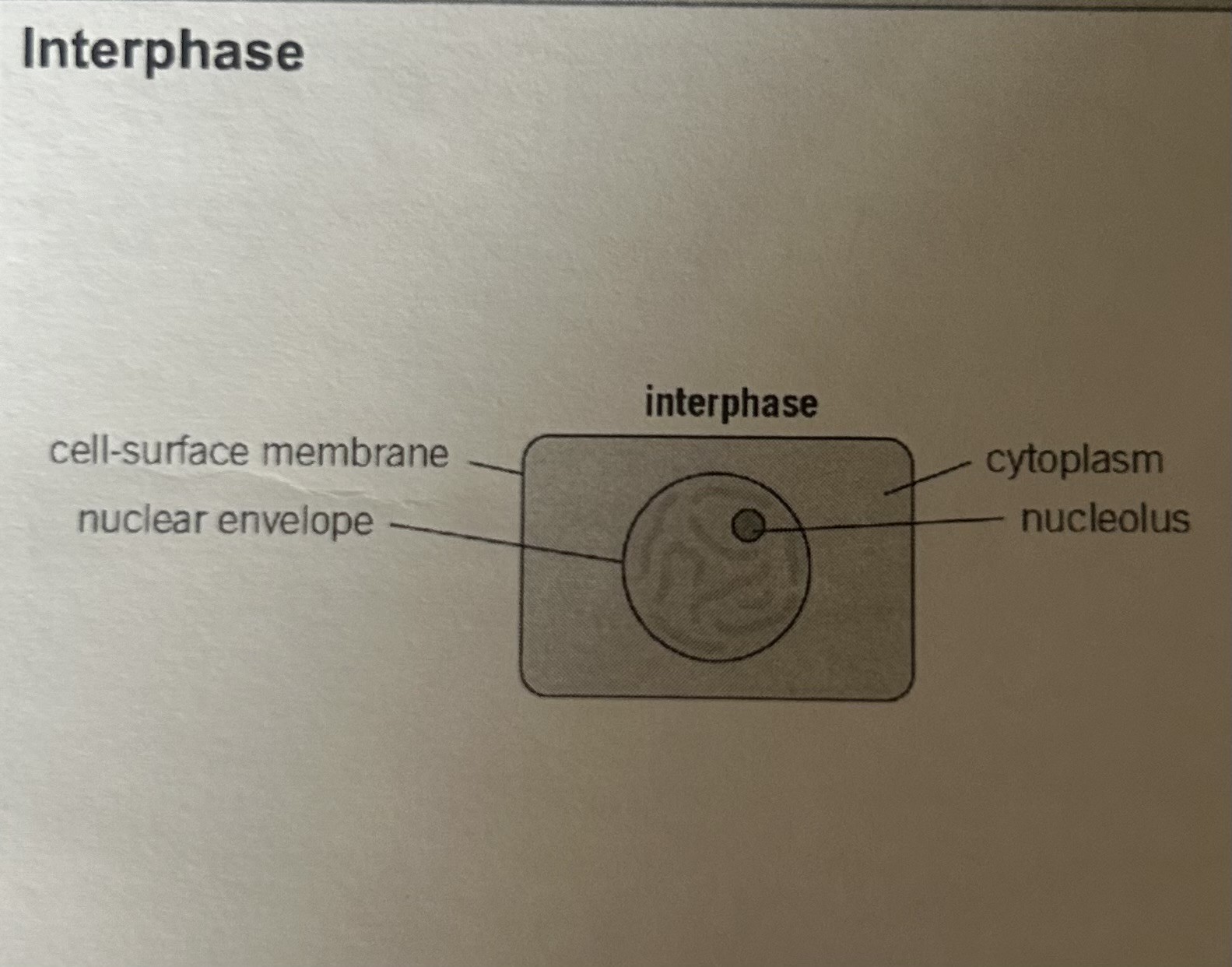
Interphase
Parent Cell
Cell growth
DNA replication
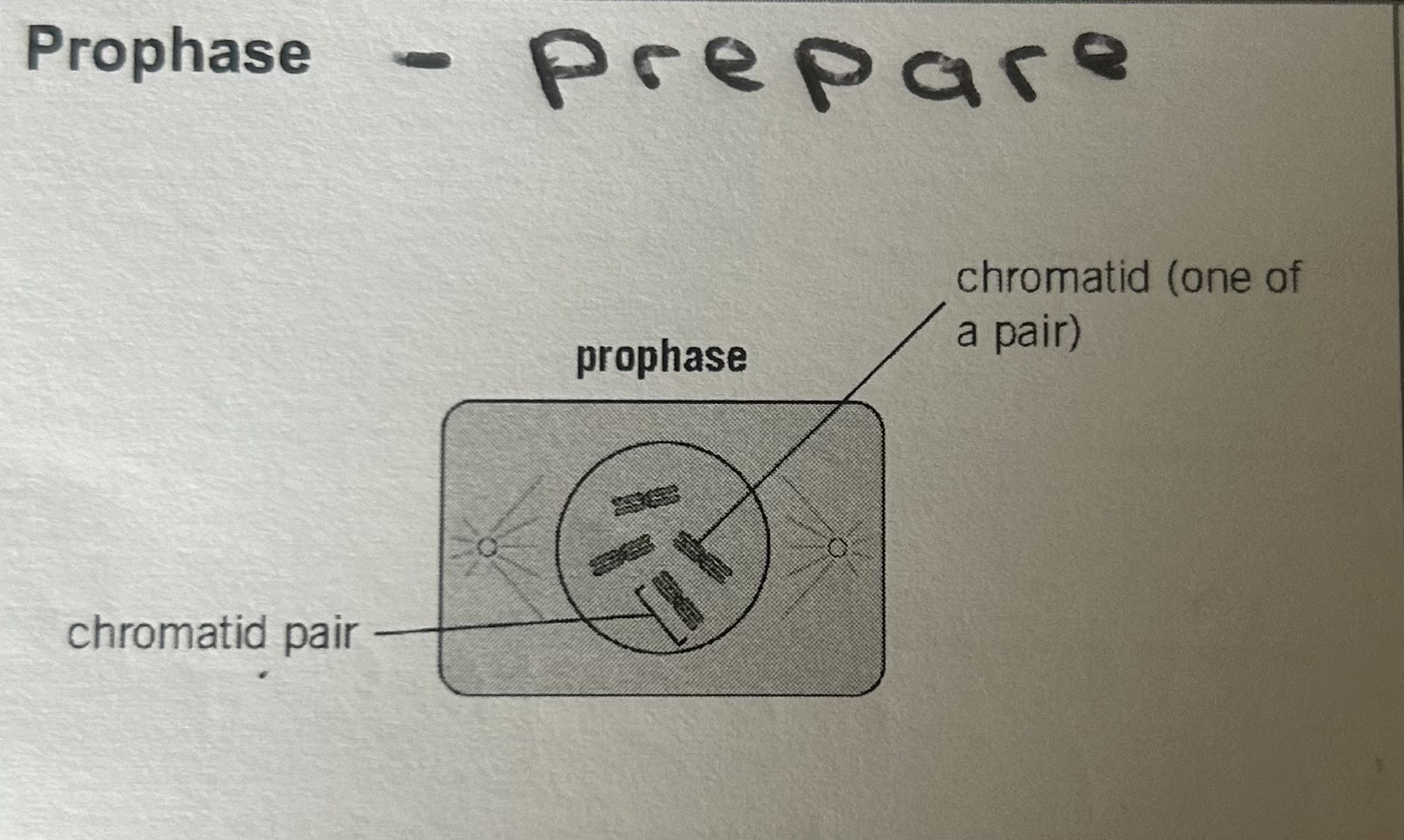
Prophase
Chromosomes make identical copies of themselves
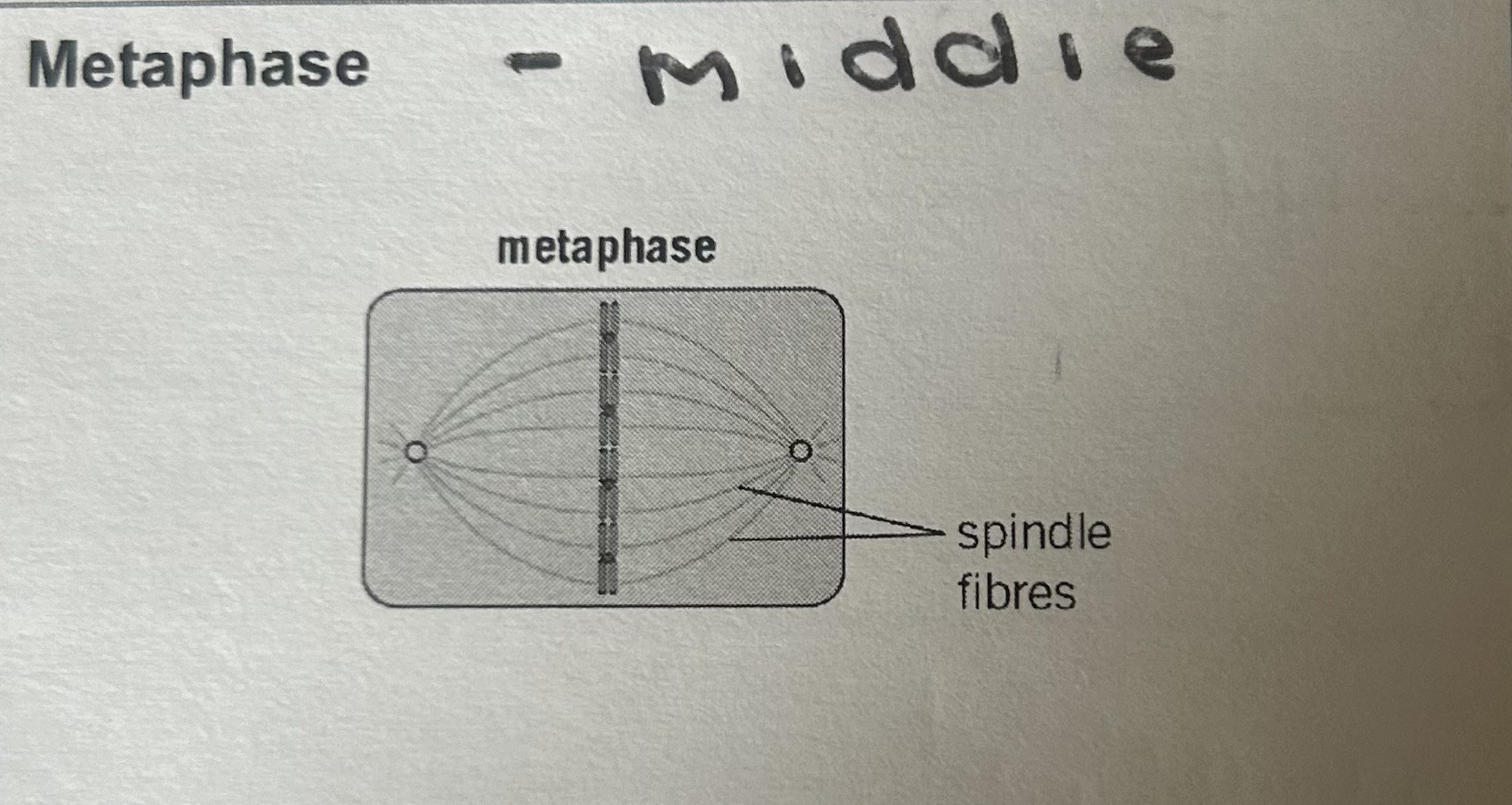
Metaphase
Chromosomes line up along the center (equator)
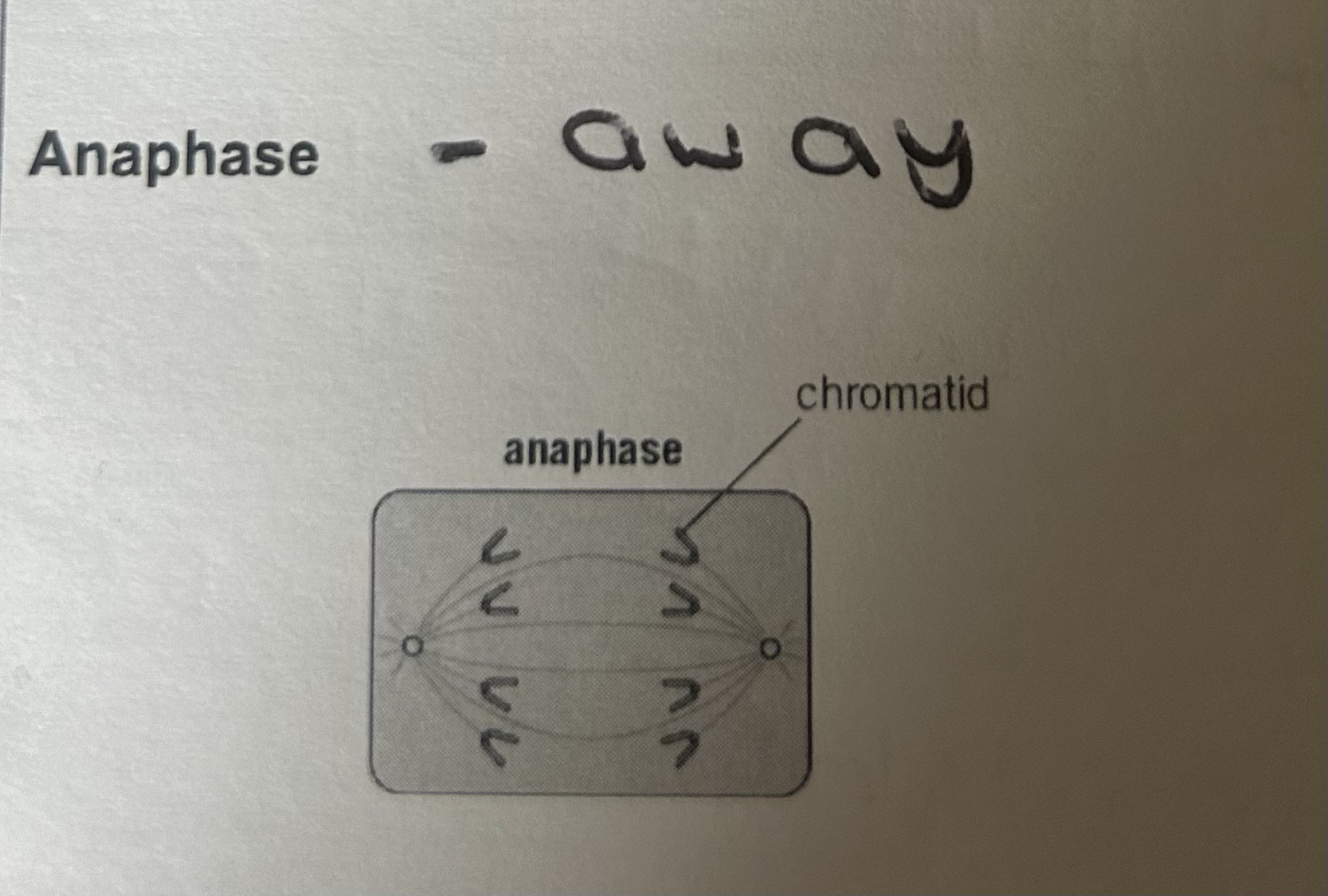
Anaphase
Chromosomes are pulled apart to poles
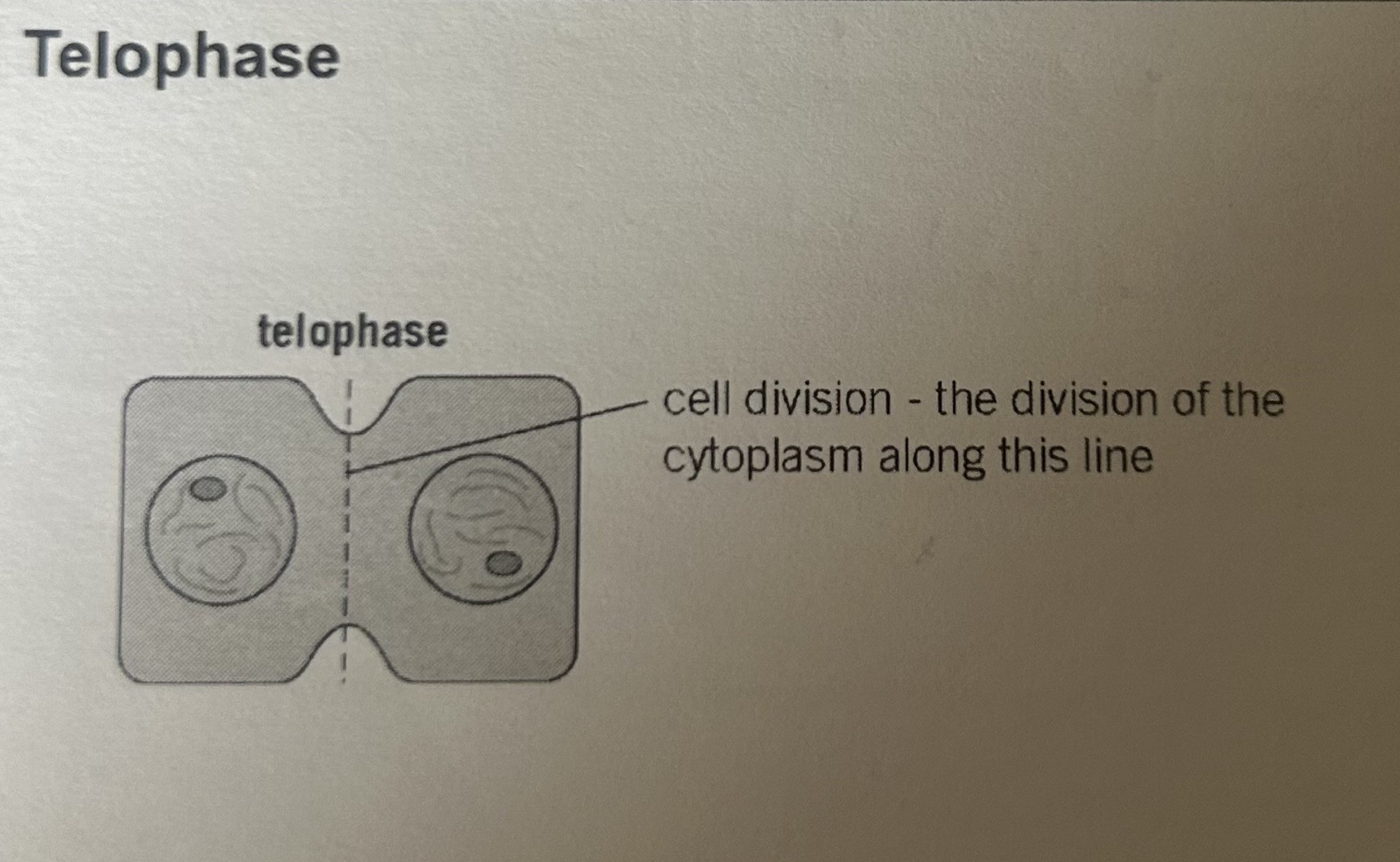
Telophase
Cells divide into two identical daughter cells
How cell division by mitosis is important in the growth, repair, and development of multicellular organisms
Growth - When an organism grows, it’s cells divide through mitosis to create more cells , allowing tissues + organs to expand
Development - From a single fertilised egg (zygote), mitosis creates all the different cells that make up the organism
Repair - Mitosis helps replace damages or dead cells
Which stage do cells spend more time in - mitosis or cell growth
Cell growth
steps of the cell cycle
During the cell cycle, the genetic material is doubled and then divided into two identical cells.
Before a cell can divide, it needs to grow and increase the amount of subcellular structures such as ribosomes and mitochondria.
The DNA replicates to form two copies of each chromosome.
In mitosis, one set of chromosomes is pulled to each end of the cell, and the nucleus divides.
Finally the cytoplasm and cell membranes divide to form two identical cells.
What are the results of the steps of the cell cycle
The cell has now produced two new daughter cells. The daughter cells contain exactly the same DNA - they’re identical. Their DNA is also identical to the parent cell.
Explain how using tissue culture creates a clone of a plant
The stem cells allow the small pieces of tissues to grow into full organisms
What is a stem cell
An undifferentiated cell that can replicate itself and differentiate to become a specialised cell
Where do we find stem cells
In a bone marrow or embryos
Where do stem cells grow
plants meristems
What can stem cells from human embryos, adult bone marrow and the meristems in plants do
Stem cells from human embryos can be cloned and made to differentiate into most different types of human cells.
Stem cells from adult bone marrow can form many types of cells, including blood cells.
Meristem tissue in plants can differentiate into any type of plant cell throughout the life of the plant.
Describe differences between embryonic and adult stem cells.
Embryonic stem cells are only found in embryos, whereas adult stem cells are found in adults and children
Embryonic stem cells can differentiate into all the cell types that make up a human, whereas adult stem cells can only differentiate into certain ones, such as blood cells
In medicine, embryonic stem cells could be used to replace faulty cells in sick people in the future, whereas in medicine, adult stem cells are already used to cure disease
Describe what therapeutic cloning can be used for
In therapeutic cloning an embryo is produced with the same genes as the patient. Stem cells from the embryo are not rejected by the patient’s body so they may be used for medical treatment.
Arguments for and against stem cell research
For:
Curing patients who already exist and who are suffering is more important than the rights of embryos
The embryos used in the research are usually unwanted ones from fertility clinics, which, if they weren’t used for research, would probably just be destroyed
Against:
Human embryos shouldn’t be used for experiments since each one is a potential human life
Campaigners for the right of embryos feel that scientists should concentrate more on finding and developing other sources of stem cells, so people could be helped without having to use embryos.
Risks of stem cells
can cause tumor’s
organ damage
the body might reject them
infections
Explain the reasons for ethical and religious objections against stem cells
Some think it’s wrong to play god by manipulating life
Many religious people believe life starts at conception, so destroying embryos is killing life
Some conditions which may be helped by treatment with stem cells
Blood Cancers - leukemia + lymphoma
Neurological diseases - parkinson’s disease + Alzheimer’s disease + spinal cord injury
Heart disease
Eye conditions
Diabetes
Bone + joint issues
Tissue damage
Paralysis
What can stem cells from meristems in plants be used for
Stem cells from meristems in plants can be used to produce clones of plants quickly and economically
Rare species can be cloned to protect from extinction.
Crop plants with special features such as disease resistance can be cloned to produce large numbers of identical plants for farmers.