A&P150 - Osteology Exam
 Call Kai
 Learn
Learn Practice Test
 Spaced Repetition
 Match
Match Flashcards
 Knowt Play
1/61

Earn XP
Description and Tags
Cerritos College
Name | Mastery | Learn | Test | Matching | Spaced | Call with Kai | Chat |
|---|
No analytics yet
Send a link to your students to track their progress
62 Terms
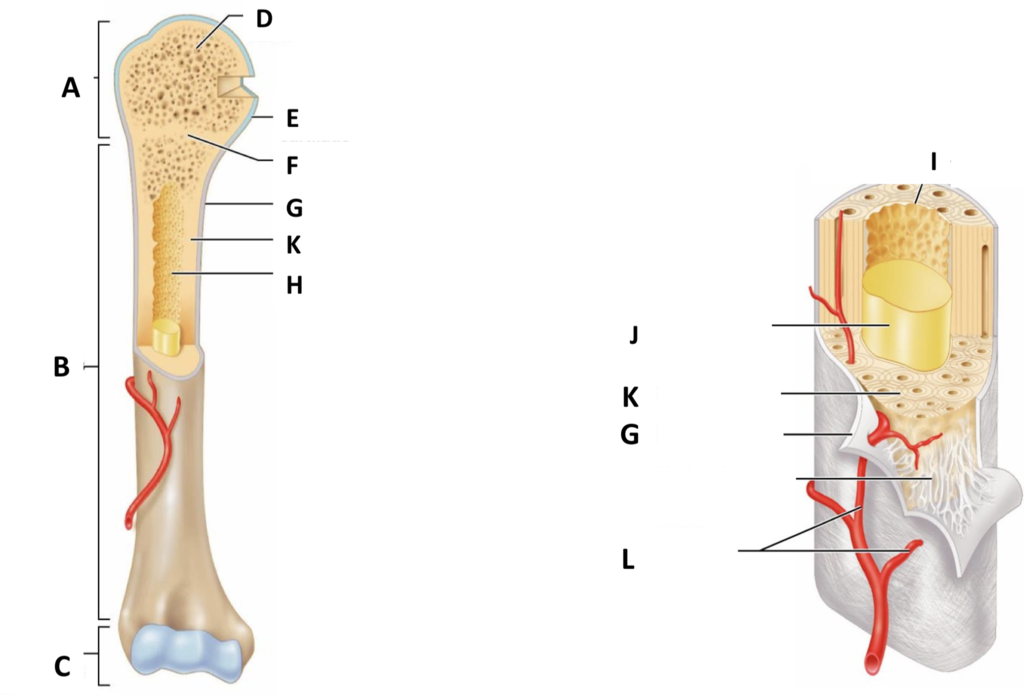
A
Proximal Epiphysis
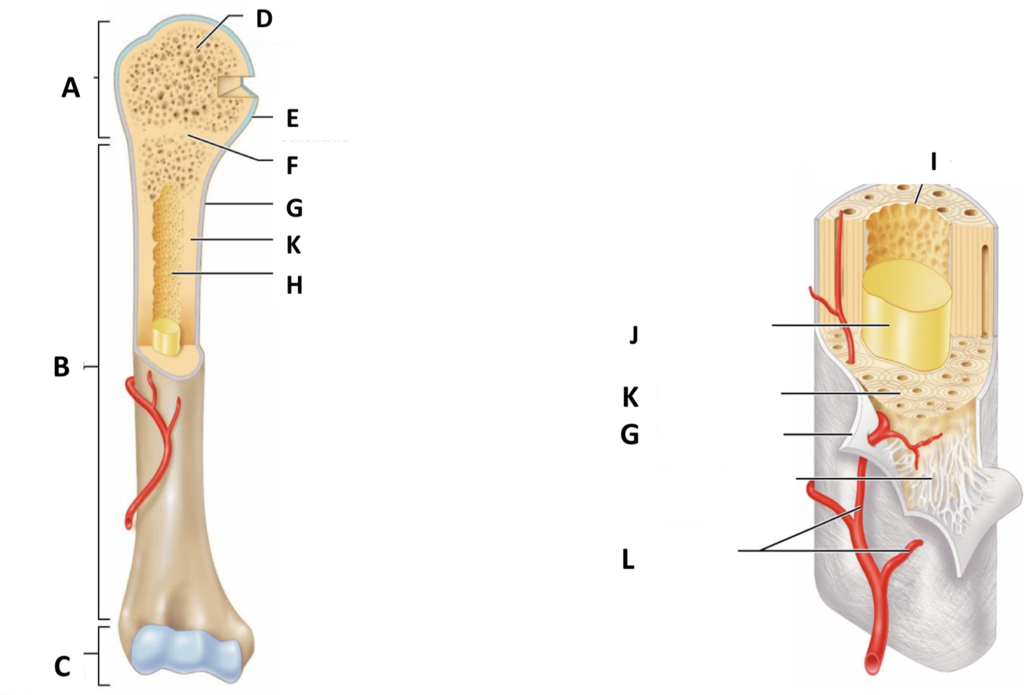
B
Diaphysis
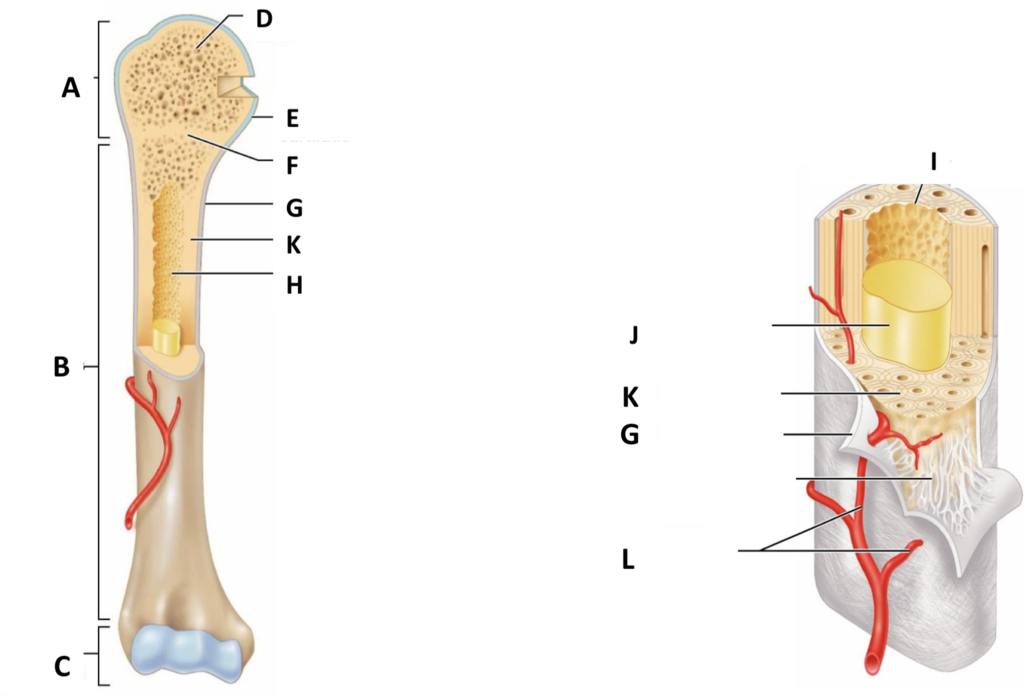
C
Distal Epiphysis
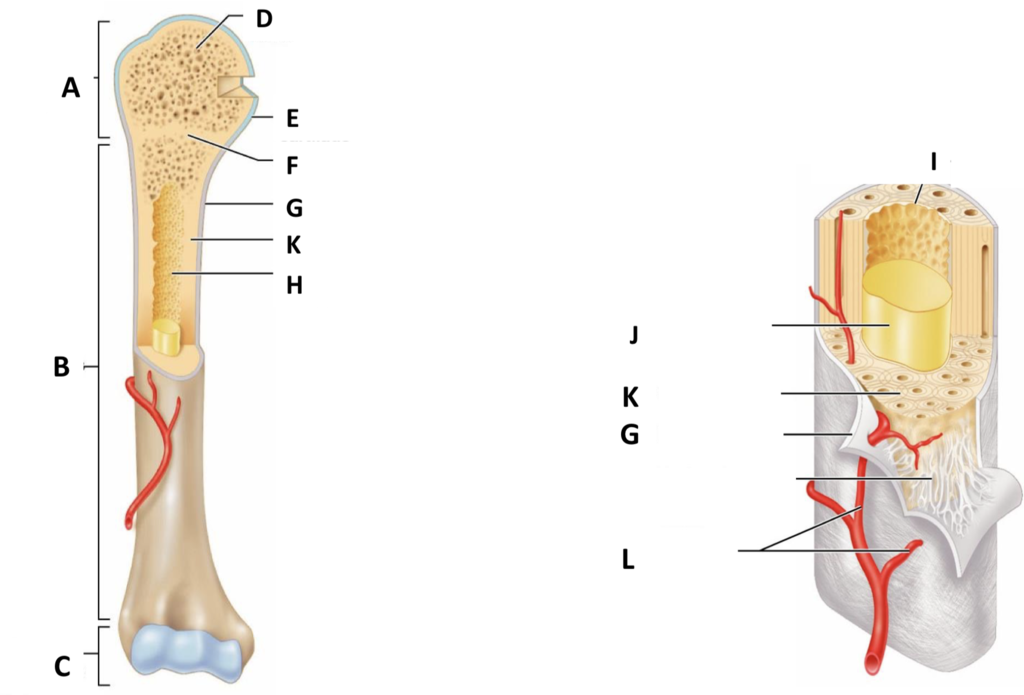
D
Spongy Bone
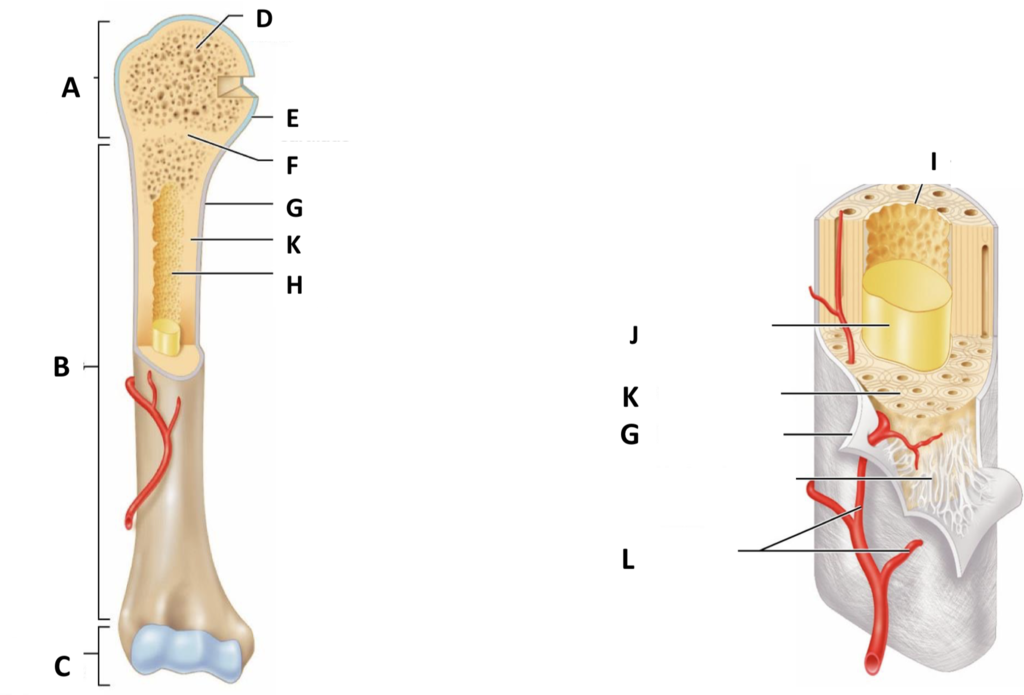
E
Articular Cartilage
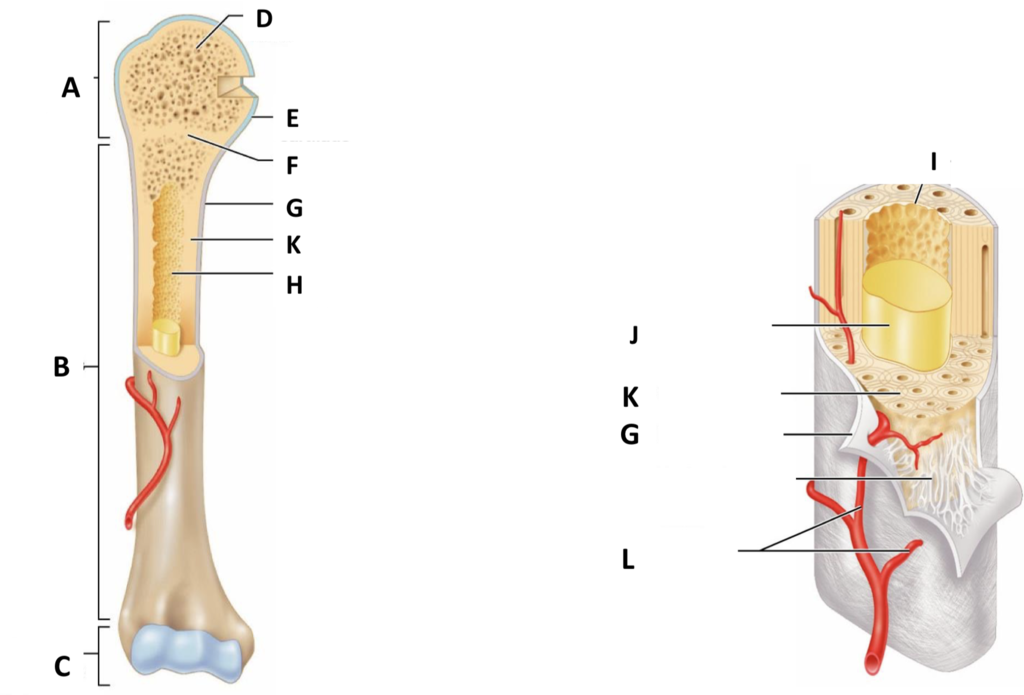
F
Epiphyseal Line

G
Periosteum
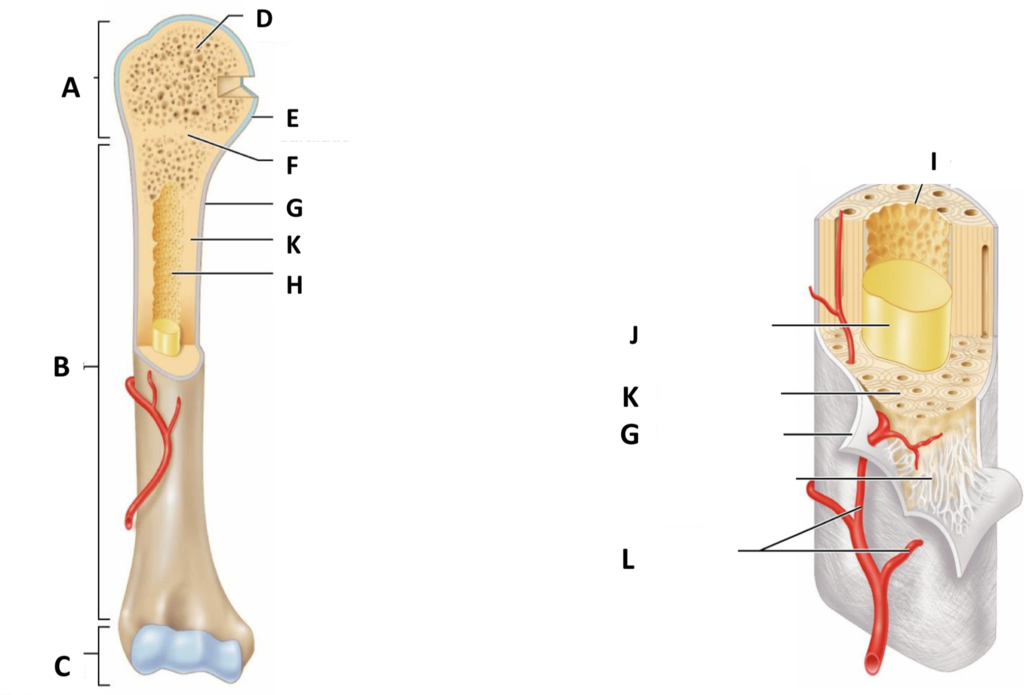
K
Compact Bone
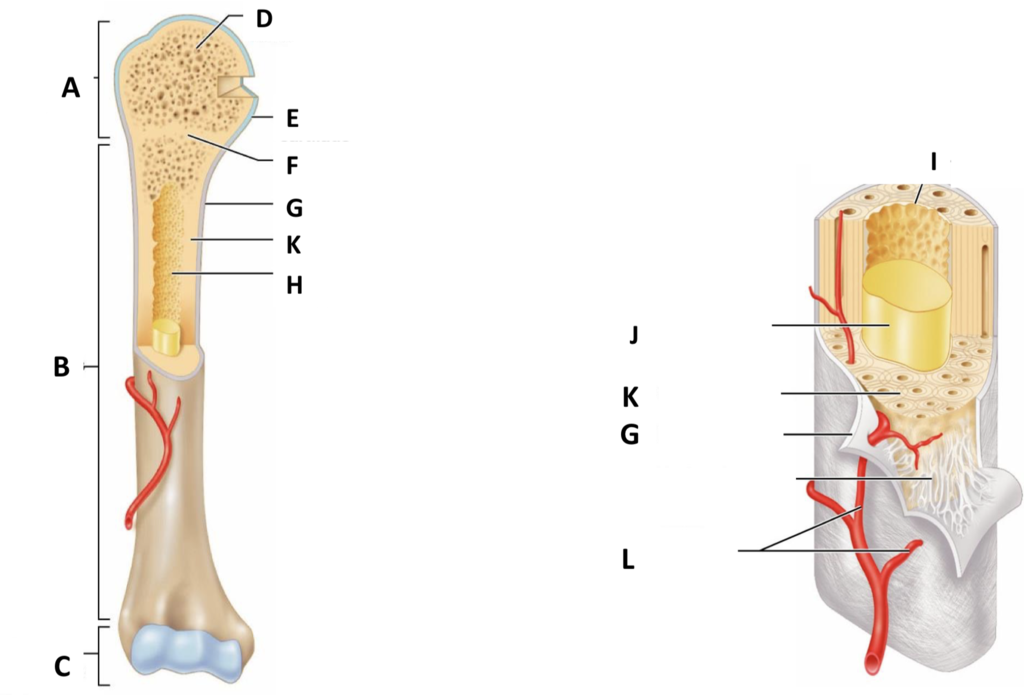
H
Medullary Canal
What type of bone is found in the diaphysis?
Compact Bone
What type of bone is found in the epiphysis?
Spongy Bone
What type of cartilage is found in the metaphysis?
Hyaline cartilage (growth plate)
What type of cartilage is articular cartilage?
Hyaline Cartilage
What is the difference between the epiphyseal plate and the epiphyseal line?
Epiphyseal plate → cartilage that allows bones to grow longer
Epiphyseal line → remnant of the plate after bone growth has stopped
Name a major difference in the microscopic anatomy between compact and spongy bone.
Compact bone has osteons (central canals), while spongy bone has trabeculae and no osteons
What type of cartilage is the model for Endochondral Ossification?
Hyaline Cartilage
“Within cartilage, I am changing you into bone.”
What types of bones undergo Endochondral Ossification?
Produces majority of bones in the body
Describe what is happening during the steps of Endochondral Ossification
A hyaline cartilage model is gradually replaced by bone.
Cartilage model forms → creates the shape of the future bone.
Bone collar forms → bone develops around the outside.
Primary ossification → bone replaces cartilage in the shaft (diaphysis).
Medullary cavity forms → a hollow space develops inside the shaft.
Secondary ossification → bone replaces cartilage in the ends (epiphyses).
Growth plate remains → allows the bone to grow longer.
What types of bones are formed by Intramembranous Ossification?
Flat bones of skull, some facial bones, mandible and central portion of clavicle
How does appositional growth affect the development of bone?
Growth from outside, increases in width
Results in thicker bones
How does interstitial growth affect the development of bone?
Growth from within, increase in length
Results in longer bones
Function of Osteoprogenitor (Osteogenic) cells and location
Stem cell that divides (mitosis) —> then becomes osteoblast
Location: Periosteum and bone marrow
Function of Osteoblasts and location
“B” Builds Bone
Location: Periosteum and endosteum
Function of Osteocytes and where do they live
Matured osteoblast, maintain matrix
Live in Lacuna
Function of Osteoclast
Resorb bone
Dissolve and make new bone tissue
What would happen if osteoclast activity was greater than osteoblast activity?
Osteoporosis
Two main minerals found within bone tissue.
Calcium and phosphate
Effects of Vitamin C on bone growth and health
Promotes collagen production
Effects of Vitamin D on bone growth and health
Promotes absorption of calcium and phosphate into blood (calcification of bone)
Effects of Vitamin A on bone growth and health
Activates osteoblasts
State the five functions of the skeletal system
Protect internal organs
Stores and releases fats and minerals
Produces (all) blood cells
Facilitates movement
Supports the body
What is the major protein fiber running through the bony matrix?
Collagen Fibers
What are the inorganic components of bone?
Mineral salts, primarily calcium phosphate (hydroxyapatite), which give bone its hardness and strength.
List the shapes of bone and give an example of each
Long Bones (Femur, Humerus, Phalanges, Radius)
Short Bones (tarsals, carpals)
Flat Bones (ribs, scapula, hyoid, cranial, sternum)
Irregular Bones (vertebrae, coxal, facial bones, sacrum)
Sesamoid Bones (patella)
Name the blood vessel that enters the bone through the diaphysis.
Nutrient Artery and Vein
Do bones have nerves running through them?
Yes, through the nutrient foramen
Growth Hormone (release location, function and effect on bone growth)
Location: anterior pituitary gland
Function: Cartilage proliferation @ epiphyseal plate (bone elongation/length)
Effect: Little growth hormone results in shorter stature in child
Thyroid Hormone (release location, function and effect on bone growth)
Location: thyroid gland
Function: stimulates metabolic rate of osteoblasts
Effect: little too thyroid hormone —> shorter stature
Calcitonin (release location, function and effect on bone growth)
Location: thyroid gland
Function: calcium deposition in bone, inhibits osteoclast activity, inc. blood calcium
Parathyroid (release location, function and effect on bone growth)
Location: gland
Function: dec. blood calcium by encouraging bone resorption by osteoclasts
Estrogen and Testosterone function
stimulate osteoblasts —> promote epiphyseal plate growth + closure
What is actually happening in the condition known as Achondroplasia?
A/chondro/plasia
A = w/o
Chondro = cartilage
Plasia = growth
mutated form of the receptor is constitutively active —> severely shortened bones

Zone 1
Resting Cartilage
anchor to hold bone in place, chondrocytes are resting

Zone 2
Proliferating Cartilage
engine of growth, form vertical columns (starch of coins)
what pushes epiphysis away from diaphysis (lengthening bone)

Zone 3
Hypertrophic Cartilage
cells stop dividing and enlarge (hypertrophy)
further stretches growth plate

Zone 4
Calcified Cartilage
enlarged cells calcify surrounding matrix and block nutrients
chondrocytes die —> empty calcified tunnels

Zone 5
Ossification
blood vessels invade empty cavities (zone 4)
osteoblasts lay down real, permanent bone, osteoclasts dissolve temporary calcification
Which zone is closest to the epiphysis?
Zone 1, Resting Cartilage
Which zone is closest to the diaphysis?
Zone 5, Ossification
Which zone has cells that are proliferating and multiplying?
Zone 2, Proliferating Cartilage
Which zone is being replaced by bone?
Zone 5, Ossification
What is actually happening in the condition called Osteoporosis? What is happening to the bones?
Deterioration of bone tissue and inc. bone fragility
Rate of bone resorption (osteoclasts) outpaces rate of bone formation (osteoblasts) —> laying down less bone
What is another name for a Haversian System?
The “Target”
osteons
What is the “bullseye” of this structure called?
What is running though here?
Central Canal
blood vessels & nerves
What is the function of Perforating (Volkman’s) canal’s?
runs perpendicular to osteons
blood vessels
connects mult. central canals
What is the name of the connective tissue structure that covers our bones?
How many layers does it have?
Periosteum
Fibrous Layer
Osteogenic Layer
What is the name of the structures that attach to the periosteum structure to the bone?
Perforating (Sharpey’s) Fibers
How does exercise help our bones?
Weight-bearing exercises inc. bone density, stimulates osteoblasts to build more bone

#1
Lacunae

#2
Interstitial Lamellae

#3
Osteocytes in lacunae

#4
Lamellae