Pedigrees and Genetic Tests
 Call Kai
 Learn
 Practice Test
 Spaced Repetition
 Match
 Flashcards
 Knowt Play
1/21

Earn XP
Description and Tags
Ch. 6
22 Terms

Pedigree tip
Individuals entering a pedigree laterally are often normal homozygous, but not always
Autosomal Recessive Pedigree
Males and females even
Skips generations
More common when parents are related
Parents must be heterozygous

Consanguinity (inbreeding)
Closely related individuals marry/reproduce (shown on pedigree with a double line)
Increases homozygosity → exposes recessive alleles
Common in Royal Families
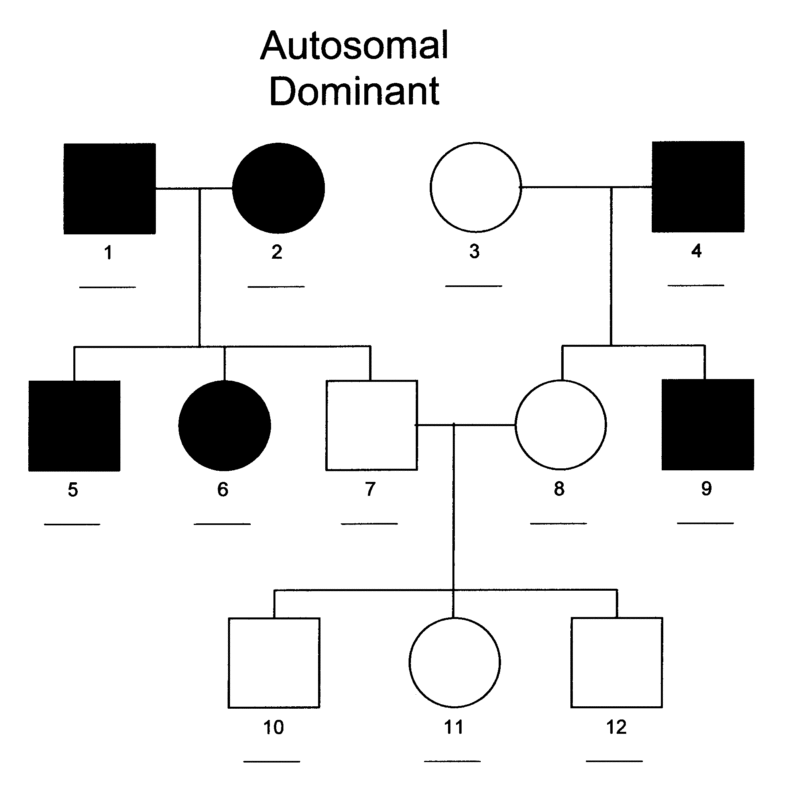
Autosomal Dominant pedigree
Males and females even
Present in each generation across a pedigree, but it can be lost within a lineage.
Once lost, it will not reappear
X-Linked Recessive Pedigree
More males affected
Traits skip a generation
Sons of affected fathers are unaffected
Daughters of affected fathers are carriers
Affected mothers must pass it on to their sons

X-Linked Recessive Example
Hemophilia: bleeding disorder
European royal families married closely and there were carriers of the disease and members who had it
X-Linked Dominant Pedigree
Slightly more females
Each generation
Sons of affected fathers are unaffected
Daughters of affected fathers are affected

Y-Linked Pedigree
Males only
Affected fathers have affected sons
Each generation

Useful Tips for Pedigrees:
Does the trait skip generations? If yes, it’s probably recessive
Do affected males pass the trait on to their sons? If yes, it can’t be X-linked
Are more males than females affected? If yes, it’s probably X-linked
Twins: Monozygotic
Identical twins - single egg
Due to chance
Twins: Dizygotic
Nonidentical or fraternal twins - two separate eggs
Can “run” in a family
Concordance in Twins
Dizygotic twins = same environment, 50% same genetics
Monozygotic twins = same environment, 100% same genetics
Both twins develop a trait: they are concordant
Only one develops a trait: they are discordant
Greater concordance in monozygotic than dizygotic = genetic control
Concordance in twins (table)
ABO blood type: monozygotic (100%) > dizygotic (66%) = 100% genetic control
Migraines: monozygotic (62%) > dizygotic (34%) = genetics and environment
Chicken pox: monozygotic (13%) = dizygotic (15%) = environmental control
Genetic Testing (When is it done?)
Prenatal - before birth
Postnatal - after birth and later
Pre-implantation - in vitro fertilization
Prenatal - Amniocentesis and CVS
Common test - reliable results
Lots of genetic fluid
Risk to mother and fetus
Slow and late in gestation
Prenatal - Cell-Free DNA Test
Prenatal, non-invasive screening
Low risk
Higher error - not sufficient without other tests
Postnatal - examples
Newborn screening: genetically based, detected quickly and treated
Heterozygote screening: non-affected parents, see if child will be affected
Presymptomatic screening: disease develops late in life, common for genetic counselors
Postnatal - Sickle Cell Disease (heterozygote screening)
Can perform PCR to see chance of having offspring with the following traits (genetic couseling)
Homozygote (s+s+) - no symptoms
Homozygote (sasa) - sickle cell anemia
Heterozygote (s+sa) - no disease, but occasional mild anemia (= normal phenotype)
How valuable is it to test for diseases with no treatment?
Some diseases are easy to detect and have treatments, other harder to detect or have no treatments.
Pre-Implantation
Very expensive, no guarantee
Can choose only girl/boy at extra cost
Ethical concerns
Genetic Counseling
Genetic testing and how to deal with results
Combines the science behind genetics and the counseling aspect of how to deal with the results
23 & Me and other consumer genetic tests
Some companies selling genetic data to drug companies
Genetic info. nondiscrimination act: health insurance companies and employers cannot discriminate, or change rates based on genetic tests