Quiz 3: Biomes & Ecosystem Ecology
 Call Kai
 Learn
 Practice Test
 Spaced Repetition
 Match
 Flashcards
 Knowt Play
1/93

There's no tags or description
Looks like no tags are added yet.
94 Terms
The four major abiotic components of climate are:
(1) Temperature
(2) Water
(3) Sunlight
(4) Wind
Macroclimate
Consists of patterns on the global, regional, and local level
Microclimate
Consists of very fine patterns, such as those encountered by the community of organisms underneath a fallen log (determined by fine-scale differences in the environment that affect light and wind patterns)
Global climate patterns are determined largely by…
solar energy and the planet’s movement in space
As you move away from the equator and toward the poles, what happens?
Seasonal variations of light and temperature increase steadily (as you move away from the equator and toward the poles, the differences between summer and winter become greater)
What are biomes, what determines them, and are they stable?
Large regions of land or water with similar organisms and conditions. Biotic and abiotic factors shape them, and they are not stable (constantly changes due to disturbances)
What type of biome accounts for the largest part of the biosphere in terms of area?
Aquatic
Oceanic pelagic biome
Vast open ocean water mixed by wind-driven currents. Covers ~70% of Earth's surface & is dominated by phytoplankton and zooplankton with free-swimming animals.
Example of disturbance(s) in biomes
Storm, fire, or human activity
Dry tropical forest plants may have what kinds of features to protect themselves?
Deep tap root systems and the ability to shed their leaves
Climograph
A plot of the temperature and precipitation in a region
Terrestrial biome
A large area of land that has similar climate, plants, and animals
Terrestrial biomes can be characterized by..
Distribution, precipitation, temperature, plants, and animals
What is vertical layering in terrestrial biomes?
Vegetation grows in different layers or heights, especially in forests.
What are the main vertical layers of a forest?
(1) Upper canopy
(2) Low-tree layer
(3) Shrub understory
(4) Herbaceous ground layer
(5) Forest floor
(6) Root layer
Why is vertical layering important for animals?
Different vegetation layers provide diverse habitats for animals.
How does rainfall differ between tropical rainforests and tropical dry forests?
Rainforests receive relatively constant rainfall, while dry forests have highly seasonal rainfall.
Why is competition for sunlight intense in tropical forests?
Forests have many vertical layers of vegetation competing for sunlight.
How are tropical forest leaves adapted to their environment?
Many have broad leaves to capture sunlight. Tropical dry forest trees often shed leaves during dry seasons
What is the biodiversity like in tropical forests? Is it high? Low? In between?
Extremely high — tropical forests are home to millions of animal species, including an estimated 5–30 million still undescribed species of insects, spiders, other arthropods
How much precipitation do deserts receive?
Deserts receive low and highly variable precipitation, generally less than 30 cm per year.
How are desert plants adapted to survive?
They tolerate heat and dryness, store water in succulent tissues, and have reduced leaf surface area to conserve water. Many also have waxy coatings to reduce water loss and thorns or spines for protection against predators (herbivores).
Are the desert animals diurnal or nocturnal? Why?
Nocturnal; they are active at night to avoid extreme daytime heat and conserve water
What animals are commonly found in deserts?
Snakes, lizards, scorpions, ants, beetles, birds, and seed-eating rodents.
What is the climate like in savannas?
Warm year-round, but precipitation and temperature vary seasonally, with distinct wet and dry seasons.
What vegetation is commonly found in savannas?
Grasses and forbs, with scattered trees and thorny plants
What animals commonly live in savannas?
Insects, wildebeests, zebras, lions, and hyenas.
What are the dominant herbivores in savannas?
Insects
Fires are commonly caused by what in Savannas?
Lightning strikes & dry conditions
What limits tree cover in savannas?
Grazing animals, frequent fires, and seasonal droughts
What is the climate like in chaparral biomes?
Highly seasonal, with cool, rainy winters and long, hot, dry summers
What vegetation is commonly found in chaparral?
Shrubs, small trees, grasses, and herbs
How are chaparral plants adapted to survive?
They are adapted to drought and fire, with tough evergreen leaves, fire-resistant roots, and seeds that may germinate after fires.
What animals commonly live in chaparral?
Amphibians, reptiles, birds, insects, small mammals, and browsing mammals
Why is fire important in chaparral ecosystems?
Many plants are adapted to survive them and use it to trigger seed germination.
Where are temperate grasslands found?
On many continents around the world
What is the climate like in temperate grasslands?
Winters are cold and dry, while summers are hot and wet.
What vegetation dominates temperate grasslands?
Grasses and forbs (herbaceous flowering plants)
How are temperate grassland plants adapted to survive?
They are adapted to drought and fire, and grasses can quickly resprout after fires.
What limits tree growth in temperate grasslands?
Grazing animals, fires, and droughts
What animals commonly live in temperate grasslands?
Large grazing mammals (like bison) and small burrowing mammals (like prairie dogs).
Where is the northern coniferous forest (taiga) found?
Across northern North America and Eurasia (Europe and Asia).
What is the largest terrestrial biome on Earth?
The northern coniferous forest (taiga).
What is the climate like in the northern coniferous forest (aka taiga)?
Winters are long and cold, while summers are short and can be hot.
How are conifer trees adapted to heavy snowfall?
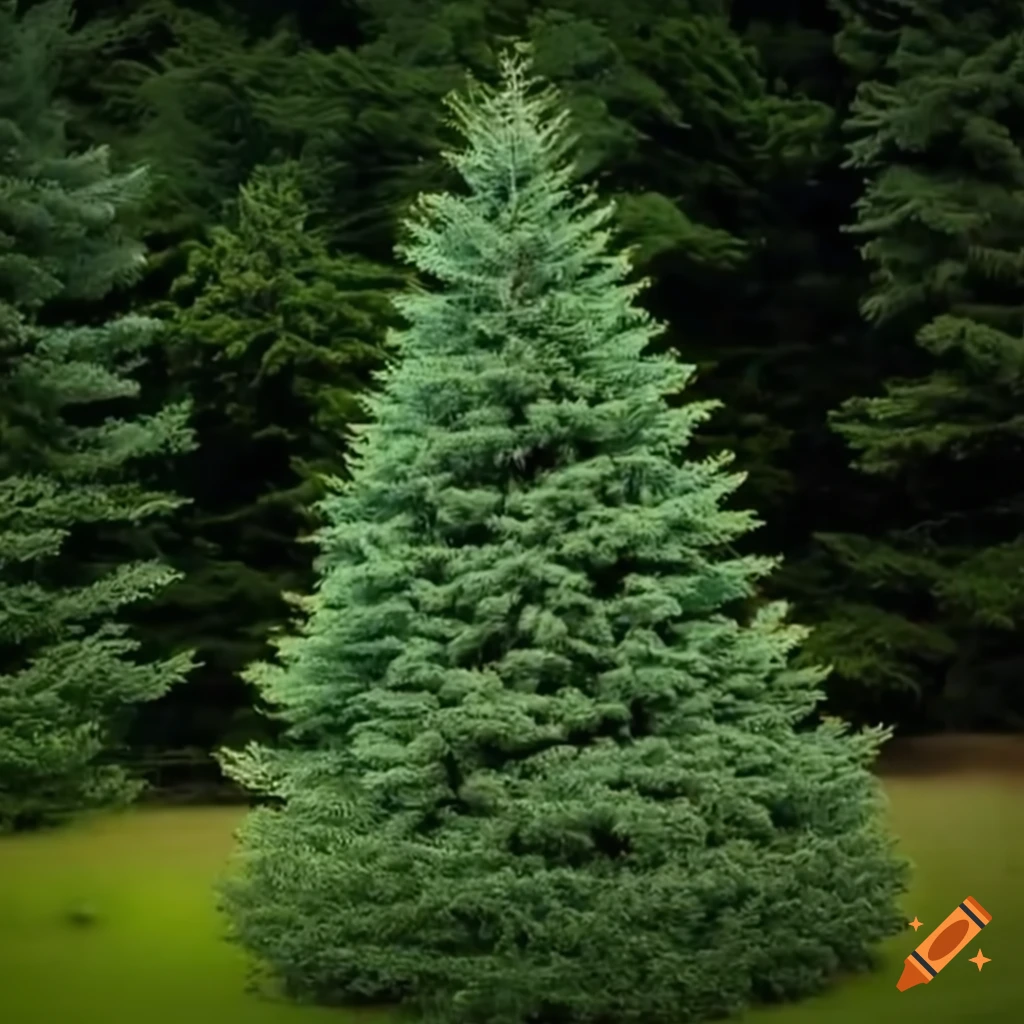
Their conical shape helps snow slide off, preventing snow buildup and branches from breaking.
What animals commonly live in the northern coniferous forest (taiga)?
Migratory and resident birds, along with large mammals such as moose, bears, and wolves.
What is the climate like in temperate broadleaf forests?
Winters are cool, while summers are hot and humid, with significant precipitation year-round as rain and snow.
What vegetation dominates temperate broadleaf forests?
Deciduous trees in the Northern Hemisphere and evergreen eucalyptus trees in Australia.
What does it mean that trees are deciduous?
They shed their leaves seasonally, usually in the fall, to conserve resources during winter and spend their energy on survival.
What is the vegetation structure of temperate broadleaf forests?
Mature forests have multiple vertical layers of vegetation that provide different habitats for animals.
What animals commonly live in temperate broadleaf forests?
Mammals, birds, and insects that occupy different vertical layers of the forest.
How do many mammals in Northern Hemisphere temperate broadleaf forests survive winter?
They hibernate to conserve energy during the cold winter months.
What is the climate like in the tundra?
Winters are long and extremely cold, while summers are short and relatively cool. Precipitation varies.
Permafrost
A permanently frozen layer of soil that prevents water from infiltrating (soaking into) the ground. Makes it very difficult for trees and other plants to grow.
What vegetation is commonly found in tundra?
Short statured herbaceous plants, including mosses, grasses, forbs, dwarf shrubs, dwarf trees, and lichens.
What animals commonly live in tundra?
Birds, grazing animals (like caribou), and predators (like Arctic foxes and wolves).
What is convergence in biomes?
When organisms in different regions develop similar adaptations because they live in similar environments.
How do the East African savanna and North American temperate grassland demonstrate convergence?
Both are dominated by grasses and have large grazing animals, despite being in different geographic regions.
Why does convergence occur in different biomes?
Similar environmental pressures, such as drought, fires, and grazing, lead to similar adaptations in plants and animals.
Why do you think the mammals of two different rainforests with no evolutionary history resemble eachother?
They live in similar climates and are exposed to similar abiotic factors (temperature, rainfall, sunlight) and biotic factors (competition, predators, food). These similar environmental pressures lead to similar adaptations through convergent evolution, even though the mammals evolved independently.
Ecosystem
Consists of all the organisms living in a community, as well as the abiotic factors with which they interact
Describe the boundaries of an ecosystem; is it discrete (obvious)?
Boundaries between ecosystems are not always discrete
Regardless of an ecosystem’s size, its dynamics involve what two main processes:
(1) Energy flow
(2) Chemical cycling
The first law of thermodynamics states that..
Energy cannot be created or destroyed, only transformed/transferred (plants - solar to chemical energy
Energy enters an ecosystem as solar radiation, is conserved, and is lost from organisms in the form of:
Heat
The second law of thermodynamics states that…
Energy conversions are not completely efficient, and some energy is always lost as heat
The law of conservation of mass states that…
Matter cannot be created or destroyed
Chemical elements are continually ______ within ecosystems
Recycled
Ecosystems are open systems,meaning it is continuously ________________.
Absorbing energy and mass, & releasing heat and waste products (inputs & outputs)
List the order in which energy and nutrients pass from, starting with primary producers/autotrophs
Primary producers (autotrophs)
Primary consumers (herbivores)
Secondary consumers (carnivores)
Tertiary consumers (carnivores that feed on other carnivores)
Detritivores, or decomposers:
Consumers that derive their energy from detritus, nonliving organic matter
______ connects all trophic levels
Decomposition
The law of conservation of energy states that
Energy is transformed or transferred (but also inefficient—some energy is lost as heat)
Primary production in an ecosystem:
The amount of light energy converted to chemical energy by the primary producers (autotrophs) during a given time period
Energy can be lost during: (list 3)
Cellular respiration/photosynthesis
Hunting/foraging
Defecation
Total primary production is also known as the ecyosystems:
Gross primary production (GPP)
Define gross primary production (GPP) new biomass increased per unit time
The amount of energy from light/chemosynthesis converted to chemical energy to make organic molecules by primary producers
Net primary production (NPP) is… write the equation
(Gross primary production) - (Rp) Energy used by primary producers for cellular respiration
NPP is approximately half of GPP. Why is that?
About half of GPP is used for cellular reproduction
What does the NPP tell you about the ecosystems position relative to the equator?
The higher the NPP, the closer it is to the equator
NEP = net ecosystem production (total biomass accumulation per unit time). What is the equation for calculating NEP?
(Gross Primary Production) - (Re) Respiration of all organisms
When CO2 enters then leaves the ecosystem, carbon is being stored as?
Organic molecules or biomass
Limiting nutrient
The element that must be added for production to increase in an area
What are the two nutrients that most often limit marine production?
Nitrogen and phosphorous
Energy transfer between trophic levels is typically only ___% efficient
10%
Secondary production of an ecosystem is the
Amount of chemical energy in food converted to new biomass during a given period of time (focuses on how consumers utilize this energy to grow and reproduce)
An organism’s production efficiency is the
Fraction of energy stored in food that is not used for respiration
What is the equation for calculating an organisms production efficiency (PE)?
PE = (net secondary production x 100%) / (assimilation of primary production) the energy from food that the organism actually digests and absorbs
Trophic efficiency
The percentage of production transferred from one trophic level to the next (multiplied over the length of a food chain)
Trophic efficiency usually ranges from 5–20% (usually about 10%). Where does the other 80-95% go?
Heat from respiration and body functions
Waste (feces and urine)
Undigested food
Organisms or parts that aren't eaten
Describe the carbon cycle in ecology

There is continuous movement of carbon through the atmosphere, water, soil, and living organisms. Carbon dioxide (CO₂) plays a major role in photosynthesis because primary producers, such as trees, plants, and phytoplankton, absorb CO₂ from the atmosphere or water and use sunlight to produce food. Carbon then moves through the food chain as primary consumers eat producers, secondary consumers eat primary consumers, and higher-level consumers eat other organisms. When organisms die or produce waste, they become detritus, which decomposers break down, returning carbon to the soil, water, and atmosphere. Carbon dioxide is also released back into the environment through cellular respiration, which occurs in both producers and consumers. Additionally, burning fossil fuels and wood releases stored carbon into the atmosphere as CO₂, increasing atmospheric carbon dioxide levels, especially when fossil fuels are burned. Overall, carbon is constantly being recycled, and the carbon cycle is essential because it supports photosynthesis, food chains, and the balance of carbon throughout Earth's ecosystems.
Eutrophication
The gradual increase in the concentration of phosphorus, nitrogen, and other plant nutrients in an aging aquatic ecosystem
Biological magnification

the increase in concentration of a substance in the tissues of organisms at higher levels in a food chain where biomass is lower