neuro exam 2: week 4
 Call Kai
 Learn
Learn Practice Test
 Spaced Repetition
 Match
Match Flashcards
 Knowt Play
1/109

There's no tags or description
Looks like no tags are added yet.
Name | Mastery | Learn | Test | Matching | Spaced | Call with Kai | Chat |
|---|
No analytics yet
Send a link to your students to track their progress
110 Terms
major function of the spinal cord (1)
chief input and output site for sensory and motor signals below the neck
major function of the spinal cord (2)
transmission of ascending and descending information via fiber tracts
cervical region contains the vertebrae
CI-CVII
thoracic region contains vertebrae
TI-TXII
lumbar region contains vertebrae
LI-LV
sacral region contains vertebrae
sacrum and coccyx
are the spinal nerves represented with roman numerals or numbers?
numbers (ex: C1)
spinal nerves include
dorsal root AND ventral root
what do the dorsal root and ventral root do?
convey both sensory and motor information
general somatic efferent (GSE)
efferent (motor) and somatic (skeletal muscle)
general visceral efferent (GVE)
efferent (motor) and visceral (smooth/cardiac muscle, glands)
general somatic afferent (GSA)
afferent (sensory) and somatic (skeletal muscle)
general visceral afferent (GVA)
afferent (sensory) and visceral (smooth/cardiac muscle, glands)
complete spinal cord injury
loss of motor and sensory function
incomplete spinal cord injury
retained motor and/or sensory function
paraplegia
loss of movement of the lower body and limbs
regions affected by paraplegia
thoracic, lumbar, sacral
tetraplegia
loss of movement of the upper and lower body and limbs
regions affected by tetraplegia
cervical
respiratory muscle(s) associated with C3-C5
diaphragm
respiratory muscle(s) associated with T1-T11
external intercostals
internal intercostals
respiratory muscle(s) associated with T7-T12
rectus abdominis
transverse abdominal
external oblique
internal oblique
neurological level of injury (NLI)
rostral most (superior) intact nerve
retained sensory and motor function bilaterally
ASIA A classification
complete
ASIA B classification
sensory incomplete (motor complete)
ASIA C classification
motor incomplete (< half spared)
ASIA D classification
motor incomplete (half or more spared)
medulla functions (1)
passage for motor and sensory axons
medulla functions (2)
cranial nerve functions (hearing, balance, swallowing, voice, head and tongue movement)
medulla functions (3)
reticular formation
reticular formation
cardiovascular (regulating blood pressure and heart rate) and respiratory function
pons function: basilar pons (ventral part)
passage for sensory and motor axons
grey matter (pontine nuclei)
pons function: tegmentum (dorsal part)
cranial nerve functions (facial movements)
reticular formation
PAG (voice and aspiration)
midbrain function: cerebral peduncle (ventral part)
axon passage
grey matter (substantia nigra)
midbrain function: tegmentum (middle part)
cranial nerve functions (eyes)
reticular formation
PAG (voice, emotion, autonomics, pain)
midbrain function: tectum (dorsal part)
superior col (reflective vision)
inferior col (sound localization
respiratory centers
pons respiratory centers
medullary respiratory center
what is auditory brainstem response (ABR)
newborn hearing screening
how is ABR preformed
electrodes detect minor electrical changes in the skin from brainstem and CN VII activity
where are the cell bodies of efferent lower motor neurons located
ventral horns of the spinal cord
spinal nerves contain
both afferent and efferent fibers
which of the following levels of spinal cord injury would be most likely to warrant use of assisted coughing
C3 ASIA C
true or false: normal ABR involve the primary auditory cortex of the cerebrum
false
what is a function of all three components of the brainstem
axon pasage
where does the spinal cord stop matching ratio
mid-low thoracic
where do spinal nerves exit (except cervical)
below their corresponding vertebrae
fibers that form the cauda equina are
both sensory and motor
what is the dorsal root ganglia made of
grey matter
transverse foramen
where the vertebral artery comes through
vertebral artery
supplies blood to the spinal cord and brain
superior costal and transverso-costal facet
connect the thoracic section of the spinal cord to the ribs (think intercostals)
why are there more “shoot offs” in the lumbar/thoracic section of the spinal column
because they connect to more
why is there more grey matter in the cervical/lumbar level of the spinal cord
there’s a greater amount of motor nerves/action
lateral fasciculus sensory function
noxious stimuli (bad taste/smell)
crude touch
body position
lateral fasciculus motor function
fine motor movements
anterior fasciculus sensory function
noxious stimuli (bad taste/smell)
temperature
anterior fasciculus motor function
trunk control
posture
lower motor neurons (LMN)
feed the motor portion of spinal cord grey matter
roots
cell bodies that extend outside the spinal cord
pia matter function
gives structure
subarachnoid space
weblike (think spider)
pseudounipolar cells
more common for sensory neurons
CNS grey matter components
cortex (gyri and sulci)
nucleus
PNS grey matter components
ganglion
CNS white matter components
fasciculus
fiber bundle
tract
pathway
etc
PNS white matter components
nerves
which type of spinal cord fiber is more likely to be in the dorsal root columns
general somatic afferent (GSA) because it is more specific
what do general visceral efferent (GVE) spinal cord fibers control
internal organs
when are SLPs most likely to work with a SCI patient
when the cervical or thoracic SC is primarily injured
diaphragmatic breathing (belly breathing)
used to improve respiratory support for speech
assisted cough
applying compensatory pressure to the abdomen to help clear secretions
when should you generally not used assisted cough
when the patient has a feeding tube
brainstem function (1)
controls the automatic regulation of things like heartbeat, blood pressure, breathing, etc
brainstem function (2)
site for the nuclei of the cranial nerves
basis pontis
middle of the pons
what does the tegmentum cover
the full length of the brainstem
pyramidal descussation
where the pyramids cross over
MPM sandwich
medulla
pons
midbrain
cauda equina function
transmits sensory and motor signals between the central nervous system and the lower limbs
which nerves are intact in a spinal cord injury at the level of C3
C3 and above
how do grey matter and white matter differ throughout the spinal column? why?
At different parts of the spinal column, the proportion of gray matter to white
matter changes such that the lumbar region has the highest proportion of gray
matter, and the thoracic level has the lowest proportion of gray matter. The parts of the spine with more gray matter have more cell bodies to innervate more muscles/larger parts of the body. These areas also correspond to higher
sensitivity/more sensory info being sent to CNS.

what region of the spinal cord is this
thoracic
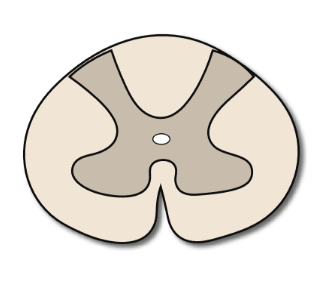
what region of the spinal cord is this
cervical

which region of the spinal cord is this
lumbar
a T5 ASIA injury might affect which regions
external intercostals
transverse abdominal
internal oblique
what type of information is primarily carried by the posterior fasciculus (dorsal columns)
somatic sensory
what can the coccygeal nerve be referred to as
CO1, S6
the two major functions of the spinal cord are: chief ___ and ___ site for ___ and ___ signals below the ___ as well as the transmission of ___ and ___ information via ___
input
output
sensory
motor
neck
ascending
descending
fiber tracts
order or the brainstem from superior to inferior
midbrain
pons
medulla
what type of spinal cord fiber would be affected if the dorsal horn of the spinal cord white matter was compromised
general somatic afferent
describe the pathway of information from the brain to skeletal muscle for movement via motor neurons
the primary motor cortex efferently sends information through the spinal cord via upper motor neurons through the dorsal horn, lower motor neurons exit the spinal cord through the ventral horn towards the skeletal muscle to innervate a motor movement
medulla function
primarily involved in regulating blood pressure, heart rate, and respiratory function
provides a passage for motor and sensory axons, and contributes to cranial nerve functions involved in hearing, balance, swallowing, voice, and head and tongue movement
pons function
provides a passage for sensory and motor axons, contributes to respiration in the reticular formation, contributes to cranial nerve functions involved in facial movements, and vocalization in the periaqueductal gray (PAG
midbrain function
involved in eye movements via the cranial nerve, voice, emotional processes, autonomic activity, and the perception of pain in the PAG, and provides an axon passage
tectum in the midbrain contains the inferior colliculus involved in sound localization and the superior colliculus involved in reflexive vision

label the layers of the meninges correctly
dura matter
periosteal
meningeal
arachnoid layer
pia matter
true or false: spinal nerves include dorsal root fibers that convey sensory and motor function
true
describe the primary purpose of the posterior fasciculus in the white matter of the spinal cord (includes type of information that is conveyed and where this information comes from)
the posterior fasciculus in the white matter of the spinal cord conveys the
somatic sensory information that ascends to the CNS
afferent fibers that carry sensory information that comes from the joints, skin, and skeletal muscle
describe the difference between paraplegia and tetraplegia
paraplegia is the loss of movement in the lower body and limbs due to a thoracic, lumbar, or sacral injury
tetraplegia is the loss of movement in the upper body AND lower body and limbs due to a cervical injury
another name for the cerebral penduncles
crus cerebri