2.5 organic
 Call Kai
 Learn
Learn Practice Test
 Spaced Repetition
 Match
Match Flashcards
 Knowt Play
1/33

There's no tags or description
Looks like no tags are added yet.
Name | Mastery | Learn | Test | Matching | Spaced | Call with Kai | Chat |
|---|
No analytics yet
Send a link to your students to track their progress
34 Terms
Functional group priority list
carboxylic acid
alcohol
amine
alkene
alyne
alkane/haloalkane
compounds with functional group number at the beginning of name
haloalkane
compounds with functional group number at the middle of name
alkene, alkyne, amine, alcohol
compounds with that need n after prefix
amine, alcohol, carboxylic
boiling point order
alkane < alkyne < alkene < haloalkane < amine < alcohol < carboxylic
but the longer carbon chain > higher up in list
the only exception is carboxylic (only 8 and above carbon is higher)
Alkane properties
saturated carbons, meaning they are very strong and stable due to single bonds
insoluble in water (non-polar), has no attraction to water (polar)
poor conductor of electricity and heat (no free-moving charged particles)
boiling point increases with carbon chain length
Justifying boiling point
As the carbon chain length increases, there are more atoms, therefore there will be greater intermolecular forces due to greater surface area. This means that more energy is required to separate molecules, resulting in a higher boiling point.
Straight chain compounds have greater SA than branched compounds, creating more points of contact between molecules and therefore have stronger intermolecular attractions.
Substitution reaction example answer
[compound] reacts with [reagent] under [conditions] in a substitution reaction. The __ atom in [compound] is replaced by the __ group from [reagent], forming [products].
don’t list conditions if none
optional: the __ removed from the [compound] combines with __ from [reagent] to form __ as a byproduct
Cycloalkane properties
Ring structure
same properties as alkane
Haloalkane properties
Same structure as alkane
Heavier halogens increase in boiling point: I > Br > Cl > F (highest to lowest)
Elimination reaction example answer
[compound] reacts with [reagent] under [conditions] in an elimination reaction. The [reagent] removes a hydrogen atom from one carbon, and the [functional group] atom from the adjacent carbon, forming a C=C double bond between them and producing [alkene]. The __ removed from [compound] combines with __ from [reagent] to form __ as a byproduct.
2 degree haloalkane / alcohol compound - saytzeff’s rule elimination (full answer)
[compound] is an asymmetric/ 2 degree haloalkane/alcohol. It reacts with [KOH aq/ conc H2SO4] under heat by elimination. The [reagent] removes the [OH/X] along with a hydrogen from either adjacent carbon to the [OH/X group] (carbon __ or __), therefore 2 possible alkenes can be formed.
According to Saytzeff’s rule, the H atom will often be removed from the carbon with the lowest number of carbon atoms. Therefore, the H atom will be removed from carbon __ as it only has (lower no. H atoms) attached to it, whil carbon has (higher no. H atoms) attached to it. This will form the major product [alkene]. The minor product [alkene] can be formed if the H atom from carbon (lower H atom) is removed. The removed [OH/X] and K+/H forms KX/water as a byproduct.
Alkene properties
same properties as alkane
Addition reaction example answer
[compound] reacts with [reagent] under [conditions] in an addition reaction. The C=C double bond breaks and each carbon gains one [reagent] atom, forming [compound].
asymmetrical alkene to haloalkane/alcohol markovnikov addition example answer
[alkene] is an asymmetrical alkene. It reacts with [HX / H2O/H+] in an addition reaction. [alkene] has a double bond between carbon __ and carbon 2 __. Carbon __ has (higher H atom) while carbon __ has (lower H atom). During an addition reaction, H and X from [HX] / H and OH from [H2O/H+] is added across the double bond, forming 2 different products (double bond is broken).
According to Markovnikov’s rule, the carbon in the C=C double bond with more H atoms will often have another H atom bonded to it. This means that the H atom from [HX/ H2O/H+] will bond to carbon __ (more H atom), and the X/OH atom will bond to carbon __ (less H atom), forming the major product [haloalkane/alcohol]. The minor product [haloalkane/alcohol] can be formed if the H atom bonds to carbon __ (less H atom) instead, and the X/OH atom bonds to carbon __ (more H atom).
Minor/major product drawing
If major: the functional group is not at the end
If minor: the functional group is at the end
Alkene + H2 —> alkane reaction explained
This is an addition reaction. [alkene] reacts with H2 in the presence of a Ni/Pt catalyst and heat. The H2 is added to the C=C double bond in the addition reaction, converting [alkene] into [alkane]
Alkene —> polymer / addition polymerisation
[alkene] undergoes addition polymerisation. The C=C double bond is broken down and new C–C single bonds are formed between monomers, making long chains of repeating units called poly[alkene]. Because poly[alkene] only contains single saturated C–C bonds, it is more stable and less reactive than the alkene monomer [alkene]. This make them safe and durable to use as they are chemically inert.
alkene oxidising reaction
Alkenes react with acidified dichromate or permanganate in an oxidation reaction. The oxidising agent adds across the C=C double bond, breaking it and forming a diol. Each carbon from the double bond gains an OH group.
Alcohol properties
As the carbon length increases, the solubility of the alcohol decreases.
Small alcohols (C1 - C3) are soluble in water. C4 is slightly soluble in water. Anything above C4 is not.
This is because small alcohols have a small non-polar carbon chain and a very polar OH group, which forms an attraction to the polar water. As the non-polar hydrocarbon chain increases, the alcohol becomes less polar overall and the OH group becomes a smaller part of the molecule, therefore becoming less soluble with water.
BP same as alkane
primary alcohol oxidising reaction to carboxylic
Primary alcohols are oxidised by acidified dichromate or permanganate. During oxidation, the first carbon (bearing the OH group) loses hydrogen atoms and gains an oxygen atom from the oxidising agent, forming a C=O double bond. This converts the alcohol into a carboxylic acid.
Amine litmus paper
Turns wet red litmus paper blue (indicates it is acting as a base).
Turns wet blue litmus paper red (indicates it is acting as an acid).
carboxylic properties
COOH is very polar
High melting and boiling points due to stronger intermolecular attractions. (They can form two hydrogen bonds, harder to separate).
Small acids (C1–C4) are very soluble in water. As the carbon chain increases, the non‑polar hydrocarbon part dominates → solubility decreases

what does this mean
number of points = carbon atoms
because amine is attached to the second carbon, it would be butan-2-amine
Geometric isomerism existing
Geometric isomers contain a rigid double bond which prevents rotation. Because the atoms are not able to freely rotate, groups attached to the double bonded carbons stay locked in place.
For geometric isomerism to exist, each carbon in the C=C double bond must have 2 different groups attached to it. In [the one with geometric isomer], one alkene carbon is bonded to [x] and [y], while the other carbon is bonded to [x] and [y].
Geometric isomerism not existing
say everything except geometric isomers have rigid part until the ‘in the’ part
In [the one without geometric isomer], one carbon in the C=C double bond has two identical [x] groups, therefore it cannot form geometric isomers.
cis vs trans
Cis = the groups are on the same side of the C=C double bond.
Trans = the groups are on different sides of the C=C double bond.
Classifying alcohol/haloalkane
The carbon atom attached to the halogen is joined to only one/two/three carbon atom, it is a primary/secondary/tertiary haloalkane. Same thing for alcohol.
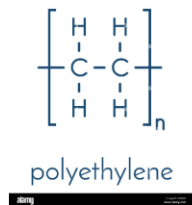
Drawing polymer
Draw the monomer so that the double bonds line up across the page (make sure to break it up into 2 carbons each)
Change the double bond to a single bond, line it up across a horizontal line
Put double brackets around the polymer and an n
The name of the polymer would be poly - name of monomer
Drawing monomer
see where the repeating unit stops
Draw the double bond first, and see what part is attached to what
Distinguish between compounds tips
You have to say what happens to the other compound no matter what.
If nothing happens to something, state no reaction happens
justify some things like BP or solubility
to distinguish between carboxlyic and amine using a metal carbonate
state that it’s an acid base reaction
state that carboxylic produces carbon dioxide. fizzing will be observed
amine is a base and will not react with metal carbonate
to identify between alkene, alcohol, and alkane using br and h2o
br can be used to identify alkane, it decolourises from red-brown colour
hexene will form two layers when reacted with water, because it has no attraction to it (non-polar)
ethanol is a polar solvent and is miscible in water (polar solvent as well)
chemical test for an alcohol and an alkene
you can use warm acidified potassium dichromate for alcohol as it will oxidise into a carboxylic acid, the colour change observed will be orange to green
you can use bromine water to identify alkene as it will decolourise bromine water from orange-brown colour to colourless rapidly.
permanganate cannot be used as both alkene and alcohol will react with it, and the same purple to colourless observation will be seen. alcohol will oxidise into a carboxylic, alkene will oxidise into a diol.