9. nervous system and endocrine system
 Call Kai
 Learn
 Practice Test
 Spaced Repetition
 Match
 Flashcards
 Knowt Play
1/40

There's no tags or description
Looks like no tags are added yet.
41 Terms
describe the concept of “umwelt”
each species exists within a unique reality constrained by their own nervous system
it’s why we can’t detect nectar guides or moth pheromones. they don’t impact our survival, so there’s nothing for evolution to act upon
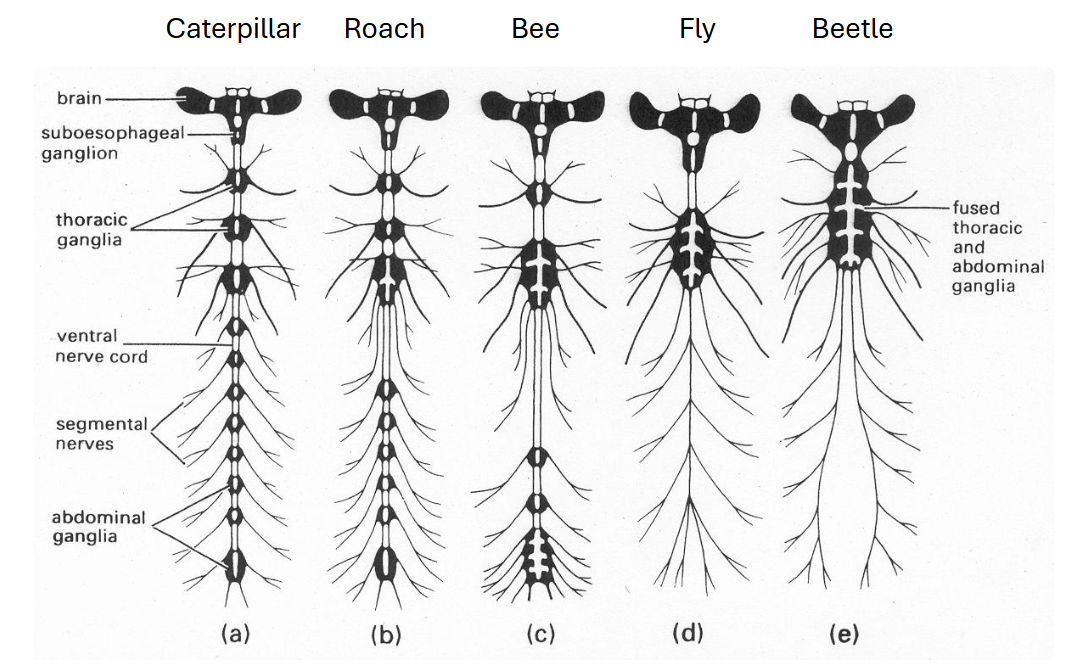
what segments of the body plan make up the brain and esophagus?
segs 1 and 2
what segments of the body plan make up the subesophageal ganglion/zone?
segs 3-6
what segments of the body plan make up the ventral nerve cord?
segs 7-20
what segments of the body plan make up the thoracic ganglia?
segs 7-9
what segments of the body plan make up the abdominal ganglia
segs 10-20


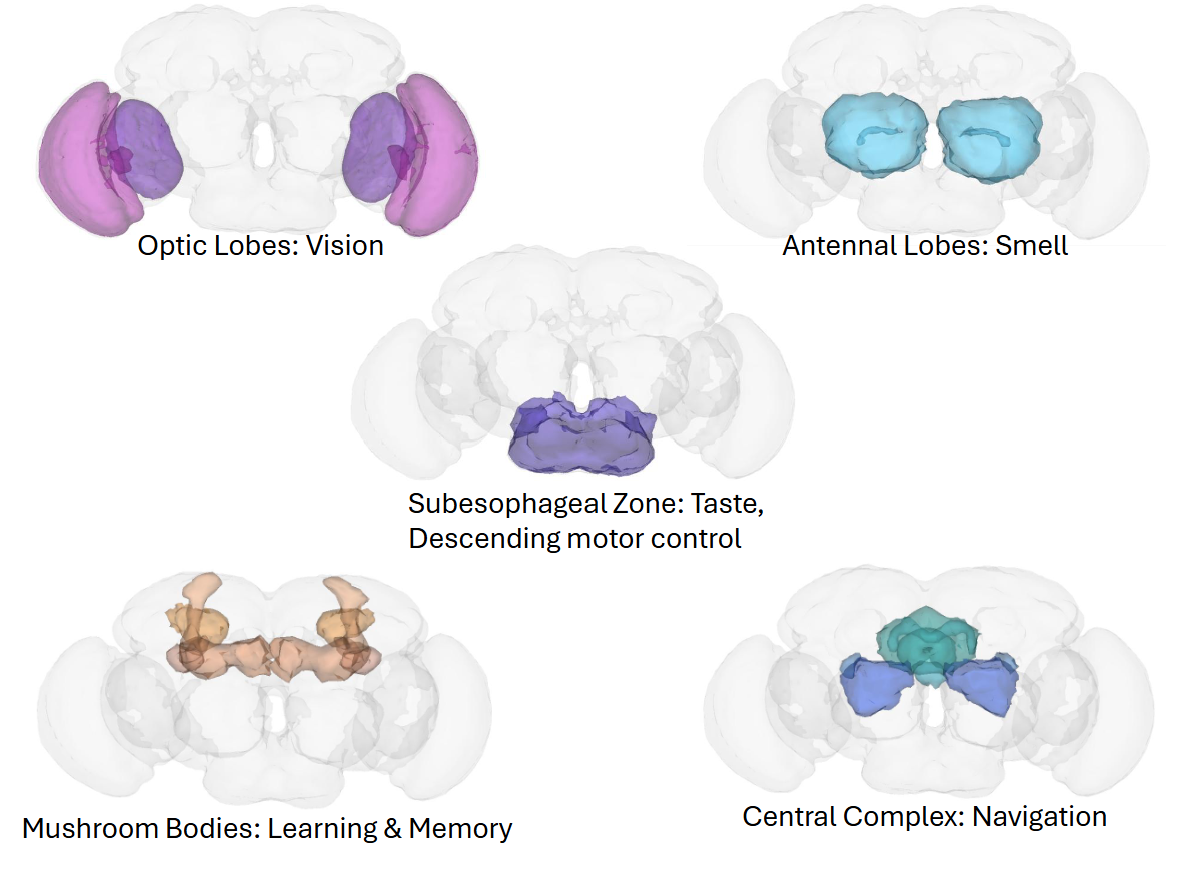
describe what each of these parts of the brain process: optic lobes, antennal lobes, central complex, mushroom bodies, subesophageal zone
optic lobes: vision
antennal lobes: smell
central complex: navigation
mushroom bodies: learning and memory
subesophageal zone: taste, descending motor control

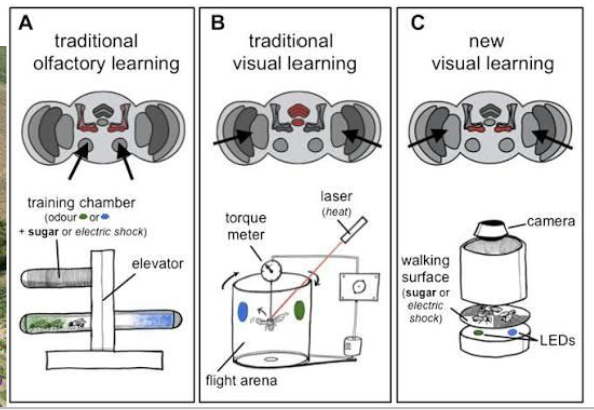
investment in brain regions reflect 2 things
reliance on specific sensory modalities
behavioral capabilities
5 insect/mammalian differences in the nervous systems
CNS position
cell body position
neuron morphological type
myelination
“identified” neurons
insect/mammalian differences: CNS position
mammalian CNS is dorsal
insect CNS is ventral

insect/mammalian differences: cell body position
mammalian cell bodies are layered with circuitry above and below
insect cell bodies surround the neuropil in a “rind”

insect/mammalian differences: neuron morphological type
most mammalian cell bodies integrate current
insect cell bodies are “unipolar” → don’t receive synaptic input

insect/mammalian differences: myelination
most mammalian neurons are “myelinated” → increase conduction velocity
insect neurons are unmyelinated (shorter axons + space efficient)

insect/mammalian differences: “identified” neurons
uniquely identified across indivs of the same or different species (i don’t rlly get this slide but wtvr)
5 insect/mammalian similarities in the nervous system
biochemistry (mostly)
sensory mapping
network organization
neuromodulation
plasticity
insect/mammalian similarities: biochemistry (mostly)
share many of the same NTs as mammals
some transmitters differ
ex: octopamine vs. epinephrine
some receptor mechanisms differ
ex: insects lack metabotropic histamine receptors and ionotropic serotonin receptors
insect/mammalian similarities: sensory mapping
sensory maps reflect the physical nature of the stimulus and dedicate more real estate to important stimuli
insect/mammalian similarities: network organization
broad principles of organization are either conserved or converged upon
rhythmic motor output
sensory mapping
sparse coding in learning and memory
insect/mammalian similarities: neuromodulation
CNS alters how it operates based on current conditions
neuromodulators transiently change response properties and synaptic weights of neurons
ex: low insulin = modulatory receptor expression to increase activity of food-detecting neurons
insect/mammalian similarities: plasticity
insects can learn many associations
have diff phases of memory consolidation which rely on conserved biochemical pathways
ex: cAMP, PKA, MAPK, CREB
classical vs. operant conditioning
learn smell, color, patterns, direction, order of events, taste, locations, etc.

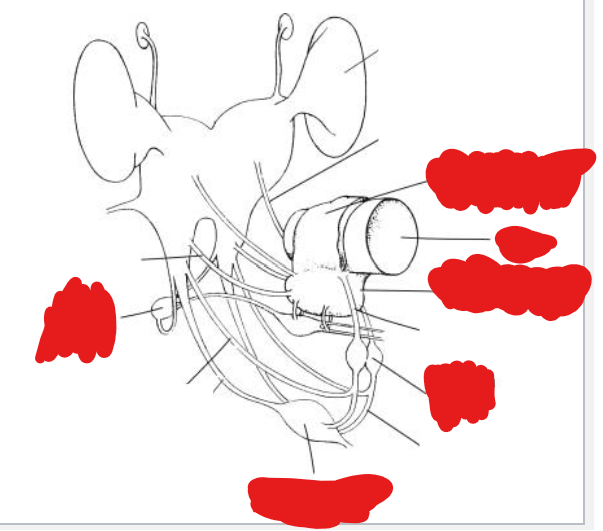
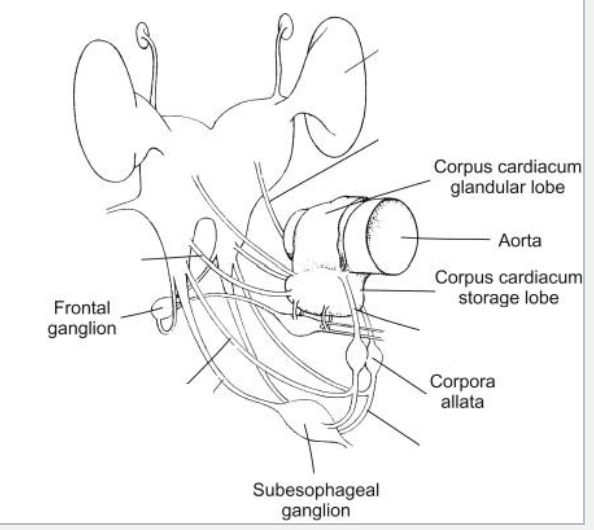
3 endocrine structures
pars intercerebralis
corpora cardiacum and allatum
frontal ganglion
pars intercerebralis
neurosecretory cells in dorsal brain
regulates metabolism, reproduction, dev, circadian rhythms
synaptic inputs to endocrine structures

corpora cardiacum and corpora allatum
attached to the brain
release hormones into the dorsal aorta and hemolymph
control heart rate, sugar storage, and dev (molting and metamorphosis)
frontal ganglion
both neuronal and endocrine signaling
releases neuropeptides into blood to affect gut motility and molting

adipokinetic hormone
mobilizes fats for fuel
allatotropin and allatostatin
up and downregulate juvenile hormones
cardioactive peptide
increase heart rate
diuretic hormones
increase diuresis
PBAN
induce pheromone production
ecdysis
acts of shedding old cuticle
instar
each juvenile stage
describe the steps of molting (do not factor in hormones)
apolysis: epidermis separates from old cuticle
new cuticle secreted over epidermis (enzyme resistant) + epidermal cell replication (instar growth)
molting fluid fills “exuvial space” w enzyme to break down old cuticle for nutrient recycling
ecdysis: insect swallows air or water to split old cuticle (exuvia) along ecdysial structures
sclerotization hardens new cuticle
describe molting in terms of the endocrine system
based on growth, stretch receptors trigger:
prothoracicotropic hormone (PTTH) from pars intercerebralis
eclosion hormone (EH) and ecdysis triggering hormone (ETH) from corpora cardiacum and bursicon from CNS
PTTH stimulates prothoracic glands to produce ecdysone
ecdysone converted by fat bodies to 20-hydroxyecdysone → triggers apolysis and synthesis of a new exoskeleton
EH, ETH, and bursicon trigger ecdysis

role of juvenile hormone (JH) in molting (high JH + ecdysone, low JH + ecdysone, no JH + ecdysone)
secreted by the corpora allata to repress transition to adulthood
high JH + ecdysone = nymph/larva-to-nymph/larva molt
low JH + ecdysone = larve-to-pupa molt
no JH + ecdysone = nymph/pupa-to-adult molt
sugars are mobilized in 2 phases. describe phase 1
phase 1: octopamine (first 10 minutes)
released by neurons in CNS motor circuits and into hemolymph by corpora cardiaca upon flight initiation
elevates activity in motor pattern circuits in CNS
elevates glycolysis in flight muscles (increases twitch velocity)
stimulates lipases (convert triacylglyercide to more mobile diacylglyceride) and glycogen phosphorylase (convert DAG to trehalose) in fat bodies → increase circulation of trehalose
describe phase 2 of mobilization of energy stores
phase 2: adipokinetic hormone (after 10 minutes)
released by corpora cardiaca
AKH receptor activation lasts longer than octopamine
stimulates TAG to DAG and glycogen phosphorylase
shifts muscles to oxidize fatty acids and lipids over sugars
analogous to vertebrate glucagon in that it mobilizes sugars and fatty acids