BIOL204 Practical #3
 Call Kai
 Learn
Learn Practice Test
 Spaced Repetition
 Match
Match Flashcards
 Knowt Play
1/44

There's no tags or description
Looks like no tags are added yet.
Name | Mastery | Learn | Test | Matching | Spaced | Call with Kai | Chat |
|---|
No analytics yet
Send a link to your students to track their progress
45 Terms

What is the major apomorphy of the Lycopodiophyta?
Microphylls: leaves with a single, unbranched vascular trace.
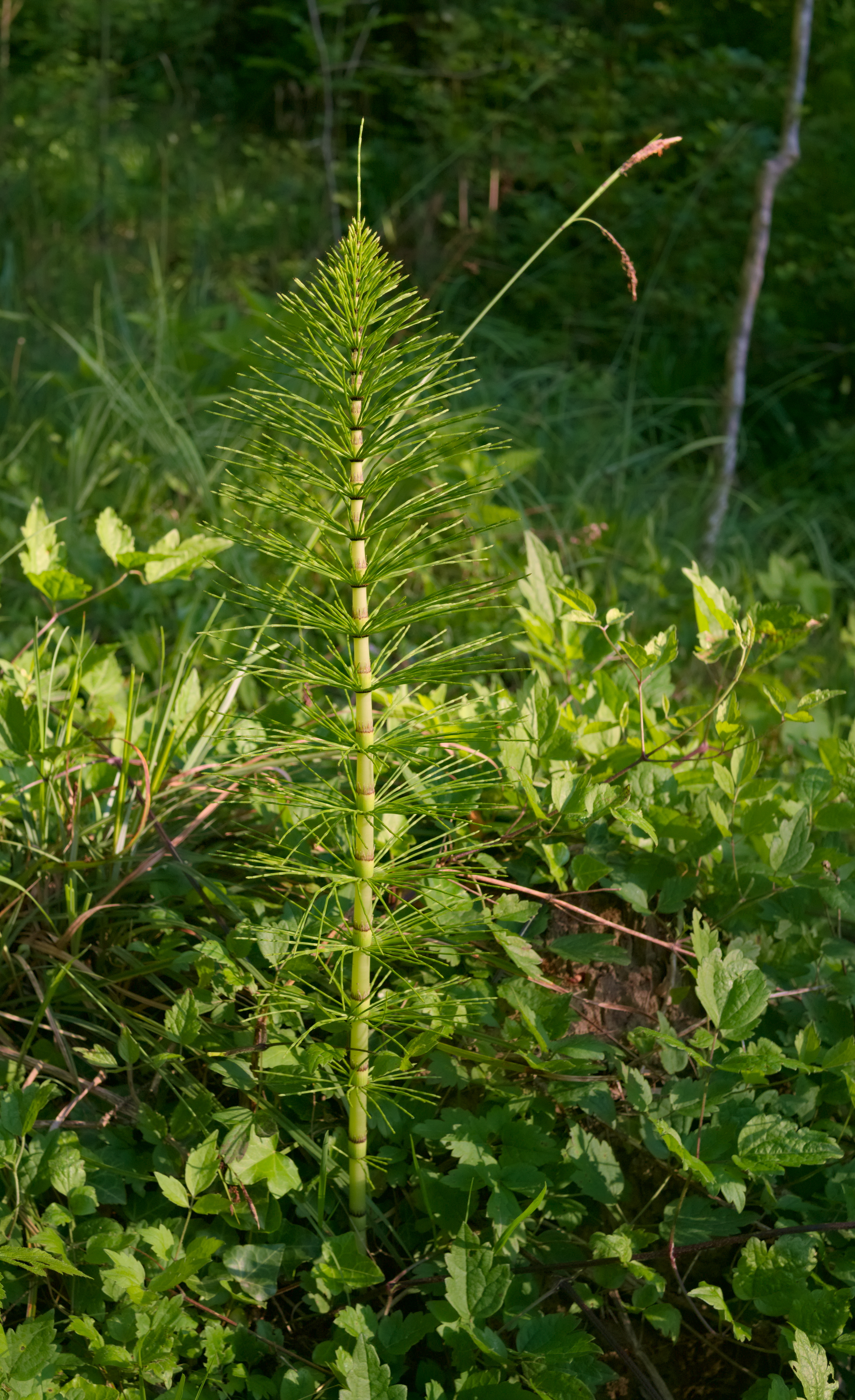
What are the major apomorphies of the Equisetidae?
-Jointed and ribbed stems with distinct nodes and internodes
-whorled leaves and branches
-terminal strobili composed of sporangiophores. Equisetum also commonly has silica deposits in its epidermis.

What is a sporangiophore?
A specialized stalk or structure that bears sporangia.
In Equisetum, sporangiophores are specialized, shield-shaped structures arranged in a terminal strobilus.
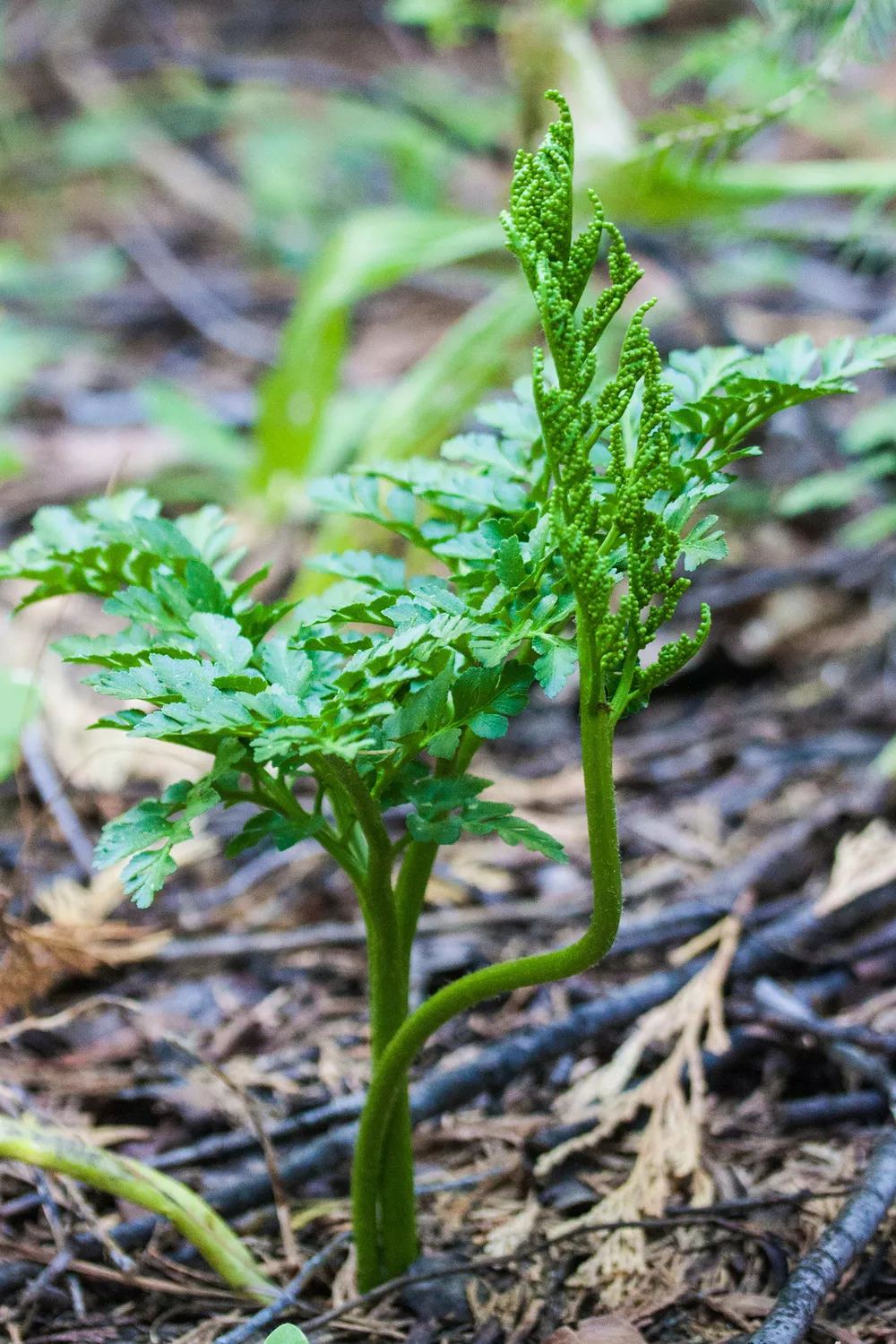
What are the major characteristics of the Ophioglossidae (e.g., Psilotum nudum)?
They are eusporangiate ferns with homosporous spores.
Psilotum has a dichotomously branching, leafless and rootless sporophyte with small enations and synangia, while the gametophyte is subterranean and mycorrhizal.

What apomorphy is unique for the Polypodiidae (leptosporangiate ferns)?
Leptosporangia, which develop from a single initial cell and typically contain a small, definite number of spores with a specialized annulus for spore release.

What is a frond? a fiddlehead/crozier?
A frond is the leaf of a fern. A fiddlehead or crozier is the young, tightly coiled fern frond before it expands.
What are the three apomorphies of the seed plants?
Heterospory
ovules, which are integumented megasporangia
pollen, which transports the male gametophyte without requiring free water for sperm movement.

What is a eustele?
A vascular arrangement with vascular tissue organized into a ring of discrete vascular bundles surrounding a central pith.

What is a vascular cambium?
A lateral meristem that produces secondary xylem toward the inside and secondary phloem toward the outside, allowing secondary growth in thickness.

What is an embryo?
The young developing sporophyte contained within a seed.
What is a seed?
A mature ovule containing an embryo, nutritive tissue, and a protective seed coat.
What is an ovule?
An integumented megasporangium that contains the female gametophyte and develops into a seed after fertilization.
What is a cone?
A reproductive structure consisting of an axis bearing specialized sporophylls or scales.
What is the adaptive significance of the vascular cambium?
The vascular cambium allows secondary growth, increasing the diameter of stems and roots. This produces more vascular tissue for transport and structural support, allowing plants to grow taller and live longer.
What are the parts of an embryo?
The radicle, hypocotyl, epicotyl, and cotyledons. The radicle develops into the root, the hypocotyl is the embryonic stem below the cotyledons, the epicotyl is the embryonic stem above the cotyledons, and the cotyledons are embryonic leaves.

What is heterospory?
The production of two different types of spores: microspores and megaspores. Microspores develop into male gametophytes, and megaspores develop into female gametophytes.
What are the names of the two types of spores and what do they develop into?
Microspores develop into male gametophytes, which produce pollen. Megaspores develop into female gametophytes, which produce eggs.
What, technically, is a pollen grain?
A pollen grain is a reduced, immature male gametophyte that develops from a microspore.
Name four major adaptive features of the seed.
A protective seed coat
nutritive tissue for the developing embryo
an embryo that can remain dormant;
the ability to disperse and survive unfavorable conditions before germination.
What are the five major clades of seed plants?
Cycads, Ginkgo, conifers, Gnetales, and angiosperms.
Distinguish between the structure of a cycad leaf and a Ginkgo leaf.
Cycad leaves are generally large, leathery, and pinnately compound, with many leaflets arranged along a central rachis. Ginkgo leaves are simple, fan-shaped, and often apically two-lobed, with dichotomous venation.
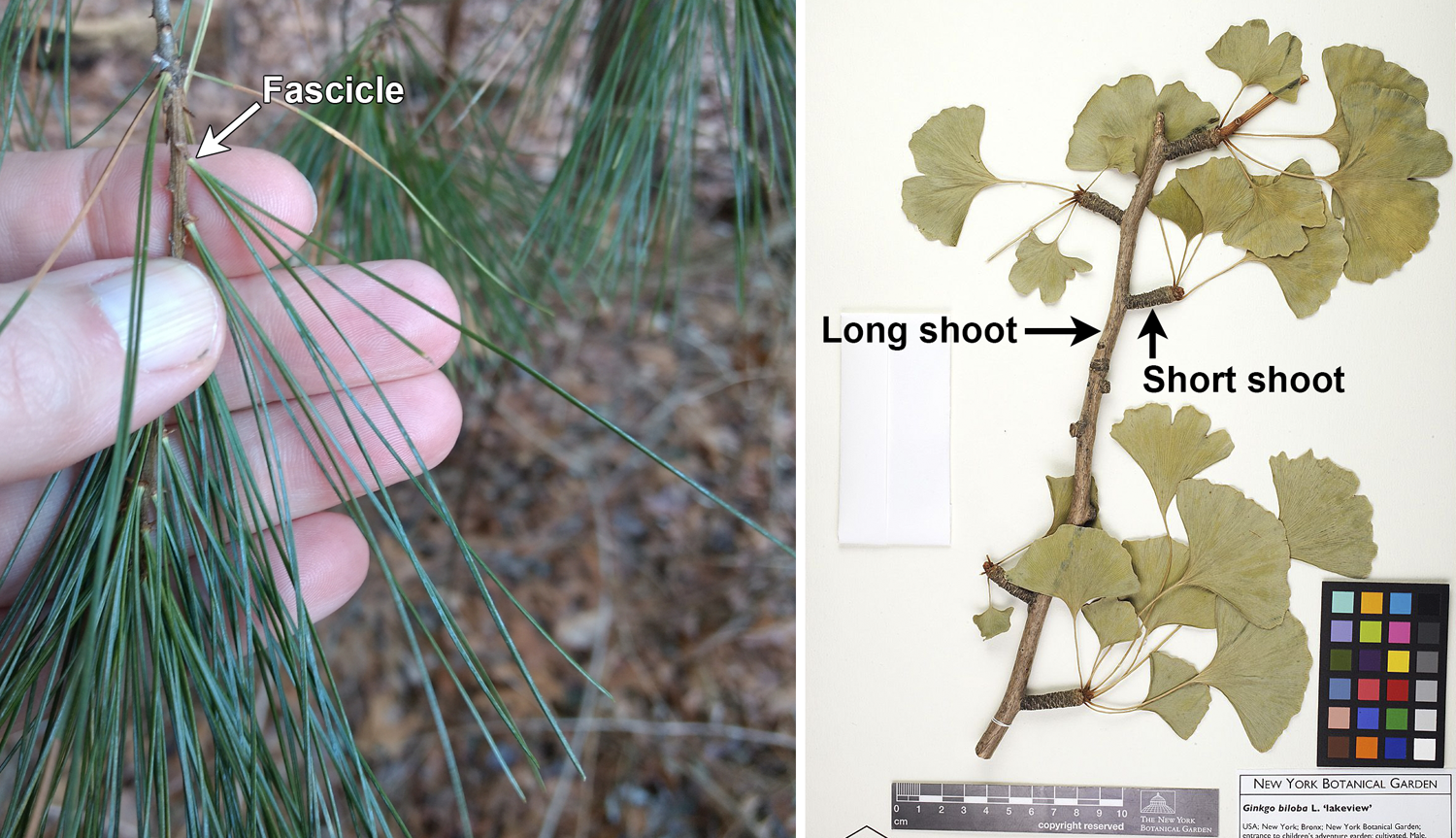
What is a short shoot or fascicle? How do these differ from long shoots?
A short shoot or fascicle is a determinate, condensed shoot with short internodes that bears a cluster of leaves. A long shoot is an indeterminate shoot with elongated internodes that produces leaves farther apart along the stem.
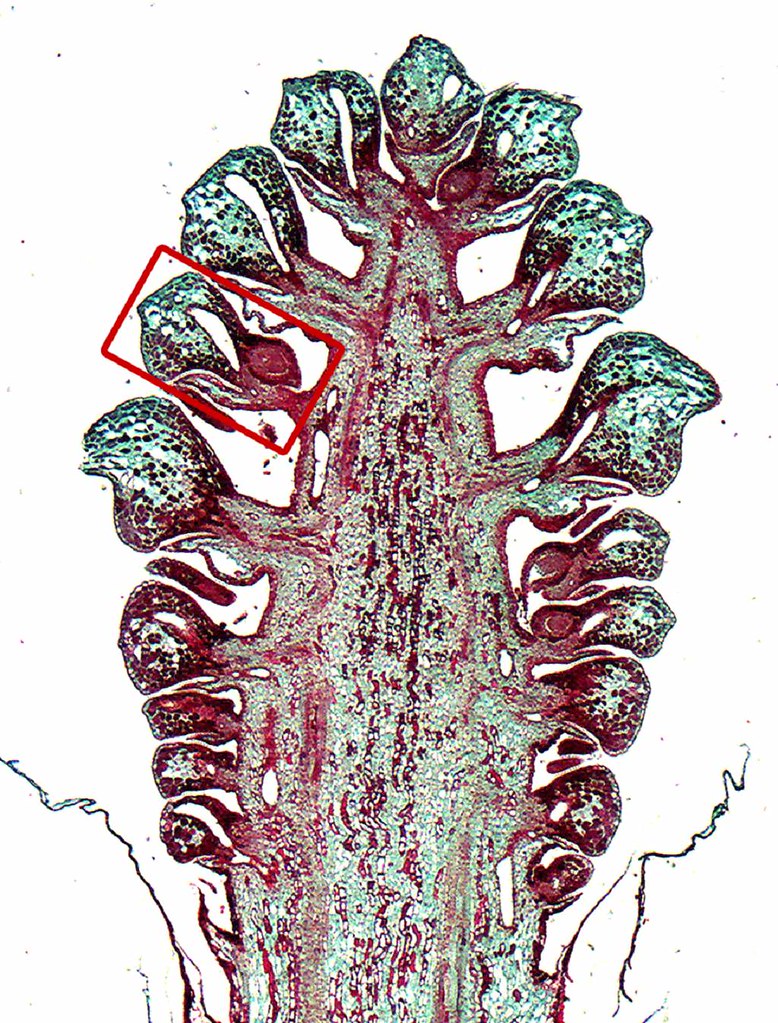
What are the modified leaves of male cones called? What do these bear?
They are called microsporophylls. They bear microsporangia, which produce microspores that develop into pollen grains.

What is an ovuliferous scale in what group of seed plants is it found?
A specialized scale that bears ovules. It is found in conifers, especially the Pinaceae.

Describe the morphological features of any of the extant Gnetales.
Ephedra has photosynthetic, striate stems and highly reduced scale-like leaves, with male or female cones in the axils of the leaves. Welwitschia has an underground stem bearing only two long, continuously growing leaves and cones on axes arising from the apex. Gnetum has broad leaves with netted venation and reproductive structures that resemble those of flowering plants.

List the apomorphies for the Angiosperms
Flowers
ovules enclosed within carpels
fruits derived from the ovary or associated tissues; and double fertilization, which produces both the embryo and endosperm.
Identify the major components of an Angiosperm flower.
The perianth, consisting of the calyx and corolla
the androecium, consisting of the stamens
gynoecium, consisting of the carpels or pistils. A typical stamen has an anther and filament, and a typical pistil has an ovary, style, and stigma.

What is a carpel?
A carpel is a single leaf-like reproductive structure that encloses one or more ovules and consists of an ovary, style, and stigma, although the style may be absent.

What are two major adaptive functions of the carpel?
The carpel encloses and protects the ovules and helps control pollen reception and pollen-tube growth, promoting selective fertilization. After fertilization, the carpel also develops into or contributes to the fruit.
What is the difference between a carpel, pistil, and gynoecium?
A carpel is one individual unit of the female reproductive structure. A pistil consists of one carpel or several fused carpels. The gynoecium is the entire female reproductive whorl of a flower, including all carpels or pistils.

What is a fruit?
A fruit is a mature ovary, sometimes together with accessory floral tissues, that contains and helps disperse seeds.
What is a pericarp?
The pericarp is the wall of the mature ovary, which becomes the fruit wall and may be divided into the exocarp, mesocarp, and endocarp.

Identify and contrast fleshy fruit types and dry fruit types. Discuss their adaptive significance
Fleshy fruits, such as berries, drupes, pepos, hesperidia, and pomes, have soft tissue that often attracts animals, which eat the fruit and disperse the seeds. Dry fruits, such as achenes, grains, samaras, burs, capsules, and legumes, have dry walls and disperse seeds by wind, water, gravity, explosive opening, or attachment to animals.
What is the difference between aggregate and multiple fruit types?
An aggregate fruit develops from several carpels of a single flower. A multiple fruit develops from the ovaries and often other tissues of several flowers in an inflorescence.
Identify the cells of the Angiosperm female gametophyte
The mature female gametophyte contains three antipodal cells, two polar nuclei in the central cell, one egg cell, and two synergids. The egg and synergids form the egg apparatus.

From what cell fusions does endosperm arise?
Endosperm arises from the fusion of one sperm cell with the two polar nuclei in the central cell. This triple fusion produces the usually triploid primary endosperm nucleus.
List three apomorphies of the Monocots.
One cotyledon
parallel leaf venation
atactostele, in which vascular bundles are scattered throughout the stem rather than arranged in a ring.
Other monocot characteristics include monosulcate pollen and floral parts commonly in multiples of three.

Identify an apomorphy of the Eudicots.
Tricolpate pollen, meaning pollen with three grooves or apertures.
Why is "Dicot" no longer an acceptable taxon?
The traditional dicots are paraphyletic because they include the common ancestor of the eudicots but not all of its descendants. The term does not represent a single complete clade, so classifications use Eudicots and other recognized angiosperm groups instead.
What is an atactostele?
A vascular arrangement in which the vascular bundles are scattered throughout the ground tissue rather than organized into a ring. It is characteristic of monocot stems.

What root system is composed of adventitious roots: taproot or fibrous?
A fibrous root system is composed of many adventitious roots. A taproot system has one main primary root with smaller lateral roots.
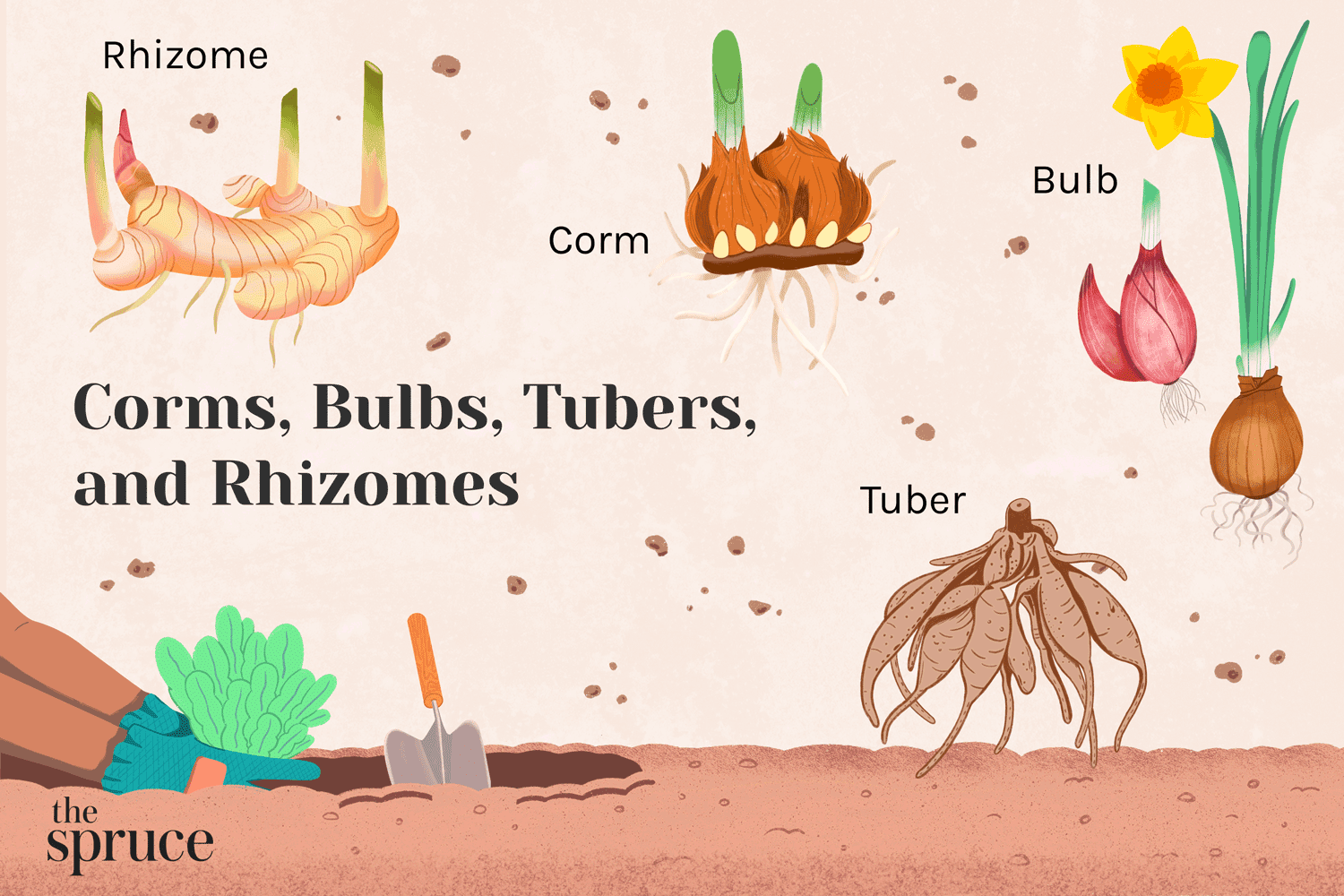
What is the difference between a bulb and a rhizome?
A bulb is a short underground stem surrounded by thick, fleshy storage leaves, as in an onion. A rhizome is a horizontal underground stem with nodes and internodes that produces roots and aboveground shoots.
What is the difference between a thorn and a spine?
A thorn is a modified stem or branch, while a spine is a modified leaf or leaf part. Both are defensive structures, but a prickle is an epidermal or cortical outgrowth and is not a modified stem or leaf.
What is the difference between a simple, pinnately compound, and palmately compound leaf?
A simple leaf has one continuous blade.
A pinnately compound leaf has separate leaflets arranged along a central rachis.
A palmately compound leaf has separate leaflets attached to one point at the end of the petiole.

Name three types of leaf modifications found in carnivorous angiosperms
Pitcher traps, snap traps, and sticky or flypaper traps. Other examples include bladder traps and lobster-pot traps.