Nerve Tissue (BMD 310)
 Call Kai
 Learn
 Practice Test
 Spaced Repetition
 Match
 Flashcards
 Knowt Play
1/33

There's no tags or description
Looks like no tags are added yet.
34 Terms
The central nervous system (CNS) consists of…
cerebrum
cerebellum
spinal cord
The peripheral nervous system (PNS) consists of…
cranial nerves
spinal nerves
ganglia
Central Nervous System branches out into the…
Brain
Spinal Cord
Peripheral Nervous System branches out into the…
Motor
Sensory
Motor nervous system branches out into the…
Autonomic
Somatic
Autonomic nervous system branches out into the…
Sympathetic (“fight or flight”)
Parasympathetic (“rest and digest)
Neurons
the ‘communication’ cells of the nervous system
Glial cells
the support cells
The glial cells of the CNS are…
Astrocytes
Microglia
Oligodendrocytes
Ependymal cells
***A MOE
The glial cells of the PNS are…
Schwann cells
Satellite cells
***SC times 2!
The “Typical Neuron”
be able to identify the various structures that make up a neuron

Neuron Histology
be able to identify the various structures

Synapse
be able to identify the various structures

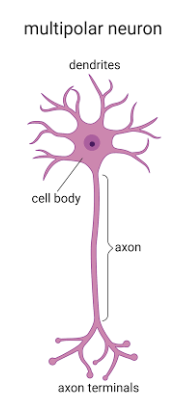
multipolar neuron
identify
bipolar neuron
identify

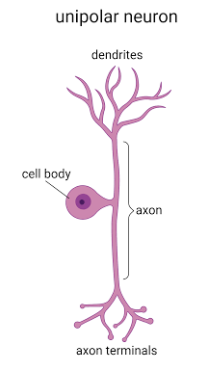
unipolar neuron
identify
pyramidal neurons
very large
commonly found within the cerebral cortex
have many large projections and triangular shaped bodies
most often excitatory
sensory neuron
transduce sensory input into electrical signal to be carried to brain for perception
called cutaneous when referring to skin sensation
afferent - carries information TO the CNS (Arriving to the nervous system)

motor neuron
carry information to muscle cells to produce movement (skeletal, cardiac, and smooth)
efferent - carries information AWAY from the CNS (Exiting the nervous system)
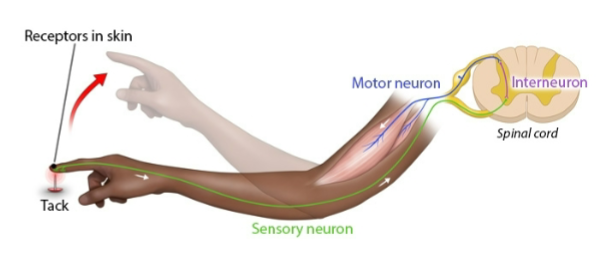
interneuron
serve as connection between motor and sensory within the CNS
example: reflex arc

excitatory function
general function potentials
locally or long range
neurotransmitters: glutamate, epinephrine, norepinephrine, NO
depolarize the post-synaptic neuron
unidirectional or bidirectional information
example: pyramidal neurons
inhibitory function
decrease likelihood of action potentials
localized within small regions
neurotransmitters: GABA, glycine, serotonin, dopamine
decrease likelihood of depolarization
bidirectional information
example: interneurons
Grey matter
rich in neuronal cell bodies (soma) and dendrites\
collections of cell bodies — called a nucleus
also contains glial cells
looks grey in color in dissection specimen
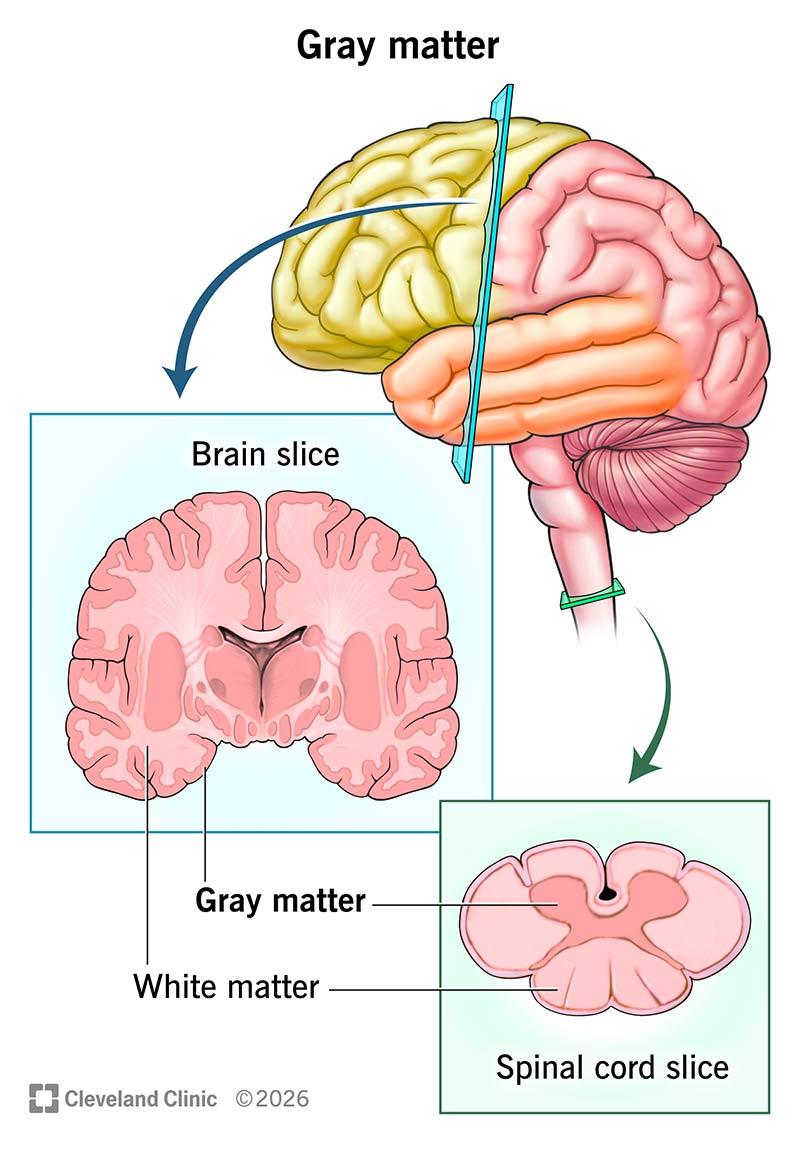
White matter
rich in axons
also contains glial cells and a few neuronal soma
looks white in color (from the myelin covering the axons)
White matter named in several different ways: fasciculus, funiculus, lemniscus, peduncle, tract
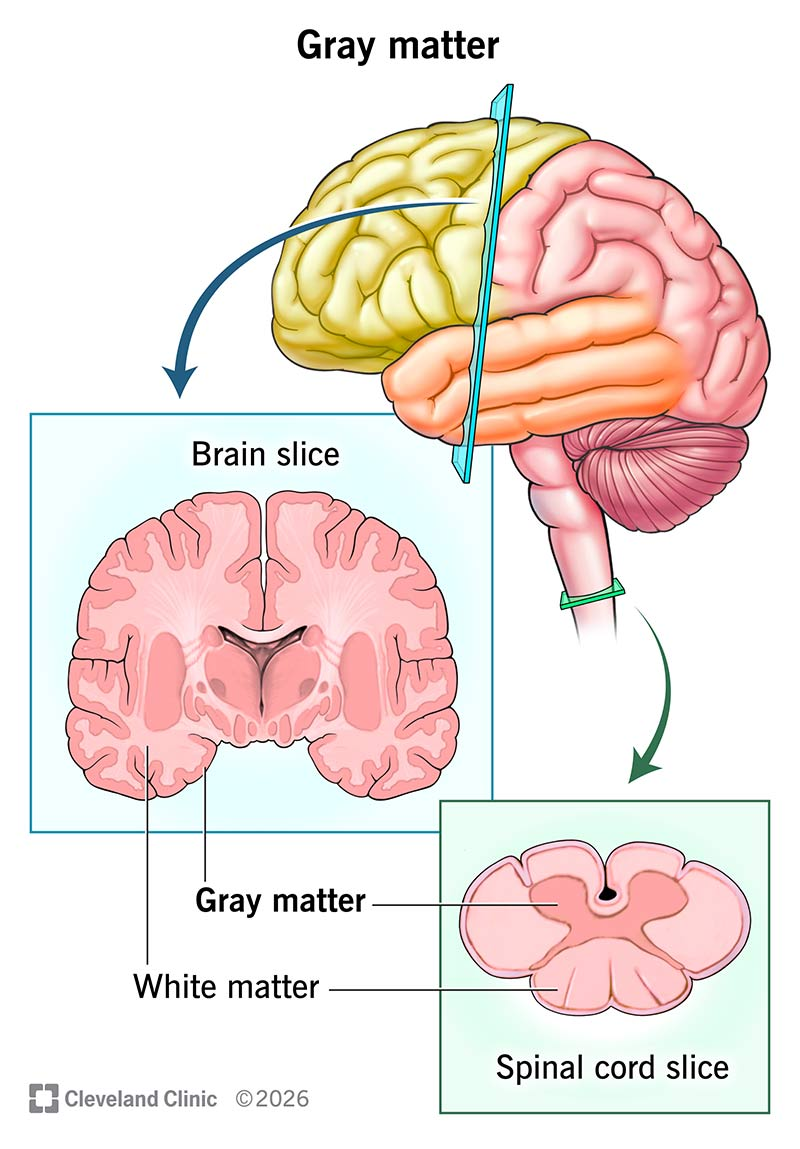
nuclei
collections of grey matter within the CNS
ganglia
collections of grey matter within the PNS
microglia
immune cells
respond to injury or disease
secrete and respond to many different cytokines and chemokines
recruit immune cells from the periphery into the CNS if needed
Morphology
variable
small cell body with many processes that are scanning the environment
astrocytes
support (physical, chemical, and metabolic)
maintain the blood brain barrier (BBB)
secrete and absorb neurotransmitters in the synaptic cleft
store glycogen, providing glucose and lactate to neurons
regulate the internal CNS environment, especially fluid surrounding axons and synapses, by controlling ion concentrations in the extracellular space
glioma
upwards of 80% of brain tumors are gliomas
tumor arising from glial tissue
typically, astrocytic or oligodendrocytic
graded on severity I-IV (1-4)
glioblastoma is a grade IV malignant glioma
Oligodendrocytes
myelinating cell of the CNS
myelin electrically insulates an axon, increasing transmission speed
one oligodendrocyte will wrap around several axons
ependymal cells
line the ventricles and the central canal of the spinal cord
act a bit like epithelium in the CNS, but lack a basement membrane
Ependymal cells in the choroid plexus secrete cerebrospinal fluid
Schwann Cells
myelinating cell of the PNS

Satellite Cells
accessory cells in PNS ganglia, similar to astrocytes in the CNS
Axon Regeneration
CNS
Inhibitors produced and found within the CNS prevent regeneration
Myelin-associated inhibitors from oligodendrocytes
CSPGs from astrocytes
PNS
Schwann cells promote regeneration through a variety of molecules