Principles of Biology Exam Ch 6,7,8
 Call Kai
 Learn
Learn Practice Test
 Spaced Repetition
 Match
Match Flashcards
 Knowt Play
1/70

Earn XP
Description and Tags
Ch 6, 7, 8
Name | Mastery | Learn | Test | Matching | Spaced | Call with Kai | Chat |
|---|
No analytics yet
Send a link to your students to track their progress
71 Terms

Electron Transport Chain

Chloroplasts

NADP+

NADPH

PS I

Calvin Cycle Reactions

ATP

ADP + P

ATP Synthesize Complex
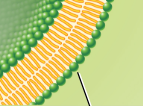
Thylakoid Membrane

Thylakoid Space

PS II

Stroma
Between 560 nm and 600 nm; reflected
Yellow Light
Between 600 nm and 740 nm; absorbed
Red Light
Between 500 nm and 560 nm; reflected
Green Light
Between 430 nm and 500 nm; absorbed
Blue Light

NADPH

PS I Reaction Center

CO2

PS I
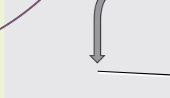
CH2O (carbohydrate)

ATP

Pigment Complex

PS II

PS II Reaction Center

Solar Energy

Electron Transport Chain
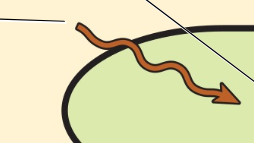
Solar energy

H2O

CO2

Reduction
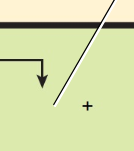
(CH2O)

O2

Oxidation
In what ways is photosystem I different from photosystem (PS) II?
Photosystem (PS) I uses the high-energy electrons to reduce NADP+ to NADPH, whereas photosystem (PS) II uses them to convert ADP into ATP.
Because the reactions are not cyclic, over time photosystem (PS) II would lose all its electrons. This does not happen because
energy from photosystem (PS) II is used to split water molecules, releasing electrons.
The last stage of the Calvin cycle acts to recycle ____, sending it back to aid in _____ again.
RuBP; carbon fixation
By accepting electrons, serving as the final electron acceptor, oxygen is reduced to form water. In this manner, a water by-product is formed during the electron transport chain.
True
The complete breakdown of glucose requires _____ but may continue in anaerobic conditions through the process of ________.
Oxygen; fermentation
During this process, the ______ formed by glycolysis accepts two ______ atoms and is reduced to _______.
pyruvate; hydrogen; lactate
This reaction regenerates ______, which can then pick up more electrons to keep glycolysis and ______ production going.
NAD+; ATP
Fermentation is a way to produce ATP during _______ conditions, like when we use our muscles rigorously.
anaerobic
Before entering the citric acid cycle, pyruvate is converted to ______.
acetyl-CoA
The first stage of cellular respiration is called ______ and results in glucose being broken down into two ______ molecules.
glycolysis; pyruvate
Glycolysis occurs outside the ______ and within the ______ of the cell.
mitochondria; cytoplasm
Glycolysis can be divided into two steps: the _____ step, when ATP is used to begin the reaction, and the step, when both ATP and NADH are produced.
energy-investment; energy-harvesting
Since energy is invested during glycolysis, there is only a net gain of two _____ molecules at the completion of this process.
ATP
Match each molecule to the number produced after two turns of the citric acid cycle. :4
Released CO2
Match each molecule to the number produced after two turns of the citric acid cycle. :2
ATP
Match each molecule to the number produced after two turns of the citric acid cycle. :6
NADH
Match each molecule to the number produced after two turns of the citric acid cycle. :2
FADH2
Proton pumps are protein complexes that __________.
move hydrogen ions across cell membranes
Which of the following is the enzyme used to synthesize ATP?
ATP synthase
During glycolysis, a 6-carbon sugar diphosphate molecule is split into two 3-carbon sugar phosphate molecules.
True
NADH serves as an electron carrier that can donate its hydrogen to other molecules.
True
The term glycolysis (glyco-) (-lysis) means _____ _____.
splitting sugar
The purpose of the spindle fibers is to
aid in sorting and aligning the chromosomes for their movement to opposite ends of the cell.
Which of the following statements about the spindle fibers, called kinetochore microtubules, during anaphase is TRUE?
They shorten, drawing the individual chromosomes to the poles.
Centromeres join sister chromatids during prophase.
True
Mutated forms of the Rb protein
do not bind to E2F, thereby promoting uncontrolled cell division.
The protein ______ checks for damaged DNA, thereby acting as a "quality control" for the cell.
p53
The contractile ring observed during cytokinesis in animal cells is composed of _____ filaments.
actin
As the filaments slide past one another, the cell is pinched and a _______ is created around the cell's circumference.
cleavage furrow
As a result of cytokinesis in animal cells, _______ new cells form.
two
Cytokinesis is not a phase of the cell cycle; it happens after nuclear division.
False
Repeating DNA sequences found at the end of chromosomes are called ______.
telomeres
These sequences promote chromosomal _____ for replication, preventing essential ______ from being deleted.
Stability; Genes
Germ cells and _______ cells have enzymes called _______, which serve to rebuild telomeres.
Stem; Telomerase
In _______ cells, the gene for telomerase is turned on, allowing cells to continue replication indefinitely.
cancer