Session 8 guest lecture recording
 Call Kai
 Learn
 Practice Test
 Spaced Repetition
 Match
 Flashcards
 Knowt Play
1/25

There's no tags or description
Looks like no tags are added yet.
26 Terms
microbes
too small to see with a naked eye; microscopic organisms
3 domains of life
bacteria
Archaea
Eukarya
viruses are separate because they aren’t alive themselves; depend on other organisms to live
are most microbes pathogens?
no; microbes can do good things for us
microbiome functions
human beings aren’t just human cells, but we are walking ecosystems of microbes
ferment foods like kimchi or pickles
beer is a result of fermentation from microbes
1900 last century death rates
influenza and pneumonia
turberculosis
gastroenteritis
mostly communicable/infectious
today’s causes of death
mostly noncommunicable like heart disease, cancer, stroke
but we are living longer
we are underestimating septicemia (infection in the blood); number 3 cause of death actually
virulence factors
these factors are the ways that microbes cause disease (attach the cells)
these microbes pick up pieces of DNA from other organisms like plasmids
two categories of pathogens
frank pathogens
microorganisms that cause disease in healthy people
opportunistic pathogens
don’t have as much virulence factors but cause infections in people with weak immune systems or enter the wrong systems
colonizing opportunistic pathogens: microbes that we can carry around like in our guts or noses but not cause disease in colonizing site but if it gets in the blood, it kills you
morphology
a colony on a petri dish allows us to see color of the microbes, and shape of them
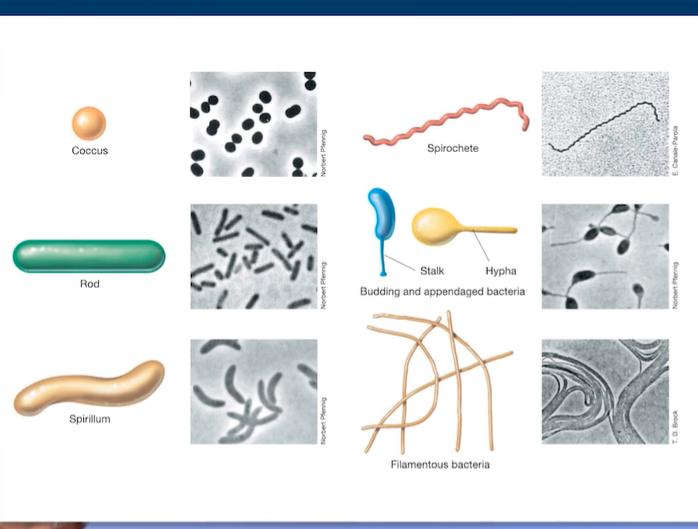
shapes of microbes
circle: coccus
oval: rod
slight twist:spirillum
squiggly: spirochete
size of microbes
smallest ones a viruses
bacteria
then eukaryotic pathogens
then roundworms
substructures within microbes
in a prokaryote:
no membrane bound organelles
no structures except DNA and plasmid
ribosomes
cell wall
eukaryotic cell
organelles
nucleus where DNA is
two categories of bacteria and how they stain
gram negative: stain pink
gram positive: stain purple with a stain
two types of viruses
naked virus: they’re environmentally stable
enveloped virus (the one we mostly care about): can be easily disrupted with sanitizing agents like alcohol becuase they can be killled easily
states of bacteria
planktonic cells that multiply
biofilm: bacteria that form a community or population that can protect them from environmental/sanitizing agents
reservoirs
the places that microbes live when they’re not infecting us
routes
how microbes get to us
person to person
zoonosis (animal to human)
waterborne
soil-borne
food-borne
vector-borne
how pathogens are killed in labs
thermocycler uses pressure and heat to kill pathogens in lab
getting rid of pathogens in food
radiated food (using radiation to kill microbes)
water being used to kill microbes
filter out microbes using filtration or chlorine
antimicrobials
way to poison and inhibit microbes; but the more we use it the more resistant the microbes get
cellular way to kill microbes
attack cell membrane
block protein/DNA/RNA synthesis
however it allows evolution to make microbes resistant
killing eukaryotic cells
attack essential part of cell
however, humans are made up of eukaryotic cells, so it’s hard to find ways to kill eukaryotic pathogens without collateral damage
antibiotics disrupt ____
the microbiome
fecal transplant therapy
using feces from healthy people and bring it to people with C diff infections to help them
human activities disrupting microbial ecology
red tide is when there is overgrowth of heterotrophic algae, turns water red, produces toxin, gets in seafood that harms humans
plastics in ocean block light from coming in water and uses light to produce oxygen; reduces ability to produce photosynthesis
when we dig up the earth, it piles up on the surface and becomes acidic'
carbon heats up planet, increasing range of vectors (mosquito infections now happening in previously colder areas)