Canine lymphoma
 Call Kai
 Learn
 Practice Test
 Spaced Repetition
 Match
 Flashcards
 Knowt Play
1/27

There's no tags or description
Looks like no tags are added yet.
28 Terms
What is lymphoma?
Diverse group of neoplasms that arise from the lymphoreticular cells (T or B cells).
Normally arise from lymphoid tissue but can arise from virtually any tissue.
Mostly haematopoietic malignancies
What is the aetiology of lymphoma?
Multifactorial & largely unknown
Genetic & molecular factors
IDs
Toxins
Immunological factors e.g. immune mediated conditions
What is the clinical presentation of lymphoma?
Can virtually affect any dog
Middle age to old incr. risk
Oestrogen protective effect of intact F have reduced risk
Breed predisp & familiar traits —> boxers, bull mastiff, dog de bordeaux
Clinical signs depend on location
What are the anatomical classifications of lymphoma?
Multicentric
Craniomediastinal
GI
Cutaneous
Extra-nodal forms (CNS, renal, heart, bladder)
Many presentations overlap
What is the most common form of canine lymphoma?
Multicentric lymphoma
What are the clinical signs of multicentric lymphoma?
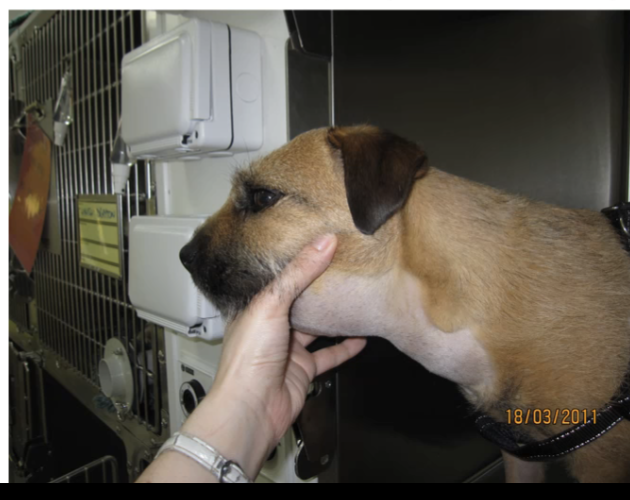
Generalized peripheral lymphadenopathy +/- other clinical signs.
Mod to marked LN enlargement.
Some dogs clinically well but deteriorate quite quickly if left
Rapid deterioration.
Non-specific signs (weight loss, inappetence/anorexia, lethargy, pyrexia).
More specific signs (D+, V+, cough, ocular signs).
Regional oedema if LN drainage impaired
What are the clinical signs of cranial mediastinal lymphoma?
Can occur as solitary lesion or part of multicentric form —> normally T cell form
Tachypnoea, dyspnoea.
Signs of hypercalcaemia of malignancy because T-cell form (PU/PD, V+ / D+, muscle tremors, anorexia, weight loss).
Occasionally pre-caval syndrome (regional oedema from impaired venous return due to mass)
Altered position of point of maximum intensity (PMI) for cardiac auscultation, displacement of apex beat (more cd)
What are the clinical signs of GI (alimentary) lymphoma?
V+, D+, weight loss, anorexia, pan-hypoproteinaemia (hypoalbuminemia), evidence of malabsorption.
Abdominal masses or diffuse.
Lymphadenopathy (abdominal & less commonly peripheral).
Tends to be aggressive in dogs
What are the different forms of cutaneous lymphoma and how do they differ?
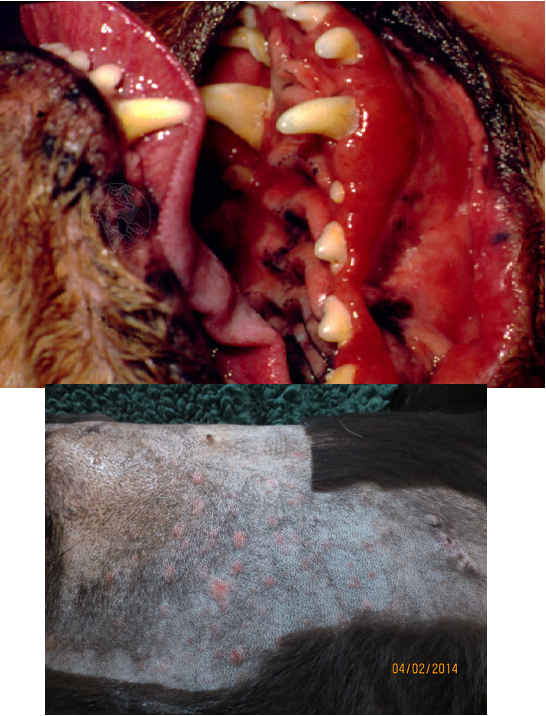
Histopathological classifications:
Epitheliotrophic
T cell
Solitary / generalized
Non-epitheliotrophic
More frequently B cell
More likely to have lesions elsewhere
How do cutaneous lymphomas present?
Different appearances.
Progression to raised, erythematous plaques/nodules.
Variable pruritus.
In general poorly responsive to chemotherapy
What are the forms of extranodal lymphoma and their features?
Hepatosplenic
Just liver & spleen affected
Aggressive, no peripheral lymphadenopathy
T cell
CNS
Mass lesion or diffuse, variable neuro deficits but commonly signs of multicentric / diffuse lesions
Commonly ocular involvement
Generally T cell
Renal, urinary, bladder, heart, muscle etc.
What is paraneoplastic syndrome?
Set of signs and symptoms that it is a consequence of the tumour but it is not due to the presence of tumour cells in that location.
What paraneoplastic syndromes can lymphoma cause?
Hypercalcaemia (caused by PTHrp i.e. PTH related protein produced by tumour cells —> tells body to produce more calcium)
T cell (35%)
Mediastinal and GI forms
Immune mediated diseases
IMHA, immune mediated thrombcytopenia, and Pemphigus foliaceous
Monoclonal gammopathies
B-cell
Neuropathies
Cachexia
How is lymphoma diagnosed?
Cytological or histopathological
Ancillary tests:
PARR (PCR) —> clonality (B cell / T cell) & phenotype
Flow cytometry —> cell size, phenotype & expression of aberrant markers (needs fresh samples)
Immunohistochem / immunocytochem
Biomarker tests
What are some histological features of lymphoma with clinical or prognostic implications?
Grade (low, intermediate, high)
Immunophenotype (B cell tend to be better, T cell = terrible or null phenotype)
How can you stage lymphoma based on involvement?
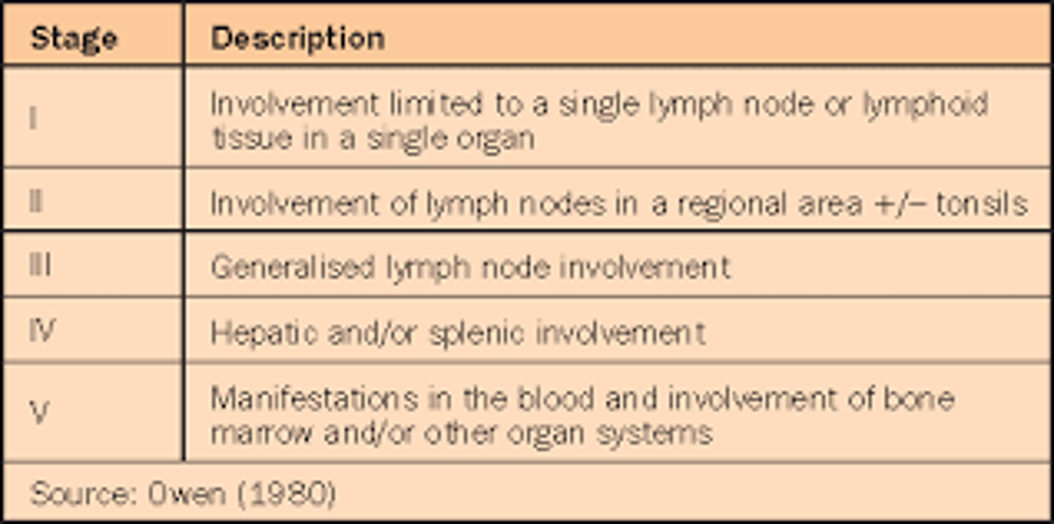
extranodal forms (CNS & renal) = stage V = poorer prog
bone marrow involvement = poor prognostic indicator
What can be tested for when deciding staging on lymphoma?
Haematology:
thrombocytopenia
neutrophilia
lymphocytosis
abnormal cells on smear
Biochem:
hypercalcaemia
check for signs of organ dysfunction
Aspirate / biopsy of other LNs / organs
Thoracic rads
Abdo U/S
Bone marrow biopsy if suspected involvement
What are the tx options for lymphoma?
No tx
Median survival time 3-6wks for asymp dogs
reccommend euthanasia for symptomatic
Prednisolone alone as palliative tx
median response duration 1-2months
NB: Resistance to chemo develops —> won’t respond as well or for as long to chemo
Gold standard is multidrug chemo
survival times vary depending on protocol & individual response
doesn’t tend to be curative because of low dose but less side effects
What chemo protocols can you use for lymphoma?
High dose COP (preferred over low dose version)
Prednisolone, Vincristine & Cyclophosphamide
Haematology & urine sample prior to each tx
median survival time 6-9 months
Discontinuous CHOP/CEOP
COP drug + Doxorubiciin (=CHOP) / Epirubicin (=CEOP)
median survival time 10-12 months
better response rate than COP
no advantage to cont. tx (stop @ 25wks)
What are the side effects of chemo?
GI tox —> V+, D+, nausea.
Myelosupression —> Neutropenia, thrombocytopenia & anaemia.
Drug specific toxicities
sterile haemorrhagic cystitis due to Cyclophosphamide
cardiotoxicity due to Doxorubicin & Epirubicin
hepatotox due to lomustine —> monitor ALT & liver protectors
How is sterile haemorrhagic cystitis due to cyclophosamide managed?
Give furosemide to encourage urination
When may local txs be useful in lymphoma?
(Rarely indicated)
Radiation
Stage I dx
Palliation of local dx
Mass lesion on CNS
Surgery
Considered for rare Hodgkin's lymphoma & poss extranodal and early stage I
(^^^ Adjuvants of chemo, not substitutes)
What consideration do we need to make about drugs for CNS lymphoma? Which can we use?
Many drugs do not penetrate the BBB
Can use:
Cytarabine
Lomustine (CCNU)
Steroids
L-asparaginase
How is epitheliotrophic lymphoma treated?
COP or lomustine + prednisolone
No proven extension of lifespan, maybe improvement of quality of life
Retinoids (for control of clin signs such as pruritis) —> improve quality of life
Radiation therapy useful for localised mucocutaneous dx
How do you assess the response of lymphoma to treatment?
Palpation of LNs / other lesions prior to every tx.
Resolution of clinical signs.
Repeating imaging (restaging) for internal lesions.
Monitoring blood parameters (Ca, ALT etc.)
Achieving a complete response @ end of discontinuous protocol is good prognostic indicator (if do not achieved —> suggests resistant population of tumour cells → will rapidly become dom population )
Give some examples of rescue protocols (for dogs that have stopped responding to a current protocol) that can be used with lymphoma?
DMAC (Dexamethasone, Melphalan, Actinomycin-D, Citarabine)
LPP (Lomustine, procarbazine, prednisolone)
Single agent anthracyclines i.e. doxorubicin / epirubicin (if not already used)
short-lived resonses but occassional long term survivors
What is the average relapse time of a complete response patient?
4 months
(follow up monthly for at least first 6 months, then every 2-3 months)
When would you restage a lymphoma?
When there are no sentinel LNs to follow.
When patient not doing as well as expected or all clinical signs do not resolve.
@ end of induction phase.
@ end of a discontinuous protocol