L92 Abnormalities or Dynamics of Lipid Metabolism
 Call Kai
 Learn
 Practice Test
 Spaced Repetition
 Match
 Flashcards
 Knowt Play
1/61

There's no tags or description
Looks like no tags are added yet.
62 Terms
Sterols
Cholesterol cholesterol esters, bile acids, steroid hormones
Function of sterols
Cell membranes(phospholipids & cholesterol)
Hormones (cortisol, sex hormones, Vit D)
Bile acids
Lipids found in animals
Mono / di / Triglycerides, (TG)
Glycerol esters: Fatty acids (FA), Sphingosenes
Terpenes: vitamins A, E, & K.
Function of lipids found in animals
TG & FA - Energy source
Lipoproteins =
lipid (Triglyceride or Cholesterol) + protein (apoproteins) - (HDL, LDL, VLDL, LDLs)
• Transport in body without forming large lipid masses
When lipids are absorbed from the diet:
(20-30%) are esterified in enterocytes (gut cells) & cannot travel as such in blood
Cholesterol packaged into lipoproteins (LDL and HDL) are
released into lymph → transported into bloodstream
Triglycerides (TG) are stored in?
adipose tissue or packaged into chylomicrons (dietary) and VLDL (hepatic) for transport
Lipoproteins percentages: usually measure fractions in man (not vet spp)

Ingested (Exogenous) Cholesterol Metabolism (high insulin)
1. Ingestion (approx. 20-30%) → Absorbed in SI or from liver synthesis (biliary secretion) → Bile salts aggregate → micelles in SI
3. → hydrolyzed by pancreatic & intestinal lipase enzymes in gut lumen → absorbed into intestinal cells - free cholesterol re-esterified with fatty acids
5. free cholesterol and cholesteryl esters are secreted into chylomicron particles (remnants)
Ingested (Exogenous)Triglyceride (TG) Metabolism(High Insulin)
TG hydrolyzed in intestinal lumen by pancreatic lipase → mono & diglycerides, free fatty acids (FFA) → combine with phospholipid & bile salts → form micelles
→ absorbed into intestinal cells → re-esterified to form TG
4. TGs + cholesteryl esters, free cholesterol, phospholipid, & proteins incorporated into chylomicron particles → circulation via the lymphatics
Cholesterol Synthesis If fasted, then (70-80%) Synthesized - Endogenous
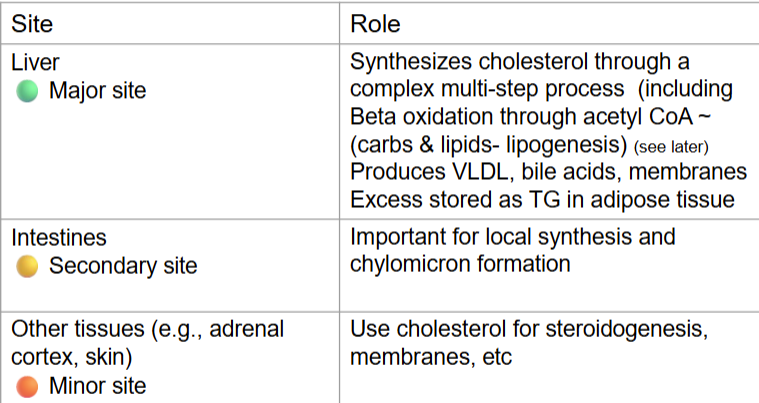
Chylomicron, VLDL, LDL & Liver Cholesterol Metabolism
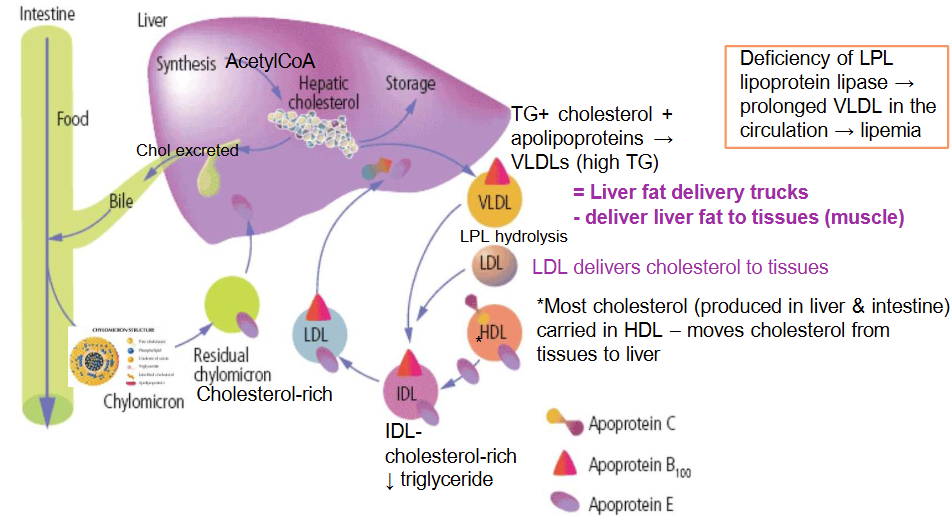
Endogenous (Fasted) Triglyceride (TG) Metabolism

Summary Points
TGs transported via chylomicrons (dietary), VLDL(hepatic)
LPL (lipoprotein lipase) is key to TG clearance;(enhanced by insulin) - ↑ uptake of FFAs from chylomicrons / VLDL into adipose tissue
Insulin promotes TG (fat) formation & storage in adipose tissue
HSL Hormone sensitive lipase intracellular enzyme in lipocytes
In fasted state (↓ insulin) HSL hydrolyzes stored triglycerides into free fatty acids (FFA) + glycerol (lipolysis) → mobilization of stored TG → hypertriglyceridemia
High TGs can trigger or worsen pancreatitis, especially in predisposed breeds (eg Miniature Schnauzer)
Lipemia (Lipidemia)
describe turbid (cloudy) appearance(chylomicrons & VLDLs – high TG)
Presence of lipids in serum /plasma,
Often incorrectly used to describe an concentration of circulating lipids
What does lipemia effect?
Can affect serum chemistries (method dependent)
• ↑ Bile acids, Calcium
• ↓ Na, Cl
• Can also affect Liver , pancreatic enzymes bilirubin, glucose
Hyperlipidemia /Hyperlipemia
abnormal ↑ lipids in serum /plasma(post 12 hr fast)
Cause turbidity of sample (high triglycerides)
Hyperlipidemia occurs after ingesting a meal
Fasting hyperlipidemia →
abnormal lipid metabolism / endocrine disease
Hyperlipoproteinemia =
↑Lipid proteins (LP)(triglyceride &/or cholesterol) + protein
Hyperlipidemia does not always result in?
lipemia(only presence of chylomicrons or VLDL – high in triglycerides)
Hypercholesterolemia =
↑ LDL & HDL – does not cause lipemia of sample
Hypertriglyceridemia (TG) tube examples
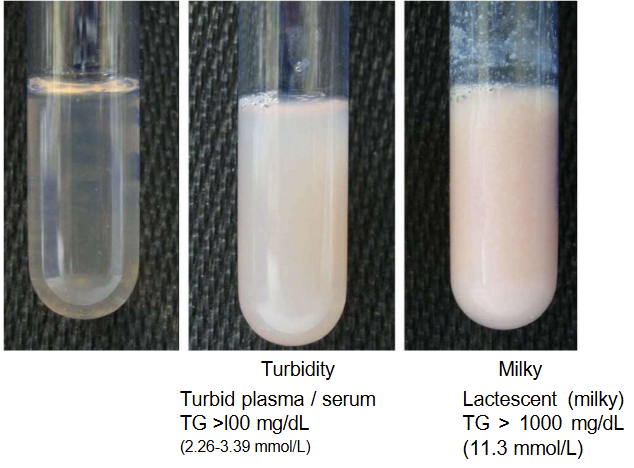
Chylomicrons = Exogenous lipemia due to dietary fat(usually post prandial)

VLDL’s = Endogenous lipemia produced in liver by endogenous triglycerides

Classification Hyperlipemia/Hyperlipoproteinemia/Hyperlipidemia: Physiologic(postprandial)
Dogs & cats: ↑chylomicrons
Expect clearing < 8 hr(< 16 hr – seems long)
If delayed clearing, think secondary (acquired) hyperlipidemia
Classification Hyperlipemia / Hyperlipoproteinemia/Hyperlipidemia: primary
congenital; hereditary
certain breeds – Min Schnauzers
Classification Hyperlipemia / Hyperlipoproteinemia/Hyperlipidemia: secondary(more common)
acquired: especially if not eating or associated with endocrine or metabolic disorders
Pancreatitis, cholestasis, PLN, obesity, High fat diets, drugs
Physiologic Hyperlipidemia
Postprandial (ingest TGs) in small animals, ↑ Formation chylomicrons, ↑ TG (& Cholesterol)
May persist for 16 hours if fatty meal
Always try to fast patient for 8 hours before collecting blood(not in very small / debilitated animals / exotics)
Physiologic hyperlipidemia results in?
lipemia - can interfere with analytes (esp. bile acids)
Primary / Idiopathic Hyperlipidemia
Familial in Miniature Schnauzers → Inherited defect in lipoprotein lipase(defective lipolysis of lipoproteins - intravascular) or apoprotein CII enzymes
Usually > 4 years old
Primary/idiopathic hyperlipidemia results in?
High triglycerides & hyperchylomicronemia
± Mild hypercholesterolemia
Chronic hyperlipidemia can result in ↑ ALP, abdominal pain, predispose to pancreatitis and seizures
Primary/idiopathic hyperlipidemia can also be seen in?
occasionally Beagles, Poodles, Shelties
Primary/idiopathic hyperlipidemia in cats
Type III LPL def. in cats
Himalayan, Siamese, DSH(autosomal recessive)
Primary/Idiopathic Hyperlipidemia: Clinical signs - Dogs
V/D/ pancreatitis, ± diabetes
Seizures - synthesis of myelin and other essential fatty portions of the CNS, resulting in conduction disturbances and seizures
(Neuro Sx -usually Triglycerides > 1000 mg/dL)
Primary Hyperlipidemia – Cats clinical signs(young cats 8-9 mos)
Multiple hematomas affect peripheral nerves, causing loss of sensation
Facial / limb /pharyngeal paralysis
Horner's syndrome
Muscle atrophy, Cutaneous xanthomas - lipid-laden macrophages in the skin
Triglycerides > 1500 mg/dL (RI< 100-150 mg/dL), lipemia retinalis or lipemia acqueous
Also hypercholesterolemia
Primary Hyperlipidemia Inherited (Familial): Hypercholesterolemia
Idiopathic: unknown defect in Doberman pinschers, Rottweilers & Briards
Cholesterol ↑↑↑ triglycerides ↑
Animals are often asymptomatic
Secondary Hyperlipidemia: Endocrine causes
• Hypothyroidism
• Diabetes mellitus
• Hyperadrenocorticism (Cushing’s)
Secondary hyperlipidemia: endocrine lab signs
↓ LPL (Lipoprotein lipase) activity → ↓ clearance of LDL
↓ lipolysis of VLDL
↑ cholesterol / ↑ triglycerides
Secondary hyperlipidemia: metabolic
Pancreatits (Acute)
• Hepatic Disease
• Nephrotic Syndrome
• Obesity
• Equine / Camelid hyperlipidemia (triglycerides)
Hypothyroidism ↓ T4: Low thyroid ↓ LPL
↓ Cholesterol uptake/ slow lipid metabolism
↓ T3 ↓ hepatic lipase degradation of cholesterol to bile acids
Serum cholesterol can be markedly increased ↑↑ in ± 80% of dogs (LDL)
Also mild ↑ TG
May result in vascular disease and subsequent neurologic or cardiac abnormalities
Diabetes Mellitus: ↓ Insulin
↓ LPL activity, ↓ Clearing chylomicrons and VLDL
↑ Hormone-sensitive lipase (HPL) activity → ↑ lipolysis → more free fatty acids FFA → ↑ VLDL production by liver (influx of FA)
Liver re-esterifies FA to TG → VLDL, Converts FFAs to ketones → Hyperlipoproteinemia, ↑ ↑ ↑ Triglyceride & ↑ cholesterol
Can predispose to pancreatitis
Hyperadrenocorticism(Cushing’s disease): Steroids
↑ Cholesterol (common) & ↑ triglyceride
↑ Lipolysis (↑ free FA from TG + glycerol breakdown), ↑ Synthesis of VLDL (& LDL) by the liver, ↑ Hormone-sensitive lipase (HSL) ↑ FA influx
Steroids antagonize insulin → peripheral insulin resistance → ↓ LPL activity (slower removal / clearance of lipoproteins)
Acute Pancreatitis: ↑ Triglycerides & / or ↑ cholesterol
Cytokines & stress (cortisol) stim lipolysis → ↓ LPL activity
• ?↓Insulin ↓ LPL activity - ↑ VLDLs
Can be due to cholestasis or DM } pathogenesis unknown
Prolonged hypertriglyceridemia may predispose to pancreatitis
Cholestatic Hepatic disease
↑ Cholesterol / triglycerides seen with cholestatic disease(Liver is major route of cholesterol excretion)
Nephrotic syndrome - Protein Losing Glomerulonephropathy: Hypercholesterolemia ↑↑
↓ Lipolysis of lipoproteins with Apoprotein B → ↓ Intravascular processing(loss of protein needed for LPL binding?)
Stimulate VLDL synthesis in hepatocytes, ↑ TG
Hypoalbuminemia
Proteinuria, Edema or ascites
Hepatic Lipidosis – due to Negative Energy Balance seen in?
Lactating dairy cows
Pregnancy toxemia sheep / goats (twin lambs)
Anorexic obese cats, small equids & camelids
Hepatic Lipidosis & Ketosis in Cows (Especially Dairy Cows)
Negative energy balance in early lactation (first 2–6 weeks postpartum) but late lactation can develop clinical ketosis
High-producing cows can’t eat enough to meet the massive energy demand for milk production = pregnancy ketosis
Hepatic lipidosis and ketosis in dairy cows: metabolic pathway
1. Low glucose → low insulin → ↑ glucagon & catecholamines ↑ HSL activity → fat mobilization -
Adipose tissue releases NEFAs (Non-Esterified Fatty acids) into blood →Liver takes up NEFAs: Some oxidized for energy, Some converted into ketone bodies(acetoacetate → β-hydroxybutyrate, acetone).
Some are re-esterified into triglycerides, but: Cattle have limited ability to export VLDL, so TG accumulate in the liver → fatty liver, but ketosis common
Bovine Ketosis Bloodwork and Diagnostics:
↑ NEFAs Test for negative energy balance Non esterified fatty acids (pre-calving)
↑ Ketones (especially β-hydroxybutyrate, aka BHB) – Usually post calving
• ↓ Glucose
• AST ↑ if hepatocellular injury from lipidosis
Ketosis Sheep Pregnancy toxemia
Late gestation, when ewes carrying multiple fetuses cannot meet their energy demands → Decreased glucose leads to negative energy balance → Fat mobilization, and ketone buildup - clinical ketosis
Clinical signs of ketosis sheep pregnancy toxemia
Dehydration, Weight loss, decreased milk yield, Weakness
Grinding teeth (pain sign), Sweet/acetone odor on breath or urine, Ruminal stasis and constipation
CNS signs : sometimes apparent blindness
Trembling, muscle twitching
Aimless wandering, head pressing, star-gazing, convulsions, coma
Feline Hepatic Lipidosis (& Ketosis):
Often secondary to anorexia, especially in obese cats
Triggers: stress, illness, change in diet, etc
Feline hepatic lipidosis and ketosis: metabolic pathway
Anorexia → low insulin → ↑ HSL (hormone sens lipase)activity → fat mobilization
Fat (NEFAs (non-esterified fatty acids)) floods the liver → limited capacity for hepatic β-oxidation of fatty acids → liver re-esterifies them into TGs
bad at exporting those triglycerides as VLDL → Excess fat accumulates as hepatic triglycerides → hepatic lipidosis→ impairs liver function
Can develop secondary ketosis
Results in accumulation of free (unesterified) cholesterol in plasma
Equine Hyperlipidemia: Mild problem, TG < 500 mg/dL
During fasting liver re-esterifies NEFAs into TGs → exports them into blood as VLDL → VLDL particles accumulate in blood → Hyperlipidemia and organ damage
In ponies/donkeys, LPL is reduced
Common diseases associated with hyperlipidemia in horses are:
PPID- Pars pituitary intermedia dysfunction(hyperglycemia, insulin resistance, and hirsutism)
Colic, Laminitis, GI parasites
Equine Hyperlipidemic Syndrome: Severe Hypertriglyceridemia ↑ ↑ TG > 500 mg/dL
Seen in small equids(Miniature horses, ponies, donkeys)
During systemic disease that produces a negative energy balance - starvation or chronic illness, obesity, pregnancy, lactation, stress, and transportation, enterocolitis, parasitism, gastric impaction or colic
Also ↑ cholesterol
Equine Hyperlipidemic Syndrome: Severe Hypertriglyceridemia ↑ ↑ TG > 500 mg/dL metabolic pathway
Horses have poorly developed pathways for ketone production(Cannot convert mobilized fatty acids to ketones)
↑ VLDL production → Hypoglycemia, ± Hyperlipidemia → Hepatic lipidosis → Eventually liver failure → Renal disease and CNS signs
Fatal in more than 60% of cases
Hyperlipemia in Camelids
Males and females can develop hepatic lipidosis and ketosis in negative energy balance(Stress, anorexia, pregnancy, lactation)
Females often in late pregnancy (pregnancy toxemia) or early lactation
Hyperlipidemia due to ↑ triglycerides [mostly VLDL], cholesterol and ketosis
Can die due to hepatic lipidosis
Hypolipidemia causes
Liver Failure
Chronic liver diseases (e.g. cirrhosis)
Portosystemic shunts
Hypolipidemia results in?
↓ Production - ↓ cholesterol, ↓ TG, ↓ Apoproteins, ↓ phospholipids, ↓ VLDLs, ↓ plasma lipoproteins
Hypocholesterolemia / hypotriglyceridemia
May also see low urea, albumin, glucose
Hypolipidemia due to GI / pancreatic disease
Maldigestion (exocrine pancreatic insufficiency - EPI)
• Malabsorption
• Protein losing enteropathy
• Lymphangiectasia
• Starvation