Human Birth Exam 1
 Call Kai
 Learn
 Practice Test
 Spaced Repetition
 Match
 Flashcards
 Knowt Play
1/63

There's no tags or description
Looks like no tags are added yet.
64 Terms
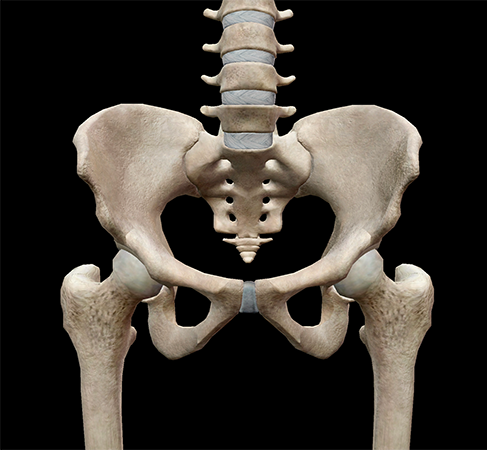
Pelvic cavity (front to back) + pelvic girdle
• Front → back: pubic symphysis → bladder/urethra → uterus/vagina → rectum → sacrum
• Girdle: ilium, ischium, pubis, sacrum, coccyx
• Pubic symphysis anterior; SI joints posterior

Pelvic joints in pregnancy
• Pubic symphysis = cartilaginous + fibrocartilage disc
• SI joint = modified synovial plane
• Normally little movement
• Both become more mobile during pregnancy
Pelvic floor function + perineum parts
• Pelvic floor supports organs + continence
• Levator ani = pubococcygeus + puborectalis (maintains anorectal angle) + iliococcygeus
• Perineal membrane separates superficial/deep compartments
Bladder parts + urethra support
• Bladder: apex, superior surface, base, inferolateral surfaces, neck
• Urethral support comes from pelvic-floor fascia
• Reduced support → stress urinary incontinence
Uterus anatomy + wall layers
• Fundus = top
• Body/corpus = main portion
• Cervix = lower portion
• Cavity inside; tubes lateral
• Wall: endometrium → myometrium → perimetrium

Endometrium: basalis vs functionalis
• Basalis = remains + regenerates
• Functionalis = hormone-responsive; proliferates → differentiates/secretory → sheds if no pregnancy
Uterine orientation: Version vs flexion
• Version = cervix relative to vagina: anteverted forward, retroverted backward
• Flexion = body relative to cervix: anteflexed forward, retroflexed backward
• Most common = anteverted + anteflexed
Uterine supports upper vs lower
• Upper: round, broad, cardinal/transverse (lateral support + uterine artery), pubocervical, uterosacral ligaments
• Lower: levator ani, coccygeus, perineal body
Broad vs ovarian vs suspensory ligaments
• Broad ligament = a broad peritoneal fold with:
Part | Associated with |
|---|---|
Mesometrium | uterus |
Mesosalpinx | uterine/fallopian tube |
Mesovarium | ovary |
• Ovarian ligament connects the ovary to the uterus
• Suspensory ligament: connects the ovary toward the lateral wall
Carries the ovarian blood vessels.

Ovary anatomy (three)
• Surface = simple cuboidal epithelium
• Cortex = follicles/oocytes + stroma
• Medulla = vessels, nerves + loose connective tissue

Cervix + Vagina layers + vulvar appearance
• Cervix: internal os → endocervical canal → external os
Internal os = opening between the uterine cavity and cervical canal
External os = opening between the canal and vagina
Endocervix = inside canal
Ectocervix = outside toward vagina
• Vagina: epithelium (protection) → lamina propria (connective tissue) → fibromuscular (smooth muscle)→ adventitia (outer support)
No glands
• There is not one single normal vulvar or labial appearance
Where uterus and ovaries get their arterial blood?
Sequence of blood through the uterine wall
Uterine artery ← internal iliac
Ovarian artery ← abdominal aorta
Arteries: Uterine → arcuate (thru myometrium) → radial → straight (supply basalis) + spiral (extend to functionalis)
Venous/vein drainage (ovaries/uterus) + "water under bridge"
• Right ovarian vein → inferior vena cava (IVC)
Right goes RIGHT to the IVC.
• Left ovarian vein → left renal vein → IVC
Left goes to the LEFT renal vein.
• Uterine veins → internal iliac veins
• "water under bridge" = Ureter UNDER uterine artery
Lower vagina/Sympathetic/Para Nerves
Lymphatic drainage
Posterior cul-de-sac
• Sympathetic T10–L2; parasympathetic S2–S4
• Lower vagina receives somatic sensory innervation through the: pudendal nerve
Lymphatic drainage: Most pelvic reproductive structures → iliac lymph nodes BUT ovaries → para-aortic
Posterior cul-de-sac = between uterus and rectum; potential space where fluid may collect
Ovarian vs uterine cycle
• Ovarian: follicular → ovulation → luteal
Ovarian hormones drive endometrial changes
• Uterine: menstrual → proliferative → secretory
Follicular + proliferative phases hormones
• FSH → follicle development
• Follicle → increased estradiol (which rebuilds functionalis)
• ESTROGEN BUILDS
Ovulation + cycle days
• Ovulation: LH surge → mature follicle ruptures → oocyte released
NOT always day 14
• Cycle ≈23–35 days; bleeding ≈2–7 days
• Follicular phase varies most; luteal ≈14 days
Decidualization
• Stromal fibroblasts → specialized decidual stromal cells
• Terminal differentiation
• Creates implantation tissue
• Endocrine + immune functions
Decidualization
• Stromal fibroblasts → specialized decidual stromal cells
• Terminal differentiation
• Creates implantation tissue
• Endocrine + immune functions
No pregnancy vs pregnancy
• NO pregnancy: no hCG → corpus luteum regresses → estrogen/progesterone ↓ → prostaglandins/remodeling → functionalis sheds
• PREGNANCY: hCG rescues corpus luteum → progesterone stays ↑ → lining maintained
Basal body temperature
• Lower follicular
• Rises after ovulation in progesterone-dominant luteal phase
• Falls before next menses if no pregnancy
Menstrual vs estrous cycle endometrium fate
• Menstrual = endometrium shed
• Estrous = generally reabsorbed
• Detectable menstruation uncommon among mammals
Evolution of menstruation
• Pathogen defense = remove sperm-borne pathogens
• Energy economy = rebuilding may cost less than continuous maintenance
• Terminal-differentiation/byproduct = decidualized tissue cannot reverse, so must be shed/rebuilt
Concealed ovulation
• Humans have relatively weak external ovulation signals
• Hypotheses: paternity confusion, continuous receptivity, male investment, etc.
Clancy: why the endometrium matters
• Fertility ≠ ovulation alone
• Thickness, differentiation, receptivity, inflammation, energetics + ecology matter
• Ecology may affect endometrium through ovarian hormones AND directly
Sperm vs oocyte production
• Sperm = continuously produced after puberty, many small gametes
• Oocytes = finite developmental pool, mature cyclically, usually one ovulated/cycle
Fertilization
• Usually occurs in uterine tube
• Sperm can survive ~5 days
• Acrosome enzymes help penetrate oocyte barriers
• Membranes fuse → sperm nucleus enters → zygote forms
Preventing polyspermy
• After fertilization, zona pellucida becomes impermeable to additional sperm
• Prevents multiple sperm entering same oocyte
Cleavage timeline
• Day 0 zygote → ~30 hr 2-cell → Days 2–3 4/8-cell → ~Day 4 morula → Days 5–7 blastocyst
• Cleavage ↑ cell number without major overall size increase
Morula vs blastocyst vs hatching
• Morula = ~16-cell solid stage inside zona
• Blastocyst = inner cell mass (embryo) + trophoblast (placental interface)
• Hatching = blastocyst escapes zona
Successful implantation
• Requires competent blastocyst + receptive progesterone-supported endometrium + correct timing
• Implantation: apposition → adhesion → invasion
Apposition = initial contact/positioning
Adhesion = stronger molecular attachment
Invasion = trophoblast penetrates epithelium/basement membrane into stroma
Implantation: immune response + arteries
• Implantation is controlled invasion
• Maternal immune responsse regulate the invading trophoblast
• Trophoblast remodels spiral arteries into low-resistance vessels to increase maternal-fetal blood flow
Why implantation fails
• Chromosomal/embryonic abnormalities
• Poor receptivity/timing
• Hormonal/signaling problems
• Immune regulation
• Abnormal adhesion, invasion, or vascular remodeling
hCG
• Human chorionic gonadotropin
• Produced by trophoblastic/placental tissue
• Maintains corpus luteum → progesterone
• hCG blood test detects/monitors pregnancy around 11 days after conception
• Home urine test becomes reliable around 13 to 14 days after conception
Anembryonic vs ectopic vs molar pregnancy
Nonviable conceptions
• Anembryonic/blighted ovum = sac develops, embryo does not
• Ectopic = implantation outside uterus, usually tubal/ampulla
May cause pain/bleeding OR be asymptomatic
Medically treated with methotrexate
Surgically treated via salpingostomy (opening the tube to remove the pregnancy) or salpingectomy (removing part or all of the tube)
• Molar = abnormal trophoblastic/placental proliferation; nonviable
Early pregnancy loss stats + chromosomes
• ~50% fertilized eggs fail to implant; ~25% pregnancies miscarry; ~80% miscarriages in first 12 wk
• Chromosomal abnormalities are major contributor, not only cause; increase with maternal age
Miscarriage management
• Expectant = wait/monitor
• Medication = misoprostol (progesterone antagonist → removes hormonal support) ± mifepristone (prostaglandin E1 analogue → uterine activity)
• Surgical = uterine aspiration/removal
• Spontaneous abortion = miscarriage
Induced abortion: methods + access
• Intentional termination
• Methods: medication or procedural
• Global safety depends on access to medical care
• U.S. access shaped by laws, facilities, travel, telehealth + information
• Availability ≠ accessibility
Medical viability
• Biological development, medical viability + legal definitions are different
• Threshold varies with gestational age, medical resources + context
Early pregnancy hormones - hCG Progesterone Estrogen Prolactin Relaxin Placental lactogen
• hCG maintains corpus luteum
• Progesterone maintains pregnancy/endometrium
• Estrogen supports growth
• Prolactin prepares lactation
• Relaxin = tissue remodeling/vasodilation
• Placental lactogen = maternal metabolic + mammary adaptations
• Placenta takes over estrogen/progesterone ~10–12 wk
Months 1–3 fetal development + Why first trimester is vulnerable
• M1 = organogenesis; placenta/skeleton forming; week 4 heart + neural tube + limb buds
• M2 = limbs/digits, teeth/nails, genital, kidney/circulatory development
• M3 = rapid growth, organ positioning, nervous function + movement
• Vulnerable due to rapid organogenesis + differentiation where toxins/disruption can affect developing structures
Maternal cardiovascular + respiratory changes
Cardiovascular:
• Heart: pump MORE through WIDER pipes. (~40% increase)
• Vessels dilate → resistance decreases → blood pressure can fall
Respiratory:
• Progesterone increases ventilation/tidal volume → CO₂ decreases in blood → blood becomes more alkaline → kidneys excrete bicarbonate to compensate
Maternal blood + renal + GI changes
• Blood volume ↑ ~1.5 L
• Plasma ↑↑↑ more than RBCs ↑↑ → RBC concentration falls → physiologic anemia
• Iron need ↑ + hypercoagulability (blood is more prone to clotting)
• GFR ↑ by 50% = kidneys filter more → urinary stasis → UTI risk
• Progesterone slows GI smooth muscle → reflux/delayed transit
How Fetal growth measured + nutrition
• CRL (crown-rump length), fetal weight, head circumference, ultrasound
• Does not grow the same amount every week.
• First-trimester nutrition acts partly through placenta; iron, amino acids, glucose, protein, vitamins + fat stores matter
NVP + hyperemesis
• NVP = nausea/vomiting of pregnancy; ~50–80%
• Costs: anxiety, work/family effects
• Hyperemesis = severe N/V + significant weight loss/metabolic imbalance; can be dangerous
Three evolutionary NVP hypotheses and Evidence
PROTECTION = avoid/expel toxins/pathogens
high-risk food aversion; meat high in lecture; more NVP associated with lower loss
EMBRYO QUALITY = maternal response to embryo/hCG may screen pregnancy quality
hCG timing parallels NVP; low hCG ↔ loss; high hCG ↔ hyperemesis; twins/female fetuses show higher hCG/NVP
PLACENTAL GROWTH = altered intake/nutrient partitioning may favor placenta
• Association ≠ causation
• NVP varies cross-culturally with diet/ecology
Weight-gain recommendations
• Maternal weight gain is biomedical growth/health measure
• Too little/too much can matter
• Recommended ranges vary by prepregnancy BMI, history + country/culture:
Guideline | Recommended pregnancy weight gain |
|---|---|
U.S./IOM | 12.7–18.1 kg |
Japan | 9–12 kg |
Second vs third trimester + quickening
• Second = ~15–28 wk; movement + hearing
• third = ~29 wk→ maturation, brain/lungs + fat/weight → birth
• Quickening = maternal perception of fetal movement
Months 4–6 development
• M4: fat begins, weight ↑, length slows, skeleton ossifies
• M5: organ maturity, WBC production, skin thickens
• M6: muscles/motor control + lung air sacs
Months 7–9 development
• M7: rapid brain/nervous growth, gas exchange, sleep cycles
• M8: brain/weight + mineral storage; lungs still mature
• M9: fat + brain/lung maturation + maternal antibody transfer
"Ordinary pregnancy": ideal vs reality
• U.S. cultural ideal often = white, married, heterosexual, cisgender, early 30s, intentional pregnancy, insured, educated, middle-class
• Expected to be happy, right age, control cravings/weight, avoid "bad" foods + afford pregnancy extras
• Actual pregnancies vary greatly by age, race/ethnicity, income, relationship + intention
• Cultural ordinary ≠ statistical reality
Han: embodiment + ordinary vs literate body
• Embodiment = pregnancy experienced through lived body; symptoms change sense of self
• Ordinary body = mundane experiences matter
• Literate body = sensations interpreted through medicine, books, media + culture
Han: control + productive symptoms
• Middle-class ideals emphasize planning/choice/self-control; pregnancy disrupts control
• Control is class/socially situated
• Productive symptom = discomfort interpreted as fetal well-being
• Links to maternal-sacrifice/"good mother" ideals
Han: fetus, belly + public body
• Fetal movement makes fetus perceptible/relational → "one body becomes two"
• Growing belly becomes sign of pregnancy/health
• Visible pregnancy invites comments, advice + touching; body may feel like "public property"
Weight, food + maternal responsibility
• Weight = biomedical AND aesthetic/moral/social measure
• Guidelines vary historically/BMI/country
• Pregnant people expected to eat "correctly"
• Healthy-food ideals require money, time + access → responsibility shaped by structural resources
Pregnancy technology + commodification
• Technology measures/diagnoses but also affects attachment, anxiety + fetal visibility
• Ultrasound can become bonding/consumer product
• Pregnancy marketed through maternity goods, fetal images + keepsake imaging
Screening (NPT, NT, Serum, Anatomy) vs Diagnostic (CVS, Amniocentesis) prenatal testing
• Screening = estimates probability/risk = "Should we look more closely?"
Non-invasive prenatal testing (NIPT): DNA blood SCREEN, ~9–10 wk
A "high-risk" NIPT: "pregnancy has an elevated probability of this condition."
Nuchal translucency (NT): neck ultrasound SCREEN ~11–14 wk
Serum screening: maternal blood-marker SCREEN ~15–20 wk
Anatomy ultrasound: ~18–20 wk
• Diagnostic = more definitively confirms/rules out = "Is the condition actually present?"
CVS → placental tissue DIAGNOSTIC → ~10 weeks
Amniocentesis → amniotic fluid DIAGNOSTIC → ~16 weeks
• Screening is generally less invasive and can identify pregnancies at increased risk, while invasive diagnostic testing can then be used when more definitive information is warranted.
Prenatal depression: risks + treatment
~10–20%
• Symptoms: sadness/crying, fatigue, appetite change, anhedonia, guilt, anxiety/hopelessness, irritability, poor attachment
• Pregnancy symptoms can overlap and complicate recognition
• Untreated: associated with low birth weight/SGA, miscarriage, preterm labor, preeclampsia, inadequate care, substance use, postpartum depression + suicide
• Pregnancy does NOT prevent relapse
• SSRIs common
Social determinants of pregnancy health
• Education, employment, income, housing, environment, violence, healthcare access + discrimination shape outcomes
• Health disparities cannot be reduced to individual behavior
Four levels of racism + mechanisms
• Micro = internalized + interpersonal
• Macro = institutional + structural
• Chronic discrimination → stress/physiologic effects
• Implicit bias = unconscious stereotypes altering provider judgment/treatment
Racialized pregnancy stigma + healthcare bias
• Stereotypes → Black pregnant women as poor, single, welfare-dependent, many children regardless of actual SES
• Bias can cause pain dismissal, stereotyping, cultural disrespect + unequal recommendations
• Higher SES does not eliminate racism
Bias in medical education + provider trust
• Overgeneralizing one culture to an entire race/continent creates harmful stereotypes
• Bias learned in training can affect care
• Nonjudgmental provider relationships → trust + disclosure → better prevention/detection/management
Core biocultural framework
• Human reproduction = biological + social
• Anatomy, hormones, implantation + fetal development interact with evolution, ecology, technology, culture, inequality, access, identity + healthcare systems