art history
 Call Kai
 Learn
 Practice Test
 Spaced Repetition
 Match
 Flashcards
 Knowt Play
1/42

There's no tags or description
Looks like no tags are added yet.
Name | Mastery | Learn | Test | Matching | Spaced | Call with Kai | Chat |
|---|
No analytics yet
Send a link to your students to track their progress
43 Terms
Dome of the Rock
690, Jerusalem, Umayyad
Great Mosque of Damascus
706, Damascus, Umayyad
Qusayr Amra
first half 700s, Jordan, Umayyad
Great Mosque of Cordoba
780s-980s, Cordoba, Umayyad Emirate
Palace City of Madinat al Zahr
930s, Cordoba outskirts, Umayyad emirate
Baghdad
760s, Baghdad, Abbasids
Ukhaidir
770s, near Kufa, Abbasids
Jaswaq al-Khaqani
830s, Samarra, Abbasids
Great Mosque of Samarra
850s, Samarra, Abbasids
Mosque of Ibn Tulin
870s, Cairo, Tulunids
Al Azhar Mosque and Madrasa
990s, Cairo, Fatimids
Al Aqmar Mosque
1120s, Cairo, Fatimids

Dome of the rock

great mosque of damascus

great mosque of cordoba
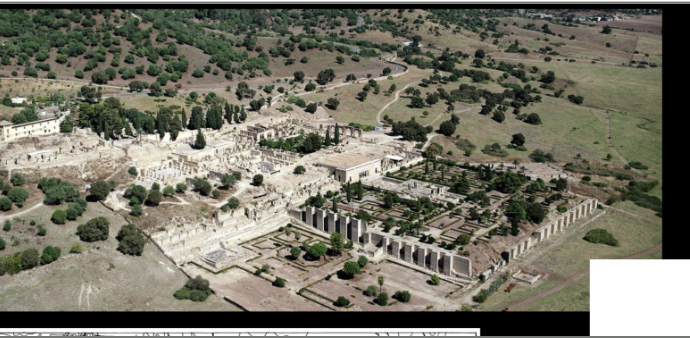
palace city of madinat al zahr
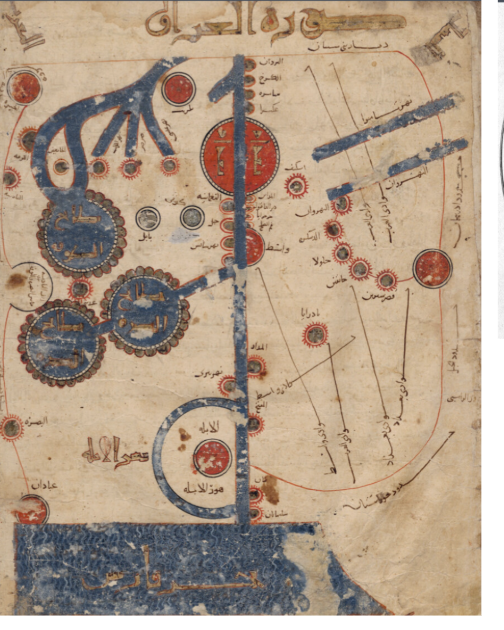
baghdad
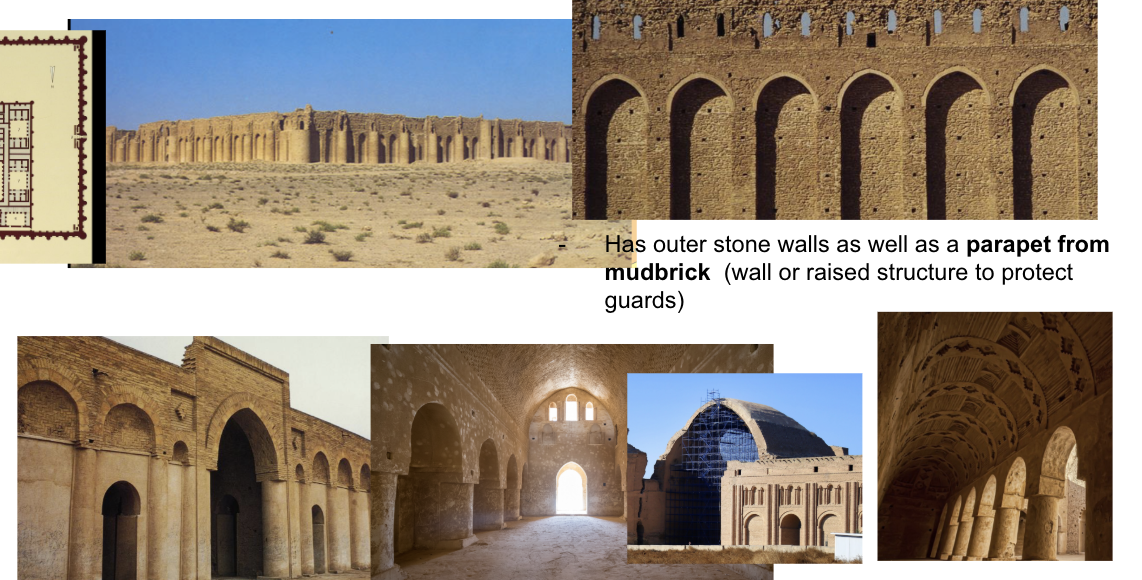
ukhaidir

jaswaq al khawani

great mosque of samarra

mosque of ibn tulin

al azhar mosaque and madrasa

al aqmar mosque

9th century, china, tang dynasty, porcelain

imitation green splashed samarra bowl, 9th century, abbasid, ceramics
who were tulunids
Ahmad ibn Tulun was sent by Abbasid to Cairo but he built his own dynasty 868/70. refused to pay tribute and declared himself independent
What did abbasid art do/change?
more mesapotamian materials and forms, persian inspired brickwork throne room & valuted chambers, trade over indian ocean like with tang dynasty, new round city,
fatimids
Shi’i Isma‘ili political system - believe in hereditary caliphate and caliph is Imam, 900s arise and become a threat, mid 969 declare cairo as capital, overthrown by ayyubids in 1171
Who are the ayyubids?
Salah al-Din defeats the Fatimids and establishes the
Ayyubid dynasty (1171–1250)
1187: Salah al-Din (Saladin) recaptures Jerusalem.
1189–92: Third Crusade and the Sieges of Acre and
Jaffa with Richard the Lionheart.
1250: Mamluks overthrew the Ayyubids
1291: Fall of Acre to the Mamluks, end of the Crusades
Abolishment of Shi‘i doctrine and reinstatement
of Sunni Islam
About the crusades
1067: Sack and dispersal of the royal Fatimid
treasury in Cairo
1095: Pope Urban II launched the First
Crusade. Jerusalem was under the Fatimid
Caliphate (909–1171).
1171: The Ayyubids overthrew the Fatimids
1187: The Ayyubid dynasty (1171–1250) ruler
Salah al-Din (Saladin) recaptures Jerusalem
1291: Fall of Acre to the Mamluks, end of the
Crusades
This period leads to more christian-muslim interactions influencing art

fatimid ewer for sultan al aziz, rock crystal, 970s-990s, cairo

1260s, Two beakers, Syria, Glass & enamel, Ayyubids

Blown glass, Syria, 1250, Ayyubids

Freer Canteen, Syria or Northern Iraq,
mid-13th century, Brass and silvery Inlay, Ayyubids

porcelain canteen, ming dynasty, 1400s, China
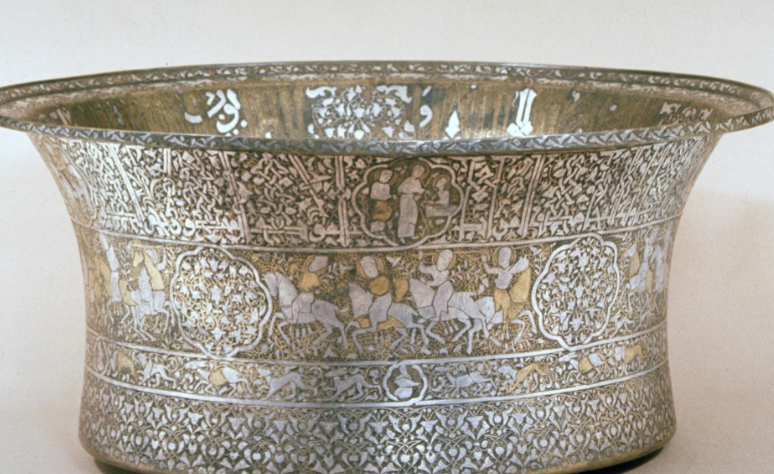
Ayyubid metalware, 1169–1260, Egypt and Levant, brass
Samanids and seljuks
Turkish and Persian Muslims establish autonomous kingdoms
Native languages like Turkish and Persian are used
Clash between Sunni and Shi‘i dynasties emerges
Select Dynasties:
The Samanids, 819–1005, Transoxiana (lower Central Asia) and Khurasan
The Seljuks of Persia, (1037–1194) capital was isfahan

The Mausoleum of Isma‘il b. Ahmad, Bukhara, early 900s century, Samanids

Samanid pottery, Nishapur, 900s to 1000s, fritware

figure with jeweled headdress, iran, 12th-13th century, seljuk, stucco

Mina’i ceramics, iran, 12th century, seljuks

The congregational mosque of isfahan, seljuks, iran, first built late 700s
What is islamic art
Islamic art describes not only art created for
the Muslim faith but also art and architecture produced in
lands ruled by Muslims, for Muslim patrons, or by
Muslim artists