chapter 16 magnetism and electromagnetism
 Call Kai
 Learn
 Practice Test
 Spaced Repetition
 Match
 Flashcards
 Knowt Play
1/16

There's no tags or description
Looks like no tags are added yet.
17 Terms
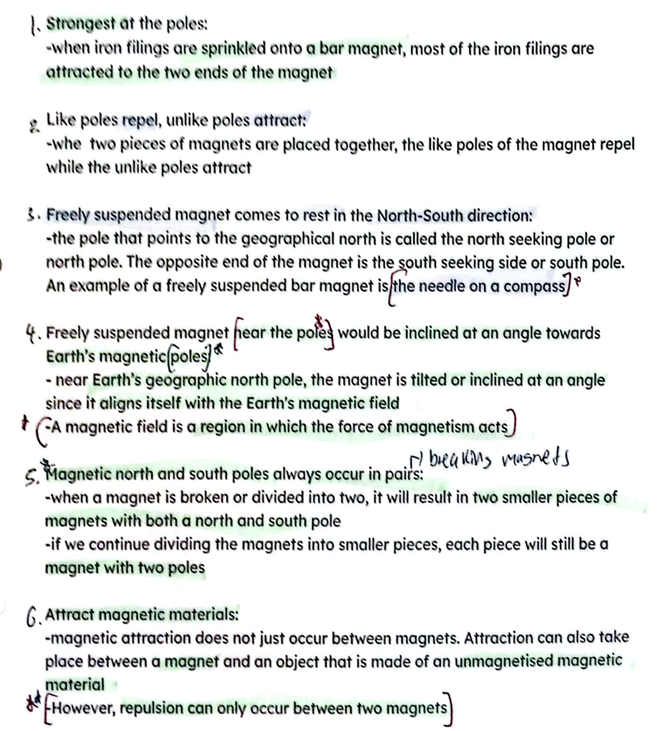
properties of magnets (6)
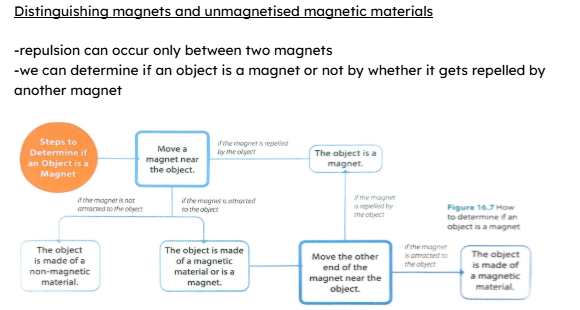
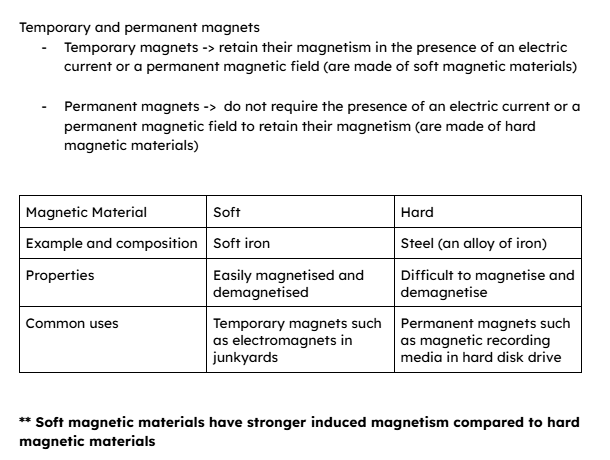
Distinguishing magnets and unmagnetised magnetic materials
Induced Magnetism/ induced magnet
** opposite pole will be induced

Ways to magnetised
by stroking with a strong magnet
place in a current-carrying solenoid

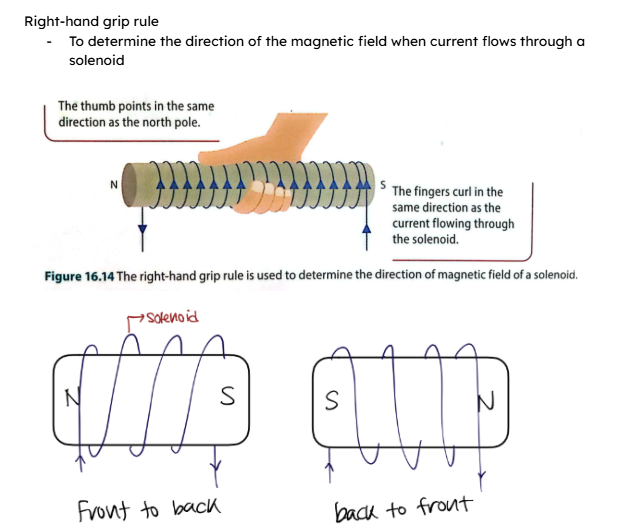
right-hand grip rule
** must be convectional current
explaining induced magnetism
the (material) becomes a induced magnet due to the magnet.
The side nearer to the magnet will become north/south pole as it is the opposite pole from the magnet pole will be induced.
since unlike poles attract, the (material) is attracted to the magnet
explaining electromagnetism
when the current is switched on, the (material) is magnetized.
using right hand grip rule, the right/left side of the (material) becomes a north/south pole.
Since like/unlike poles repel/attract , (the description from the qn)
Demagnetisation

temporary and permanent magnets
magnetic field lines
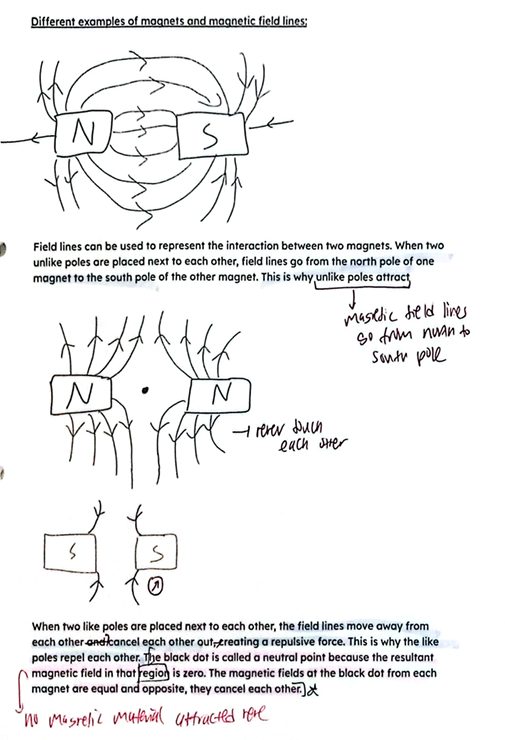
Characteristics of magnetic field lines:
-the magnetic field lines never cross each other
-the magnetic field lines are continuous and they form closed loops
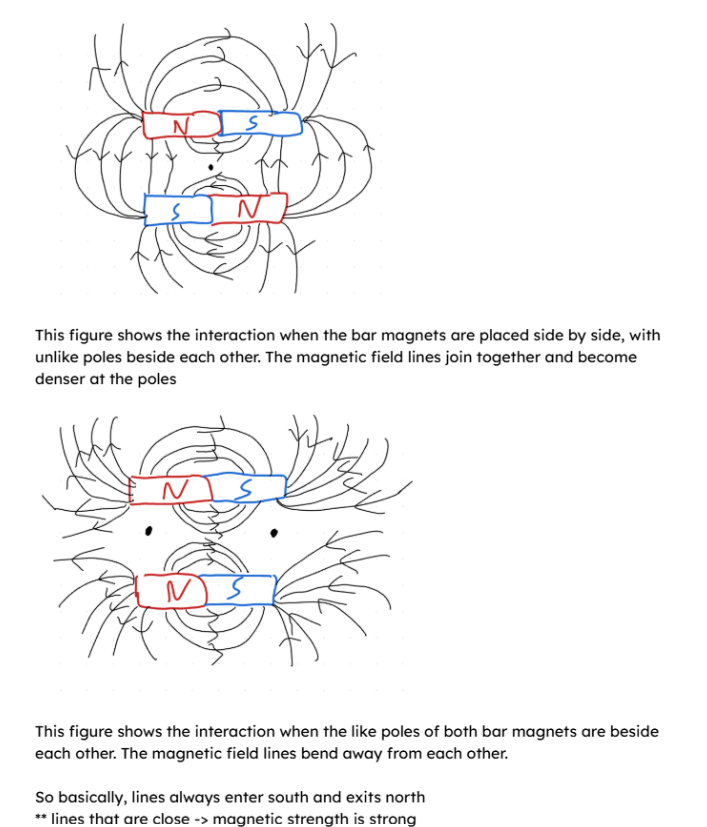
-the distance between the magnetic field lines represents the strength of magnetic field. The closer the lines, the stronger the magnetic field
** the needles of the plotting compasses will point in the direction tangential (touches curve at single pt)l to the magnetic field line
** always enter south and exits north
**always from north to south

Example of magnetic field lines
** no magnetic material attracted
Example of magnetic field lines
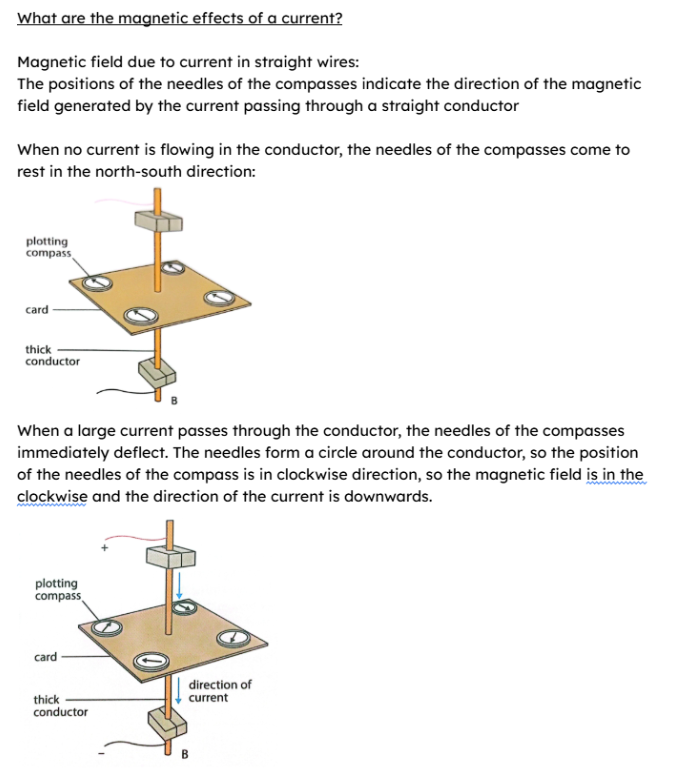
Magnetic field due to current in straight wires:
** neddles of compass follow direction of magnetic field
right-hand grip rule
The directions of the needles on the compasses follow the right-hand grip rule. If we grip the conductor with our thumb pointing in the direction of the conventional current (not electron flow), the curl of the fingers shows the direction of the magnetic field
The field produced by the current is temporary. As soon as the current is switched off, the magnetic field disappears. It is possible to use this to make temporary magnets such as in a solenoid

Magnetic field due to current in solenoid

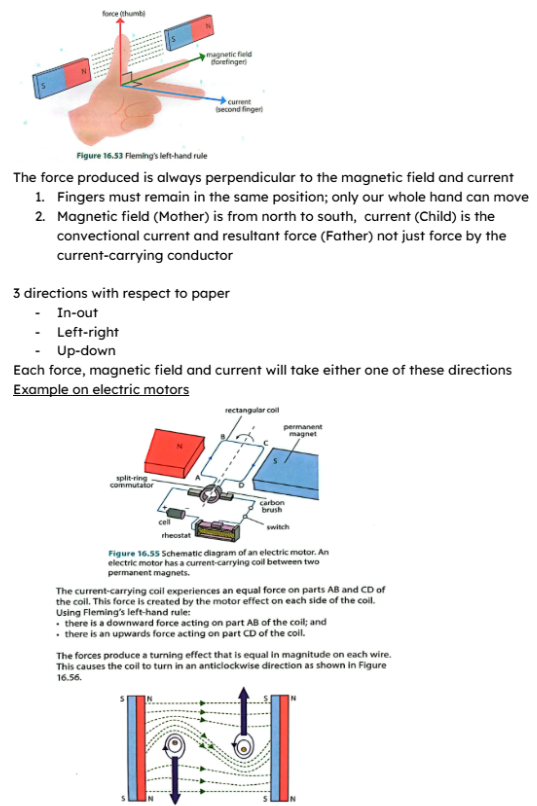
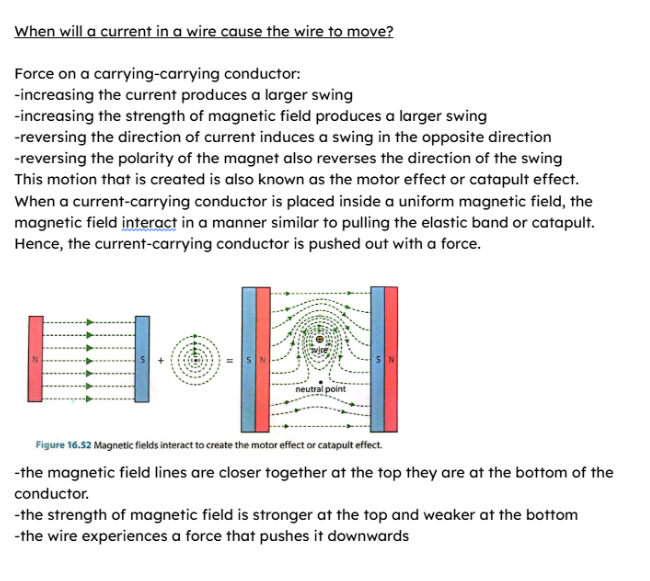
When will a current in a wire cause the wire to move?
Fleming’s left-hand rule
** convectional current not electron flow
** direction must state with respect to the paper
** can be clockwise/anticlockwise