Algebra II - Parent Functions
 Call Kai
 Learn
 Practice Test
 Spaced Repetition
 Match
 Flashcards
 Knowt Play
1/36

There's no tags or description
Looks like no tags are added yet.
37 Terms
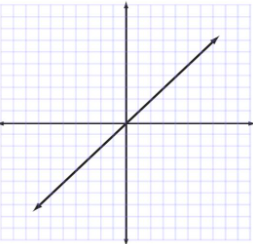
linear parent function
y = x
absolute value parent function
y = |x|
quadratic parent function
y = x2
cubic parent function
y = x3
square root parent function
y = squarerootof x
cube root parent function
y = cuberootof x
reciprocal parent function
y = 1/x
exponential parent function
y = 2x
linear graph
absolute value graph

quadratic graph

cubic graph

square root graph

cube root graph

reciprocal graph

exponential graph

intercept form equation for quadratic function
f(x) = a (x - h)2 + k
vertex is at . . .
( h, k )
axis of symmetry
x = h
a is the . . .
stretch factor
y = -squarerootof x
reflected over x - axis
y = squarerootof -x
relfects over y-axis
y = -squarerootof -x
reflects over both, 180 degree rotation
y = [squarerootof x +1]
vertex shifted left 1 unit
y = [squarerootof x] + 1
shifted up 1 unit
y = a|x|
vertical stretch/shrink
y = |x + 1|
shifted left 1 unit
y = |x| + 1
shifted up 1 unit
quadratics: vertex form
y = a ( x - h )2 + k
quadratics: intercept form
y = (x - p)(x - q)
quadratics: standard form
y = ax2 + bx + c
p and q
the x-intercepts
formula for finding the vertex with standard form
-b / 2a, then sub that answer in for x to find y
c
y-intercept
how to evaluate y in piecewise functions
find the equation in which the selected value of x would make the inequality true
sub it in to find y
how to write rules for piecewise functions
write the equation of the section of the function in slope-intercept form
determine when your equation is true and write it as an inequality that starts with x
graphing quadratic inequalities
find the vertex and make a table of values based on it (should by symmetrical!)
graph (used dashed/solid line depending on inequality symbol)
shade either inside or outside the parabola depending on whether y is greater than or less than the function