chem - hypoglycemia
 Call Kai
 Learn
 Practice Test
 Spaced Repetition
 Match
 Flashcards
 Knowt Play
1/23

There's no tags or description
Looks like no tags are added yet.
24 Terms
hypoglycemia
low plasma glucose levels below normal reference level: < 70 mg/dL
glucagon and other glycemic factors are released: 60-70 mg/dL
observable symptoms of hypoglycemia appear at: < 50 mg/dL
following an overnight fast, hypoglycemia in non-diabetic adult, defined as:
glucose ≤ 55 mg/dL
hormones released to maintain levels
epinephrine and glucagon - INCREASE glucose level
cortisol and growth hormone - increase glucose METABOLISM
hypoglycemia primary concern is:
brain fuel deprivation
impaired judgement and behavior, seizures, coma, and death
hypoglycemia definition
imbalance in rate of glucose appearance and disappearance from circulation
caused by treatment or other biological factors
more severe symptoms:
impaired CNS
confusion
seizures
coma unconsciousness

classification of hypoglycemia - table
severe hypoglycemia
requires assistance to active administer carbohydrates and glucagon or take other corrective actions
documented symptomatic hypoglycemia
symptoms of hypoglycemia
measured plasma glucose concentration ≤ 70 mg/dL (≤ 3.9 mmol/L)
asymptomatic hypoglycemia
no symptoms of hypoglycemia
measured plasma glucose concentration of ≤ 70 mg/dL (≤ 3.9 mmol/L)
probable symptomatic hypoglycemia
symptoms typical of hypoglycemia
NO plasma glucose determination performed
pseudo hypoglycemia
symptoms of hypoglycemia
measured plasma glucose concentration > 70 mg/dL (> 3.9 mmol/L) but approaching that level
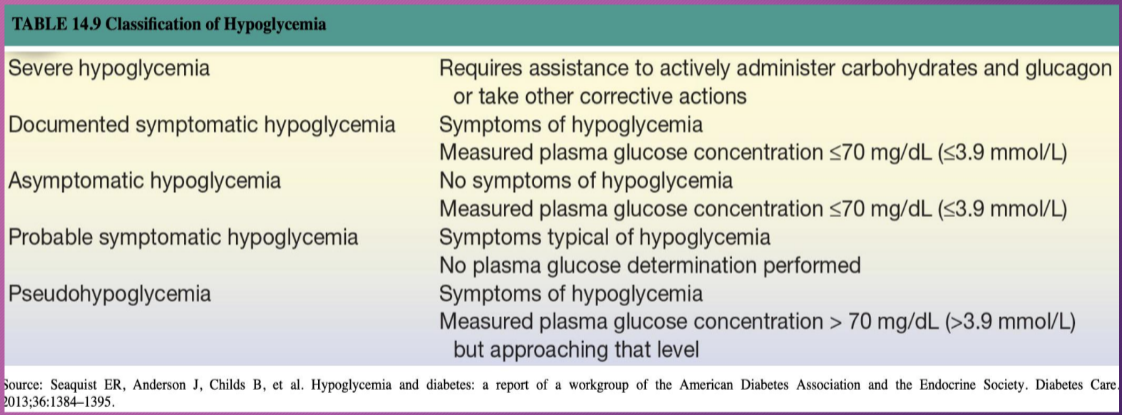
classification of hypoglycemia - important for test
postprandial (reactive)
occurs within 4 hrs after a meal
classified based on severity and glucose level
diabetic patients at risk
non-diabetic pts - WHIPPLE TRIAD
hypoglycemic symptoms
plasma glucose < 50 mg/dL when symptomatic
symptoms relieved by glucose correction
gastric bypass surgery - food exits stomach fast
insulin secretion is exaggerated - severe hypoglycemia
causes of postprandial hypoglycemia
patient appears healthy - NO COEXISTING DISEASE
strong insulin response - more insulin made than what is needed
type of food - high carbohydrate/refined carbohydrates - sharper rise and sharper drop after
drugs
severe exercise
insulinoma
factitial hypoglycemia (self-inflicted)
patient appears ill
drugs
hepatic tumors, endocrine tumors
hospitalized patient
factitious hypoglycemia
self administered insulin
intentional or accidental
to verify:
glucose and c-peptide low during episode
but insulin is elevated (due to exogenous administration)
hypoglycemia in neonates
levels often fluctuate at birth
normal full term: 30-45 mg/dL
neonates can tolerate LOWER LEVELS than adults
hypoglycemia defined levels
<20 in premature infants
<30 in full term infants
why are babies lower?
inadequate glycogen stores and immature regulatory mechanisms
low glucose levels seen in babies born to mothers w/ GDM
baby’s insulin = HIGH at birth
insulinoma
rare, usually benign tumor of beta cells
causes UNSUPRESSED INSULIN SECRETION to bloodstream → hypoglycemia
expected lab results:
glucose: <40 mg/dL (DECREASED)
excess insulin brings down glucose
insulin: ≥ 6 uU/ml (INCREASED)
tumor secretes insulin despite hypoglycemia
proinsulin: ≥ 5 mmol/L (INCREASED)
inactive precursor of insulin
tumor cells release increased amounts of incompletely processed proinsulin
C-peptide: ≥ 0.2 nmol/L (INCREASED)
protein fragment released when beta cells convert proinsulin to insulin
released along w/ insulin from cleavage of proinsulin
insulin to glucose ratio: > 0.3 (INCREASED)
too much insulin for the concentration of glucose

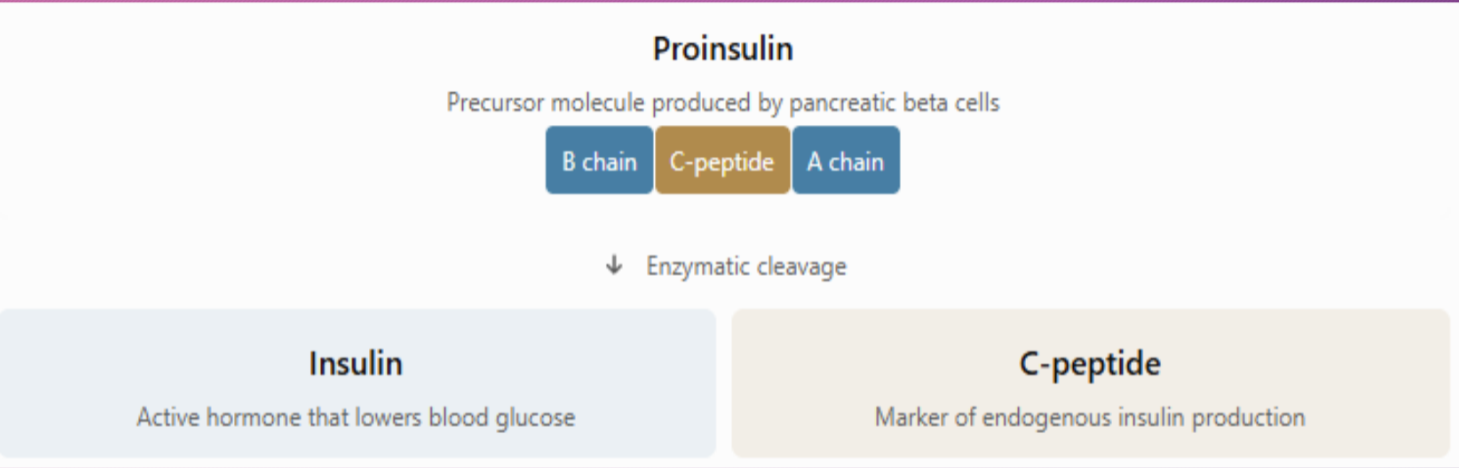
proinsulin
NORMAL PROCESS:
beta cells make proinsulin (inactive precursor) ; only SMALL AMOUNT enters bloodstream
proinsulin breaks down INTO insulin and c-peptide
INSULINOMA
pancreatic tumor cells release MORE PROINSULIN
insulin: active hormone that lowers blood glucose
c-peptide: marker of endogenous insulin production
tolbutamide tolerance test
AKA insulin tolerance test
differentiates insulinomas from other hyperinsulinemia states
TOLBUTAMIDE - drug that stimulates pancreas to produce insulin
procedure
inject tolbutamide IV and collect glucose level at different intervals for 2 hrs
results
NORMAL PATIENT: rapid fall in glucose to 50 % of fasting level, and returns to normal in 2 hrs
INSULINOMA: exaggerated plasma insulin response w persistent hypoglycemia, does NOT return to normal levels
> 150 uIU/mL at 60 mins - consistent w insulinoma
tolbutamide tolerance test - specs
fasting overnight
initial fasting glucose level measured prior to test
if patient is hypoglycemic (< 60 mg/dL) do NOT perform test - blood sugar levels could decrease to a DEADLY range
blood glucose and insulin measured in minute increments
0, 2, 30, 60, 90, 120, 150, and 180 minutes

galactosemia
congenital deficiency of enzymes involved in galactose metabolism
problems w milk (lactose) ingestion
cannot convert galactose to glucose
results in increased galactose levels in blood, urine, and body tissues
LACKING ENZYME: GALACTOSE-1-PHOSPHATE URIDYLTRANSFERASE (GALT)
leads to:
failure to thrive
malnutrition, wasting, diarrhea, vomiting, mental retardation, jaundice, and cataracts
treatable if detected early - avoid galactose and lactose
galactosemia lab findings
Lab findings
hypoglycemia
hyperbilirubinemia
galactose metabolites damage liver
GALACTOSE ACCUMULATION IN BLOOD, TISSUE, AND URINE AFTER MILK INGESTION
urine
NEGATIVE on urine dipstick
only detects glucose
POSITIVE clinitest
picks up any reducing sugar in urine
confirm dx w/ Thin Liquid Chromatography (TLC) or check activity of erythrocyte GALT

fructose intolerance
causes NAUSEA AND HYPOGLYCEMIA AFTER FRUCTOSE INGESTION
fruits, dried fruit, fruit juice, processed drinks, certain vegetables, sweeteners, honey
essential fructosuria (incomplete fructose metabolism)
deficiency of fructokinase
high fructose levels in serum and urine after fruit consumption
no pathological problems, asymptomatic, positive clinitest
hereditary fructose intolerance
begins early
lacks aldolase B enzyme
buildup of fructose-1-phosphate in liver
glycogenolysis and gluconeogenesis become impaired
vomiting, abdominal pain, hepatomegaly, hypoglycemia after fructose

lactose intolerance
intolerance is due to decreased activity of lactase enzyme
lactase breaks down lactose (glucose + galactose)
most common problem of carbohydrate metabolism
congenital intolerance
most severe, most rare
profuse watery diarrhea w milk, gas, bloating, irritable
acquired intolerance
varies in severity
age, ancestry, and genetics play a role
east asians, african americans, native americans, hispanics
symptoms
lactose enters the colon, bacteria ferment it
gas, diarrhea, abdominal discomfort, cramps after ingestion
lactose tolerance test
similar to GTT
give 50g of lactose
if lactase is sufficient, lactose will be converted to glucose and plasma glucose will increases
check blood glucose at intervals
NORMAL: blood glucose increases > 25 mg when compared to fasting level
DEFICIENCY OF LACTASE: no increase in glucose levels
mucopolysaccharide storage disease
mucopolysaccharides (complex carbohydrates)
structural components of cartilage, bone, and connective tissue
normally degraded by lysosomal enzymes
storage diseases - hereditary disease caused by deficiency of one of the lysosomal enzymes
HURLER’S SYNDROME (best known)
build up of glycosaminoglycans in the lysosomes
severe and progressive
corneal clouding, hepatosplenomegaly, skeletal abnormalities, delayed development, lifespan up to 10 yrs old
tests
measure enzymes in leukocytes or cultured skin fibroblasts

glycogen storage diseases
group of disorders: deficiency of one or more enzyme that causes alteration of glycogen metabolism
Type I - von Gierke Disease
McArdle’s Disease
Type I - Von Gierke Disease
most common
lack glucose-6-phosphate
enlarged liver, severe hypoglycemia, increased lipids, uricemia, and growth retardation
no glycogenolysis - glycogen cannot be converted to glucose by liver
glycogen buildup in the liver - hepatomegaly
liver biopsy - positive for glycogen stain
glycogen buildup IRREVERSIBLE but disease controlled by avoiding hypoglycemia

epinephrine tolerance test
used to diagnose Von Gierke’s Glycogen Storage Disease
procedure:
inject epinephrine IM → should INCREASE glucose
measure glucose over 2 hours intervals
interpretation:
NORMAL = increase in glucose
VON GIERKE’S = no increase in blood glucose
rarely used → usually just measure glucose-6-phosphatase levels
McArdle’s Disease
lack muscle phosphorylase within muscle cells
important for breakdown of glycogen in muscle
symptoms:
cramps after exercising
myoglobinuria in some patients
