Reading the Periodic Table
 Call Kai
 Learn
 Practice Test
 Spaced Repetition
 Match
 Flashcards
 Knowt Play
1/15

Earn XP
Description and Tags
Groups and Trends
16 Terms

What order is the periodic table written in?
Increasing atomic number
Period (7 of these in total)
Horizontal row
Group (18 groups in total)
Vertical column

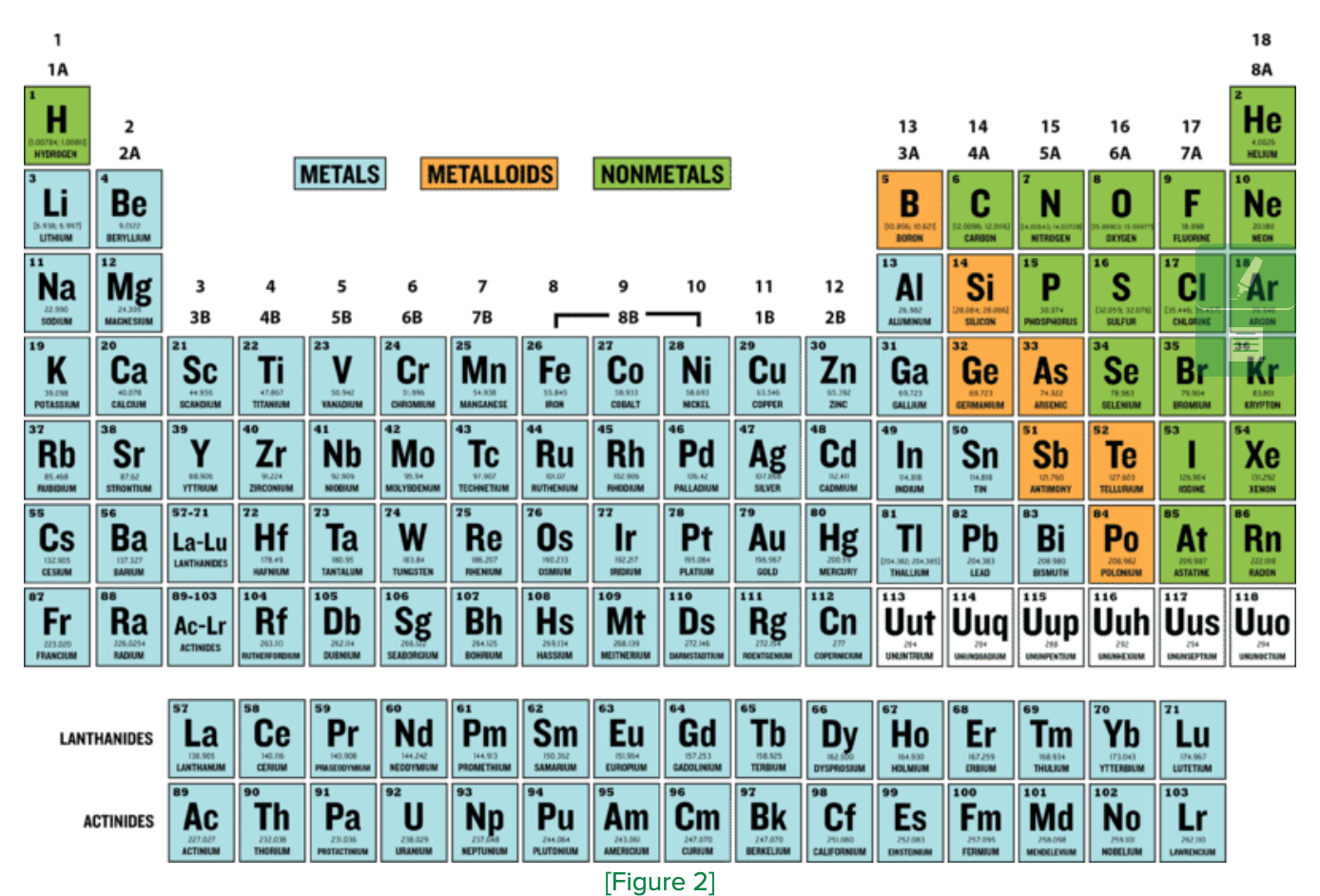
Metals
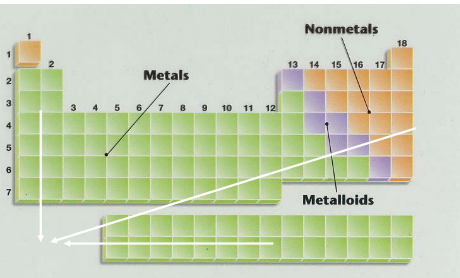
Largest number of elements and found on left side of the table. Lustrous, ductile, malleable, good conductors of heat and electricity, solid state at room temperature (except Hg).
Nonmetals
Right side of periodic table. Small number of elements in gaseous state. No metallic luster, poor conductors of heat and electricity.

Metalloids
Other type of elements on the periodic table, found along the “staircase”. Have characteristics that resemble metals and nonmetals. Elements to the upper right of line display increasing nonmetallic behavior, elements to lower left display increasing metallic behavior

Alkali metals
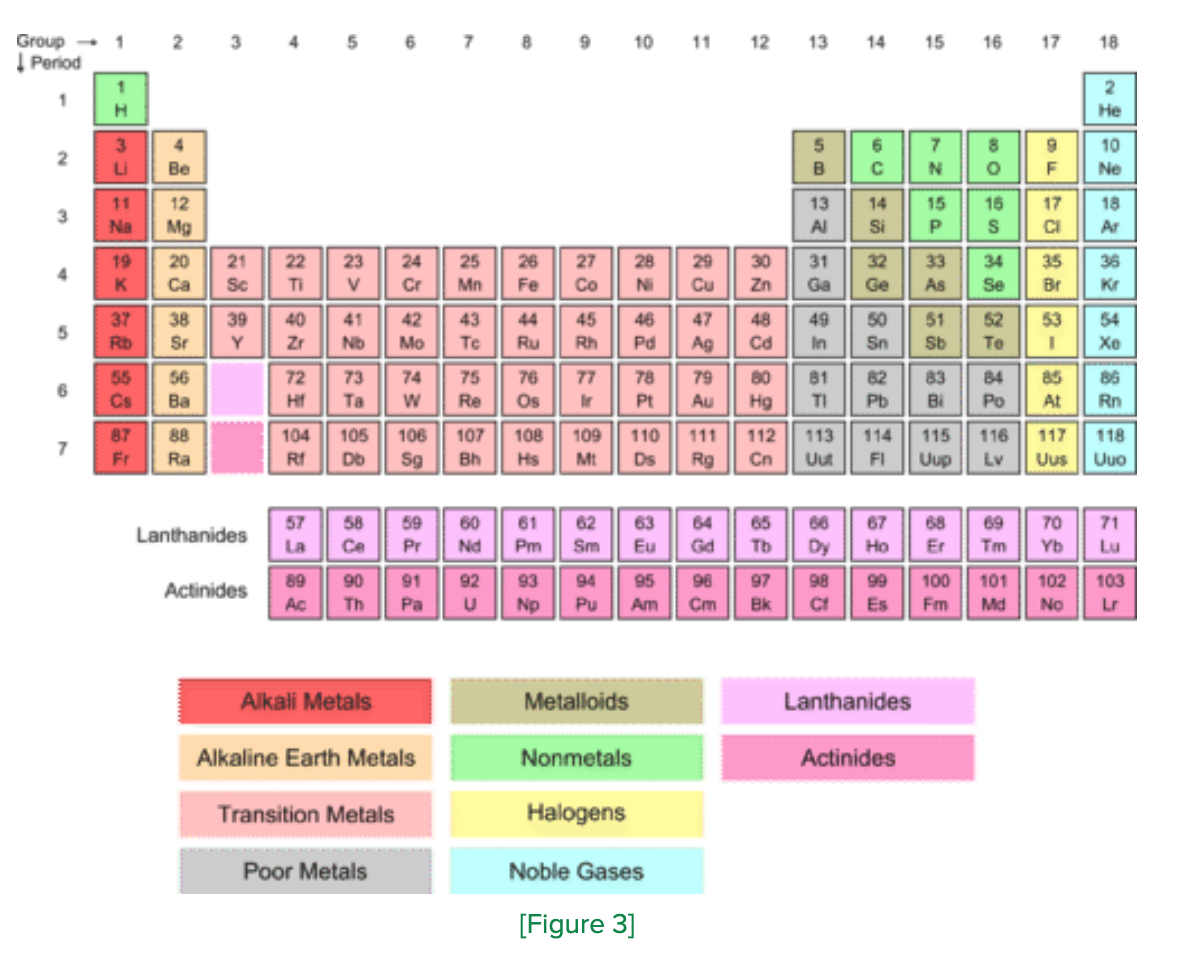
Alkali metals are located in group 1 of the periodic table (leftmost column). All alkali metals have +1 charge because they have exactly one valence electron in their outmost shell. Softness, metallic, lusterous, low density, highly reactive

Alkaline earth metals
Alkaline earth metals are located in group 2, possess a common charge of +2, and are known for being highly reactive, shiny, and soft
Transition metals
Transition metals are located in groups 3-12 and have a variety of charges, but +2 is the most common charge. Known for being hard, dense, high melting/boiling point, good conductors of heat, highly malleable and ductile

Halogens
Halogens are located in group 17 with the common charge of -1. They are highly reactive non-metals with a variety of states of matter at room temperature. As you move down, reactivity decreases, boiling points increase. Poor conductors of electricity and heat.

Noble Gases
Group 18 (along with helium). Common charge of 0 (because outer valence shell is completely filled). Colorless, odorless, tasteless, low reactivity, very low melting and boiling points. Solid, dense, lustrous, high conductivity, malleable and ductile.
Atomic Radius (MAKE ATOM LARGER)
Across a period (decrease), adding protons increases the nuclear charge and pulls electron shells closer. Down a group (increase), new electron energy shells are added and make atom larger.

Ionization Energy (ENERGY REQUIRED TO REMOVE ELECTRON FROM GASEOUS ATOM)
Across a period (increase), electrons are held more tightly by higher nuclear charge. Down a group (decrease), outer electrons are farther from nucleus and shielded by inner shells.

Electronegativity (ATOMS ABILITY TO ATTRACT SHARED ELECTRONS IN A CHEMICAL BOND)
Period (increases). Down a group (decreases), greater dstance and shielding reduce nucleus’s pull on outside electrons.

Valence electrons
Each group has same number of valence electrons.
Octet Rule
Atoms are most stable with eight electrons in valence shell, atoms will try to gain or lose electrons depending on their amount of valence electrons