Design Google Drive/Dropbox
 Call Kai
 Learn
Learn Practice Test
 Spaced Repetition
 Match
Match Flashcards
 Knowt Play
1/10

There's no tags or description
Looks like no tags are added yet.
Name | Mastery | Learn | Test | Matching | Spaced | Call with Kai | Chat |
|---|
No analytics yet
Send a link to your students to track their progress
11 Terms
Functional Requirements
Add Files
Download files
Sync files across multiple devices
See file revisions
Share files with friends and family
Send notification when file is edited, deleted, or shared with you
Non-functional
Available
Scalable
Secure
ACID-ity
Reliable
BOE
50 million signed up, 10 million DAU. Users get 10 GB
Assume users upload 2 files/day, average file size is 500KB
1:1 read write ratio
Total space is 50 million * 10 GB = 500 PB
QPS for upload API: 10 million * 2 / 10^5 is exactly 240 when not rounding secs in day
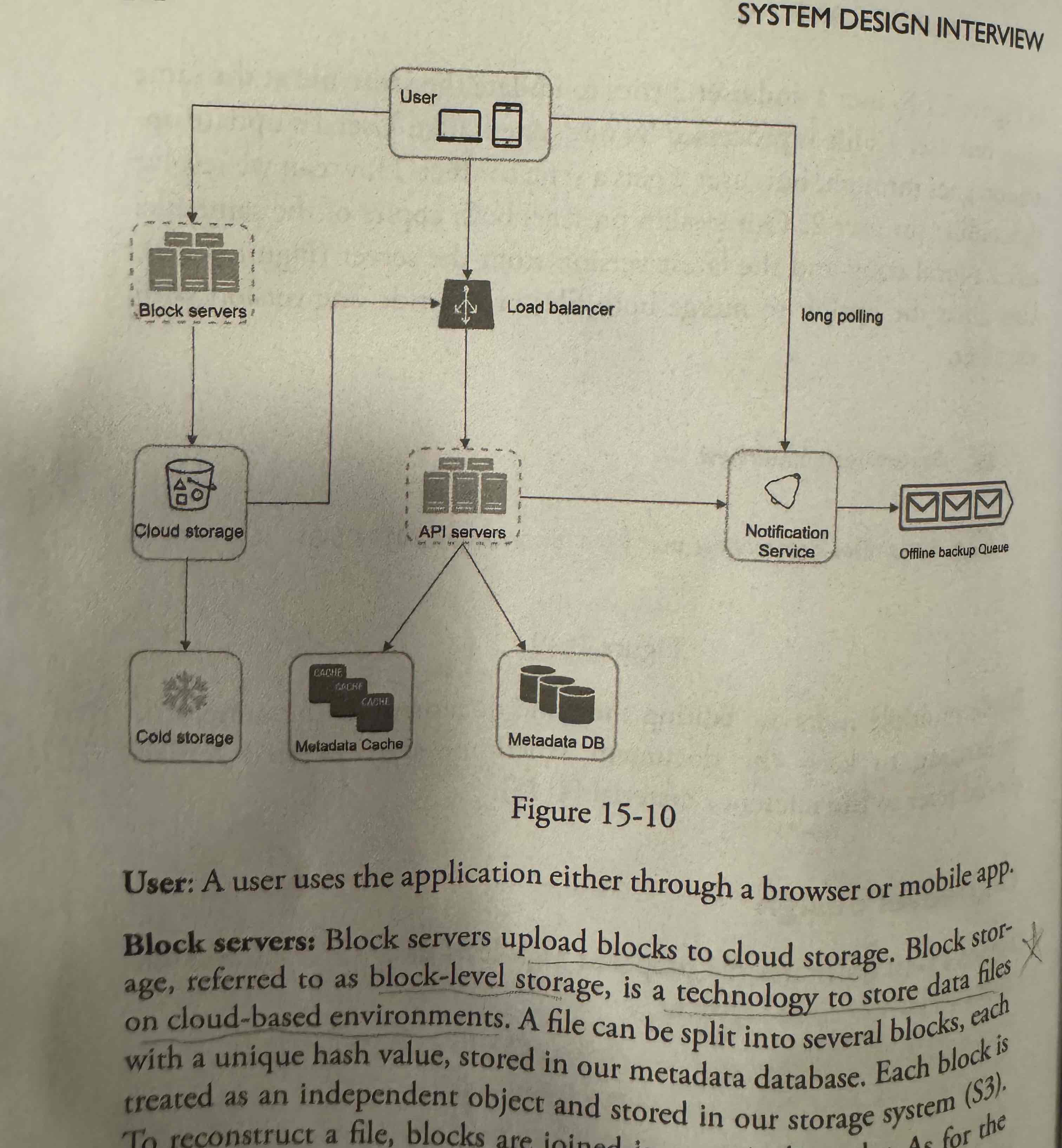
High Level Design
Block servers
Cloud Storage
Cold Storage
Notification Service
MetaData DB
Offline Backup Queue
Block Server
Files split into smaller blocks, each with unique hash value. Store metadata in our metadata db. Blocks stored in S3. Joined to create file. If updated, just do delta of old block. compression for space optimization.
Consistency Requirements
HIGH consistency. Memory cache adopts eventual consistency model. To enforce this strong consistency, INVALIDATE CACHE ON WRITE. Diagram in upload flow
must use relational DB for ACID-ity. Must be ACID for strong consistency.
To prevent sync conflicts, use versioning. Can do timestamp or version number- do version number. Time can be messed up depending on server. Version number uses first to get that version number if conflict occurs.
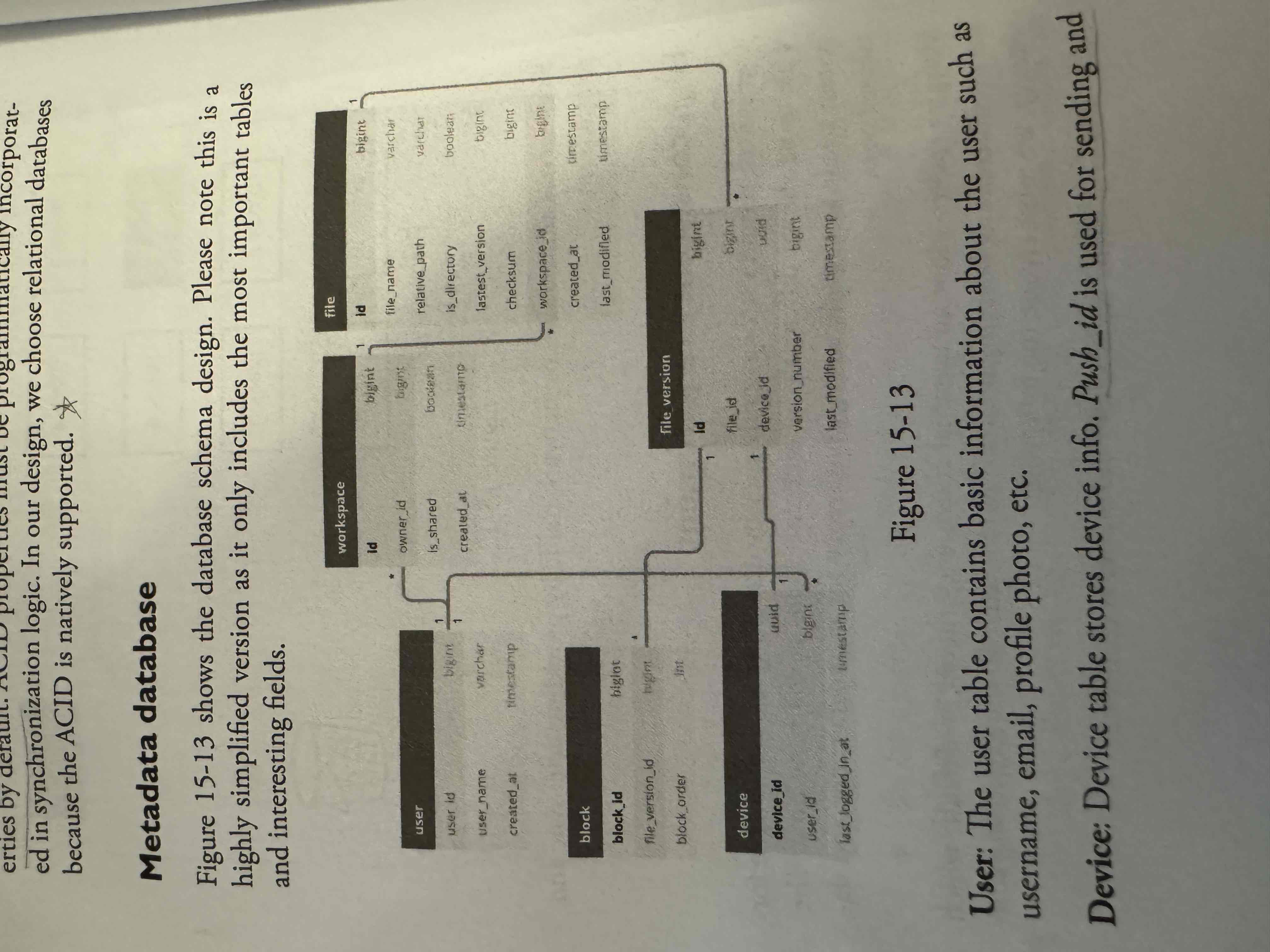
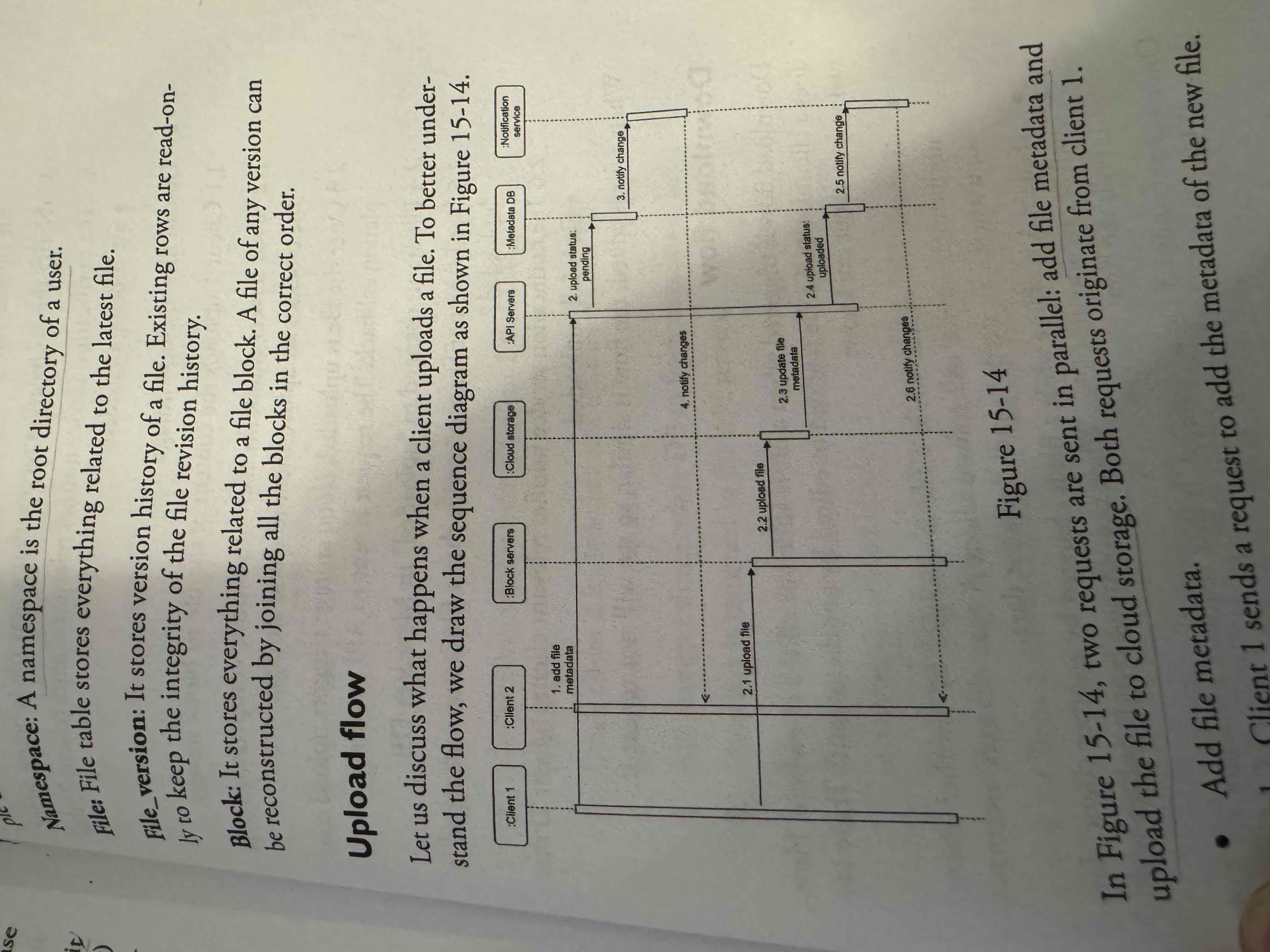
Uploading flow
User A wants to upload file
send request to add metadata of new file. Stores in metadata DB, then notification service notifies relevant clients
client A uploads file to block servers. Block servers take chunk, compress and encrypt, then upload to cloud. Cloud storage triggers completion callback
File status changed in metadata db. notify the notification service to tell relevant clients.
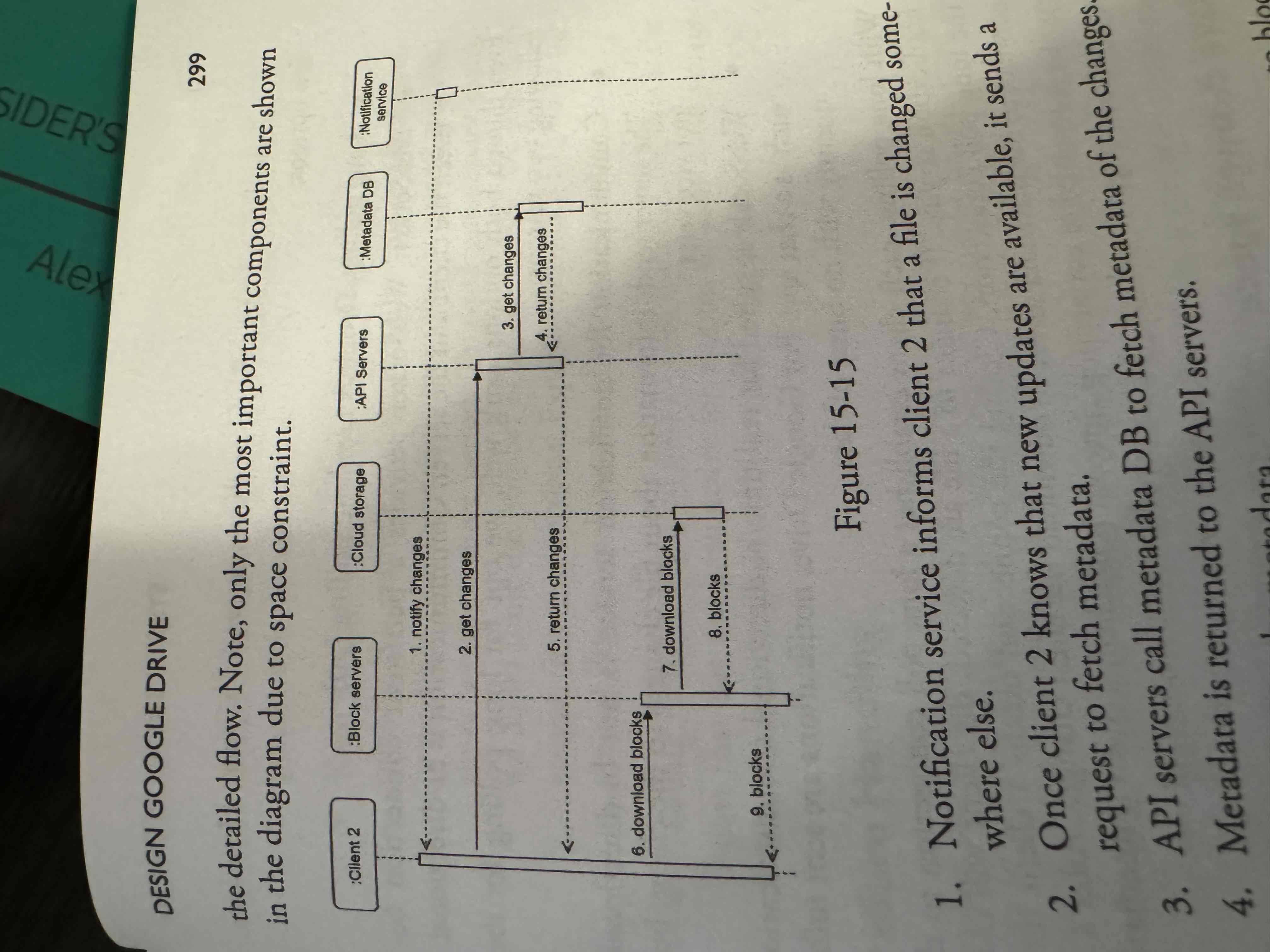
Download Flow
If client 2 online when file is changed by another user, notification service will inform client that they need to pull data. Otherwise, data will be saved to the cache and when client is online again, they will pull.
Notification Service design
Websocket vs long polling. Use long polling, not bi-directional. Websocket better for chat apps. (or uber!) Dropbox uses long polling. When user closes long poll to download data, it reestablishes connection.
Storage space vs versioning (storage space optimizing)
to save space:
only keep certain number of versions
if old versions never used, delete?
move infrequently accessed to cold storage.
de duplicate if same hash.
Random Extras
Duplicate block servers in case one fails
duplicate S3 buckets in different regions
notification service failure- reconnecting all clients from disconnected server. May be very slow, but necessary. Need to have backups
Load balancers keep heartbeats. If primary fails, secondary takes traffic
Offline backup queues are replicated multiple times. If one fails, user may need to re-subscribe to backup queue