ch3
 Call Kai
 Learn
Learn Practice Test
 Spaced Repetition
 Match
Match Flashcards
 Knowt Play
1/15

There's no tags or description
Looks like no tags are added yet.
Name | Mastery | Learn | Test | Matching | Spaced | Call with Kai | Chat |
|---|
No analytics yet
Send a link to your students to track their progress
16 Terms
Heterolysis

Homolysis

Bronsted Lowry definition
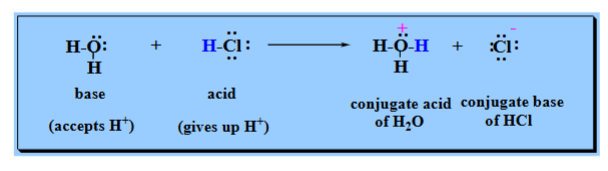
Lewis definition for acids and bases

Nucleophile
electron rich
gives electron pair to another thing (losses electrons)
(negative charge, lone pairs, pi bonds)
lewis bases
carbanion
electrophile
positive charge, incomplete octet
carbocation
Basically, look at conjugative bases. If structure gained a proton = base = electrophile
If structure lost a proton = acid = nucleophile
Describe arrow pushing
Go from lone pairs/negative charge/pi bond → another atoms
from nucleophile to electrophile
Ka and pKa relativity to acid strength
pKa UP → acid strength DOWN
Ka UP → acid strength UP
Strong acid → weak conjugate base
Weak acid → strong base
Be able to predict the outcome of acid/base reactions and the direction of the
equilibrium.
Identify Acid on each side
compare pka value for the acids
EQUILIBRIUM FAVORS THE SIDE WITH THE HIGHER pKA
Understand why many organic acid/base reactions are carried out in nonaqueous solutions due to the leveling effect of water.
Some acid/base reactions are not carrier out in aqueous solution because aqueous solutions cause acids stronger than hydronium to completely convert into hydronium when they dissolve in water.
For bases, they transform into OH
The point of doing these reaction in nonaqueous solutions is so reactions are actually carried out rather than being prevented by water, and so that the true acid strengths and bases strength of the compound being used can actually be observed rather than being limited by water
Strongest acid in water - hydronium H3O+
Strongest base in water = hydroxide OH-
Recognize organolithium reagents and their role as very strong bases.
Organolithium reagents are those that are [carbon—metal] bonds
Like C—-Li
These are super strong bases because the C-Li is highly polarized as the carbon cleaves like a carbanion.
These are also super strong bases because the C-Li bonds the associated carbanions happen to be the conjugate bases of alkanes which have a high pKa (high pKa → strong base & weak acid)
Super strong bronsted bases
Strong nucleophiles
these cannot be used in water because the reagent would only survive in very low acidity solvents like hydrocarbons
Carboxylic acid pKa
2-5
alcohols pKa
16-18
phenols pKa
10
terminal alkynes pKa
25