mb w7 (viral infect cont)

0.0(0)
Studied by 0 people
call kaiCall Kai
learnLearn
examPractice Test
spaced repetitionSpaced Repetition
heart puzzleMatch
flashcardsFlashcards
GameKnowt Play
Card Sorting

1/12

encourage image

There's no tags or description

Looks like no tags are added yet.

13 Terms

1
New cards

recap


Herpesviridae = family of DNA viruses cause disease in human/animal

  • 8 human herpesviruses (HHV-1 to HHV-8)


HHV-1 (HSV-1): oral herpes (cold sores)

HHV-2 (HSV-2): genital herpes

HHV-3 (VZV): chickenpox & shingles


HHV-4 (EBV): infectious mononucleosis, Burkitt’s lymphoma, nasopharyngeal carcinoma

HHV-5 (CMV): mononucleosis-like illness, retinitis (immunocompromised) HHV-6: roseola (sixth disease)


HHV-7: roseola-like illness

HHV-8 (KSHV): Kaposi’s sarcoma

  • rhadinovirus = KSHV = Kaposi's sarcoma herpesvirus (not be confused with Kaposi's varicelliform eruption


Human Herpesvirus 3 (HHV-3) = Varicella-Zoster Virus

  • cause varicella (chickenpox) & herpes zoster (shingles)

  • 2 diff disease due to identical organism

  • chicken pox = primary infection

  • herpes zoster = reactivation of illness


Varicella (Chickenpox)

  • cause = VZV

  • transmit = enter via mucosa of upper resp tract (high infect) > viremia > spread to skin > replic in epith cells > vesicular rash


  • incubation = 2 weeks

  • clinical finding = malaise, fever, diffuse vesicular rash (oral mucosa too)

  • treatment = self limiting, symptomatic management


Varicella-Zoster Infects

  • cause = reactivation of VZV

  • pathogenesis = latent in dorsal root / cranial nerve ganglia

  • triggers = immunosuppresion, trauma, drug, malignancy


  • clinical = malaise, fever, severe localized pain, vesicular rash along a nerve (dermatomal distrib / dermatome

  • - roses from hell vasicular rash


  • treatment = analgesic (for pain), antiviral (acyclovir), vaccine (for prim infect + reactive)


<p><strong><mark data-color="blue" style="background-color: blue; color: inherit;">Human Herpesvirus 3 (HHV-3) = Varicella-Zoster Virus</mark></strong></p><ul><li><p>cause <u><mark data-color="yellow" style="background-color: yellow; color: inherit;">varicella (chickenpox)</mark></u> &amp; <u><mark data-color="yellow" style="background-color: yellow; color: inherit;">herpes zoster (shingles)</mark></u></p></li><li><p>2 diff disease due to <strong>identical organism</strong></p></li><li><p><mark data-color="yellow" style="background-color: yellow; color: inherit;">chicken pox = primary infection</mark></p></li><li><p><mark data-color="yellow" style="background-color: yellow; color: inherit;">herpes zoster = reactivation of illness</mark></p></li></ul><div data-type="horizontalRule"><hr></div><p><strong><mark data-color="purple" style="background-color: purple; color: inherit;">Varicella (Chickenpox)</mark></strong></p><ul><li><p>cause = VZV</p></li><li><p>transmit = enter via <mark data-color="yellow" style="background-color: yellow; color: inherit;">mucosa of upper resp tract (high infect)</mark> &gt; viremia &gt; spread to skin &gt; replic in epith cells &gt; vesicular rash</p></li></ul><p></p><ul><li><p>incubation = 2 weeks</p></li><li><p>clinical finding = malaise, fever, diffuse vesicular rash (oral mucosa too)</p></li><li><p>treatment = self limiting, symptomatic management</p></li></ul><div data-type="horizontalRule"><hr></div><p><strong><mark data-color="purple" style="background-color: purple; color: inherit;">Varicella-Zoster Infects</mark></strong></p><ul><li><p>cause = reactivation of VZV</p></li><li><p>pathogenesis = <strong><mark data-color="yellow" style="background-color: yellow; color: inherit;">latent in dorsal root / cranial nerve ganglia</mark></strong></p></li><li><p>triggers = immunosuppresion, trauma, drug, malignancy</p></li></ul><p></p><ul><li><p>clinical = malaise, fever, <strong><mark data-color="blue" style="background-color: blue; color: inherit;">severe localized pain</mark></strong><mark data-color="blue" style="background-color: blue; color: inherit;">, vesicular rash</mark> along a nerve (dermatomal distrib / <mark data-color="blue" style="background-color: blue; color: inherit;">dermatome</mark></p></li><li><p>- roses from hell vasicular rash</p></li></ul><p></p><ul><li><p>treatment = analgesic (for pain), antiviral (acyclovir), vaccine (for prim infect + reactive)</p></li></ul><p></p><p></p>
2
New cards
<p><strong><mark data-color="purple" style="background-color: purple; color: inherit;">HHV-4 = Epstein-Barr Virus</mark></strong></p><p></p><ul><li><p>etiology = Epbar virus (EBV) (HHV-4)</p></li><li><p>target tissue = <mark data-color="yellow" style="background-color: yellow; color: inherit;">lymph nodes &amp; spleen (incs lymphocytes aka B cells)</mark></p></li></ul><p>^establishes lifelong latency w potential reactivate</p><p></p><p><u>assoc diseases</u></p><ul><li><p><mark data-color="yellow" style="background-color: yellow; color: inherit;">infectious mononucleosis (kissing disease)</mark></p></li><li><p>burkitt lymphoma &amp; other B-cell lymphomas</p></li><li><p>nasopharyngeal carcinoma</p></li><li><p>oral hairy leukoplakia</p></li><li><p>post-transplant lymphoproliferative disorders</p></li></ul><p></p><p><u>transmission/patho</u> = via saliva (<mark data-color="yellow" style="background-color: yellow; color: inherit;">kissing disease</mark> or shared drink)</p><p></p><p><u>incubation</u> = 4-7 week</p><p><u>clinical</u> = fever, sorethroat, enlarged tender nodes, fatigue, mild jaundice, gingival bleed</p><p></p><p><u>disease characs</u></p><ul><li><p>acute infect of lymphoid tissue</p></li><li><p>most common adolescent (15-20)</p></li><li><p>self limiting (fatique)</p></li></ul><p></p><p></p>

HHV-4 = Epstein-Barr Virus


  • etiology = Epbar virus (EBV) (HHV-4)

  • target tissue = lymph nodes & spleen (incs lymphocytes aka B cells)

^establishes lifelong latency w potential reactivate


assoc diseases

  • infectious mononucleosis (kissing disease)

  • burkitt lymphoma & other B-cell lymphomas

  • nasopharyngeal carcinoma

  • oral hairy leukoplakia

  • post-transplant lymphoproliferative disorders


transmission/patho = via saliva (kissing disease or shared drink)


incubation = 4-7 week

clinical = fever, sorethroat, enlarged tender nodes, fatigue, mild jaundice, gingival bleed


disease characs

  • acute infect of lymphoid tissue

  • most common adolescent (15-20)

  • self limiting (fatique)


HHV-5 = Cytomegalovirus (CMV)

  • etiology = CMV (herpesvirus fam, HHV-5)

  • congenital infection (intrauterine/perinatal)

  • usually asymptomatic in healthy ppl


high risk = neonates (newborn) can be deaf & intellectual disability later

  • immunocomps = transplant receipient, leukemia ppl, HIV/AIDs ppl


CMV is a AIDs-defining infection


transmit = body fluids

incubation = 4-8 week


clinical

  • infants = severe disease (CNS damage, jaundice, pneumonitis, dev delay)

  • adults = mononucleosis-like illness

  • RETINITIS


latency + reactivation = high prevalence

  • no proven regimens for therapy and prevention of CMV infect


treatment for EBV & CMV

EBV (infectious mononucleosis)

  • support care (rest hydrate)

  • no specif antiviral therapy

  • steroids (only in severe)


SUPPORTIVE CARE


CMV - antivirals for high-risk patients

  • Ganciclovir / Valganciclovir

  • used in immunocomps or severe disease

  • supportive care in mild cases


MAY REQ ANTIVIRALS IN HIGH RISK PATIENT


3
New cards

Which virus causes chickenpox?

A. Herpes simplex virus

B. Varicella-zoster virus

C. Epstein–Barr virus

D. Cytomegalovirus


Which route is the most common mode of transmission for chickenpox?

A. Fecal–oral transmission

B. Vector-borne transmission

C. Respiratory droplets and direct contact

D. Contaminated food


Which statement regarding varicella-zoster virus is CORRECT?

A. It is an RNA virus

B. It remains latent in salivary glands

C. It can reactivate later in life as shingles

D. It is transmitted primarily through blood transfusion

A university student presents with fever, fatigue, sore throat, and cervical lymphadenopathy. Which virus is the most likely cause?

A. Varicella-zoster virus

B. Cytomegalovirus

C. Epstein–Barr virus

D. Herpes simplex virus type 1


A patient with advanced HIV infection develops retinitis caused by a herpesvirus. Which virus is the most likely cause?

A. Epstein–Barr virus

B. Varicella-zoster virus

C. Cytomegalovirus

D. Herpes simplex virus type 1


Congenital CMV infection is clinically important because it may cause:

A. Dental caries only

B. Hearing loss and developmental abnormalities

C. Appendicitis

D. Hyperthyroidism

4
New cards
<p><strong><mark data-color="purple" style="background-color: purple; color: inherit;">Papillomavirus - warts</mark></strong></p><ul><li><p>etiology = HPV</p></li><li><p>patho = infect epithelial cells of skin &amp; mucous mems</p></li></ul><p></p><p>clinical</p><ul><li><p>cutaneous <mark data-color="yellow" style="background-color: yellow; color: inherit;">warts</mark> (common, plantar, flat)</p></li><li><p>genital wart</p></li><li><p>laryngeal wart</p></li></ul><p></p><p>oral finding</p><ul><li><p>papular or nodular lesion</p></li><li><p>surface = <mark data-color="yellow" style="background-color: yellow; color: inherit;">papillary *cauliflower like* projections</mark></p></li></ul><p></p><ul><li><p>transmit = direct contact</p></li><li><p>treatment = excision (surg remove) or chemical remove (trichloracetic acid)</p></li></ul><p></p><p><span style="color: red;">know theres many types w different conditions</span></p><p><span style="color: red;">range from benign proliferative lesions &gt; oncogenic disease</span></p><p><span style="color: red;">depend on strain &amp; loc</span></p><p></p>

Papillomavirus - warts

  • etiology = HPV

  • patho = infect epithelial cells of skin & mucous mems


clinical

  • cutaneous warts (common, plantar, flat)

  • genital wart

  • laryngeal wart


oral finding

  • papular or nodular lesion

  • surface = papillary *cauliflower like* projections


  • transmit = direct contact

  • treatment = excision (surg remove) or chemical remove (trichloracetic acid)


know theres many types w different conditions

range from benign proliferative lesions > oncogenic disease

depend on strain & loc


HPV vax = Gardasil

  • only for 6, 11, 16, 18

  • 16/18 = high risk type assoc w oropharyngeal cancer

  • 6/11 = low risk type (90% genital warts)


HPV infect cause nearly all cervical cancers

<p><strong><mark data-color="purple" style="background-color: purple; color: inherit;">HPV vax = Gardasil</mark></strong></p><ul><li><p>only for 6, 11, 16, 18</p></li><li><p>16/18 = high risk type assoc w <mark data-color="yellow" style="background-color: yellow; color: inherit;">oropharyngeal cancer</mark></p></li><li><p>6/11 = low risk type (<mark data-color="yellow" style="background-color: yellow; color: inherit;">90% genital warts</mark>)</p></li></ul><p></p><p><strong>HPV infect cause nearly all cervical cancers</strong></p>
5
New cards
<p><strong><mark data-color="purple" style="background-color: purple; color: inherit;">Hepatitis</mark></strong></p><ul><li><p><mark data-color="yellow" style="background-color: yellow; color: inherit;">inflam disease of liver</mark> caused by variety of virus (transmit dep on type)</p></li><li><p>acquire thru blood, body fluid, food/water, too much alc (non-infectious cause)</p></li><li><p>common symptom = malaise, jaundice, dark pee, pale fatty stool</p></li></ul><p></p><ul><li><p><mark data-color="yellow" style="background-color: yellow; color: inherit;">at least 6 strains</mark> of hep viruses (A-G)</p></li><li><p>if see “non-hep” = less common form that dont fit classifs</p></li></ul><p></p>

Hepatitis

  • inflam disease of liver caused by variety of virus (transmit dep on type)

  • acquire thru blood, body fluid, food/water, too much alc (non-infectious cause)

  • common symptom = malaise, jaundice, dark pee, pale fatty stool


  • at least 6 strains of hep viruses (A-G)

  • if see “non-hep” = less common form that dont fit classifs


Hep A

  • eti = small non-envelope single-strand RNA virus (picornavirus)

  • transmit = prim fecal-oral route (contam food/water)

  • mostly children


  • infectious before symptoms appear

  • virus present in feces + saliva

  • no chronic infect/carrier state


symptoms

  • fever, nausea, abd discomfort, jaundice (common in adult)

  • resemble influ-like illness

  • self limiting (goes away on own)


diagnosis

  • IgM anti-HAV (hep A virus) → early/acute infect

  • IgG anti-HAV → later in disease/immunity


outcome + prevent

  • lifelong immunity after infect

  • no chronic disease or carrier state

  • combined hep A+B vaccine (initial then booster)

  • low risk for dentistry bc fecal-oral route


Hep B

  • eti = enveloped double-stranded DNA virus (hepadnavirus)

  • target = infect lymphocyte → liver inflam

  • many transmit = body fluid, needle share, sex, mother-child


dental relevance = blood contam saliva


clinical

  • many infect initially asymptomatic

  • fatigue nausea abd pain jaundice


carrier state

  • most recover completely, little develop chronic carrier state

  • chronic lead to → cirrhosis, hepatocellular carcinoma (liver cancer)

  • remain infect for yrs for chronic


diagnosis = blood testing

  • serological markers determ > active infect, immunity, infectivity, carrier state


important markers

  • HBsAg – Indicates current infection/carrier state

  • anti-HBs – Indicates recovery or immunity after vaccination

  • HBeAg – Indicates high infectivity

  • anti-HBc – Indicates previous or ongoing infection


prevent = hep B vax

  • recombinant vax (use DNA techno in yeast cells, not live)

  • engerixB, recombivax


treatment = antiviral therapy (for chronic)

occupational risk = dental bc blood bourne
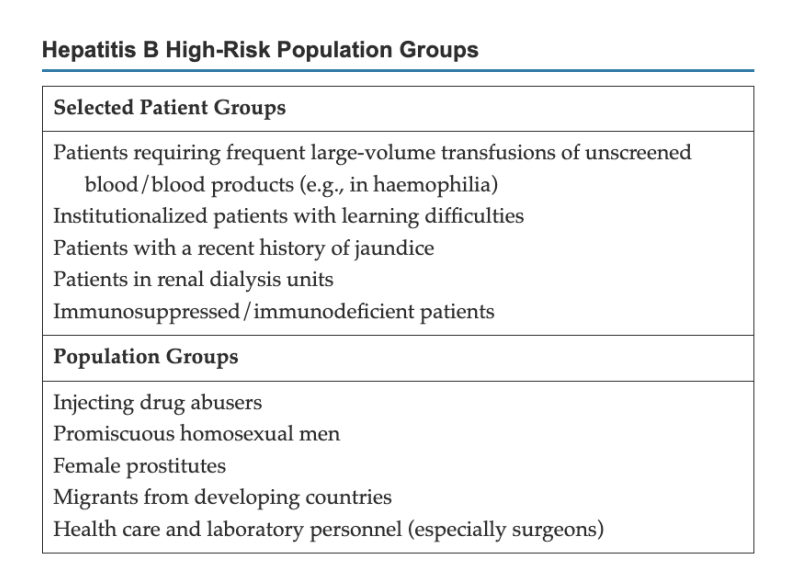

<p><strong><mark data-color="green" style="background-color: green; color: inherit;">Hep A</mark></strong></p><ul><li><p>eti = <mark data-color="yellow" style="background-color: yellow; color: inherit;">small non-envelope single-strand RNA virus</mark> (picornavirus)</p></li><li><p>transmit = <mark data-color="yellow" style="background-color: yellow; color: inherit;">prim fecal-oral route (contam food/water) </mark></p></li><li><p>mostly children</p></li></ul><p></p><ul><li><p>infectious before symptoms appear</p></li><li><p>virus present in feces + saliva</p></li><li><p>no chronic infect/carrier state</p></li></ul><p></p><p>symptoms</p><ul><li><p>fever, nausea, abd discomfort, <mark data-color="yellow" style="background-color: yellow; color: inherit;">jaundice (common in adult)</mark></p></li><li><p>resemble influ-like illness</p></li><li><p>self limiting (goes away on own)</p></li></ul><p></p><p>diagnosis</p><ul><li><p>IgM anti-HAV (hep A virus) → early/acute infect</p></li><li><p>IgG anti-HAV → later in disease/immunity</p></li></ul><p></p><p>outcome + prevent</p><ul><li><p>lifelong immunity after infect</p></li><li><p>no chronic disease or carrier state</p></li><li><p>combined hep A+B vaccine (initial then booster)</p></li><li><p>low risk for dentistry bc fecal-oral route</p></li></ul><p></p><div data-type="horizontalRule"><hr></div><p><strong><mark data-color="green" style="background-color: green; color: inherit;">Hep B</mark></strong></p><ul><li><p>eti = <mark data-color="yellow" style="background-color: yellow; color: inherit;">enveloped double-stranded DNA virus</mark> (hepadnavirus)</p></li><li><p>target = <mark data-color="yellow" style="background-color: yellow; color: inherit;">infect lymphocyte → liver inflam</mark></p></li><li><p>many transmit = body fluid, needle share, sex, mother-child</p></li></ul><p></p><p>dental relevance = blood contam saliva</p><p></p><p>clinical</p><ul><li><p>many infect initially<mark data-color="yellow" style="background-color: yellow; color: inherit;"> asymptomatic</mark></p></li><li><p>fatigue nausea abd pain jaundice</p></li></ul><p></p><p>carrier state</p><ul><li><p><mark data-color="yellow" style="background-color: yellow; color: inherit;">most recover completely</mark>, little develop chronic carrier state</p></li><li><p><mark data-color="yellow" style="background-color: yellow; color: inherit;">chronic lead to → cirrhosis, hepatocellular carcinoma (liver cancer)</mark></p></li><li><p>remain infect for yrs for chronic</p></li></ul><p></p><p>diagnosis = blood testing</p><ul><li><p>serological markers determ &gt; active infect, immunity, infectivity, carrier state</p></li></ul><p></p><p><u>important markers</u></p><ul><li><p><strong>HBsAg</strong> – Indicates current infection/carrier state </p></li><li><p><strong>anti-HBs</strong> – Indicates recovery or immunity after vaccination </p></li><li><p><strong>HBeAg</strong> – Indicates high infectivity </p></li><li><p><strong>anti-HBc</strong> – Indicates previous or ongoing infection</p></li></ul><p></p><p>prevent = hep B vax</p><ul><li><p>recombinant vax (use DNA techno in yeast cells, not live)</p></li><li><p>engerixB, recombivax</p></li></ul><p></p><p>treatment = antiviral therapy (for chronic)</p><p>occupational risk = dental bc blood bourne</p><p></p>
6
New cards
<p><strong><mark data-color="green" style="background-color: green; color: inherit;">Hep C</mark></strong></p><ul><li><p>eti = hep C virus (HCV) <mark data-color="yellow" style="background-color: yellow; color: inherit;">enveloped single stranded RNA virus</mark> (flavivirus)</p></li><li><p><mark data-color="yellow" style="background-color: yellow; color: inherit;">formerly non-A, non-B hepatitis</mark></p></li><li><p>primarily blood borne</p></li><li><p>exist as 6 genotypes</p></li><li><p>viral rna remain intact up to 7 days room temp</p></li></ul><p></p><p>transmit</p><ul><li><p>injection/drug use, blood stuff, needle, org transplant, sex, mom-kid</p></li></ul><p></p><p>clinical</p><ul><li><p>often asymptomatic</p></li><li><p>symptoms. fatigue nausea abd discomf (<mark data-color="yellow" style="background-color: yellow; color: inherit;">SIMILAR TO B)</mark></p></li></ul><p></p><p><mark data-color="yellow" style="background-color: yellow; color: inherit;">chronic infect</mark></p><ul><li><p><mark data-color="yellow" style="background-color: yellow; color: inherit;">80% develop this</mark>, can persist for decades</p></li><li><p>lead to cirrhosis, chronic liver disease, hepatocellular carcinoma</p></li></ul><p></p><p>diagnose</p><ul><li><p>serological blood testing (ELISA)</p></li><li><p>PCR testing for detect early infect</p></li></ul><p></p><p>treat</p><ul><li><p>not always required</p></li><li><p>direct acting antivirals (DAA)</p></li><li><p>high cure rate</p></li></ul><p></p><p>prev</p><ul><li><p><mark data-color="yellow" style="background-color: yellow; color: inherit;">no vax available</mark></p></li></ul><p></p><p>dent/oral manifestation</p><ul><li><p>greatest risk is needle-stick injury</p></li><li><p><mark data-color="yellow" style="background-color: yellow; color: inherit;">oral lichen planus</mark></p></li><li><p>salivary gland disease</p></li><li><p>inc risk oral malignancy</p></li></ul><p></p>

Hep C

  • eti = hep C virus (HCV) enveloped single stranded RNA virus (flavivirus)

  • formerly non-A, non-B hepatitis

  • primarily blood borne

  • exist as 6 genotypes

  • viral rna remain intact up to 7 days room temp


transmit

  • injection/drug use, blood stuff, needle, org transplant, sex, mom-kid


clinical

  • often asymptomatic

  • symptoms. fatigue nausea abd discomf (SIMILAR TO B)


chronic infect

  • 80% develop this, can persist for decades

  • lead to cirrhosis, chronic liver disease, hepatocellular carcinoma


diagnose

  • serological blood testing (ELISA)

  • PCR testing for detect early infect


treat

  • not always required

  • direct acting antivirals (DAA)

  • high cure rate


prev

  • no vax available


dent/oral manifestation

  • greatest risk is needle-stick injury

  • oral lichen planus

  • salivary gland disease

  • inc risk oral malignancy


What is the primary route of transmission for Hepatitis A?

A. Blood transfusion

B. Sexual contact

C. Fecal–oral route

D. Needle-stick injuries


Hepatitis B is primarily transmitted through:

A. Airborne droplets

B. Blood and body fluids

C. Insect bites

D. Contaminated food only


A patient who carries Hepatitis B virus without symptoms is referred to as:

A. Immunocompromised

B. Opportunistic

C. A carrier

D. Seronegative


Which statement about Hepatitis A is CORRECT?

A. It commonly causes chronic liver disease

B. It is usually self-limiting

C. It requires integration into host DNA

D. It is primarily blood-borne


Which preventive measure is MOST effective against Hepatitis A?

A. Antibiotics

B. Antifungal therapy

C. Vaccination and good hygiene

D. Corticosteroids


Which route is MOST associated with Hepatitis C transmission?

A. Fecal–oral route

B. Respiratory droplets

C. Blood exposure

D. Contaminated water


7
New cards

Hep D - Delta Hepatitis

  • eti = HDV hepatitis d virus (defective single-strand RNA envelope from HBV)

  • requires ACTIVE HBV INFECT to survive & replic

  • ^borrows its outer viral envelope from its surface antigen

  • HDV inc severity of HBV (CO-INFECTION/SUPERINFECTION)


transmit = blood, needle, sex, perinatal


epidemiology = common in inject drug user, africa, amazon, middle east


clinical

  • often asymptomatic

  • freq cause jaundice

  • severe acute hepatitis

  • fulminant liver disease

  • chronic infect -→ cirrhosis (late stage liver infect)


diagnose = detect of delta antigen/antibody (ELISA)


treat = limited resp to interferon therapy


prev = hep B vax


Hep E

  • eti = hep E virus (HEV) single stranded RNA virus

  • similar to Hep A

  • self limiting, no chronic


transmit = fecal-oral route thru water

  • areas of poor sanitation


epidemiology

  • large outbreak/epidemic may occur

  • adolescent/young adult

  • intrafamilial/parental spread rare


high risk = pregnant (esp 3rd trimester) → inc mortality


diagnosis = ELISA, PCR, Western blot


dental = minimal bc fecal oral not blood


8
New cards

Hep G - Human Pegivirus (HphV-1)

eti = RNA virus related to Hep C virus (family Flaviviridae)

  • transmit = blood

  • common in injection drug user / blood recepient

  • little/no symptom, clinically unclear


overall dental implics

  • real risk of viral infect in dental setting

  • HCV transmit prim assoc w exposure to blood & needlestick


9
New cards
<p><strong><mark data-color="green" style="background-color: green; color: inherit;">HIV = human immunodeficiency virus</mark></strong></p><p>eti = HIV virus <mark data-color="yellow" style="background-color: yellow; color: inherit;">enveloped single stranded RNA</mark> (retroviridae)</p><ul><li><p>involve <mark data-color="yellow" style="background-color: yellow; color: inherit;">destruct of immune sys, infect CD4 + T lympocytes (helper</mark> t-cells reg immune resps)</p></li><li><p>make ppl suscept to life threatening infect/disease</p></li></ul><p></p><p><strong>contains</strong></p><ul><li><p><mark data-color="yellow" style="background-color: yellow; color: inherit;">reverse transcriptase enzyme</mark></p></li><li><p><mark data-color="yellow" style="background-color: yellow; color: inherit;">viral RNA genome</mark></p></li></ul><p></p><p><strong>2 major types</strong></p><ol><li><p>HIV-1 = (common worldwide)</p></li><li><p>HIV-2 = (less transmissible, mainly africa)</p></li></ol><ul><li><p>without treatment HIV progress to AIDS in 2-12 yrs</p></li></ul><p></p><p>transmit</p><ul><li><p><mark data-color="yellow" style="background-color: yellow; color: inherit;">sex (most common)</mark></p></li><li><p>blood, needle, preg/birth/breastfeed</p></li><li><p>not rlly saliva</p></li></ul><p></p>

HIV = human immunodeficiency virus

eti = HIV virus enveloped single stranded RNA (retroviridae)

  • involve destruct of immune sys, infect CD4 + T lympocytes (helper t-cells reg immune resps)

  • make ppl suscept to life threatening infect/disease


contains

  • reverse transcriptase enzyme

  • viral RNA genome


2 major types

  1. HIV-1 = (common worldwide)

  2. HIV-2 = (less transmissible, mainly africa)

  • without treatment HIV progress to AIDS in 2-12 yrs


transmit

  • sex (most common)

  • blood, needle, preg/birth/breastfeed

  • not rlly saliva


STEPS OF INFECT

  1. HIV selectively attach to T4 lymphocytes (helper)

  2. viral RNA quickly converted → viral DNA (via reverse transcriptase)

  3. viral DNA integ > host cell DNA

  • permanent infect of lymphocyte & future cells

  1. can be latent for years then start prod new virus particles

  2. virus prod continue to destroy


3-4 week after infect…symptoms (PHOTO)


diagnosis

  • antibodies (to recog) dev 6-12week after infect

  • window period before detectable


screening in 2 assays

  • HIV antigen/antibody test

  • ELISA (must retest bc of false negs)

then confirmatory testing

  • western blot/sipplemental immunoassays

PCR testing

  • detect viral RNA &. measure viral load


treatment

  • no cure/vaccine

  • treatment symptomatic

  • combination of antiretroviral therapy (ART supress viral replication & preserve immune fxn)


<p><mark data-color="blue" style="background-color: blue; color: inherit;">STEPS OF INFECT</mark></p><ol><li><p>HIV selectively attach to T4 lymphocytes (helper)</p></li><li><p>viral RNA quickly converted → viral DNA (via reverse transcriptase)</p></li><li><p>viral DNA integ &gt; host cell DNA </p></li></ol><ul><li><p>permanent infect of lymphocyte &amp; future cells</p></li></ul><ol start="4"><li><p>can be latent for years then start prod new virus particles</p></li><li><p>virus prod continue to destroy</p></li></ol><p></p><p><strong><mark data-color="yellow" style="background-color: yellow; color: inherit;">3-4 week after infect…symptoms (PHOTO)</mark></strong></p><p></p><p><u>diagnosis</u></p><ul><li><p>antibodies (to recog) dev 6-12week after infect</p></li><li><p>window period before detectable</p></li></ul><p></p><p>screening in 2 assays</p><ul><li><p>HIV antigen/antibody test</p></li><li><p>ELISA (must retest bc of false negs)</p></li></ul><p>then confirmatory testing</p><ul><li><p>western blot/sipplemental immunoassays</p></li></ul><p>PCR testing</p><ul><li><p>detect viral RNA &amp;. measure viral load</p></li></ul><p></p><p></p><p><u>treatment</u></p><ul><li><p>no cure/vaccine</p></li><li><p>treatment symptomatic</p></li><li><p>combination of antiretroviral therapy (ART supress viral replication &amp; preserve immune fxn)</p></li></ul><p></p>
10
New cards

AIDS (acquired immunodeficiency syndrome)

  • advanced HIV infect stage

  • as HIV replic/destroy T4, immune sys weakens


  • diagnose when CD4+ count less than 200 cells/µL OR AIDs-defining illness develops

  • opportunistic infects & malignancies become common


ex: pneumocytis jirovecii pneumonia (PCP is lung infect in immunocomps)

  • kaposi sarcoma (cancer lining lymph & vessles make masses)

  • tuberculosis

  • toxoplasmosis


oral manifestation

  • candidiasis - thrush seen in 85% cases

  • distinct mouth odor

  • hairy leukoplakia (lat borders of tongue)

  • herpes typ1

  • angular chelitis

  • NUG

  • kaposi sarcoma (vascular lesion in oral)


HHV-7 & HHV-8 (Kaposi Sarcoma-Assoc Herpesvirus)

HHV-7

  • T-lymphotrophic virus

  • assoc w rash illness (roseola-like)


HHV-8 (Kaposi Sarcoma Virus)

  • cause kaposi

  • vascular tumor seen in HIV/AIDs & immunocomps


  • these establish latwncy

  • HHV6 & HHV7 very common (70-90%)


KEY TAKEAWAYS

  • these viruses are common

  • establish latency

  • HHV 8 strong link to malignancy (cancer)


<p><strong><mark data-color="blue" style="background-color: blue; color: inherit;">HHV-7 &amp; HHV-8 (Kaposi Sarcoma-Assoc Herpesvirus)</mark></strong></p><p>HHV-7</p><ul><li><p>T-lymphotrophic virus</p></li><li><p>assoc w <mark data-color="yellow" style="background-color: yellow; color: inherit;">rash illness (roseola-like)</mark></p></li></ul><p></p><p>HHV-8 (Kaposi Sarcoma Virus)</p><ul><li><p>cause kaposi</p></li><li><p>vascular tumor seen in HIV/AIDs &amp; immunocomps</p></li></ul><p></p><p></p><ul><li><p>these establish latwncy</p></li><li><p>HHV6 &amp; HHV7 very common (70-90%)</p></li></ul><p></p><p>KEY TAKEAWAYS</p><ul><li><p>these viruses are common</p></li><li><p>establish latency</p></li><li><p>HHV 8 strong link to malignancy (cancer)</p></li></ul><p></p><p></p>
11
New cards

Risk of HIV transmit in HealthCare***

  • risk of HIV transmit after single needlestick = 0.3%

  • lower than HCV (3-10%)

  • much lower than HBV (up to 30%) MOST*


VIEW REVIEW PHOTO ***


review

HIV primarily targets which cells of the immune system?

A. Red blood cells

B. Neutrophils

C. CD4+ T lymphocytes

D. Platelets


Which enzyme allows HIV to convert its RNA into DNA?

A. Integrase

B. Reverse transcriptase

C. Protease

D. DNA ligase


Which route is the MOST common mode of HIV transmission worldwide?

A. Saliva

B. Sexual contact

C. Airborne droplets

D. Food contamination


A patient is diagnosed with AIDS when:

A. HIV antibodies are first detected

B. The viral load reaches zero

C. CD4+ count falls below 200 cells/µL or an AIDS-defining illness develops

D. Oral candidiasis is present


A dental hygienist experiences a needle-stick injury involving blood from a patient with untreated HIV infection. What is the approximate risk of HIV transmission after a single occupational needle-stick exposure?

A. 0.03%

B. 0.3%

C. 3%

D. 30%


<p>VIEW REVIEW PHOTO ***</p><p></p><p><strong><mark data-color="purple" style="background-color: purple; color: inherit;">review</mark></strong></p><p>HIV primarily targets which cells of the immune system? </p><p>A. Red blood cells </p><p>B. Neutrophils </p><p><mark data-color="blue" style="background-color: blue; color: inherit;">C</mark>. CD4+ T lymphocytes </p><p>D. Platelets </p><div data-type="horizontalRule"><hr></div><p></p><p>Which enzyme allows HIV to convert its RNA into DNA? </p><p>A. Integrase </p><p><mark data-color="blue" style="background-color: blue; color: inherit;">B</mark>. Reverse transcriptase </p><p>C. Protease </p><p>D. DNA ligase </p><div data-type="horizontalRule"><hr></div><p></p><p>Which route is the MOST common mode of HIV transmission worldwide? </p><p>A. Saliva </p><p><mark data-color="blue" style="background-color: blue; color: inherit;">B</mark>. Sexual contact </p><p>C. Airborne droplets </p><p>D. Food contamination </p><div data-type="horizontalRule"><hr></div><p></p><p>A patient is diagnosed with AIDS when: </p><p>A. HIV antibodies are first detected </p><p>B. The viral load reaches zero </p><p><mark data-color="blue" style="background-color: blue; color: inherit;">C</mark>. CD4+ count falls below 200 cells/µL or an AIDS-defining illness develops </p><p>D. Oral candidiasis is present </p><div data-type="horizontalRule"><hr></div><p></p><p>A dental hygienist experiences a needle-stick injury involving blood from a patient with untreated HIV infection. What is the approximate risk of HIV transmission after a single occupational needle-stick exposure? </p><p>A. 0.03% </p><p><mark data-color="blue" style="background-color: blue; color: inherit;">B.</mark> 0.3% </p><p>C. 3% </p><p>D. 30%</p><p></p><p></p>
12
New cards

Post-Exposure Prophylaxis (PEP) testable


  • should begin soon as possible (within 2 hr)

  • uses combination antiretroviral therapy (ART)


goal

  • reduce risk of HIV infect after occupational expose

  • early treat signif lower risk of seroconversion(body start producing antibodies in resp to infect)


Needlestick/sharp exposure protocol


1. Stop and attend to the injury immediately

  • Allow the wound to bleed gently; do not squeeze or scrub

  • Wash with soap and water; flush mucous membranes or eyes with water or saline

  • Do not apply caustic agents


  1. Report

  • Notify the supervising dentist / employer at once and record the incident


  1. Assess the exposure and the source

  • Type of injury, device, depth, volume of blood, source patient status

  • Seek the source patient’s consent for HBV, HCV and HIV testing


  1. Seek medical assessment the same day

  • Baseline serology for the exposed worker (HBV, HCV, HIV)

  • Check the worker’s hepatitis B immunization and anti-HBs status


  1. Post-exposure prophylaxis (time-critical)

  • HIV: combination ART, ideally within 2 hours see PEP slide

  • HBV: HBIG and/or vaccine if not immune

  • HCV: no prophylaxis — monitor and treat early if seroconversion occurs 6. Follow-up serology and counselling as directed (typically to 6 months)


13
New cards
term image



